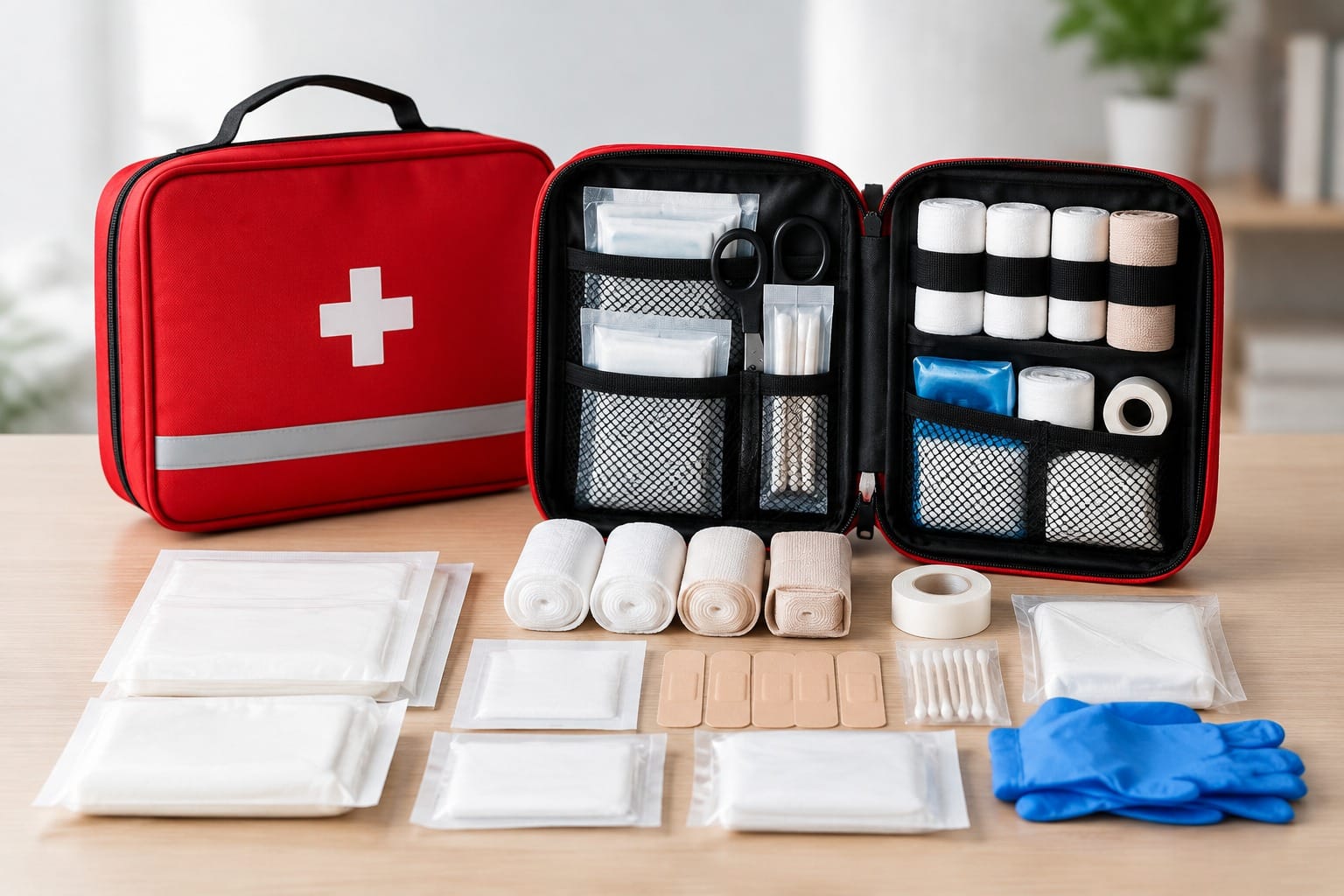
A distributor wins a fleet account and discovers that the order is not one order. Forty vans, six trucks, two minibuses and a handful of pool cars share a logo and nothing else. Each vehicle class raises its own question about a vehicle first aid kit: which rule applies, which format fits, and how thirty kits get checked and restocked without a full-time administrator.
Buyers who answer those three questions separately, in that order, end up with a programme. Buyers who order one kit for the whole fleet end up with kits in the wrong vehicles and a replacement problem they cannot see until an inspection or an incident exposes it.
This article sets out the sequence. It covers where vehicle kit requirements come from, how format follows vehicle type and duty cycle, and how the arithmetic of fleet quantities interacts with a minimum order quantity. UneedAid’s B2B sourcing guide for emergency kits and bags covers the range itself; this article deals with fleet-level planning.
The order matters because each decision constrains the next. Choosing a format before establishing the applicable standard produces a kit that fails inspection. Choosing a quantity before the standard and format are fixed produces stock that cannot be redistributed across the fleet.
| Decision | What it settles | What it depends on |
|---|---|---|
| Standard | What the kit has to contain, and which document set follows it | The destination market and whether the vehicle counts as a place of work |
| Format | Bag, case or box, and where it lives in the vehicle | Vehicle class, crew size, access in a roadside stop |
| Replacement | How the fleet stays complete over time | Shelf life, vehicle count, who owns the check |
A fleet that reverses the order usually ends up re-ordering inside twelve months. The first order is spent on a format that fits the vehicle, and the second order is spent on contents that satisfy the market.
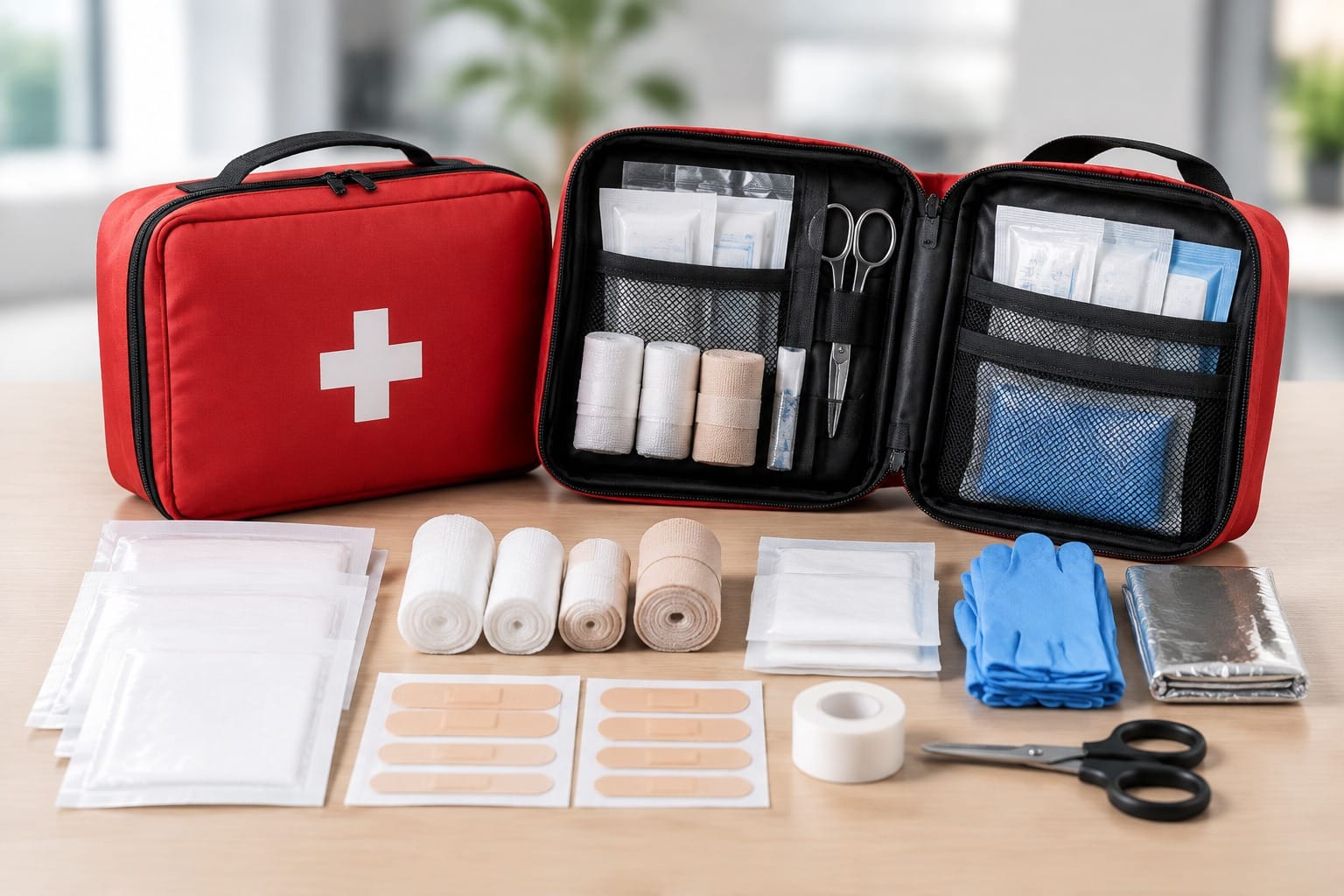
Vehicle kit requirements are not one rule applied everywhere. They come from two different sources, and a fleet that crosses a border can be subject to both.
The first source is workplace health and safety law. In the United Kingdom, the Health and Safety (First-Aid) Regulations 1981 place the duty on the employer in regulation 3: equipment and facilities must be “adequate and appropriate in the circumstances” for first aid to be given to employees who are injured or become ill at work. A driver on the road is still at work, which is why fleets in that market classify a vehicle kit as part of first aid provision rather than as vehicle equipment. The Health and Safety Executive’s guidance, including its section on first aid for travelling, remote and lone workers, is where fleet managers look for how the duty is interpreted in practice.
The second source is transport regulation, which is narrower and sometimes explicit about vehicles. The UK guidance on daily walkaround checks for buses and coaches lists the first aid kit as an inspected item and states which passenger service vehicles must carry one, adding that it has to be present, in good condition and easy to access. That is a different kind of obligation from a general employer duty: it is tied to vehicle category, and it is checked as part of the vehicle’s condition.
Two consequences follow for anyone sourcing a vehicle first aid kit at fleet scale.
Neither point can be settled by a supplier. UneedAid supplies documentation by SKU and coordinates the export file set, while confirming that a specification satisfies a given destination market remains the buyer’s decision, taken with the fleet’s own advisers.
Once the vehicle first aid kit standard is fixed, format becomes a practical question: where does the kit live, who reaches it, and under what conditions.
| Vehicle type | Usual format | What drives the choice |
|---|---|---|
| Delivery van, single driver | Hand-carry case or compact bag | One person, one kit, storage near the cab rather than the load bay |
| Service and utility vehicle | Waist or shoulder bag | The kit travels with the technician away from the vehicle |
| Truck and HGV | Case-style supply box | More occupants and more storage volume, so a rigid case survives daily handling |
| Minibus and coach | Fixed box at an accessible point | Inspection looks for presence and access; the kit is not a personal item |
| Pool car or shared vehicle | Flat, low-profile kit | Multiple users, no owner, so the kit has to be obvious and self-explanatory |
| Mixed fleet depot | Wall-mounted provision plus portable kits | The depot is a workplace in its own right, and vehicles leave it |
Formats differ less in contents than in how a kit is opened and carried. A workplace kit configuration checklist covers the contents side of that decision; the fleet decision is about the container and the mounting.
Duty cycle matters as much as vehicle type. A van that returns to a depot nightly can rely on a fixed kit and a restock routine. A vehicle that stays out for weeks needs a kit that carries its own replacement items and a check that happens at service intervals rather than at the end of a shift. This is the same reasoning that shapes bag formats for outdoor and field use, applied to a commercial fleet Replacement timing adds a second layer, and the seasonal ordering calendar for first aid products covers how a purchasing window is dated back from a season or a review.
Fleet purchasing behaves differently from single-site purchasing because the total quantity is large while the per-unit need is modest. That mismatch is where the planning usually goes wrong.
A vehicle first aid kit order covering forty vehicles is not forty kits in any simple sense. Kit sizes differ by vehicle class, spares are needed for vehicles off the road, and restock items are consumed at a different rate from the containers. The practical split is three lines rather than one: containers by vehicle class, consumables by consumption rate, and a spares pool sized to the number of vehicles in service.
Our kit programmes start at 1,000 pieces, and the tier structure means that a consolidated fleet order generally sits in a different bracket from a series of small top-up orders. Consolidation has a real cost as well, which is shelf life. Consumables age whether or not a vehicle is on the road, so a fleet that buys a year of stock in one movement needs somewhere controlled to keep it. The MOQ and quantity tier planning framework sets out how a supplier divides those tiers; the fleet-side question is how many of them are worth taking.
Sample-based validation belongs in the fleet plan rather than after it. Our standard practice is to validate a sample before bulk production, and for a fleet that is the moment to confirm that the chosen format actually fits the vehicle: whether the case clears the under-seat space, whether the mounting holds on a rough route, whether the contents list is legible in the conditions the crew will work in. A format decision made from a catalogue image is the single most common reason a fleet re-orders in the first year.
A pilot is worth running when more than one vehicle class is involved. Two or three vehicles, one full duty cycle, then a decision. The pilot costs a small amount of kit and saves the cost of a fleet-wide order built on an assumption.
Most fleet failures are not supply failures. They are maintenance failures, and they appear as missing items and expired stock rather than as late deliveries.
Three mechanisms keep a vehicle first aid kit programme complete, and a programme owner should name which one applies before the first order ships:
Documentation follows the same logic. A fleet file that holds one specification per vehicle class, one contents list per kit code, and one record of what was substituted travels well between markets and survives staff changes. It also answers the question an inspector or an insurer actually asks, which is not what the kit contains today but how the employer knows.
Where a fleet covers several markets, that file is also the lowest-cost protection against a specification that satisfies one regulator and not the next.
Not automatically, and the answer differs by market. In some markets the obligation follows the vehicle category, so specific vehicle types must carry a kit regardless of how the fleet is organised. In others it follows the employer duty to provide adequate first aid at work, which covers drivers because they are at work, and the kit may be per vehicle, per crew or per route depending on how the work is done. The practical approach is to fix the standard per market first, then decide provision per vehicle class rather than per registration number.
Start from where the kit has to be reachable. A kit that never leaves the vehicle can be fixed, which favours a rigid case or a mounted box. A kit that travels with a technician favours a waist or shoulder bag. A depot used by many vehicles may need both, because the building is a workplace and the vehicles leave it. Contents drive the specification; usage drives the container, and getting the container wrong is the most common reason a fleet re-orders early.
Size the spares pool against vehicles in service rather than against total fleet size. Vehicles off the road do not consume kit, and a pool sized on the register tends to sit unused until it expires. A common starting point is a spare ratio tied to the number of vehicles that are simultaneously in service, reviewed after the first full year when actual consumption is known. The spares pool should be drawn from the same production run as the working kits so that contents match.
Only if every vehicle does the same work in the same market. Vehicle class changes both the applicable rule and the physical format, and duty cycle changes how much self-contained restock a kit needs. Standardising where it is possible and differentiating where it is required is usually cheaper than either extreme, because it keeps one documentation set for the common lines while allowing a small number of vehicle-specific variants.
Missing items and expired stock, usually within eighteen months. Replacement is rarely planned at the same time as the initial purchase, so the fleet ends up with kits that were complete on delivery and incomplete at the first inspection. A fleet vehicle first aid kit order is usually the easy part; keeping every kit complete is the part that fails. Building restock packs, a check tied to an existing servicing routine and a written substitution rule into the original order costs very little at that stage and is expensive to add later.
A vehicle first aid kit programme is a small version of everything else in B2B first aid supply. It has a specification set by the market, a format set by use, a quantity set by the fleet register, and a maintenance obligation that outlives the order.
Getting the sequence right is what turns a fleet enquiry into a repeatable account. The specification protects the buyer, the format protects the crew, and the replacement plan is what keeps the account alive after the first delivery.
An empty first aid bag supplier will send a price within a day. The trouble starts one step later, when three of those prices sit side by side and turn out not to describe the same object. One covers a bag in a polybag. Another covers a bag, a divider set and a printed logo. A third assumes a carton packed forty units deep. On one wholesale directory listing for empty first aid pouches, minimum order quantities run from 1 piece to 5,000, and unit prices from roughly US$0.25 to US$59.99. That spread is not a market inefficiency. It is what an unclosed quote looks like at scale.
This guide covers both formats, soft bags and rigid boxes, and approaches the empty first aid bag supplier decision as a specification problem before it becomes a negotiation problem.
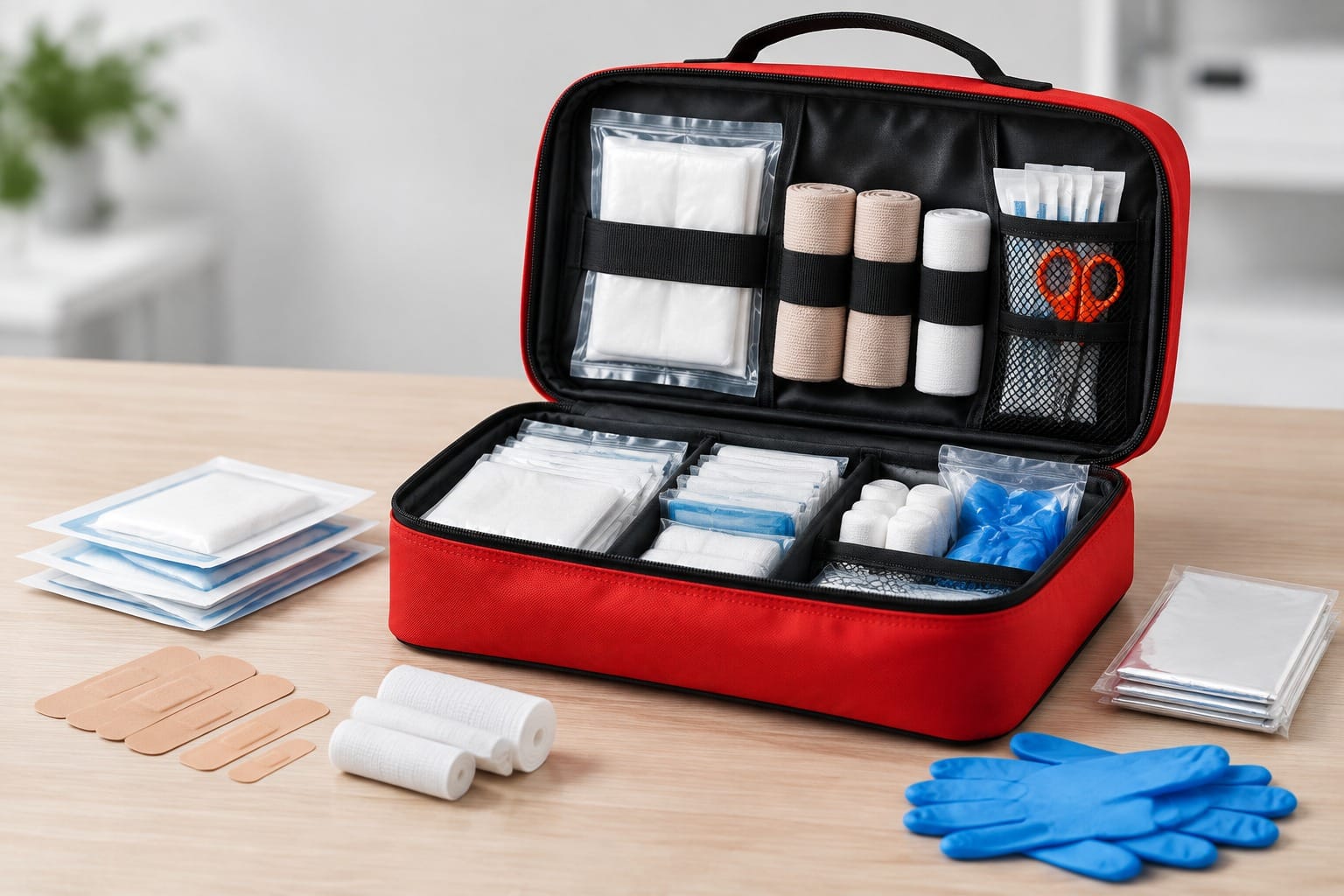
Three things differ between buyers who end up with a usable price comparison and buyers who end up with three numbers and no decision.
The first is the reference object. An empty bag has no contents list to anchor it, so the specification has to be built from the outside in. Fabric, dimensions, closure, interior layout, branding and packing all have to be stated, or the price attaches to whatever the factory assumed.
The second is that the same words cover different objects. “Empty first aid bag” spans a 0.25-dollar promotional pouch and a 59-dollar modular responder pack. Both are correctly described. Neither substitutes for the other.
The third is that size and weight move the landed cost, not just the unit price. A rigid box protects contents and stacks, but it also raises volumetric weight. A soft bag ships denser and conforms around its contents, but offers no crush resistance. Two quotes can differ by 20% before anyone discusses margin.
Buyers searching this category are already asking for structure rather than products. In our own search data the recurring phrases are things like “empty first aid bag customization options”, “empty first aid bag odm manufacturer” and “empty first aid bag producer” — all selection-stage language, all looking for a way to compare rather than a page to browse.
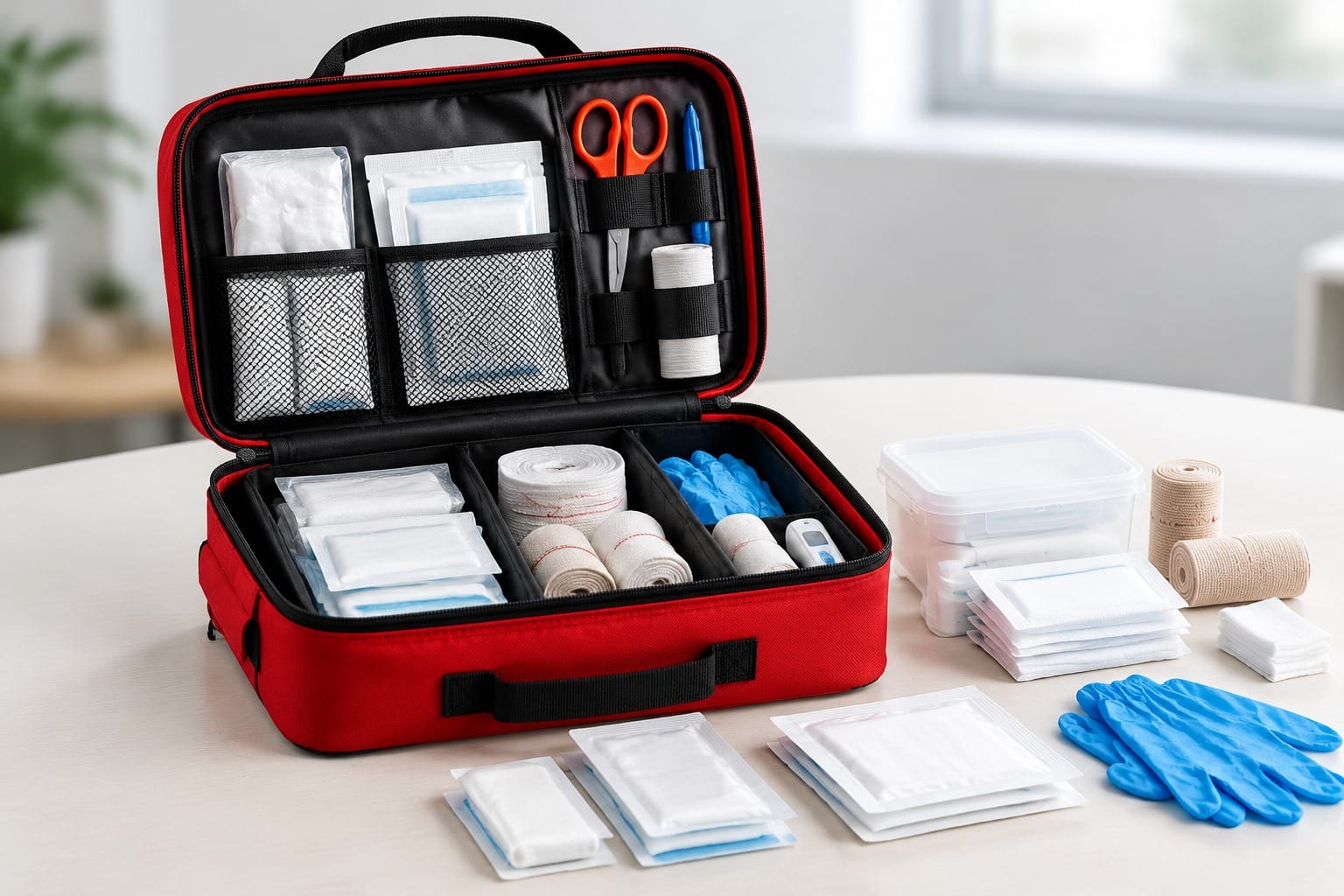
| Field | Why it decides comparability | What to ask for in writing |
|---|---|---|
| Format and finished dimensions | A sewn dimension and a finished dimension differ once the bag is loaded | External length, width and height, and whether that is cut size or finished size |
| Base material and construction | Polyester, nylon, canvas, EVA and PP differ in weight, abrasion resistance and price band | Fabric type and denier, coating, and the closure hardware (zipper type, buckle, hinge) |
| Interior configuration | Divider sets and elastic loops are frequently priced as options rather than included | Whether the divider set, mesh pocket and elastic loops are inside the unit price |
| Branding method | Printing, embroidery and heat transfer have different setup costs and minimums | Method, number of colours, placement, and whether a setup charge applies once or per run |
| Packing and carton specification | Freight is quoted on cartons, not on units | Units per polybag, units per carton, carton dimensions, gross weight |
| Commercial terms | A unit price without a delivery term and a lead time is not a quotation | MOQ per SKU, sample lead time, production lead time in working days, payment split, delivery term |
An empty first aid bag supplier who returns all six fields has handed you a comparable document. Fill those six and the comparison becomes arithmetic. Leave one open and every difference between the quotes is ambiguous, because you cannot tell whether you are looking at a price difference or a specification difference.
The delivery term line deserves its own note. The international commercial terms published by the International Chamber of Commerce determine where risk and cost transfer between seller and buyer. Two quotes at the same unit price can be several percent apart in landed cost once the term differs, and a quote that leaves the term implied has not committed to either.
Format is decided before material, and it is decided by where the kit will live. The empty first aid bag supplier conversation should therefore start here rather than with price.
| Format | Strengths | Costs to expect | Fits |
|---|---|---|---|
| Soft bag (polyester, nylon, canvas) | Ships dense, conforms around contents, low unit cost, easy to print | No crush protection, harder to keep clean, dimension tolerance wider | IFAK and MOLLE-mounted pouches, vehicle bags, waist and hand-carry kits |
| EVA or hard-shell case | Holds shape, protects instruments, wipes clean | Volumetric weight, mould cost at some quantities | Training kits, instrument-heavy kits, vehicle and field cases |
| Rigid box (PP, ABS, aluminium) | Stackable, wall-mountable, protects against compression | Heaviest per unit, freight sensitive, larger carton | Workplace and facility kits, wall-mounted stations, cabinet systems |
Two practical consequences follow. A workplace programme that will be inspected against destination requirements usually needs a box or a wall-mountable system rather than a bag, because the requirement is about accessibility and contents control rather than portability. The UK position stated by the Health and Safety Executive is one such regime, and other markets legislate their own. Where the kit contains a regulated medical device, documentation duties also attach to whoever places it on the market, and the United States quality system regulation is an example of how far those duties reach into manufacturing records.
The second consequence is that an empty bag order and an equipped kit order should not be compared on unit price at all. They sit at different points in the bill of materials.
The pass below assumes no empty first aid bag supplier has been visited and no sample has arrived. It produces a shortlist and a request, not a decision.
An hour is enough for one pass because the work is reading, not negotiating. Negotiation before the specification is closed tends to produce a discount on an object nobody has defined, which is why the sheet comes before the empty first aid bag supplier shortlist.
It depends on the SKU rather than on the supplier. Across wholesale listings for nominally similar empty pouches, MOQs observed range from a single piece to 5,000, with 500 pcs appearing most often. Stock styles carry the lowest minimums because no tooling is involved; a custom size, a specific coating or a new print layout raises it. Ask for the MOQ per SKU in writing rather than a general figure for the factory.
Buy an empty bag when you control the contents list yourself, when you are filling locally, or when your destination market makes a locally sourced contents list simpler. Buy an equipped kit when you want one supplier accountable for the whole configuration. An empty bag gives you more control over the contents and less coordination overhead with the bag factory, but it moves the contents sourcing work onto you.
Convert every quote to a single unit: cost per 1,000 units landed at your port, using the carton dimensions and gross weight the supplier provides. That normalises units per carton, carton volume and freight basis in one step. Once normalised, a lower unit price frequently turns out to be the more expensive option because it arrives in a carton shape that fills a container badly.
Six lines: format and finished dimensions; base material and closure hardware; interior configuration including whether dividers are included; branding method with colour count; packing and carton specification; and commercial terms covering MOQ, sample and production lead times, payment split and delivery term. Add a revision number and a date. A sheet without a revision number cannot be referenced later when a reorder has to match the first shipment.
Yes, and it matters more than with an equipped kit. With an equipped kit you can inspect a contents list item by item, which gives the sample a checklist. An empty bag has no such list, so the sample has to be checked against the six specification fields: measure the finished dimensions against the sheet, verify the closure type, count the divider set, and confirm the fabric against the stated denier. Sample-based validation before production is the step that catches specification drift.
Three is usually enough for a first pass. Fewer than three and you cannot separate a market price from one factory’s pricing, and more than three multiplies the specification-reading work without improving the comparison. If all three return an incomplete field list, the problem is your sheet rather than the market, so tighten the request and run the pass again.
An empty first aid bag supplier is not hard to find. A comparable quote is the scarce item, and it is scarce because nobody closes the specification.
Start with the six fields, version the sheet, and read every quote as an answer to that sheet rather than a message from a factory. The format decision then sits where it belongs: in the use case, not in the inbox. For the surrounding decisions, the emergency first aid kits and bags guide covers how an equipped configuration is planned, and the bag formats comparison works through waist, case and backpack options for outdoor programmes.
If you are ordering an empty format to fill yourself, the emergency medical bags range shows the formats we hold, and the logo branding methods guide covers how printing and embroidery decisions affect minimums. Buyers who need the quote structure itself can start from the first aid supplies RFQ template, and anyone planning the second order should read the rules on keeping components identical across repeat orders.
Our own MOQ starts at 1,000 pcs, with sample-based validation before production and a feasibility review wherever the configuration is not yet fixed. In our catalogue data the category hubs, not the individual product pages, carry most of the search impressions, which is why a supplier’s hub pages are usually the faster read when you are comparing capability rather than a single SKU.
The same split between stocked kits and empty formats shapes how a public sector first aid products tender divides its lots, because kits and empty bags are normally evaluated on separate criteria and awarded separately.
A retailer assembling its own range often begins from an empty format, and the specification notes on home first aid kit contents cover what to agree before the case is chosen.
Two suppliers quote the same 100-piece kit. One returns $6.80 per set, the other $11.40. Neither number is wrong. The first scoped a 600D polyester bag, a plastic buckle and 60 adhesive plasters. The second scoped a tarpaulin bag, a metal zipper, 90 plasters and a foil blanket. You compared two prices for two different products.
An emergency first aid kit RFQ is the document that stops that. It closes the bag, the contents, the order quantity, the sample terms and the price structure before anyone quotes, so that every response describes the same kit. Skip those closures and you do not get a price comparison. You get four shopping lists.
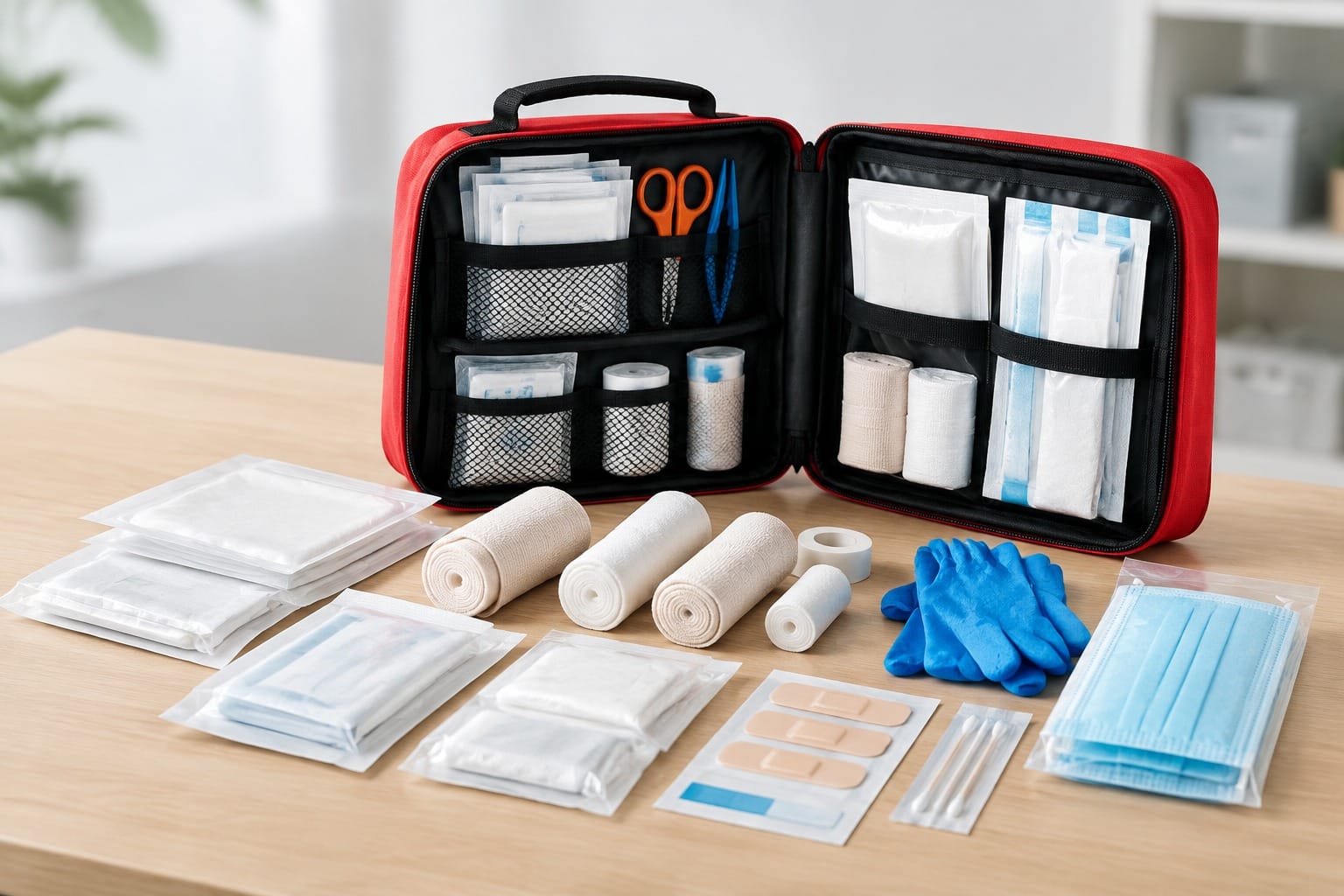
A kit is a bill of materials inside a container. Unit cost is the sum of component costs multiplied by quantities, plus the bag, plus assembly labour, plus retail packaging, plus margin. Four of those inputs stay invisible in a quote unless your document pins them down first.
The failure is quiet. A supplier reading “assorted adhesive plasters” picks a count that protects their margin, usually 20 to 40 pieces on a 100-piece kit. Another supplier reads the same words and quotes 60. Both responses are accurate to what you wrote. The prices then differ by more than a third. That is the whole job of an emergency first aid kit RFQ: closing the bill of materials before anyone puts a number next to it.
| Variable | If you leave it open | What it moves |
|---|---|---|
| Bag or case format | Supplier picks material, thickness and closure | 15-40% of total kit cost |
| Contents line items | Piece counts and item sizes drift between quotes | Largest single swing |
| Order quantity | MOQ floor and tier land wherever the supplier prefers | 20-40% per unit below 500 sets |
| Sample and freight terms | Cost, timeline and refund terms get quoted differently | Comparison breaks outright |
| Incoterm | FOB, CIF and DAP are three different prices | 5-15% on landed cost |
None of this is exotic. It is the ordinary difference between quotes you can line up side by side and quotes you cannot. The rest of this page walks through the eight lines an emergency first aid kit RFQ needs, in the order a supplier reads them.
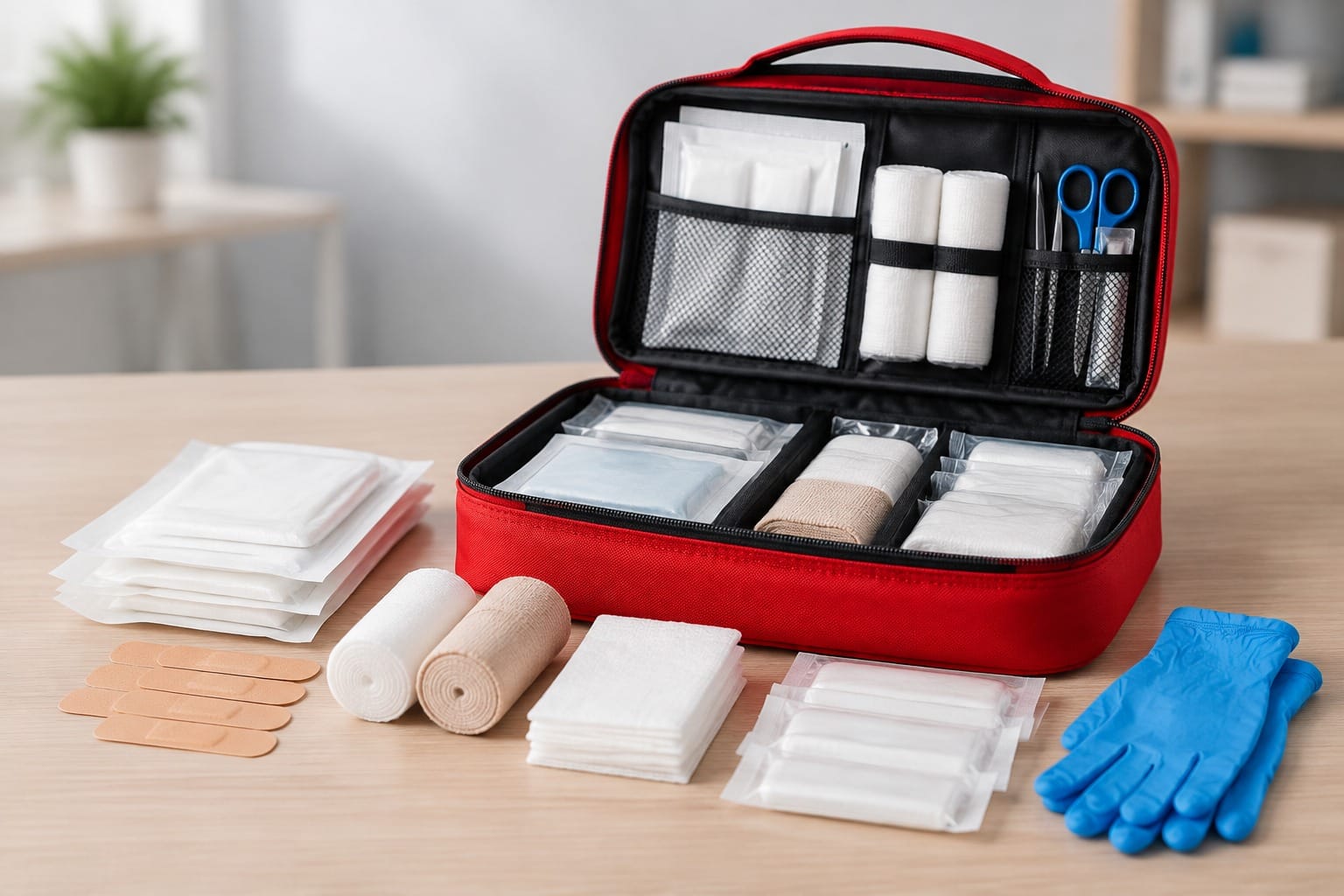
Send these eight lines to every supplier on the same day. Each one takes a decision out of the supplier’s hands and puts it back in your specification.
The same eight lines work for a stocked kit and for an empty bag programme. The contents line simply becomes “no consumables, bag supplied flat-packed” and the shelf-life line drops out.
Once every supplier answers the same eight lines, scoring the responses side by side is the step that converts a set of quotes into an award decision.
That scoring sheet needs comparable inputs, and the first aid supplies RFQ template is the document that produces them: one delivered cost per kit, with every charge that sat outside the headline price on its own line.
“Standard first aid bag” is not a specification. A supplier can answer it with a 210D polyester pouch that tears at the seam or a tarpaulin bag that survives a truck bed. Both are OEM and both are quoted as compliant.
The container line of an emergency first aid kit RFQ should name four fields: material and denier, outer dimensions in centimetres, closure type, and logo area in millimetres. Add the mounting requirement if the kit hangs on a wall or a vehicle panel. The bag is typically 15 to 40 percent of a kit’s cost, so leaving it open to interpretation quietly moves the number you are trying to compare.
Customisation on the container also escalates unevenly. Supplier listings commonly allow outer-bag logo printing at the base kit quantity, but push logo printing on inner item labels to a much larger run because each inner label needs its own print setup. An emergency first aid kit RFQ that asks for both should expect the supplier to split the two into separate quantity requirements, which is why sourcing agents now advise buyers to quote the outer and inner marking separately. This is the same discipline that applies to writing a custom medical bag specification sheet: name the fields, or accept whatever the factory fills in.
A quote is only comparable when the same line items sit on the same row. That means the contents section of your emergency first aid kit RFQ has to be a table, not a paragraph.
Four fields per row:
Ask suppliers to return the contents table with a unit price on every row. When quotes arrive, you compare row against row and the differences become visible. Without that table you are back to comparing totals and guessing.
Kit composition is also where regulatory context enters. Workplaces in the United States sit under a general obligation to make first aid supplies available, set out in 29 CFR 1910.151, while contents-class standards such as ANSI/ISEA Z308.1 are the reference many buyers use to size a workplace kit. Your RFQ should state which reference your programme is built around, because a kit designed for general workplace injuries and a kit designed for higher-risk environments do not carry the same piece count. If you already run a mixed range, the component continuity rules that keep repeat orders identical are worth reading next, because the contents table you write today becomes the baseline every reorder is measured against.
Quantity is the line where a quote can look cheaper and land more expensive. Ask for tiers, not a single number.
| Tier | What to ask for | Why it changes the answer |
|---|---|---|
| Below MOQ | Whether the supplier will quote at all | Suppliers commonly add 20-40% to unit cost below 500 sets |
| Opening tier | Unit price at the stated MOQ | This is the number most quotes show |
| Mid tier | Unit price at roughly double MOQ | Assembly labour amortises fast |
| Programme tier | Unit price at annual volume, split over shipments | Needs a fixed price validity window |
Published supplier floors give a sense of the scale. Full-kit OEM listings commonly open around 1,000 sets, with inner-label customisation pushing the requirement considerably higher; kit-specific listings from other factories quote 3,000 sets as their floor. Read those as market examples, not as terms. Get your own tier sheet, then check what each unit price includes: consumables only, kit assembly, retail packaging, export carton, and marking.
Set the delivery term in the same line. FOB, CIF and DAP prices cannot be compared against each other, and the ICC’s Incoterms 2020 reference is the version buyers should name explicitly. If your order ships by air or sea and you have not yet settled the cost split, the express, air and sea comparison for first aid supply orders lays out where the differences land.
Samples exist to close the specification, not to decorate a desk. Name three in the emergency first aid kit RFQ and say what each one decides.
Sample costing rules vary more than buyers expect. A common supplier term is free samples below a small declared value with freight collected on the buyer’s courier account, refunded from the first order. Another is a sample charge credited against the first production run. Write the rule you want into the RFQ and let suppliers accept or push back, rather than discovering the term after award.
The sample also fixes your acceptance criteria. Photograph the approved unit, record the piece count per row of the contents table, and keep the sealed unit unopened. On a reorder months later, that sealed sample is the only document that settles whether the kit changed.
An emergency first aid kit RFQ can ask a supplier to declare facts. It cannot make those facts true, so the declaration line needs a verification step attached to it.
For each regulated field, ask for three things: a written statement naming the standard or route the supplier is claiming, a supporting document, and the issuing body’s own register or published route so you can check the claim yourself. Where the destination market regulates kits as medical devices, the buyer’s own route is published by the market authority, for example the European Commission’s medical device pages. The supplier’s claim and the authority’s route are two different documents, and the second one is the one that holds.
Keep the verification in your purchase file. Re-check it when the producing site changes, when a component changes supplier, and on each new annual order. A declaration collected once and never revisited is a document, not a control.
Eight lines: container specification, contents table with piece counts, sterility status per item, minimum remaining shelf life at delivery, labelling fields, quantity with price tiers, sample terms, and the declarations you require. On top of those, name your delivery term and currency. A response that answers all eight can be placed next to another response and compared row by row, which is the only reason to issue an RFQ in the first place.
Detailed enough that two suppliers reading it cannot picture different kits. Name each item with its size, give a single piece count rather than a range, state the unit of measure, and say whether the item is sterile and individually wrapped. Then ask for a unit price on every row. If a row reads “assorted plasters”, every answer you receive will be a different product and the comparison collapses at that row.
Start at the supplier’s stated floor and ask for two tiers above it. Published floors for full kits commonly sit between 1,000 and 3,000 sets, and unit cost below roughly 500 sets can rise by 20 to 40 percent because setup and assembly labour stop amortising. If your launch volume is below the floor, quote a smaller kit with fewer lines rather than a cut-down version of the full contents list, and plan a second order against the tier.
Sometimes, and the term is worth writing into the RFQ rather than assuming. Common supplier terms include free samples under a small declared value with freight collected on the buyer’s account and refunded from the first order, or a sample charge credited against the first production run. Whichever you ask for, specify which sample type is covered and how many units, because a catalogued mock-up and a pre-production kit built to your contents table are not the same cost to produce.
An open bag specification and an open contents count, in that order. The bag moves 15 to 40 percent of kit cost, and an unnumbered contents line lets each supplier choose a different piece count for the same words. Add a missing Incoterm and the two prices are finally not prices for the same delivery at all. Fixing those three lines before you issue the document removes most of the spread you would otherwise spend a week chasing.
The document does the comparing for you. Write the eight lines once, issue the same version to every supplier, and ask for the contents table back with a unit price on each row. Every later decision, from tier selection to reorder, inherits the baseline you set here.
For the wider view of how kit formats, use cases and buying channels fit together, start from the B2B guide to emergency first aid kits and bags. If your programme runs across several sites and you are still choosing between a fixed unit and a portable one, the wall-mounted box versus portable bag comparison covers the format decision. Buyers who also need to settle paperwork before award will find the importer’s technical file responsibilities and first aid supplier payment terms useful companions to this checklist.
Stocked kits, empty bags and refill programmes are all listed under first aid kits if you want to see the formats side by side.
The first aid box vs bag question is usually framed as a preference. It is a specification decision. A wall-mounted box does one job: it makes supplies findable at a fixed point, so nobody has to remember where they are. A portable bag does a different job: it moves supplies to where the incident happened. Sites with people who stay put need the first format. Sites with people who move need the second. Most buyer programmes end up specifying both, and the sourcing work sits in getting each format right rather than picking between them.
This guide sets out what actually differs between the two formats, the four questions that decide which one a site needs, and what to write into an order when you are buying either format for import.
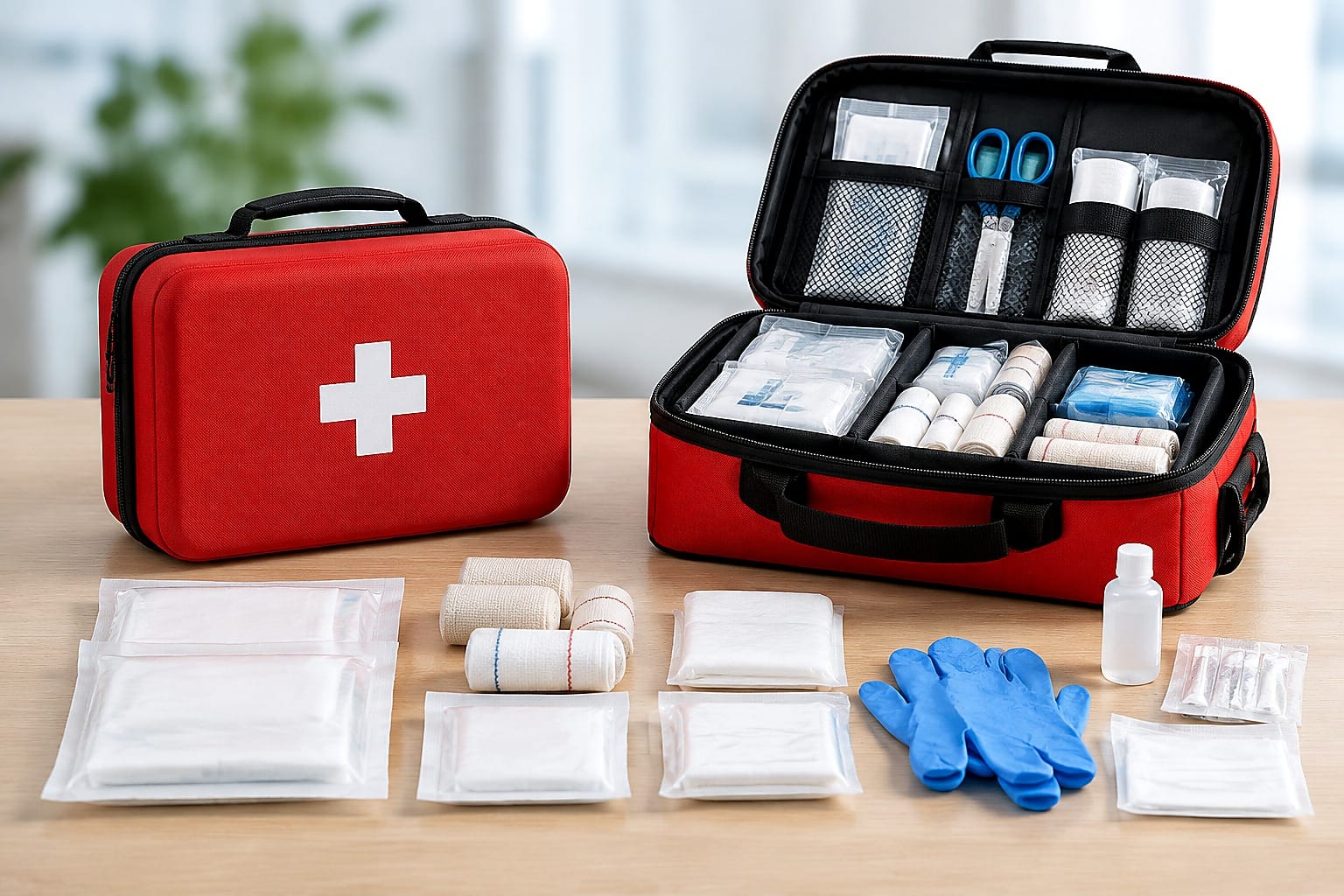
Three dimensions separate the formats, and only one of them is about the container itself.
| Dimension | Wall-mounted box | Portable bag |
|---|---|---|
| Where it lives | A fixed access point, usually marked and signed | With a person, a team or a vehicle |
| How it is restocked | Shelf by shelf, shortfalls visible without emptying it | Checked as a whole, often only after it is used |
| Content protection | A rigid body, closed against dust and knocks | Set by fabric, coating and the closure system |
| Inspection effort | Read at a glance during a walk-through | Requires opening, unloading and repacking |
| Typical fit | Offices, kitchens, warehouses, reception areas | Field crews, vehicles, events, multi-floor sites |
The restocking row is the one buyers underweight. A box that sits in the same place is inspected on a route, so the person checking it sees the same shelf arrangement every time. A bag that travels gets checked when someone thinks to check it, which is usually after an incident rather than before one.
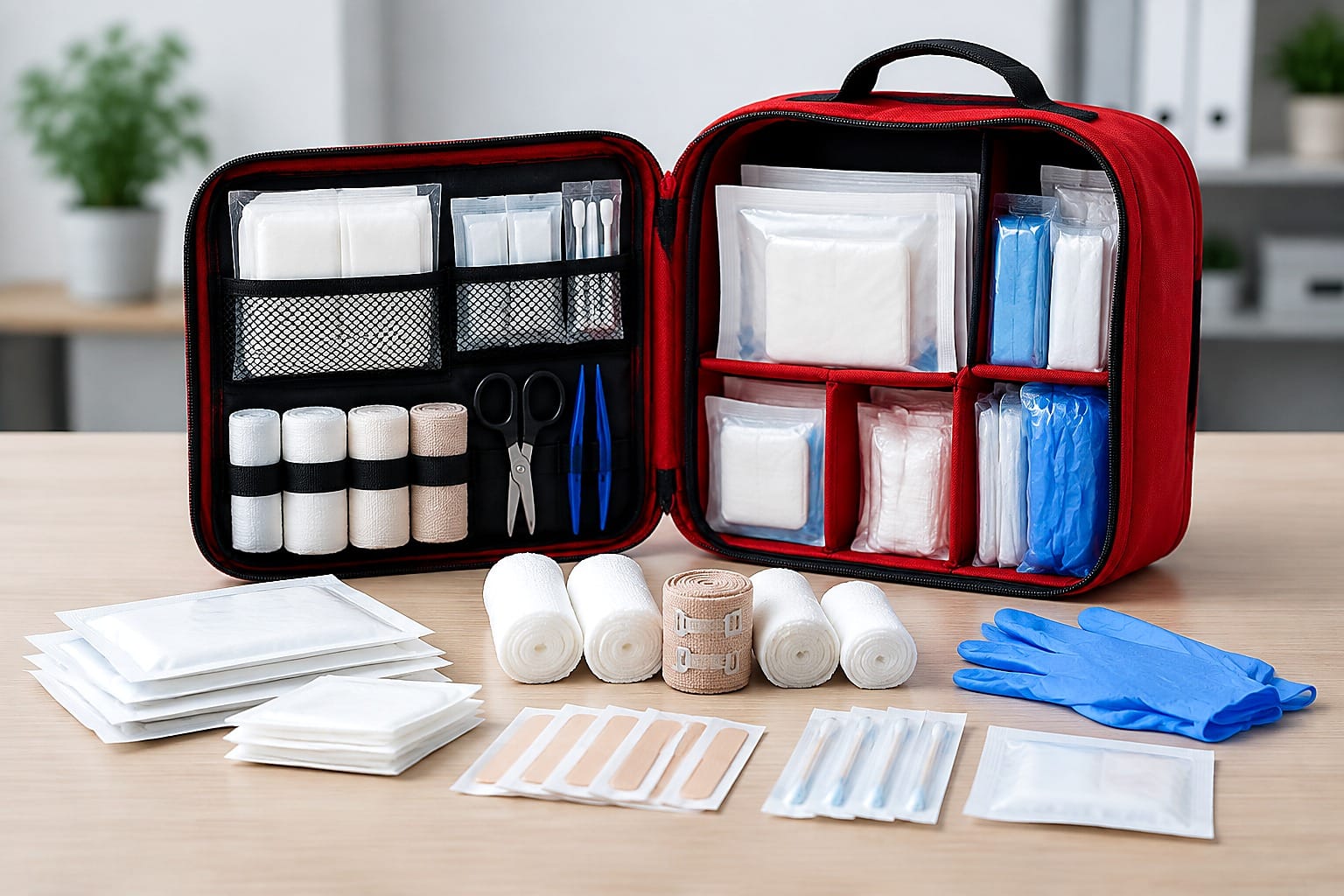
Run these before choosing a container. They are cheap to answer and they settle most of the first aid box vs bag argument.
For mixed sites, the useful pattern is one fixed station per zone plus personal or per-vehicle bags for staff who leave the zone. Splitting it that way keeps the fixed station simple and puts the portable units where the movement actually happens.
Mounting a container is a maintenance decision dressed up as a hardware decision. A fixed unit on a wall becomes a station with a route attached. Anything that has to be carried becomes an item with an owner attached.
In the United Kingdom, the duty to provide first aid equipment and facilities sits with the employer, and the practical checkpoints for a workplace provision sit in the HSE leaflet on first aid at work, which covers what first-aid regulations require, what a first-aid box or kit contains, and a checklist for setting out provision. That framing is useful for buyers because it makes the container part of a system rather than a purchase on its own.
Contents also move with the setting. A vehicle kit and a workplace kit hold different things because the situations differ, as the Red Cross anatomy of a first aid kit sets out. When you specify a first aid box vs bag, you are choosing a container for a contents list you have already decided, not the other way round.
The first aid box vs bag comparison reaches the container specification at this point. A rigid box holds its shape. That matters for molded trays and for anything that has to stay flat, and it makes a shelf layout repeatable. A bag holds its contents against the body, which matters when the kit has to be carried some distance, and it packs down when it is not in use.
Some destination markets’ standards separate the container and the contents into two independent axes rather than one product definition. Summaries of the ANSI/ISEA framework published in the United States describe a content class and a container type, where the type covers portability, mounting and environmental resistance. Those published summaries paraphrase the standard differently, and the standard itself is the authority, so check the ANSI/ISEA Z308.1 listing for the current wording. For sourcing purposes the useful part is the concept: decide the fill and the container separately, then check both against the destination market rather than assuming one implies the other.
Protection is also where specification shortcuts appear. A coated fabric and an uncoated one can look identical in a photograph. Ask for the coating and the fabric weight in writing, and confirm the closure system, because the closure is what keeps dust and moisture out of a bag that lives in a vehicle.
Buyers who import the two formats are usually buying the container, the contents, or both. Each choice changes what has to be documented.
Quantity planning works the same way in both formats. Our own production starts at 1,000 pieces per configuration, so a buyer who splits a programme across a box and two bag sizes carries the minimum three times. That arithmetic is covered in the workplace kit configuration checklist.
It is worth noting that search demand around this category positions the container as a product in its own right. Queries such as empty first aid box wholesale and aid box appear in the search data our own reporting captures, which suggests buyers shop for the housing separately from the fill. A supplier that can quote the housing on its own is easier to work with than one that will only quote a complete kit.
Comparing a wall-mounted box and a portable bag on unit price produces a decision that holds for about a month. The costs that decide the outcome sit elsewhere.
A first aid box vs bag comparison is far more useful when it runs across a refill cycle than across a single purchase.
Usually both, split by zone. Put one fixed station per floor in a marked location, and add a portable bag for the first aider who moves between floors. A single central station fails on the floors that are furthest from it, and a single bag fails as soon as it is being carried somewhere else when it is needed. Splitting the two roles keeps each format doing the job it is good at.
It depends on where it travels. A bag that moves between indoor locations needs a cleanable shell far more than a waterproof one. A bag that lives in a vehicle or goes outdoors needs a coated fabric and a closure that keeps dust out, because moisture and grit are what degrade sealed stock. State the intended environment in the order and let the specification follow.
Yes, and many importers do. Buying the empty bag or box and filling it in-market shortens the documentation chain, because only the housing crosses the border as a container. It also moves the fill decision to the buyer, which is useful when the contents have to match a local requirement you already know. The trade-off is that you then own the component specification.
Size it against sites you can actually reach, not against a forecast. One station per zone plus one portable unit per responding role is a defensible opening programme, and it is easier to repeat than a speculative bulk order. Our own production starts at 1,000 pieces per configuration, so aim the first order at the configurations you have already validated rather than spreading it thin.
It changes the inspection method, not the requirement. A fixed station is checked on a route, where a missing item is visible from the front of the shelf. A portable unit has to be opened, and that means the check depends on somebody remembering to do it. Whichever format you choose, name the person responsible and set the interval in writing, because an inspection that depends on goodwill does not survive a busy month.
Read the first aid box vs bag choice as two specifications rather than one comparison, and the rollout gets easier. The fixed station carries the visible, high-use consumable lines. The portable unit carries the response kit that has to travel. Both are ordered against a written housing specification, both have a named owner, and both are restocked on a schedule rather than after an incident.
Buyers building that structure across several sites usually start from the B2B guide to emergency first aid kits and bags, then work the format list down to the bag shapes that match each site. Where the answering unit has to leave the building entirely, the trade-offs between the outdoor first aid kit bag formats are the next decision, and the mounting question mostly resolves itself.
Whichever format you pick, the purchasing step is the same: an emergency first aid kit RFQ that fixes the contents table and the MOQ tier keeps two format quotes on the same basis.
Format is only the first of the lines that has to be fixed. Where the container is bought empty, the specification sheet for empty first aid kit bags and boxes sets out the remaining five fields, from fabric and closure through to carton and delivery term.
A sample tactical bag can look organized on a meeting table and still fail the buyer’s real use case once it is fully loaded. Pockets may become inaccessible, zipper paths may bind, attachment webbing may not fit the intended pouches, and the quoted fabric name may say little about the finished construction.
Useful tactical medical bag specifications define measurable fields: intended load, usable dimensions, fabric and coating, seam and reinforcement details, closure components, compartment layout, carrying system, attachment geometry, marking, packing, and sample tests. The buyer should approve the written specification and a loaded reference sample together. The word “tactical” describes a market or use-case style; it does not by itself prove strength, weather resistance, or suitability for a specific program.
This sourcing framework is written for distributors, institutional buyers, brand projects, and procurement teams. It supports RFQ comparison and sample control. The buyer remains responsible for confirming the required contents, intended-use claims, and destination-market obligations.
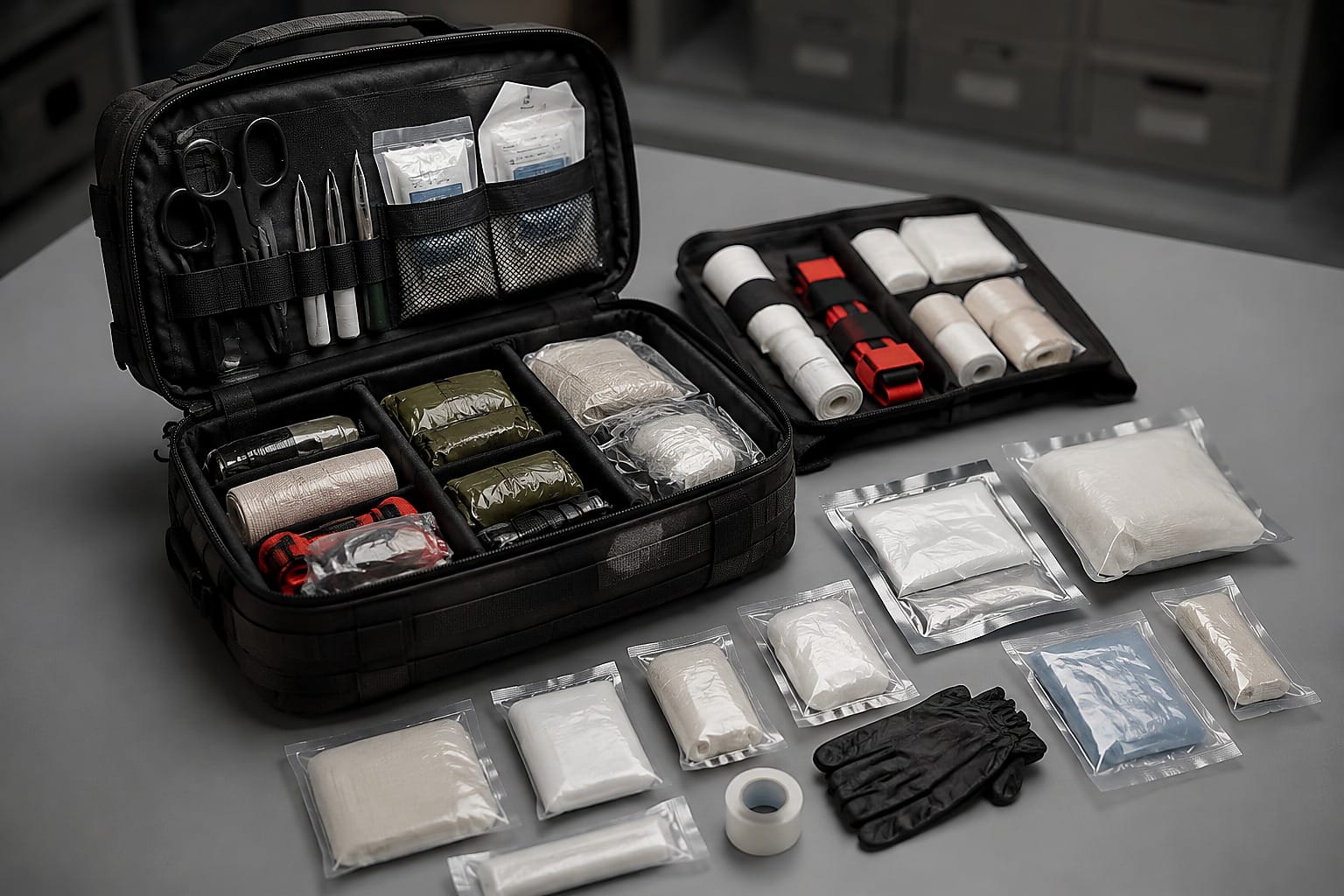
Begin with the operating brief, not a bag photograph. A supplier cannot quote the same construction for a compact belt pouch, a vehicle bag, and a loaded responder backpack without making assumptions. State who carries the bag, where it is stored, how it opens, which modules must be reached first, and what load the sample will hold.
An RFQ should cover ten groups of information:
Use the broader emergency kit and bag sourcing framework to define the use case and bill of materials before freezing these bag fields. For a US workplace project, OSHA 29 CFR 1910.151 provides one example of why supplies and access must reflect the operating context. It does not prescribe one tactical bag design or a universal component list.
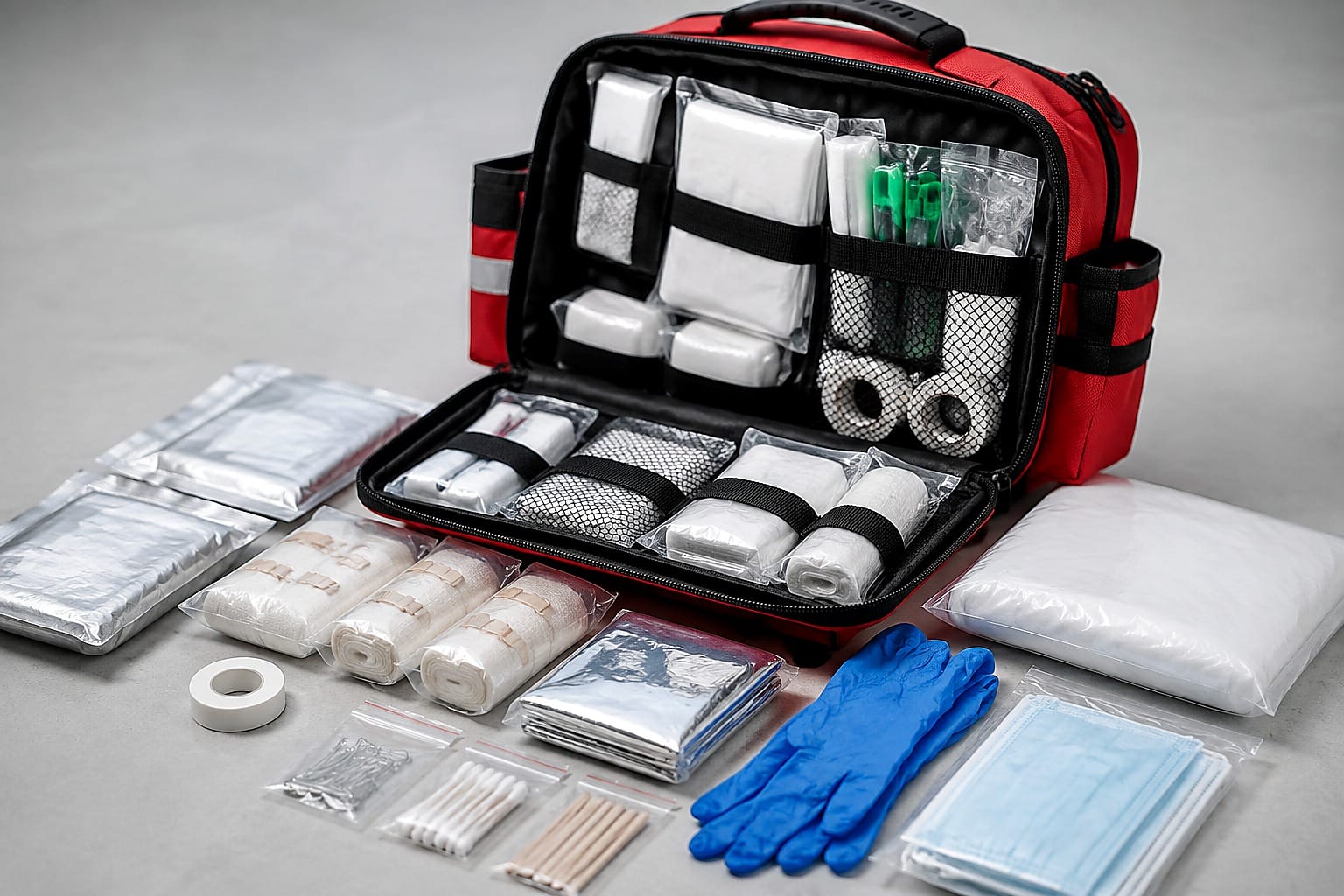
“30-liter medical backpack” is not a complete purchasing specification. Capacity figures can be calculated or measured in different ways, and rounded marketing values do not show whether the buyer’s actual modules fit. Record the method used for length, width, depth, and capacity, then verify the proposed component list inside the sample.
The most useful dimensional record includes:
| Field | What the buyer should state | What to verify on the sample |
|---|---|---|
| External dimensions | Measurement points and tolerance | Bag closed, empty and fully loaded |
| Usable internal dimensions | Clear space after lining, foam, dividers, and seams | Largest module fits without forcing the closure |
| Main opening | Opening width and zipper path | Priority modules can be removed in the planned order |
| Pocket dimensions | Finished usable pocket size | Labels remain visible and contents are retained |
| Empty weight | Bag and included removable parts | Same configuration as the quotation |
| Loaded weight | Approved BOM plus bag | Carry system remains adjustable and stable |
| Packed shipping size | Folded or shape-held unit | Master-carton quantity matches the freight quote |
Do not use one pass/fail load number without defining the load distribution and duration. Ten kilograms spread across a padded main compartment creates different stress from the same weight suspended from one handle. If a buyer requires a handle-hold test, shoulder-strap test, or repeated lift cycle, the RFQ should name the load, duration, cycle count, fixture, conditioning, and acceptance criteria.
Good tactical medical bag specifications also identify the largest rigid item, the thickest module, and any item that must remain upright. Those constraints often determine pocket depth and opening geometry more reliably than nominal liters.
Fabric denier alone does not define bag performance. It describes yarn linear density, while the finished bag also depends on fiber type, weave, coating or laminate, backing, panel structure, seam design, thread, binding, and reinforcement. Two materials sold under a similar short description may behave differently after cutting and sewing.
Ask the supplier to return an offered-material table rather than accepting “600D waterproof fabric” as a complete answer:
| Specification field | Example of a controlled response | Why it matters |
|---|---|---|
| Fiber and construction | Supplier-declared fiber and weave | Separates the base textile from a marketing label |
| Mass or weight | Test value and unit | Helps compare actual offered materials |
| Coating or backing | Type, location, and offered finish | Affects feel, structure, and moisture behavior |
| Color | Swatch, reference code, and approval light | Reduces shade disputes across production lots |
| Breaking strength | Direction, method, and result | Makes a strength claim comparable |
| Abrasion method | Method, endpoint, and result | Avoids unsupported “heavy duty” wording |
| Seam construction | Stitch type, seam allowance, thread, and reinforcement | Links panel material to finished assembly quality |
ASTM D5034 describes a grab test for breaking strength and elongation of textile fabrics. A buyer may reference that type of method when relevant, but a test method alone is not an acceptance limit. The RFQ still needs the required result, specimen direction, conditioning, laboratory route, and whether the report covers the actual offered material.
For coated or backed materials, request the supplier’s declared water-resistance method and value if water exposure matters. “Water-resistant” and “waterproof” should not be inferred from coating appearance. Seams, zipper paths, needle holes, and openings can change the finished bag’s behavior. Any performance claim should be tied to a named method and the tested construction.
Closures and load anchors deserve separate line items. A strong fabric panel does not compensate for an undersized slider, a short reinforcement patch, or a strap anchor sewn only through the lining. The loaded sample should expose the complete load path from handle or strap to the structural panels.
Record zipper chain size or supplier series, element type, tape material, slider count, opening direction, pull design, end stops, and any covering flap. Then define the test or inspection relevant to the project. ASTM D2061 covers strength tests for zippers, including components and complete assemblies. Buyers should select the applicable property and acceptance value instead of requesting a vague “zipper test.”
Use the same discipline for other hardware:
In a sample review, inspect the inside of anchor points where accessible. Reinforcement should be described in the construction sheet, not hidden behind a broad claim. Photos of the approved reinforcement stack can be stored with the sample record for later receiving inspection.
The internal layout should follow an access sequence. Separate priority modules, reserve components, documents, and hard tools according to the buyer’s own component plan. A large undivided cavity may maximize nominal volume but slow inventory checks and allow modules to shift.
Turn the layout into a numbered map. Give each removable pouch, pocket, elastic loop row, and divider a stable identifier. The BOM can then show “Module M2, pocket P4” instead of relying on a photograph. This also gives the supplier a reproducible packing instruction.
Compare layout features through their purchasing tradeoffs:
| Feature | Procurement advantage | Sample risk to check |
|---|---|---|
| Fixed sewn pocket | Repeatable location and low loose-part count | May not accept later module changes |
| Removable pouch | Easier module separation and refill handling | Attachment may release or add bulk |
| Elastic retention | Fast visibility and flexible item shapes | Elastic recovery and stitch points need review |
| Transparent panel | Quick identification | Film clarity, cracking, and edge seams need review |
| Divider system | Supports changing layouts | Dividers may collapse under an uneven load |
| Full clamshell opening | Broad access on a surface | Contents need retention when the panel is vertical |
For alternate carry formats, the outdoor first aid kit bag comparison helps buyers separate waist, case, and backpack decisions. The same loaded-sample principle applies: contents, compartments, closures, and carrying method are approved as one configuration.
Do not use “MOLLE compatible” as the only requirement. In commercial sourcing, that phrase is often applied to several webbing grids, laser-cut panels, straps, and pouch attachments. The RFQ should identify the exact pouch or interface that must fit and provide a dimensioned drawing or approved reference sample.
For sewn webbing, specify webbing width, horizontal spacing, vertical pitch, stitch-bar position, row and column count, edge clearance, and reinforcement behind the panel. For a laser-cut panel, state the material stack, slot dimensions, pitch, edge distance, backing, and any fold or curve that changes fit. The buyer should also identify zones that must remain clear of handles, openings, labels, or zipper paths.
Test the interface with the intended attachment while the bag is loaded. Check insertion, removal, lateral movement, interference, and the effect of a filled pouch on the host panel. If several accessory suppliers are involved, approve at least one defined reference combination. Tactical medical bag specifications should record that reference by drawing revision, sample ID, or both.
External loops also create snag and packing considerations. A feature may be useful in the field but inefficient in a master carton or retail sleeve. Confirm whether attachment straps ship installed, stored inside, or packed separately, and include all loose parts in the packing list.
A sample test plan should recreate the buyer’s expected handling at a controlled scale. It is not enough to pull on an empty handle once. Use the approved BOM or a defined dummy load, condition the sample as agreed, and record the method, result, photographs, and sample ID.
A practical pre-production sequence is:
| Test area | Variables that must be written down | Possible acceptance record |
|---|---|---|
| Dimension check | Measurement points, tolerance, empty or loaded state | Inspection table and photographs |
| Static load | Load, distribution, duration, suspension point | No defined seam or hardware failure |
| Repeated handling | Load, motion, cycle count, operator or fixture | Function retained after stated cycles |
| Drop or impact | Load, height, orientation, surface, number of drops | Closure retained and agreed contents contained |
| Water exposure | Method, duration, pressure or spray route | Result against buyer-defined ingress limit |
| Attachment fit | Reference pouch, load, fitting steps, movement limit | Fit record tied to reference sample |
Acceptance language should describe observable outcomes. “No damage” is ambiguous. State whether loose threads, coating marks, stitch deformation, slider resistance, buckle release, seam opening, or dimensional change are allowed and to what degree. These checks do not replace any laboratory or destination-market work required by the buyer.
Send one response template to every bidder. Require each field to be marked confirmed, alternative offered, buyer input required, or unavailable. This makes a lower quotation easier to examine because missing reinforcement, different hardware, fewer pouches, or excluded testing cannot remain hidden in a total price.
| Quote section | Buyer input | Supplier response required |
|---|---|---|
| Base bag | Drawing, size, format, use case | Offered model and deviations |
| Materials | Controlled material and hardware fields | Offered specifications and available evidence |
| Layout | Module map and attachment drawing | Construction response and feasibility notes |
| Branding | Artwork, position, color, label route | Method, artwork template, setup, and MOQ driver |
| Sample | Quantity and acceptance plan | Sample configuration, charge, and preparation time |
| Bulk order | Quantity tiers and packing requirement | Price, production factors, carton data, and terms |
| Change control | Approved references and notice rule | Substitution and reapproval process |
Separate stock and custom elements. A standard-color bag with a printed logo, a custom fabric color, a changed pocket layout, and a newly tooled buckle can have different quantity and lead-time drivers. The emergency medical bag directory can support initial format shortlisting, but the final quotation should still return a project-specific specification.
Complete tactical medical bag specifications make repeat orders easier to audit. They give both parties the same record when a material, component, packing method, or production detail changes. The approved sample remains valuable, but it should never be the only source of truth.
No. “Tactical” may describe the intended channel, visual style, access concept, attachment system, or operating use case, but it is not a test result. Buyers should translate the term into controlled fields such as dimensions, load, fabric, color, compartment map, carrying method, hardware, attachment geometry, and sample tests. Any strength, abrasion, water, or interface claim needs a named method and acceptance criterion. This keeps suppliers from quoting visually similar bags with materially different construction.
Denier is useful, but it does not define the finished material or bag. Add fiber and construction, mass, coating or backing, color reference, and the required performance method where relevant. Then control the seams, thread, binding, foam, stiffeners, and reinforcement that turn the textile into a bag. Request a swatch or sample tied to the quotation revision. If a supplier proposes another material, require a written comparison and sample review before approval.
Empty approval checks appearance, dimensions, workmanship, color, hardware, and branding. Loaded approval shows whether the actual modules fit, labels remain visible, closures follow their intended paths, dividers hold position, and straps or handles carry the stated weight. Procurement teams need both. Record the BOM revision, module map, loaded weight, sample ID, photographs, and approver so the production reference can be reproduced and later receiving checks have a defined baseline.
Provide the intended pouch or a controlled drawing of the mating interface. State the panel dimensions, pitch, stitch or slot positions, usable rows and columns, and areas that must remain clear. Fit the reference attachment to a fully loaded sample, then check installation effort, movement, release, and interference with zippers or carrying features. Avoid approving compatibility from photographs alone. If accessories come from several suppliers, name the exact combinations included in sample testing.
The clause should require notice before changes to fabric, coating, color, thread, zipper, buckle, foam, stiffener, webbing, layout, labels, packing, or production location when those fields are controlled. It should identify who reviews the change, which documents must be updated, whether a new sample is required, and how old and new inventory are separated. The supplier response should also state the notice route for unavailable components. This reduces silent substitutions and preserves the approved configuration across orders.
The sourcing sequence is straightforward: define the use case, freeze the component and module plan, issue controlled tactical medical bag specifications, compare deviations, and approve a fully loaded sample. Keep the drawing, material response, test record, artwork, packing data, and sample ID under one revision. This turns tactical medical bag specifications into a working production and inspection record instead of a descriptive sales sheet.
For the next stage, use the B2B emergency kit supplier checklist to connect the bag decision with BOM control, documentation, RFQ terms, and repeat-order planning. The result is a quotation that can be compared and an approved configuration that can be inspected.
Choosing an outdoor first aid kit bag is a format decision before it is a component decision. A waist pack can keep a compact load within reach. A case can make contents easy to count and replenish. A backpack can carry more equipment while leaving both hands available. For distributors and institutional buyers, the useful comparison is not which format looks attractive. It is which format fits the user, load, access pattern, label plan, and destination-market requirements.
Start with the operating situation: who carries the kit, how far it moves, how often it is opened, and whether a vehicle or base station is nearby. Then define the required contents and test them inside the proposed bag. A supplier can review dimensions, materials, compartments, and sample options according to the project. The buyer remains responsible for confirming local requirements and the commercial case.
For a broader configuration checklist, see UneedAid’s workplace first aid kit configuration guide. The same discipline applies when an outdoor first aid kit bag is sold to a distributor: define the use case, freeze the revision, and verify the loaded sample.
An outdoor bag has five practical jobs: keep the selected contents together, protect them during transport, make priority items findable, support inventory checks, and communicate ownership or use instructions. The format should help a trained user locate supplies without forcing every item into one large compartment.
Before requesting a quotation, write a short use-case brief:
The OSHA first-aid standard illustrates why workplace buyers should define hazards and access arrangements instead of copying a generic list. It does not prescribe one bag format for every outdoor setting. Use the hazard review to establish the brief, then validate the bag and contents together.
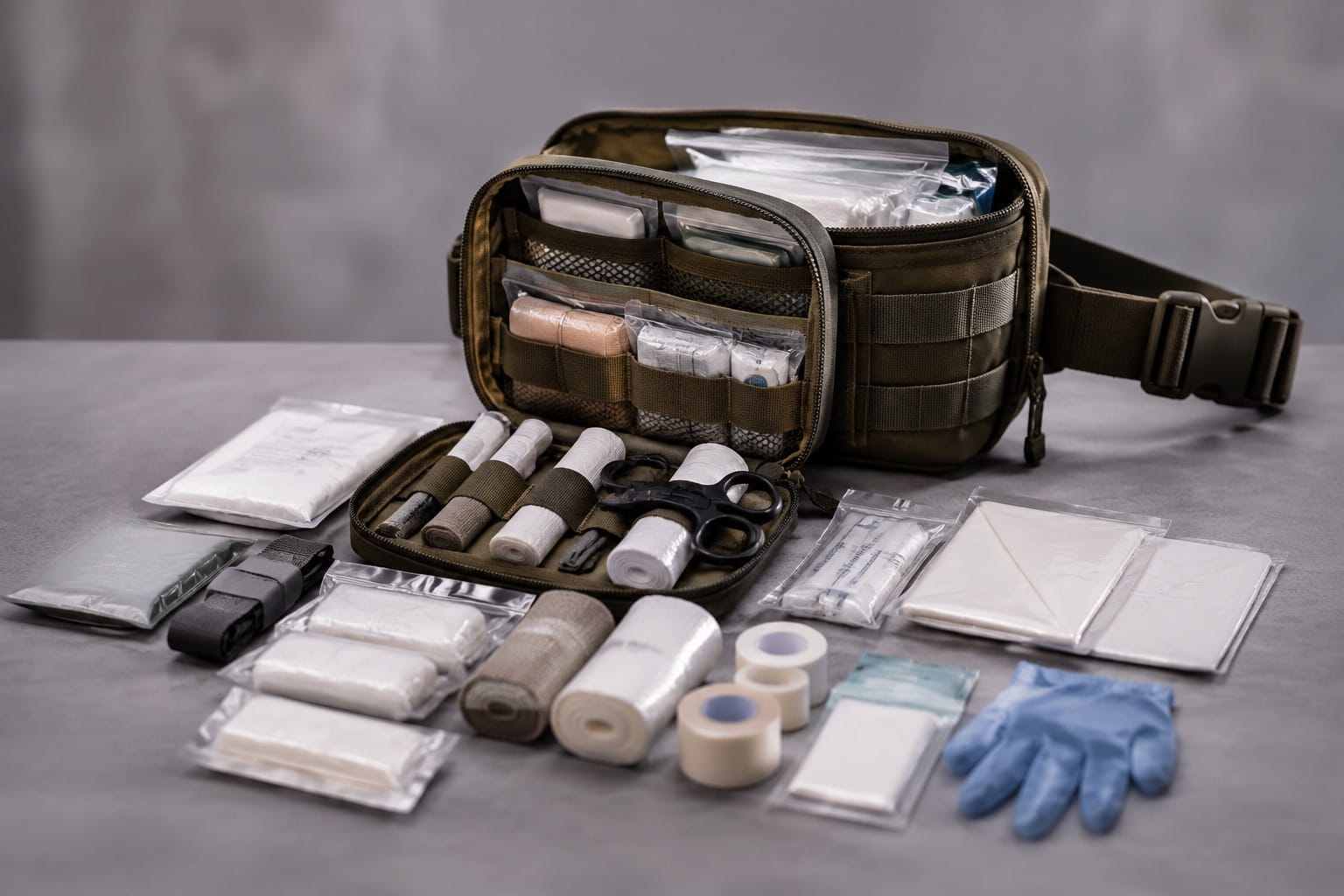
A waist format suits a small, personal load that needs to stay with one wearer. It can be useful for guided activities, event marshals, short routes, or retail bundles positioned as compact outdoor equipment. Its main advantages are immediate access and low carry burden. A wearer can reach the kit without removing a pack.
The trade-off is volume. A waist bag may not provide enough room for a larger team configuration, rigid tools, spare garments, or multiple refill groups. The belt system also needs a size range and adjustment plan. For B2B sourcing, confirm whether the target user wears a separate backpack, harness, or work belt; interference can reduce practical use.
Check these details in a sample:
For a distributor, the waist format is often a defined sub-SKU rather than a universal replacement. Keep the component list and pack-out drawing tied to a revision code so a later refill quote does not silently change the capacity.
A case format works when the kit travels in a vehicle, day pack, storage bin, or base station and the buyer values layout control. A structured case can hold dividers, elastic loops, transparent pockets, or removable pouches. Those features make a stock check easier and can support a repeatable packing method across several units.
Cases are useful for rental operators, schools, camps, vehicle fleets, and retailers that want a consistent shelf presentation. They can also be easier to label with a large front panel. However, a case may be less comfortable to carry over distance, and a rigid or semi-rigid shell can increase carton volume and freight cost.
Ask the supplier to show the empty case dimensions, usable internal dimensions, loaded weight, handle attachment, closure type, and carton packing assumptions. “Large capacity” is not a measurable specification. A packing diagram with component dimensions is more useful for procurement and later inspection.
The American Red Cross first aid kit guidance is a useful reference for thinking about organization and replenishment. It is general guidance, not a destination-market product specification. A commercial buyer should map each selected item to its own BOM, label, document, and refill plan.
A backpack format is appropriate when one person must carry a broader load over distance or keep both hands available. Outdoor instructors, response teams, field technicians, and tour operators may prefer a backpack when the kit includes several modules, protective equipment, tools, or reserve supplies.
The capacity advantage introduces more variables. A larger bag can become heavy, difficult to organize, or slow to search if every pocket is filled without a layout plan. Shoulder straps, back padding, sternum adjustment, and load distribution should be checked with the intended weight, not an empty sample. A backpack may also need a rain cover, reflective detail, or a separate documentation pocket, depending on the project brief.
Use a module map rather than a single packing list:
| Module | Typical purpose | Packing question |
|---|---|---|
| Access module | Frequently needed items | Can it be reached first? |
| Wound-care module | Dressings, tapes, and related supplies | Is the size range visible? |
| Protection module | Gloves, barriers, and protective items | Is it separated from used materials? |
| Tool module | Tools or emergency accessories | Are hard items protected from soft packs? |
| Refill module | Reserve contents | Can inventory staff count it quickly? |
This structure lets a buyer compare a backpack with a case on the same functional basis. It also gives a supplier a clearer path for sample review and quotation tiers.
The most workable format is the one with a controlled specification and a realistic replenishment plan. Compare the three options across the same fields:
| Field | Waist | Case | Backpack |
|---|---|---|---|
| Carry distance | Short to medium | Short or vehicle-based | Medium to long |
| Typical capacity | Compact | Compact to medium | Medium to large |
| Access | Very fast for wearer | Fast when opened on a surface | Fast if modules are planned |
| Inventory control | Limited by small space | Strong with dividers | Strong with modular layout |
| Branding area | Small to medium | Medium to large | Medium to large |
| Freight impact | Usually lower | Can rise with structure | Can rise with volume and padding |
For each candidate, request the same evidence: material description, dimensions, empty weight, loaded test photos, seam or closure details, artwork area, packaging, sample lead time, and a quotation basis. If the bag is equipped, tie the price to a dated component list. If it is empty, state that clearly so the distributor can build a separate contents plan.
The emergency medical bag category gives buyers a useful starting point for comparing empty formats. Use the category page as a reference for discussion, then confirm the exact outdoor first aid kit bag dimensions, materials, and feasibility in the RFQ.
The U.S. Consumer Product Safety Commission recall search is a reminder to maintain traceable product and supplier records. It is not a certification for an outdoor bag. Keep approved samples, inspection checkpoints, and revision history in the project file, and ask the importer or responsible party to confirm any market-specific obligations.
Run a sample review that mirrors the intended use. Load the bag with the proposed contents, record the loaded weight, and ask a representative user to carry, open, search, close, and repack it. Photograph the layout and note any item that is difficult to see or remove. Repeat after the bag has been folded, transported, or exposed to the conditions stated in the brief where that test is appropriate.
Distributors can also use the B2B first aid distribution strategy framework to connect bag-format testing with channel, sample, and reorder decisions. Keep the outdoor first aid kit bag revision tied to the evidence collected from each target channel.
Use a simple acceptance sheet:
Do not change the bag and the contents at the same time unless the revision is recorded. If a buyer asks for a different strap, color, or pocket layout, create a new revision and repeat the fit check. This protects later orders from mixing two versions under one SKU.
A waist bag can work for a compact personal or single-wearer load, but it may be too small for a group configuration. Start by listing the users, route duration, refill interval, and required modules. If several people rely on one kit, a case or backpack may provide better capacity and inventory control. A mixed program can use a waist bag for immediate access and a larger case or vehicle kit for reserves. Confirm the intended split in the BOM and packing diagram before requesting samples. The practical answer depends on the load and carry arrangement, not the bag label alone.
A backpack usually provides more nominal space, but useful capacity depends on layout and load weight. A deep compartment can hide small items, and an overfilled pack can slow access. Divide the contents into modules, place priority items near the opening, and test the loaded bag with the intended wearer. Measure the internal dimensions rather than relying on a litre claim. If the kit will be sold through several channels, keep a defined pack-out so buyers compare the same configuration. A smaller case may be more practical when the kit stays in a vehicle or base station.
Include the use case, carry method, external and internal dimensions, material expectations, closure, compartments, label language, artwork area, target quantity, sample requirement, packing method, carton assumptions, and requested delivery basis. For an equipped kit, attach the item list with quantities and identify which parts are fixed or open for discussion. State the destination market and who will confirm local requirements. Ask for sample timing, production lead time, inspection points, and the MOQ driver. Clear inputs make quotations comparable and reduce later revisions.
One base format can serve more than one channel when the carry needs, contents, and labeling are genuinely compatible. Keep the base bag revision stable and separate channel-specific inserts, component modules, or artwork where needed. A tour operator may need a different refill cycle from a retail reseller. Record each channel as a defined configuration rather than assuming the same pack-out fits all users. Before scaling, compare loaded weight, access, documentation, packaging, and delivery assumptions for each market. Where product feasibility allows, a common base can reduce complexity without removing the need for channel-specific validation.
Make replenishment part of the original design. Mark each component with a quantity, revision, and replacement trigger. Keep reserve contents in a separate module or refill pouch when the bag format allows it. Ask the supplier whether the same component, label, and packaging specification can be repeated, and document any item that may change because of availability or destination rules. A distributor should maintain a reorder point based on channel usage and lead time rather than the bag’s visual capacity. Confirm each repeat order against the approved BOM before production.
The right outdoor first aid kit bag is the one that matches the user’s carry pattern, the contents’ layout, and the buyer’s replenishment process. Compare waist, case, and backpack formats with a loaded sample, a revision-controlled BOM, and a clear RFQ. Then select the format that can be inspected, quoted, labeled, and repeated with the least ambiguity.
Those three shapes all travel, which raises the separate question of when a site should hold a fixed station instead, covered in choosing between a wall-mounted first aid box and a portable kit bag.
Choosing the format settles what the user carries. Closing the specification settles what the factory quotes, and the sourcing guide for empty first aid kit bags and boxes works through those fields one at a time.
A buyer can receive a complete-looking kit and still discover that it is difficult to place, inspect, refill, or reproduce across several sites. A reliable workplace first aid kit configuration starts with the workplace risk profile, workforce and shift pattern, response distance, deployment location, and buyer-controlled bill of materials. The container, quantities, labels, inspection cycle, sample approval, and reorder method should follow those inputs.
This checklist is for importers, distributors, institutional buyers, and private-label project teams. It supports sourcing and configuration decisions. It does not replace a workplace needs assessment, destination-market review, or advice from the responsible local authority or qualified professional.
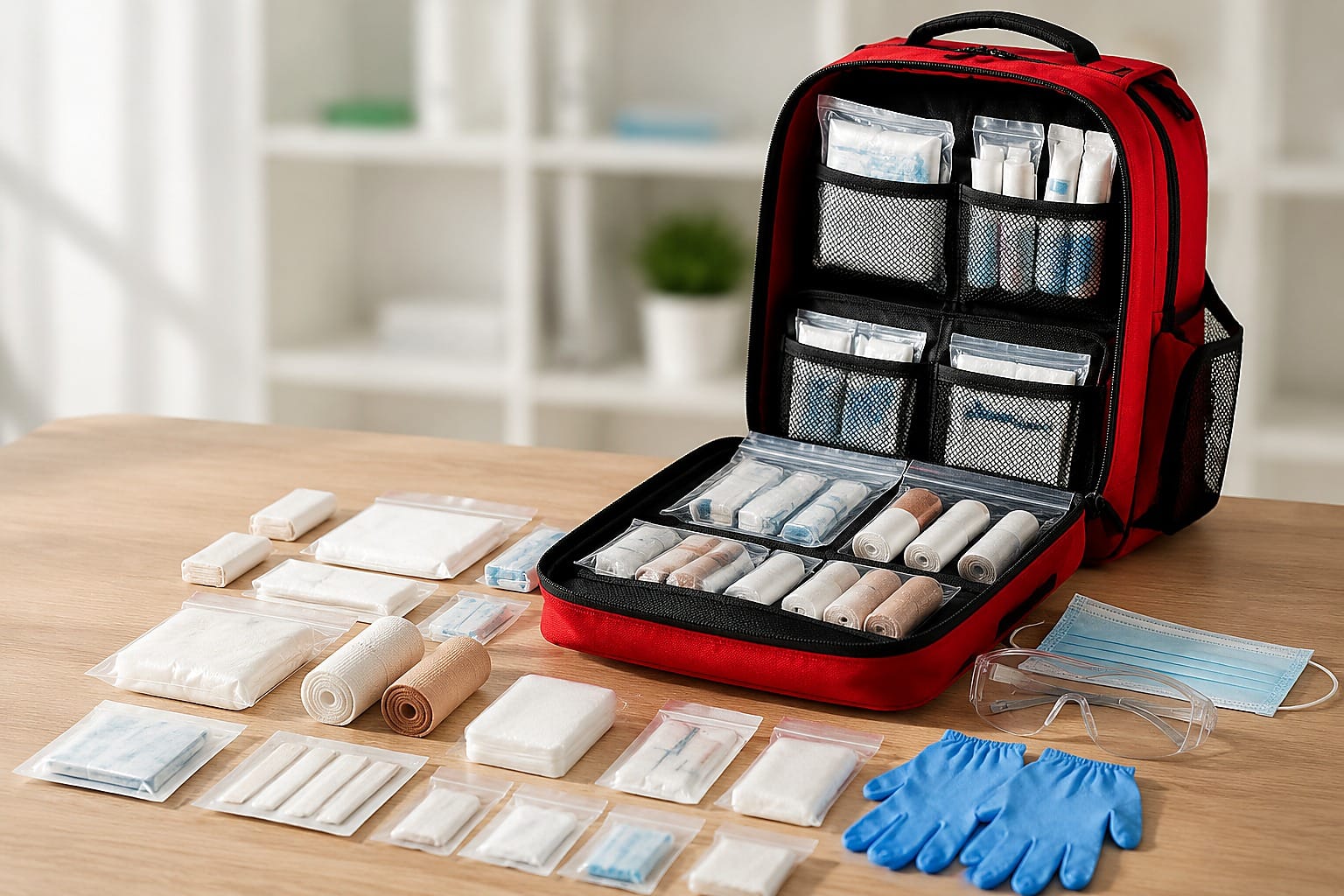
The first task in a workplace first aid kit configuration is not selecting a prepacked item count. It is documenting where the kit will be used and who must manage it. A single office floor, a warehouse with powered equipment, a remote service crew, and a multi-building campus may require different placement, container, quantity, and refill controls.
Collect these inputs before requesting a quotation:
In the United States, OSHA 29 CFR 1910.151 requires adequate first-aid supplies to be readily available. Its non-mandatory Appendix A explains that kit contents should reflect workplace needs and cites a consensus standard as one example. That appendix is not a universal global bill of materials. The United Kingdom’s HSE first-aid needs assessment guidance similarly asks employers to consider hazards, workforce, work patterns, travel, remote work, and distance from emergency services.
The procurement lesson is consistent: document the operating context first, then have the responsible buyer confirm the applicable requirements and approve the configuration.
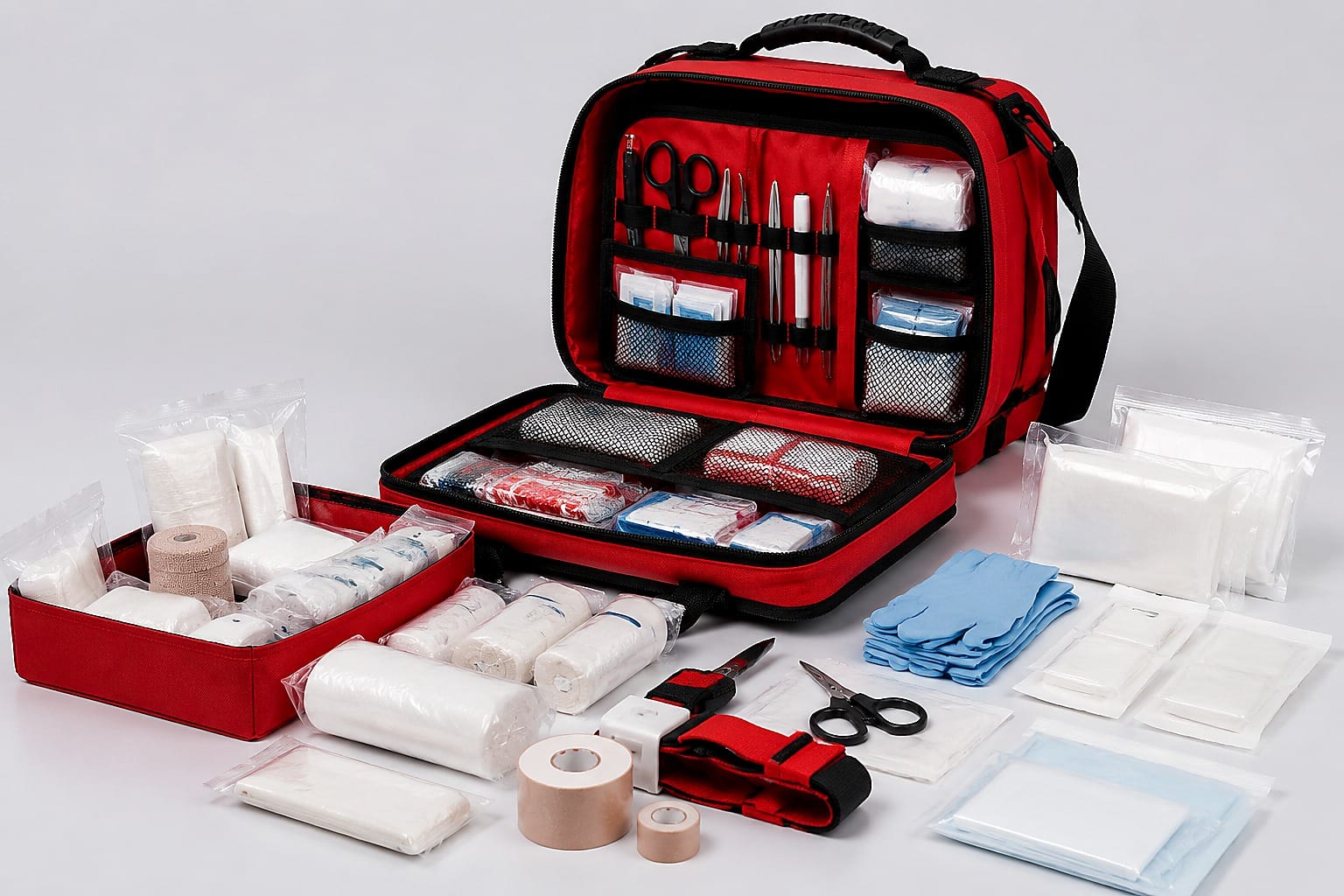
Four variables usually change the project more than the advertised piece count.
| Input | Configuration effect | Buyer evidence to capture |
|---|---|---|
| Workplace risk | Changes item classes, protective barriers, tools, and escalation planning | Needs assessment, hazard register, responsible reviewer |
| Workforce and shifts | Changes consumption assumptions, placement count, and refill stock | Headcount by shift, contractors, visitors, peak periods |
| Site layout | Changes the number of stations and whether fixed or portable formats are practical | Floor plan, walking route, vehicle or remote-work points |
| Response distance | Changes placement and the need for site-specific response arrangements | Local response plan and authority guidance |
Do not multiply one generic list by employee count and assume the result fits every location. A large office may need several visible stations because of floor layout. A smaller warehouse may require separate fixed and mobile points because workers move between loading, storage, and maintenance areas. A field team may need portable bags plus a controlled refill location.
The buyer should create a site map with a stable station ID for each location. The station ID can link the physical kit, inspection record, BOM version, refill history, and responsible person. This makes a multi-site workplace first aid kit configuration easier to audit and reorder.
A procurement BOM should organize contents by function and specification, not by a marketing total such as 50 pieces or 100 pieces. The responsible reviewer must decide which classes and quantities apply. Suppliers should quote against the approved document and identify every exception.
| BOM class | Fields to specify | Procurement check |
|---|---|---|
| Dressings and bandages | Type, size, material, sterile status where applicable, quantity, pack unit | Does the line match the sample label and quoted SKU? |
| Protective barriers | Glove material and size plan, CPR barrier format, individual packaging | Are sizes and pack units clear for each station? |
| Cleansing and irrigation | Product format, volume or count, packaging, lot and date fields | Is the proposed item suitable for the buyer-approved use and market route? |
| Burn and cold-response supplies | Format, dimensions, storage limitations, pack unit | Are storage conditions and replacement rules documented? |
| Tools and accessories | Scissors, tweezers, tape, pins, blanket, waste bags, or other approved items | Are material, size, finish, and packaging specified? |
| Records and identification | Contents card, inspection card, station ID, seal, reorder code | Can staff inspect and replenish without guessing? |
Every line should include a buyer line number, supplier SKU, description, size, quantity per kit, pack unit, label route, lot or expiry field where relevant, approved substitute rule, and refill code. Use an explicit status such as confirmed, alternative proposed, unavailable, or pending review.
The broader first aid supplies sourcing framework explains why evidence should be tied to the quoted SKU. The emergency kits and bags sourcing guide covers the same control from the full kit and container perspective.
Quantity decisions in a workplace first aid kit configuration should connect needs assessment, expected consumption, inspection frequency, site access, and refill lead time. A practical method uses five steps:
This method separates compliance confirmation from commercial planning. The supplier can explain stock pack sizes, MOQ effects, and replacement options, but the buyer remains responsible for approving the workplace quantity.
Record quantity logic in the BOM notes. For example, write “two stations on each warehouse level due to access route” instead of “four kits required.” The first statement can be reassessed when the layout changes. The second becomes an unexplained number that may persist after its basis has disappeared.
Container selection affects visibility, access, inspection work, refill organization, shipping cube, and branding. Compare the format with the loaded BOM, not as an empty sample.
| Format | Useful operating condition | Limitation to test | Loaded-sample check |
|---|---|---|---|
| Wall-mounted box | Fixed, visible station with a defined inspection owner | Door clearance, mounting surface, shelf layout | Open at the installed height and verify every label is readable |
| Portable hard case | Shared area, vehicle, or mobile crew needing shape retention | Latch, hinge, insert, and internal-space limits | Carry, stack, open, and recount the full configuration |
| Soft zip bag | Compact program with flexible packing and lower empty weight | Contents can shift or become difficult to count | Test zipper load, dividers, handle, and refill access |
| Fold-out medical bag | Program that benefits from visible modules and rapid inventory review | Overpacking can strain folds and closures | Hang or open fully, then repack to the approved compartment map |
| Backpack | Mobile work requiring hands-free transport | Weight distribution and access order need review | Load the approved BOM and check straps, back panel, and module sequence |
Buyers comparing fixed locations can review workplace emergency-care categories and wall-mounted emergency-box formats as starting points. A category page is a shortlist, not proof that one model matches the workplace rule set or the approved BOM.
The specification should state outer material, dimensions, color, closure, hinges or zippers, internal layout, handle or mounting method, label area, logo method, empty weight, loaded dimensions, and master-carton data. Performance claims require corresponding product-specific evidence; appearance alone is insufficient.
Procurement is incomplete if the buyer cannot maintain the installed workplace first aid kit configuration. Create the inspection and replenishment method before the first bulk order ships.
The station record should contain:
Separate a complete kit SKU from refill SKUs. Replacing the entire kit after one item is used creates waste and obscures consumption. A refill program can use individual component SKUs, grouped modules, or a prepacked replenishment set. The buyer should decide which method fits the number of stations, staff capacity, order volume, and shelf-life control.
For dated items, ask how lot and expiry information appears on the unit, inner pack, kit contents record, and master carton. Require written notice before an approved SKU changes. A silent substitution can change size, packaging, documentation, carton count, or refill compatibility even when the item name looks similar.
The label and document pack should identify what the buyer is receiving without making unsupported claims. At minimum, review the kit contents list, unit label, station label, inspection card, instructions supplied by the responsible party, barcode data, importer or distributor information where applicable, inner packaging, and master-carton marks.
Use a controlled artwork register:
| File | Required control | Approval evidence |
|---|---|---|
| Kit contents list | BOM revision, quantity, language, date | Signed or recorded buyer approval |
| Unit label | Product name, responsible-party fields, barcode, warnings where applicable | Approved artwork version |
| Inspection card | Station ID, inspection fields, refill route | Site-owner approval |
| Inner and master carton | Quantity, dimensions, weight, marks, destination data | Packing confirmation |
| Product and quality files | Exact SKU, model, scope, issuer, validity where relevant | Buyer compliance review |
Avoid treating a general company certificate or catalog as evidence for every component. Ask for documents linked to the quoted SKU or model. The importer, distributor, or institutional buyer should confirm classification, language, registration, labeling, workplace, and market-access obligations for the destination and intended use.
An empty bag or box sample verifies only part of the project. Approve a loaded sample against the BOM and artwork register.
Use this sample sequence:
The approved sample becomes a purchasing reference, not a substitute for the buyer’s production and receiving controls. The RFQ should state how pre-production confirmation and receiving inspection will compare bulk units with that reference.
A supplier can quote accurately only when assumptions are visible. Include the following fields in the RFQ.
| RFQ section | Buyer input | Supplier response |
|---|---|---|
| Workplace context | Country, use case, workforce, shifts, site count, deployment points | Feasibility notes and questions |
| BOM | Revision, item descriptions, sizes, quantities, pack units, substitute rules | Confirmed SKU, exception, price, and document notes |
| Container | Format, material, dimensions, layout, mounting or carrying method | Base model, custom limits, sample option |
| Identification | Station ID, label languages, barcode, logo, inspection card | Artwork template, print method, setup and MOQ drivers |
| Evidence | Product-specific file request and buyer review route | Available files by SKU and identified gaps |
| Sample | Loaded sample quantity, checks, address, target date | Sample charge, preparation time, courier method |
| Commercial terms | Trial quantity, volume tiers, Incoterm request, target schedule | MOQ, unit price tiers, lead-time factors, payment and packing |
| Continuity | Reorder horizon, refill model, substitution policy | Change notice, component continuity, refill availability |
Ask suppliers to price stock, label-only, content-customized, and container-customized options separately. The MOQ may be driven by printed packaging, fabric color, molded parts, component batch size, or assembly requirements rather than the complete kit alone.
Before approving a purchase, confirm each item below:
No single configuration fits every country, workplace, workforce, shift pattern, layout, and risk profile. Official guidance commonly starts with a needs assessment and requires the responsible party to consider the actual working environment. Buyers can use a recognized reference list as an input, but they should confirm its scope and applicability. The approved purchase specification should record why each station, item class, and quantity was selected. This makes later inspection, replenishment, and reassessment more reliable than copying a generic piece-count list.
The buyer should set the interval from applicable local requirements, workplace needs, usage, item dating, site access, and internal responsibility. High-use or remote stations may need a different cadence from a low-use office cabinet. The inspection record should identify the station, approved BOM, seal status, missing or used items, damaged packaging, expiry issues, refill action, inspector, and next due date. An interval without a named owner and reorder route is difficult to sustain across multiple sites.
Use the method that preserves the approved BOM with the least counting and purchasing error. Individual refills provide precise control but create more SKU lines. Grouped modules simplify replenishment but may replace unused items. Complete replacement kits are simple to issue but can create waste and hide consumption patterns. Many B2B programs use a complete initial kit plus controlled refill SKUs. Ask the supplier to show refill availability, pack units, minimum quantities, shelf-life information, and change-notice rules before the initial order.
Check mounting points, door clearance, hinge and latch operation, shelf or divider layout, label area, station identification, and visibility at the intended installation height. Load the exact BOM and confirm that staff can inspect labels and remove items without unloading the full box. Record the loaded dimensions and weight, especially when the mounting surface or hardware has limits. The buyer should also verify how refill stock is stored and whether a seal or inspection card remains visible after installation.
Only under the buyer’s written substitution rule. The supplier should identify the unavailable SKU, proposed alternative, specification difference, document effect, price effect, packaging change, and sample requirement. The buyer can then approve or reject the change before assembly. Silent substitution weakens repeat-order control because the same kit name can contain different sizes, materials, labels, or pack units. Keep the accepted change with the BOM revision and require the same notice process for future production.
Provide the workplace context, destination, site count, station plan, approved or provisional BOM, container format, materials and dimensions, label languages, artwork scope, document request, loaded-sample checks, quantity tiers, refill plan, packing limits, and commercial terms. Mark which fields are fixed and which are open to a supplier proposal. A structured RFQ lets buyers compare equivalent configurations and shows where MOQ, lead time, or pricing depends on packaging, component availability, customization, or documentation work.
A controlled workplace first aid kit configuration links the needs assessment, station map, BOM, container, artwork, evidence, loaded sample, inspection log, and refill plan. Keep those records under revision control. That gives the buyer and supplier one traceable reference from quotation through repeat orders.
Container format runs alongside the contents list, and the trade-offs between a wall-mounted box and a portable bag decide how the kit is inspected and restocked once it is in service.
The same configuration discipline applies to consumer-facing ranges, and the notes on home first aid kit contents for distribution set out how piece counts, dating and substitution are handled there.
Mobile workplaces raise the same question in a setting the building checklist does not cover. A driver is at work while away from the site, and this vehicle first aid kit planning guide for fleets sets out how standard, format and replacement are decided for vehicles rather than for rooms.
A buyer can approve a polished bag sample and still receive a kit that is difficult to count, refill, label, or reorder. An emergency first aid kits supplier should therefore be compared through the full program: use case, component list, bag or box format, materials, internal layout, documentation, sample checks, and repeat-order controls.
The practical answer is to specify the operating environment before selecting contents or a container. Then lock the bill of materials, verify the actual sample against the quoted files, and send an RFQ that separates stock options from custom work. This guide is for distributors, importers, institutional buyers, and private-label project teams. It is a procurement framework, not medical guidance or a substitute for destination-market review.
The first supplier question should be “Where and by whom will the kit be used?” A generic request for 1,000 emergency kits leaves too many variables open. A workplace wall box, a vehicle case, an outdoor waist bag, and a responder backpack require different access, storage, component, and labeling decisions.
Start the brief with seven decisions:
This sequence keeps container appearance from driving the entire project. It also exposes whether the supplier is quoting an existing configuration, assembling a buyer-defined list, or proposing substitutions.
For United States workplaces, OSHA 29 CFR 1910.151 requires adequate first-aid supplies to be readily available. Its non-mandatory Appendix A says kit selection should reflect workplace risks and can use professional consultation. That is a US workplace reference, not a universal product list. In the United Kingdom, HSE first-aid needs guidance likewise considers the work, hazards, workforce, travel, work patterns, and distance from emergency services. Both sources support the same sourcing principle: context comes before configuration.
Use case changes more than the item count. It changes how quickly a user can reach a component, how the kit is stored, what must be visible on the label, and how a buyer manages refills.
| Use case | Configuration priority | Suitable format to evaluate | Buyer-side questions |
|---|---|---|---|
| Workplace fixed point | Visibility, inspection, refill access, organized compartments | Wall-mounted box or portable case | Who inspects it, where is it mounted, and how are dated items replaced? |
| Vehicle or field service | Compact storage, closure security, vibration resistance, portability | Molded case, zip bag, or compact backpack | Will it stay in one vehicle, move between crews, or face heat and moisture? |
| Outdoor or event operations | Carry comfort, weather exposure, fast access, modular packing | Waist bag, shoulder bag, or backpack | How long is it carried, what equipment shares the load, and are modules removable? |
| Responder or tactical-style channel | Rapid identification, compartment logic, attachment points, controlled access | Backpack, fold-out bag, or modular pouch system | Which modules must be reached first, and which claims are supported by the actual specification? |
| Distributor or private-label retail | Shelf presentation, barcode space, multilingual text, repeatable SKU structure | Retail-ready case, bag, or boxed configuration | Is the kit sold as one SKU, a size family, or a refill program? |
A buyer comparing an emergency first aid kits supplier should ask for a configuration rationale, not only a photo and total piece count. “100 pieces” can describe many different assortments. Ten repeated low-cost items can increase the count without improving the fit for the stated use case.
For a broad review of ready bag formats, the emergency medical bag directory can be used to shortlist waist, hand-carry, backpack, and fold-out structures. The shortlist still needs a buyer-approved component plan.
The container is an operating tool. Its format affects access, refill work, shipping cube, display method, and private-label options. Compare it after the use case and approximate component volume are known.
| Format | Strength for B2B programs | Limitation to test | Sample check |
|---|---|---|---|
| Soft zip bag | Flexible packing, low empty weight, several branding methods | Contents can shift if the internal structure is weak | Load the full component list and test zip access and label visibility |
| Fold-out medical bag | Clear module display and quick inventory review | Folded thickness and closure stress rise with overpacking | Open, hang, close, and recount the loaded sample |
| Backpack | Hands-free transport and capacity for separated modules | Poor weight distribution can reduce carrying comfort | Check loaded weight, strap adjustment, back panel, and access order |
| Molded case | Shape retention, stackability, and wipe-clean surfaces | Fixed geometry can waste space or restrict bulky components | Test hinges, latches, inserts, labels, and carton loading |
| Wall-mounted box | Visible fixed-point storage and controlled refill location | Mounting hardware and door clearance depend on the site | Confirm mount pattern, opening clearance, shelves, and inspection label area |
The tradeoff is not simply soft versus hard. A soft bag can use dividers, elastic loops, mesh pockets, hook-and-loop panels, or removable pouches. A hard case can use trays, molded inserts, adjustable partitions, or empty internal space. Each feature should correspond to a component or inspection need.
For mobile, higher-capacity programs, buyers can compare emergency backpack structures and then request a loaded sample. Empty-bag dimensions alone do not show whether the proposed contents remain accessible.
Material names are useful only when paired with construction details. “Nylon bag” or “plastic box” does not define fabric weight, coating, reinforcement, panel stiffness, latch design, or seam quality. An emergency first aid kits supplier should state what is offered for the quoted model and identify which details can change under private-label work.
For soft bags and backpacks, record these fields:
For cases and boxes, record the resin or metal description provided by the supplier, wall or panel structure, hinge, latch, handle, seal, mounting points, tray design, and label area. Do not infer impact, water, flame, or chemical resistance from appearance. Request the relevant test method and result if such performance is required.
Construction also affects packing. A rigid case may increase carton volume but preserve shape. A foldable textile bag can reduce empty shipping volume, yet its dividers may need separate assembly. Ask for both unit dimensions and master-carton data from the proposed production configuration.
The bill of materials is the core purchasing record. A photo is not a bill of materials, and a marketing name such as “workplace kit” does not define the contents. Give every line a buyer code or supplier SKU, item description, size, quantity, pack unit, label route, and substitution status.
Use a control table like this:
| BOM field | What to record | Approval question |
|---|---|---|
| Line number and SKU | Stable identifier for each component | Can the same reference be used for repeat orders? |
| Product description | Exact format, size, material, and packaging | Does the sample match the written description? |
| Quantity per kit | Units, pairs, rolls, bottles, or pouches | Is the count clear at kit and carton level? |
| Lot and expiry field | Location and format for dated items | Can receiving staff inspect it without unpacking the full kit? |
| Label and language | Stock, importer, multilingual, or private label | Has the buyer approved the actual artwork version? |
| Substitution rule | Prohibited, equivalent with approval, or pre-approved option | Who approves a change before assembly? |
| Refill code | Individual SKU or grouped refill module | How will the buyer replenish installed kits? |
The emergency first aid kits supplier should return the BOM with comments instead of silently editing it. If one requested item is unavailable, the response should show the proposed substitute, the changed specification, price effect, document effect, and sample requirement.
Buyers that need a baseline can review standard kit configurations as starting points. A standard configuration is not automatic evidence that the same list suits every market, workplace, or tender. The buyer remains responsible for the intended assortment and destination requirements.
Supplier qualification works better when evidence is linked to the quoted SKU. A company certificate, catalog, or generic laboratory file may describe the supplier without confirming the exact bag, box, or component in the kit.
Request a compact project file before approving the sample:
The distinction between “available” and “applicable” matters. A supplier may hold a document that is valid for one product family, model, site, or period. The importer should confirm whether its scope matches the quoted order and the destination market. The broader first aid supplies sourcing guide explains the same evidence-by-SKU discipline for consumables.
An emergency first aid kits supplier should also identify which confirmations depend on the final artwork or configuration. Private-label changes can affect label review, carton marks, barcode placement, instruction sheets, and packing records even when the underlying stock component stays unchanged.
Inspect the sample as a small production system. First compare it with the approved BOM. Then check the container while it is fully loaded, because pocket access, closures, straps, dividers, and label areas behave differently under volume and weight.
Use this sample sequence:
This process does not prove how every production unit will perform. It creates an agreed reference for pre-production confirmation and receiving inspection. Buyers should define acceptable inspection methods and sampling levels according to their own quality process.
A clear RFQ lets suppliers separate confirmed pricing from assumptions. It also makes quote comparison faster because every bidder responds to the same configuration.
| RFQ section | Buyer input | Supplier response |
|---|---|---|
| Project and use case | Channel, user group, operating environment, destination | Feasibility notes and proposed base model |
| Kit configuration | BOM revision with quantities and substitution rules | Confirmed items, exceptions, and alternative lines |
| Container | Format, dimensions, color, layout, carrying or mounting method | Material, structure, sample option, and customization limits |
| Branding | Logo files, label language, barcode, insert, carton mark | Print method, artwork template, setup cost, and MOQ driver |
| Evidence | Required specifications and market-specific files | Available documents by SKU and any gaps |
| Sample | Quantity, approval checks, delivery address, target date | Sample charge, preparation time, and courier plan |
| Commercial terms | Trial quantity, volume tiers, Incoterm request, target timing | MOQ, price tiers, lead-time factors, payment, and packing data |
| Continuity | Reorder horizon and change-control requirement | Component reservation, notice process, and repeat-order method |
Ask the emergency first aid kits supplier to price standard and custom elements separately. A stock bag with a buyer label, a custom-color bag, and a new bag structure involve different work. The same separation should apply to standard contents, component substitutions, printed inserts, inner boxes, and master-carton changes.
The resulting decision is easier to audit: choose the supplier that can explain the configuration, reproduce the approved sample, provide applicable files, and control changes. Unit price remains important, but it should be compared against the same BOM, container specification, packing method, and commercial terms.
Compare suppliers against one written project brief. Give each bidder the same use case, component list, container specification, branding scope, document request, sample checks, quantity tiers, and delivery market. Then mark every response as confirmed, alternative, unavailable, or pending. This prevents a low quote based on fewer components, lighter construction, different packaging, or unpriced custom work from appearing equivalent. The comparison should also show who controls substitutions, how sample approval is recorded, and what happens when a component changes on a repeat order.
Start with the use case and a provisional component list, then select a container that fits the required access and carrying method. Finalize both together through a loaded sample. Choosing an attractive bag first can force the buyer to remove components, overfill pockets, hide labels, or accept poor weight distribution. Contents alone are also insufficient because the same list may work in a fixed wall box but fail in a backpack that must be carried for hours. The approved BOM and loaded-container sample should become one controlled reference.
A standard kit uses an existing supplier configuration and container, although label or carton changes may still be possible. A custom kit changes the component mix, quantity, layout, container features, color, branding, instructions, or packaging. Customization can create separate MOQ drivers for printed materials, fabric colors, molded parts, or component production batches. Buyers should ask the supplier to identify each custom element and its effect on sample time, tooling, price, documentation, and reorder continuity instead of treating the whole project as one undefined customization charge.
Verify the sealed kit, BOM count, component sizes, pack units, labels, lot and expiry fields, artwork revision, and container construction. Then load, open, carry, mount, or stack it in the intended way. Check every closure, divider, pocket, strap, handle, hinge, latch, and label area. Record photographs and the accepted sample ID. If the supplier proposes a substitution after approval, require written review of the changed specification, price, documentation, and packing effect before the component enters bulk assembly.
Not by itself. A document may apply only to a named product, model, manufacturing site, standard, report scope, or validity period. It may also address one part of a kit rather than the complete configuration. The importer or buyer should confirm the classification, labeling, language, registration, workplace, and distribution requirements for the destination and intended use. Ask the supplier for files linked to the quoted SKU, then verify scope and validity through the relevant authority, issuer, or qualified advisor before relying on them.
Provide the use case, destination, target users, BOM with quantities and pack units, bag or box format, material and layout requirements, branding files, label languages, required evidence, sample checks, quantity tiers, packing limits, and requested commercial terms. State whether substitutions are prohibited or require approval. A useful RFQ also separates the trial order from forecast volume and explains the reorder period. That gives the supplier enough information to identify MOQ drivers, quote alternatives transparently, and plan a sample that represents the proposed bulk configuration.
A strong sourcing process moves in one direction: use case, configuration, container, construction, BOM, evidence, sample, and RFQ. Keep those decisions linked by revision number. That gives the buyer and the emergency first aid kits supplier a shared reference from the first quote through repeat orders.
Before you ask three factories for a number, the emergency first aid kit RFQ checklist closes the bag, contents and quantity lines so the responses can actually be compared.
When the contents list is yours rather than the factory’s, the sourcing problem shifts to the container itself: a field-by-field guide to sourcing empty first aid kit bags and boxes covers the six lines that have to be closed before two quotes can be compared.
Contents and container are specified together, and the contents half carries its own shelf-life and repeat-order rules. The guide to home first aid kit contents for retail and distribution works through that layer for consumer-facing ranges.
Transport adds a layer that a single-site list does not have. A vehicle kit has to satisfy the market it operates in, fit the vehicle it is carried in, and stay complete across a whole fleet, and this fleet planning guide for vehicle first aid kits works through all three decisions in order.