
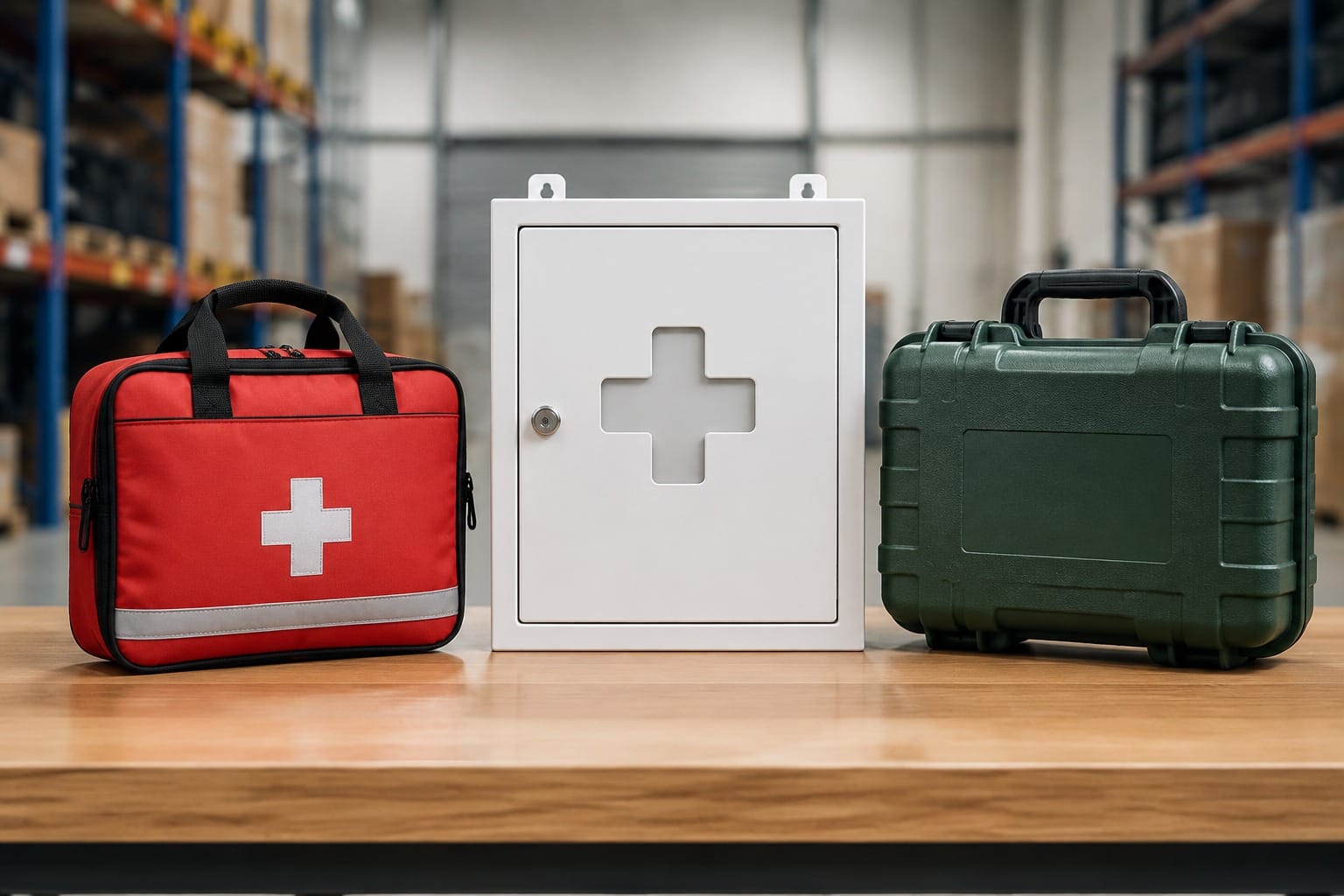
Choosing an outdoor first aid kit bag is a format decision before it is a component decision. A waist pack can keep a compact load within reach. A case can make contents easy to count and replenish. A backpack can carry more equipment while leaving both hands available. For distributors and institutional buyers, the useful comparison is not which format looks attractive. It is which format fits the user, load, access pattern, label plan, and destination-market requirements.
Start with the operating situation: who carries the kit, how far it moves, how often it is opened, and whether a vehicle or base station is nearby. Then define the required contents and test them inside the proposed bag. A supplier can review dimensions, materials, compartments, and sample options according to the project. The buyer remains responsible for confirming local requirements and the commercial case.
For a broader configuration checklist, see UneedAid’s workplace first aid kit configuration guide. The same discipline applies when an outdoor first aid kit bag is sold to a distributor: define the use case, freeze the revision, and verify the loaded sample.
What must an outdoor first aid kit bag do?
An outdoor bag has five practical jobs: keep the selected contents together, protect them during transport, make priority items findable, support inventory checks, and communicate ownership or use instructions. The format should help a trained user locate supplies without forcing every item into one large compartment.
Before requesting a quotation, write a short use-case brief:
- User group: hiking retailer, tour operator, school, worksite team, vehicle crew, or public agency.
- Environment: day trips, multi-day travel, wet conditions, dust, heat, cold, or mixed indoor and outdoor use.
- Carry method: belt, shoulder, hand, vehicle storage, or back carry.
- Load target: a compact set of supplies, a modular refill pack, or a wider configuration with tools and protective items.
- Access rule: contents needed by the wearer, by a team leader, or by a central responder.
- Identification: color, printed mark, label language, barcode, and revision reference.
The OSHA first-aid standard illustrates why workplace buyers should define hazards and access arrangements instead of copying a generic list. It does not prescribe one bag format for every outdoor setting. Use the hazard review to establish the brief, then validate the bag and contents together.
How does a waist-format outdoor first aid kit bag compare?
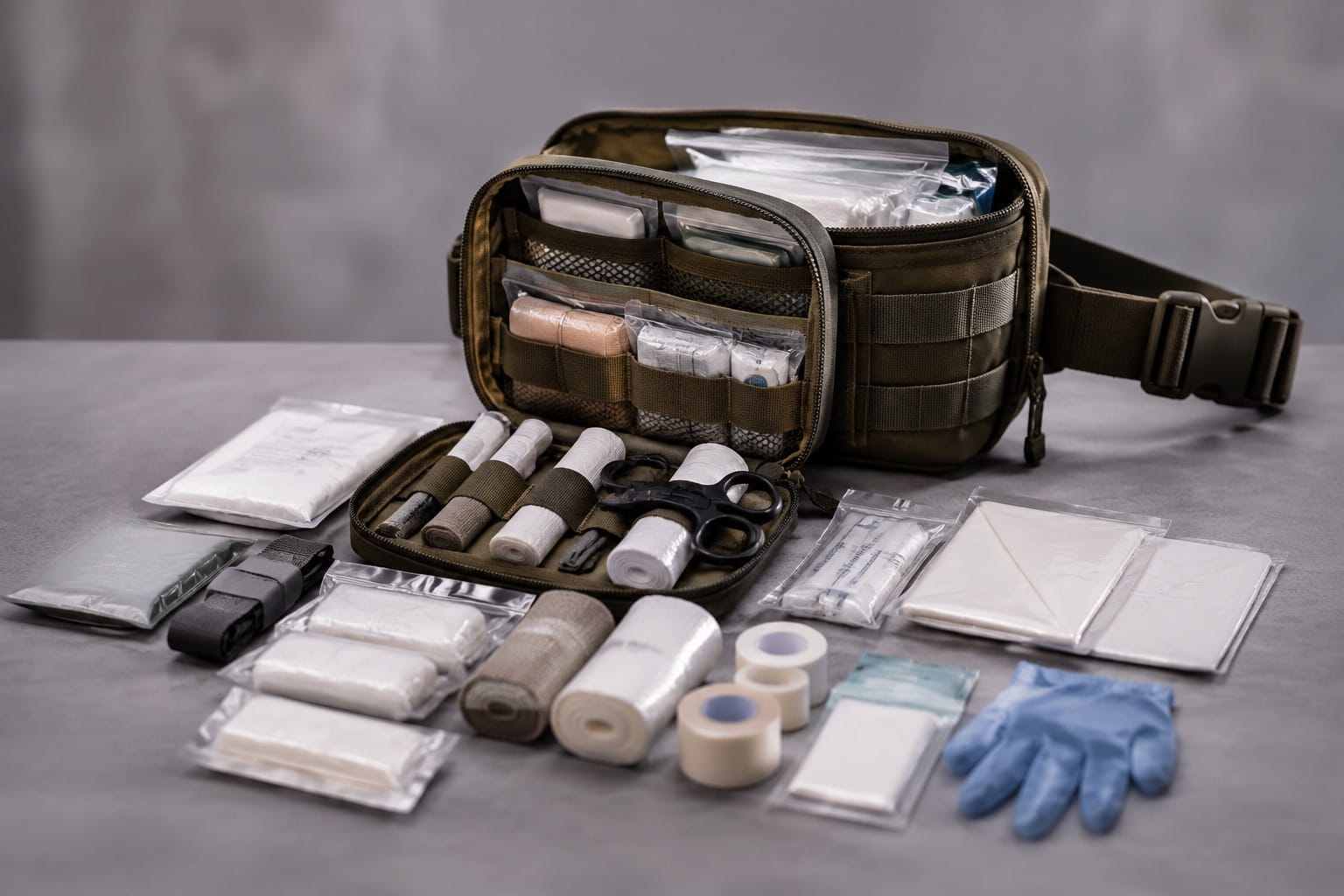
A waist format suits a small, personal load that needs to stay with one wearer. It can be useful for guided activities, event marshals, short routes, or retail bundles positioned as compact outdoor equipment. Its main advantages are immediate access and low carry burden. A wearer can reach the kit without removing a pack.
The trade-off is volume. A waist bag may not provide enough room for a larger team configuration, rigid tools, spare garments, or multiple refill groups. The belt system also needs a size range and adjustment plan. For B2B sourcing, confirm whether the target user wears a separate backpack, harness, or work belt; interference can reduce practical use.
Check these details in a sample:
- Can the wearer open the main compartment with one hand while standing?
- Are high-use items separated from reserve items?
- Does the belt hold its position when the wearer bends or climbs?
- Are zipper pulls and tabs usable with gloves where relevant?
- Can the external label be read without removing the bag?
For a distributor, the waist format is often a defined sub-SKU rather than a universal replacement. Keep the component list and pack-out drawing tied to a revision code so a later refill quote does not silently change the capacity.
When is a case-format outdoor bag more suitable?
A case format works when the kit travels in a vehicle, day pack, storage bin, or base station and the buyer values layout control. A structured case can hold dividers, elastic loops, transparent pockets, or removable pouches. Those features make a stock check easier and can support a repeatable packing method across several units.
Cases are useful for rental operators, schools, camps, vehicle fleets, and retailers that want a consistent shelf presentation. They can also be easier to label with a large front panel. However, a case may be less comfortable to carry over distance, and a rigid or semi-rigid shell can increase carton volume and freight cost.
Ask the supplier to show the empty case dimensions, usable internal dimensions, loaded weight, handle attachment, closure type, and carton packing assumptions. “Large capacity” is not a measurable specification. A packing diagram with component dimensions is more useful for procurement and later inspection.
The American Red Cross first aid kit guidance is a useful reference for thinking about organization and replenishment. It is general guidance, not a destination-market product specification. A commercial buyer should map each selected item to its own BOM, label, document, and refill plan.
When should buyers choose a backpack format?
A backpack format is appropriate when one person must carry a broader load over distance or keep both hands available. Outdoor instructors, response teams, field technicians, and tour operators may prefer a backpack when the kit includes several modules, protective equipment, tools, or reserve supplies.
The capacity advantage introduces more variables. A larger bag can become heavy, difficult to organize, or slow to search if every pocket is filled without a layout plan. Shoulder straps, back padding, sternum adjustment, and load distribution should be checked with the intended weight, not an empty sample. A backpack may also need a rain cover, reflective detail, or a separate documentation pocket, depending on the project brief.
Use a module map rather than a single packing list:
| Module | Typical purpose | Packing question |
|---|---|---|
| Access module | Frequently needed items | Can it be reached first? |
| Wound-care module | Dressings, tapes, and related supplies | Is the size range visible? |
| Protection module | Gloves, barriers, and protective items | Is it separated from used materials? |
| Tool module | Tools or emergency accessories | Are hard items protected from soft packs? |
| Refill module | Reserve contents | Can inventory staff count it quickly? |
This structure lets a buyer compare a backpack with a case on the same functional basis. It also gives a supplier a clearer path for sample review and quotation tiers.
Which bag format is easier to source for B2B programs?
The most workable format is the one with a controlled specification and a realistic replenishment plan. Compare the three options across the same fields:
| Field | Waist | Case | Backpack |
|---|---|---|---|
| Carry distance | Short to medium | Short or vehicle-based | Medium to long |
| Typical capacity | Compact | Compact to medium | Medium to large |
| Access | Very fast for wearer | Fast when opened on a surface | Fast if modules are planned |
| Inventory control | Limited by small space | Strong with dividers | Strong with modular layout |
| Branding area | Small to medium | Medium to large | Medium to large |
| Freight impact | Usually lower | Can rise with structure | Can rise with volume and padding |
For each candidate, request the same evidence: material description, dimensions, empty weight, loaded test photos, seam or closure details, artwork area, packaging, sample lead time, and a quotation basis. If the bag is equipped, tie the price to a dated component list. If it is empty, state that clearly so the distributor can build a separate contents plan.
The emergency medical bag category gives buyers a useful starting point for comparing empty formats. Use the category page as a reference for discussion, then confirm the exact outdoor first aid kit bag dimensions, materials, and feasibility in the RFQ.
The U.S. Consumer Product Safety Commission recall search is a reminder to maintain traceable product and supplier records. It is not a certification for an outdoor bag. Keep approved samples, inspection checkpoints, and revision history in the project file, and ask the importer or responsible party to confirm any market-specific obligations.
How should an outdoor first aid kit bag be tested before bulk ordering?
Run a sample review that mirrors the intended use. Load the bag with the proposed contents, record the loaded weight, and ask a representative user to carry, open, search, close, and repack it. Photograph the layout and note any item that is difficult to see or remove. Repeat after the bag has been folded, transported, or exposed to the conditions stated in the brief where that test is appropriate.
Distributors can also use the B2B first aid distribution strategy framework to connect bag-format testing with channel, sample, and reorder decisions. Keep the outdoor first aid kit bag revision tied to the evidence collected from each target channel.
Use a simple acceptance sheet:
- Dimensions and weight match the approved sample tolerance.
- Zippers, handles, straps, loops, and closures work through repeated cycles.
- Compartments hold the specified component sizes without excessive compression.
- Labels, warnings, language, and barcode fields match the approved artwork.
- Packing diagram and BOM reconcile with the physical sample.
- Carton count and delivery assumptions are understood before the RFQ is finalized.
Do not change the bag and the contents at the same time unless the revision is recorded. If a buyer asks for a different strap, color, or pocket layout, create a new revision and repeat the fit check. This protects later orders from mixing two versions under one SKU.
FAQ
Is a waist bag enough for a group outdoor kit?
A waist bag can work for a compact personal or single-wearer load, but it may be too small for a group configuration. Start by listing the users, route duration, refill interval, and required modules. If several people rely on one kit, a case or backpack may provide better capacity and inventory control. A mixed program can use a waist bag for immediate access and a larger case or vehicle kit for reserves. Confirm the intended split in the BOM and packing diagram before requesting samples. The practical answer depends on the load and carry arrangement, not the bag label alone.
Does a backpack always provide more useful capacity?
A backpack usually provides more nominal space, but useful capacity depends on layout and load weight. A deep compartment can hide small items, and an overfilled pack can slow access. Divide the contents into modules, place priority items near the opening, and test the loaded bag with the intended wearer. Measure the internal dimensions rather than relying on a litre claim. If the kit will be sold through several channels, keep a defined pack-out so buyers compare the same configuration. A smaller case may be more practical when the kit stays in a vehicle or base station.
What information should be included in an RFQ for an outdoor kit bag?
Include the use case, carry method, external and internal dimensions, material expectations, closure, compartments, label language, artwork area, target quantity, sample requirement, packing method, carton assumptions, and requested delivery basis. For an equipped kit, attach the item list with quantities and identify which parts are fixed or open for discussion. State the destination market and who will confirm local requirements. Ask for sample timing, production lead time, inspection points, and the MOQ driver. Clear inputs make quotations comparable and reduce later revisions.
Can one bag format serve several outdoor channels?
One base format can serve more than one channel when the carry needs, contents, and labeling are genuinely compatible. Keep the base bag revision stable and separate channel-specific inserts, component modules, or artwork where needed. A tour operator may need a different refill cycle from a retail reseller. Record each channel as a defined configuration rather than assuming the same pack-out fits all users. Before scaling, compare loaded weight, access, documentation, packaging, and delivery assumptions for each market. Where product feasibility allows, a common base can reduce complexity without removing the need for channel-specific validation.
How should a buyer plan replenishment for an outdoor bag?
Make replenishment part of the original design. Mark each component with a quantity, revision, and replacement trigger. Keep reserve contents in a separate module or refill pouch when the bag format allows it. Ask the supplier whether the same component, label, and packaging specification can be repeated, and document any item that may change because of availability or destination rules. A distributor should maintain a reorder point based on channel usage and lead time rather than the bag’s visual capacity. Confirm each repeat order against the approved BOM before production.
The right outdoor first aid kit bag is the one that matches the user’s carry pattern, the contents’ layout, and the buyer’s replenishment process. Compare waist, case, and backpack formats with a loaded sample, a revision-controlled BOM, and a clear RFQ. Then select the format that can be inspected, quoted, labeled, and repeated with the least ambiguity.
Those three shapes all travel, which raises the separate question of when a site should hold a fixed station instead, covered in choosing between a wall-mounted first aid box and a portable kit bag.
Choosing the format settles what the user carries. Closing the specification settles what the factory quotes, and the sourcing guide for empty first aid kit bags and boxes works through those fields one at a time.
Off-site school activity is a regular version of that decision, where the same bag has to work for a named adult on a field trip and for yard duty on a normal day. This school and childcare provision planning guide covers how those mobile kits are sized and checked.
Format also decides how contents stay visible while the kit is in use. The fold out emergency bag range covers the roll-up, folding and magnetic layouts that open flat, which matters where a kit has to be checked quickly on site.
For a more controlled backpack RFQ, define the tactical medical bag specification fields for fabric, closures, module layout, anchors, and loaded sample tests.
Buyers can place the format decision inside the broader emergency kits and bags procurement framework before they lock the component list and request samples.