
First aid importer documentation fails for one repeated reason: the buying team assumes the file that sits with the factory is the file that satisfies the market. It is not. The technical file is assembled and held by the manufacturer. The importer holds a different set of obligations, and those obligations are checked against documents the importer may never have seen.
This guide separates the two sides of that split. It covers what the technical file is, what an importer has to verify before a device goes on the market, the document request list worth sending to a supplier, and how registration systems fit in.
What first aid importer documentation has to answer before an order ships
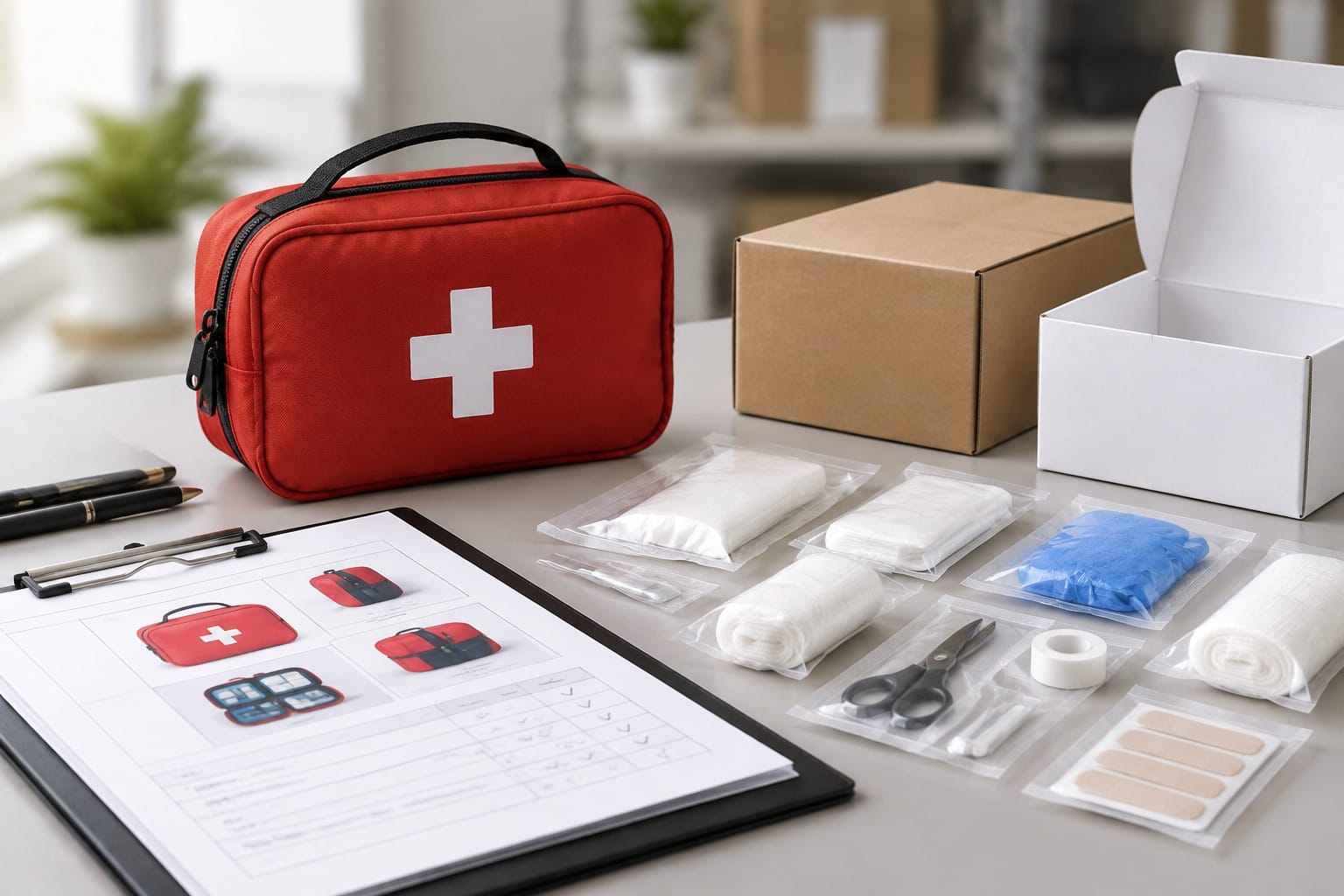
Three questions decide whether a shipment can lawfully be placed on a market, and none of them is answered by the price list.
- Who is the legal manufacturer of the item, and are they identified on the label?
- Which party is established inside the destination market and therefore carries the importer’s duties?
- Which documents does that market expect the importer to hold, and for how long?
Buyers who answer those three questions before the deposit usually avoid the failure mode where goods arrive, the customs file clears, and the market-surveillance question appears months later, which is the gap most first aid importer documentation reviews are opened to close.
The technical file belongs to the manufacturer, not the importer
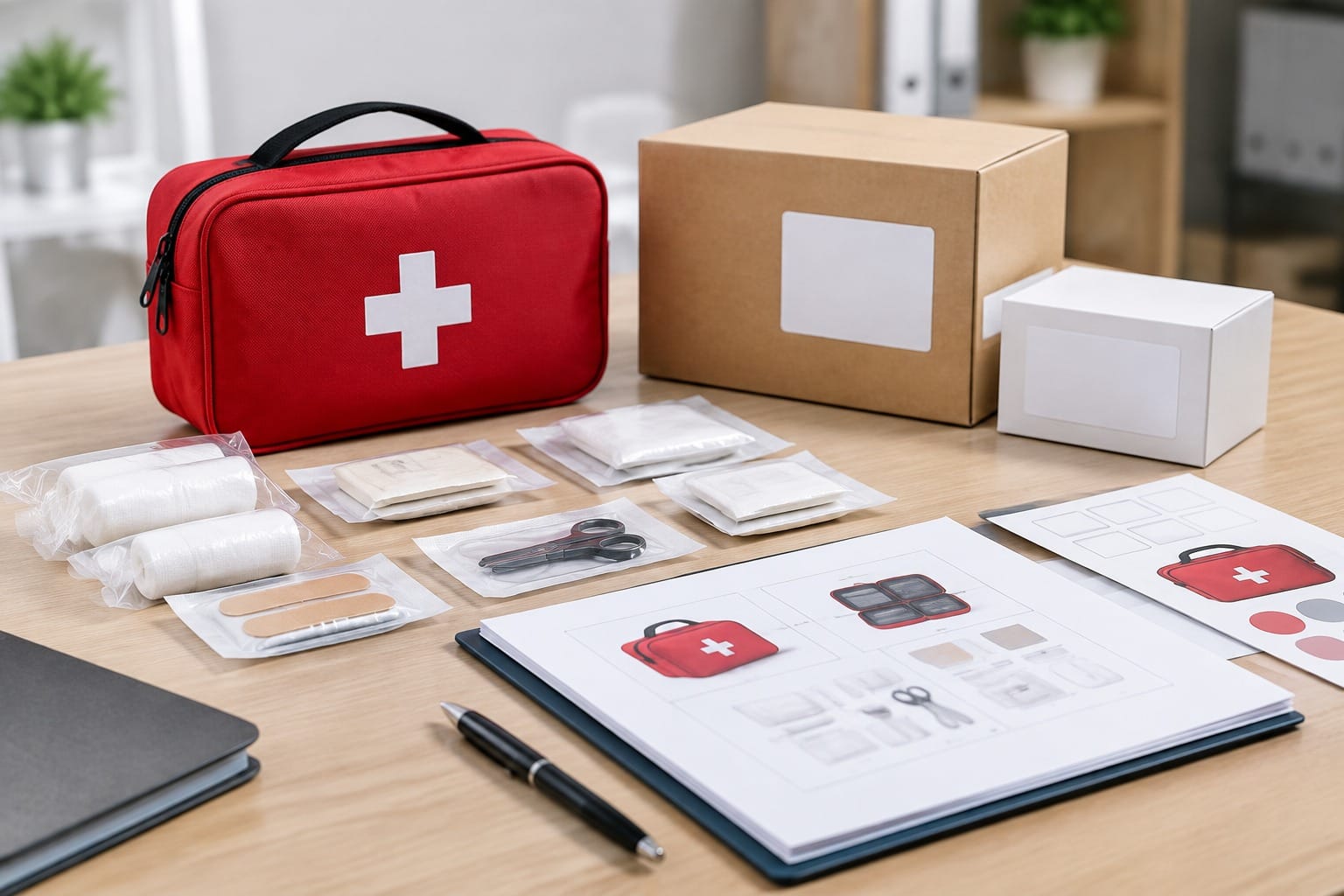
Technical documentation is the manufacturer’s artefact. It describes the device, its design and manufacture, how it meets the applicable safety and performance requirements, how risks were managed, and the labelling that follows from all of it. It is the evidence base the manufacturer maintains and updates. A buyer does not receive it with a shipment and should not expect to.
What the importer holds is narrower and specific. Under Article 13 of Regulation (EU) 2017/745, importers keep a copy of the EU declaration of conformity and, where applicable, a copy of any relevant certificate, for the retention period the regulation sets. That is the document pair an authority asks for first. The wider technical file stays upstream.
Reading those two obligations as one is the single most common misconception in first aid importer documentation. A supplier who says “we have the technical file” is answering a different question from “do I, as importer, hold what I am required to hold”.
What the importer verifies before placing a device on the market
The verification duty is explicit and itemised. Article 13 requires an importer, before placing a device on the market, to verify that the device bears the required marking and that the manufacturer has drawn up the EU declaration of conformity; that the manufacturer is identified and has designated an authorised representative where the regulation requires one; that the device is labelled as the regulation requires and comes with the instructions for use; and that a UDI has been assigned where applicable.
If a verification step fails, the regulation is unambiguous: the importer must not place the device on the market until it is brought into conformity, and must inform the manufacturer and the authorised representative. Where a serious risk or a falsified device is suspected, the competent authority of the member state where the importer is established has to be told as well.
The importer also has to put its own identity on the goods. Article 13 requires the importer’s name, registered trade name or mark, and registered place of business to appear on the device, its packaging, or an accompanying document, and any additional label must not obscure the information the manufacturer provided.
The document request list to send your supplier
Before quoting, send the supplier a written first aid importer documentation request. It is more efficient than discovering the gap after the goods are packed.
- Identity of the legal manufacturer, exactly as it appears on the label, including the registered address.
- The EU declaration of conformity, current version, with its revision or issue date.
- Any relevant certificate, together with its validity dates and the body that issued it.
- The label artwork and the instructions for use, in the language or languages the destination market requires.
- The UDI assignment, including the Basic UDI-DI where one applies.
- The importer details that will be added, and confirmation that adding them will not cover the manufacturer’s label.
- A named contact for changes, so a revised document reaches you rather than stopping at the factory.
Notice what is not on that first aid importer documentation list: the technical file itself. Asking for it usually produces either silence or a summary, because it is not a shipping document.
The list is worth pairing with a verification route on every line: the document checklist used in a first aid supplier RFQ names each file alongside the register or issuer that can confirm it.
Why the document set has to be traceable per SKU
A catalogue is not a single product, and first aid importer documentation that covers “first aid kits” in general will not survive a review that picks one line item. Documents have to be traceable to the exact item that ships.
That problem scales faster than most buyers expect. Our catalogue runs to 190 product pages grouped under 26 category hubs, and a single order often mixes kit configurations, refill consumables and bag formats that sit in different categories. Each of those can carry different labelling, different instruction sheets and a different position in the manufacturer’s technical documentation. Consolidating them into one order is a commercial decision; keeping the paperwork per SKU is a separate one that has to be made deliberately.
This is also where the responsibility boundary we work to matters. Documents are issued per SKU, and the confirmation that those documents satisfy a given destination market stays with the buyer. We do not and cannot make that determination for an importer’s market.
Registration systems: the EU worked example
Registration has moved from a paper exercise to a database exercise, and the EU shows how far that has gone. EUDAMED, the European Database on Medical Devices, is structured around six modules. As of 28 May 2026, four of them became mandatory to use: actor registration, UDI and device registration, notified bodies and certificates, and market surveillance.
That date was not arbitrary. Commission Decision (EU) 2025/2371 was published in the Official Journal on 27 November 2025, and under the transitional provisions of Regulation (EU) 2024/1860 that publication started a six-month transition period ending on 28 May 2026. The remaining two modules, covering vigilance and post-market surveillance, and clinical investigations and performance studies, are still under development.
For an importer the practical consequence is sequencing. Actor registration produces the registration number an economic operator is identified by, and device-level registration sits on top of it. Registration that is done late does not stop goods moving, but it does leave the importer unable to show the traceability the system exists to provide.
What changes after the first shipment
The first order is the easy one, because everything is new and nothing has drifted. The failures appear on the fifth, and first aid importer documentation is usually where they surface.
Documents get revised. A label gains a line, an instruction sheet is reissued in a second language, a certificate is replaced. Unless the importer has a register that records which revision it holds for which SKU, there is no way to know whether the file in the drawer still describes the goods on the shelf. Article 13 also places complaint handling and record-keeping duties on the importer, which means non-conforming units, returns and withdrawals have to be logged and forwarded upstream rather than absorbed locally.
The habit that prevents most of this is unglamorous: record the version of every document against the SKU and the shipment it arrived with, and re-request on a schedule rather than when a problem appears.
| Question | Manufacturer side | Importer side |
|---|---|---|
| Who compiles the technical documentation | Yes, and maintains it | No access needed by default |
| Who holds the declaration of conformity | Authors it | Keeps a copy for the retention period |
| Who adds details to the label | Provides the base label | Adds importer details without obscuring it |
| Who registers in the database | Registers as manufacturer | Registers as importer for the devices it places |
| Who confirms the destination market is satisfied | Supplies the documents | Confirms the market requirement and holds the record |
FAQ about first aid importer documentation
Does the importer need the full technical file?
No. Under the EU framework the importer keeps a copy of the declaration of conformity and, where applicable, any relevant certificate. The broader technical documentation is the manufacturer’s to compile and maintain. Asking a supplier to hand over the complete technical file usually misunderstands the duty, and a supplier who offers it without qualification is worth questioning.
Who counts as the importer?
Under the EU regulation the importer is the person or company established in the Union that places a device from a third country on the Union market. The status follows the act of placing on the market rather than the size of the business. If a buyer outside the Union resells into the EU, someone established in the Union still has to hold the importer role.
Can the manufacturer’s authorised representative act as the importer?
They are separate roles with separate duties, and the official guidance on Articles 13 and 14 handles them as such. One legal entity can hold more than one role in a given structure, but each set of obligations still applies in full and has to be documented. Assuming the representative automatically covers the importer duties is a recurring error.
What happens if a verification step fails?
The regulation requires the importer not to place the device on the market until it is brought into conformity, and to inform the manufacturer and the authorised representative. If a serious risk or a falsified device is suspected, the competent authority of the member state where the importer is established must also be informed. The duty is to stop rather than to proceed with a note.
How often should documents be re-checked?
Set a review interval rather than waiting for a problem, and re-check whenever a SKU changes material, packaging, labelling or supplier. Certificates and declarations carry issue dates and revisions, and a document set that was correct at the first shipment can be stale within a year. Recording the version you hold against the SKU makes that review mechanical.
Turning the responsibility split into a working checklist
The first aid importer documentation pattern that holds up is straightforward. The manufacturer compiles and maintains the technical documentation and issues the declaration and certificates. The importer verifies the specific points the regulation lists, adds its own details to the goods, registers in the market’s system where one exists, and keeps the records that prove it did. The buyer confirms what the destination market requires in the first place.
Buyers building the wider picture can start from the responsibility matrix for first aid import requirements, which maps roles across markets, then read the compliance document guide for the document set itself. Two companion pieces cover adjacent checks: verifying a supplier’s product document status and labelling and language requirements.
Nothing in this article states the status of any UneedAid product in any market. That determination depends on the destination, the specific SKU and the role of the buyer, and it belongs with the importer and its regulatory adviser.
Where a kit contains chemical-based components, the importer also has to hold and maintain the sheets attached to those components. This component safety data sheet guide explains the component map, the language requirement and the revision record.