
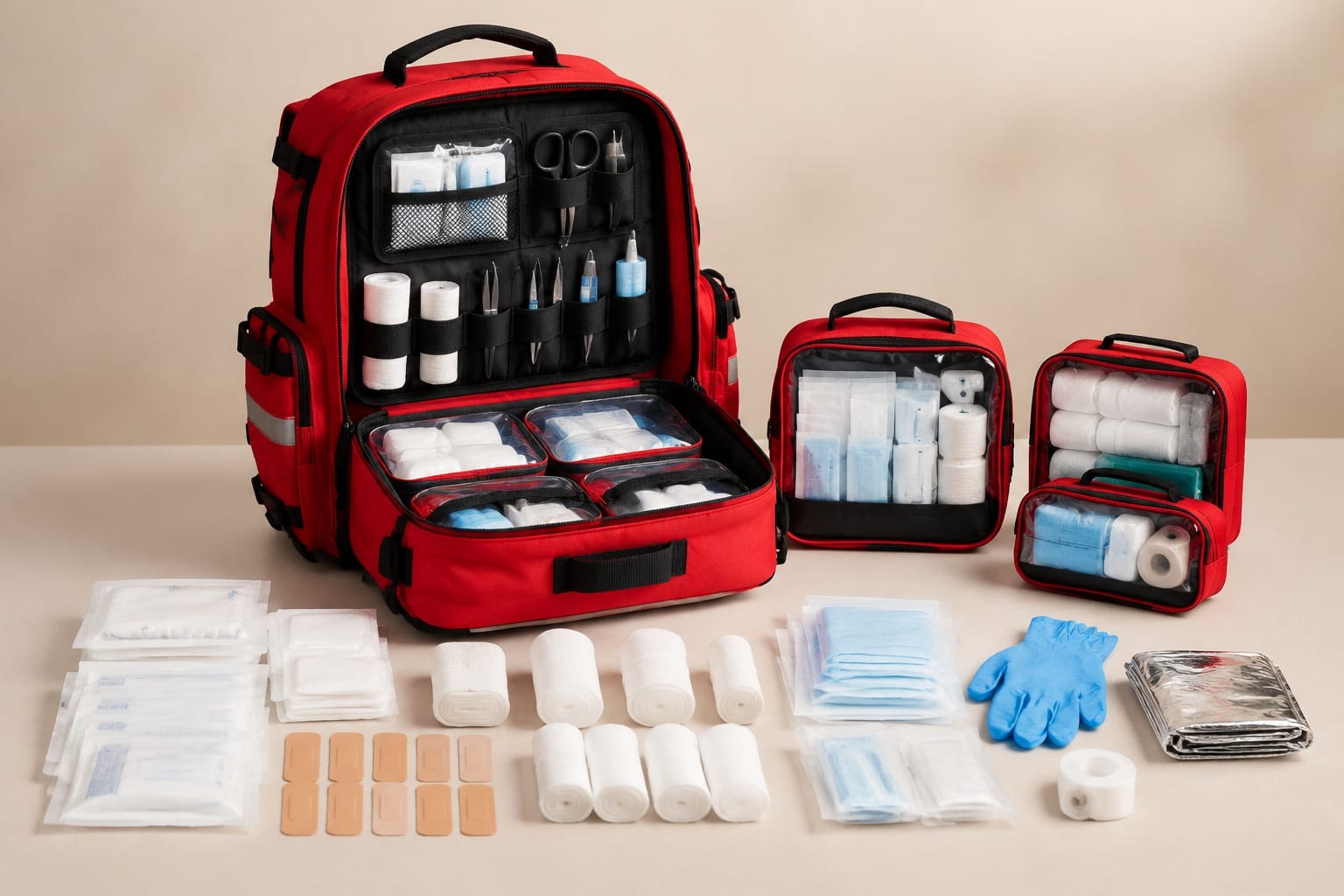
Two quotations land on the same desk. One is for an assembled kit with contents already inside. The other is for the same bag format with nothing in it. The unit prices are far apart, and the gap looks like a saving. It is not, because the two numbers do not cover the same work.
A stocked vs empty first aid kit comparison only becomes useful when both routes are measured on the same basis. The assembled route bundles contents sourcing, contents documentation and packing into one line. The empty route moves all three onto the buyer, and the buyer has to price that work honestly before the comparison means anything.
A stocked vs empty first aid kit decision is usually argued on price and is really a question about who does the work. This comparison sets the two routes side by side on five dimensions that decide the outcome: who controls the contents list, where the landed cost actually sits, what documentation follows, how the sample is validated, and how the order survives a reorder.
Stocked vs Empty First Aid Kit: What Actually Changes
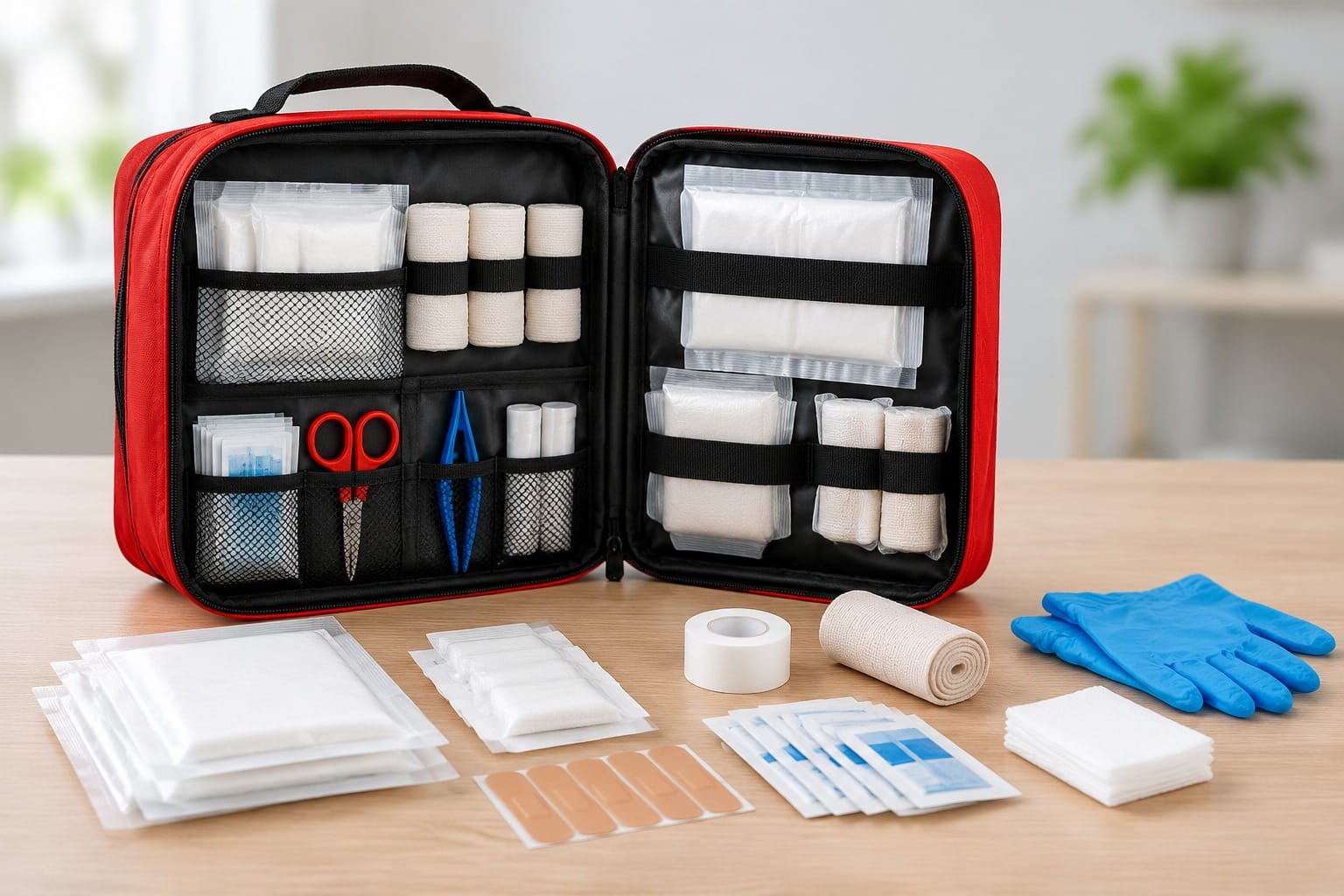
The format is the same. The obligation is not.
A stocked kit transfers the contents decision to the supplier. The buyer approves a configuration, the supplier packs to it, and the shipped product arrives complete. That is convenient, and convenience has a real value when the buying organisation has no capacity to specify dressings, gloves and dressings counts item by item.
An empty format transfers the contents decision to the buyer. The bag arrives as a carrier, and the buyer fills it, or arranges local filling, or holds it as a shell for a future programme.
| Dimension | Stocked kit | Empty bag or box |
|---|---|---|
| Contents control | Supplier specifies, buyer approves | Buyer specifies entirely |
| Contents documentation | Supplied with the assembled configuration | Buyer assembles its own file |
| Filling location | Factory, before shipment | Buyer’s market or the factory as a separate order |
| Reorder behaviour | Contents and carrier renew together | Carrier renews on wear, contents renew on use |
| Typical fit | Buyers who want one accountable supplier | Buyers who control their own contents list |
The last row is not a recommendation, it is a description of where each route removes work. The mistake is choosing the empty route for cost reasons and then discovering that the contents work was never priced in.
Where the Cost Difference Really Comes From
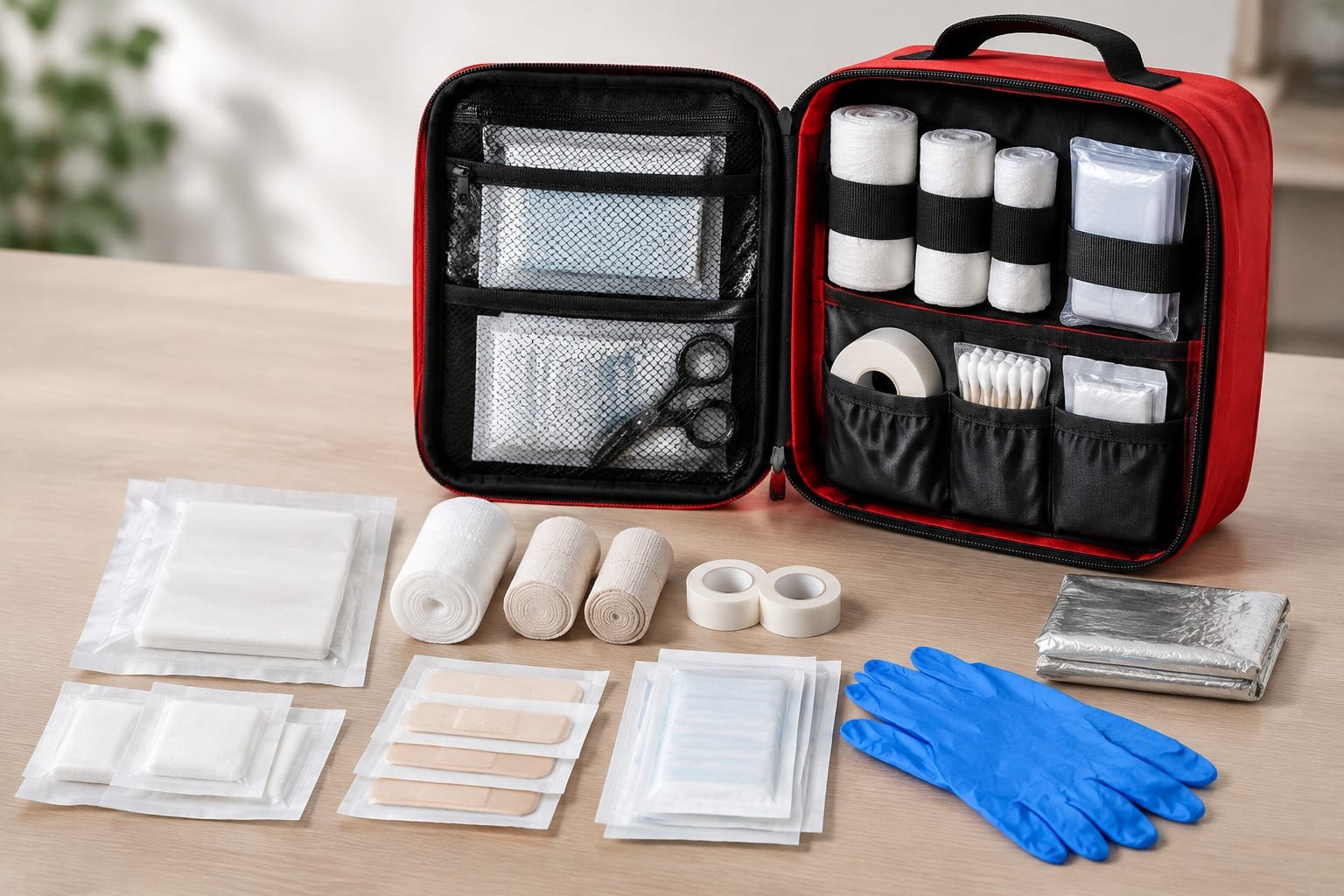
The visible gap is unit price. The real gap is order economics.
An assembled kit is one line item that contains dozens of components. Each component carries its own minimum order quantity, its own lead time and its own packaging. Bundling them removes that complexity from the buyer and places it on the supplier, which is why the unit price is higher and why the buyer’s administrative cost is lower.
An empty format has one component, so the order is simpler to quote and cheaper per unit. Three costs then move to the buyer, and all three are easy to under-count.
- Contents procurement in the destination market. Local supply may be faster and may avoid import formalities on consumables, but it reopens the specification question, because local product codes rarely map one-to-one onto factory codes.
- The order envelope against each minimum. A bag has a single minimum. A contents list has as many minimums as it has component families, and the smallest minimum in the list sets the practical order size. The arithmetic behind that is covered in the MOQ planning notes for first aid kits.
- Freight shape. Filling locally changes what moves and how it is packed. Carton size and stack height are set by what is inside, and an empty format is usually the more fragile part of a shipment, as the export carton and pallet configuration guide sets out.
The discipline that makes the comparison honest is to run the stocked vs empty first aid kit arithmetic on landed cost rather than on unit price, which means converting both quotations to a single unit: landed cost per 1,000 finished kits at the buyer’s port, using the carton dimensions and gross weight each supplier provides. Once both sides are expressed that way, the gap usually narrows and occasionally reverses, because a low unit price in an inefficient carton is not a low landed cost.
Documentation and Classification Follow the Contents
This is the part of a stocked vs empty first aid kit decision that buyers most often leave until later, and it is the part with the longest tail.
In a stocked vs empty first aid kit decision, the documentation set is set by what ships inside the carrier. An assembled kit is a bundle of separately classified items. Its documentation set covers the assembled configuration, the component list at the version shipped, and the packaging actually applied. An empty format has a much shorter technical file, because the contents are not part of the product.
Classification follows the same split. A kit that ships assembled is classified as the assembled article, which is not automatically the classification of its parts. That distinction matters at entry and again at any later review, and the reasoning is covered in the HS classification basics for first aid products. Recording which route was chosen, and why, belongs in the import file rather than in an email thread.
None of that obligation is removed by the format choice. For workplaces in the United States, the occupational first aid requirement at 29 CFR 1910.151 frames the duty in terms of supplies being readily available, and the ISEA standards index documents the kit classification and container type framework that many employers use to size provision. Neither route removes the duty; the format only changes who assembles the evidence behind it.
For buyers who fill locally, the documentation obligation does not disappear, it relocates. The contents file becomes a domestic sourcing record, and the destination market’s requirements still attach to whoever places the finished product on the market. Confirmation of those requirements sits with the importer, because the rules follow the market of sale rather than the market where the carrier was made.
Where the contents include items subject to additional controls, the assembled route also widens the documentation set, because the release paperwork attaches to what is inside the kit. An empty format sidesteps that paperwork at the border and reintroduces it wherever the filling happens.
Sample Validation When There Is No Contents List
Sampling is where a stocked vs empty first aid kit decision diverges most in effort, and the empty route is the harder of the two.
With a stocked kit, the sample arrives with a contents list, so the check has a reference. Each item can be confirmed against the approved configuration, and a discrepancy is visible immediately.
With an empty bag, there is no list to check against. The sample has to be measured against the specification sheet instead, which means the sheet has to be complete before the sample is ordered. The minimum fields that make that possible are set out in the guide to writing a custom medical bag specification sheet: format and finished dimensions, base material and closure hardware, interior configuration, branding method with colour count, packing specification, and commercial terms.
Two practices reduce the risk on the empty route. Version the specification sheet with a revision number and a date, because a sheet without a revision number cannot be referenced when a reorder has to match the first shipment. Second, ask for the sample in the production material rather than in a substitute, since fabric weight and coating behaviour are the two properties that most often change between a sample and a bulk run. Buyers scoping a full programme usually settle the specification question alongside the bag manufacturing variables of fabric, colour and hardware, because those three choices drive most of the sampling discussion.
FAQ
When is a stocked vs empty first aid kit decision clearly one-sided?
It is one-sided when the buying organisation cannot specify contents competently, or when it has no local filling capacity. In both cases the assembled route removes work that would otherwise be duplicated or done badly. The empty route is clearly the stronger choice when the destination market makes locally sourced contents simpler, when the contents list is already controlled by the buyer, or when the same carrier has to serve several different contents versions across accounts.
Does a stocked vs empty first aid kit comparison always favour the empty route on cost?
Per unit it usually does, but the landed cost comparison is not the same question. An empty format is one component with one minimum order quantity, so it is simpler to quote. A contents list introduces several component families at once, and the smallest minimum in that list sets the practical order size. Once both routes are converted to landed cost per 1,000 finished units, the difference depends on carton efficiency, freight basis and how much contents work the buyer would otherwise be paying a supplier to absorb.
How many suppliers should be quoted for each route?
Three is usually enough for a first pass. For an empty format, three quotations over the same specification sheet separate a market price from one factory’s pricing. For an assembled kit, three quotations only compare if each one is answered against the same contents list, so include the list with the request rather than describing it. If all three replies come back with an incomplete field set, the sheet is the problem rather than the market, and the request should be tightened before running the pass again.
What changes at reorder for each route?
The carrier and the contents renew on different clocks. Fabric, zips and buckles wear out on use, while dressings, gloves and wipes are consumed and expire. A stocked kit renews both together, which is simple but replaces hardware that may still have years of service left. An empty route lets a buyer replace only what was consumed, which is the structure behind consumable refills as a recurring revenue model, but it requires the contents list to stay stable across orders.
Where does regulatory responsibility sit for each route?
It sits with whoever places the finished product on the destination market, which is normally the importer or the buyer. A supplier contributes the specification, component and packaging documents at the version shipped, and keeps them stable across repeat orders. An empty format shortens the supplier’s documentation set because the contents are not part of the delivered product, and it lengthens the buyer’s, because the filling step becomes the buyer’s record. Confirmation of what the destination market requires remains with the buyer in both routes.
Deciding the Format Before You Quote
The format decision is a sourcing decision, not a price decision, and it is worth settling before either quotation is requested.
Three questions resolve most cases. Does the buyer control its own contents list, or does it need a supplier to own that specification? Is filling local or factory-based, and does the destination market favour one of those? And how many content versions does the carrier have to serve across the buyer’s accounts?
Answer those three, and the format usually selects itself. The emergency kits and bags sourcing guide covers how an assembled configuration is planned around use case, and the empty bag sourcing guide works through the empty route in the same depth, including how to close a specification before comparing quotations. Buyers filling locally often start from a contents list, and the home first aid kit contents guide shows how that list is agreed before the case is chosen.
Both routes are defensible. What is not defensible is comparing a filled unit price against an unfilled one and treating the difference as a saving. A stocked vs empty first aid kit comparison only works when it is run on the same basis, and that means landed cost per finished unit, with the contents work priced in on both sides.