
Most classification arguments start with one line on a commercial invoice. The buyer writes one number, the supplier writes another, and the shipment waits at the border while somebody decides who is right. If you searched for an HS code first aid kit figure and found several plausible answers, that is normal for this category. A kit is an assembled product. It holds textiles, chemicals, plastics and metal instruments, and sold on its own each of those parts carries a different tariff heading. The real question is which heading governs the kit as a whole.
This guide covers four things a sourcing team can act on. First, the subheading that normally applies to an assembled kit. Second, the situations that push a kit somewhere else. Third, how far international agreement actually extends. Fourth, what to fix in the RFQ so classification stops being a surprise after production. It is written for importers, distributors and brand owners, not for licensed customs brokers.
Why an HS Code First Aid Kit Needs Only One Number
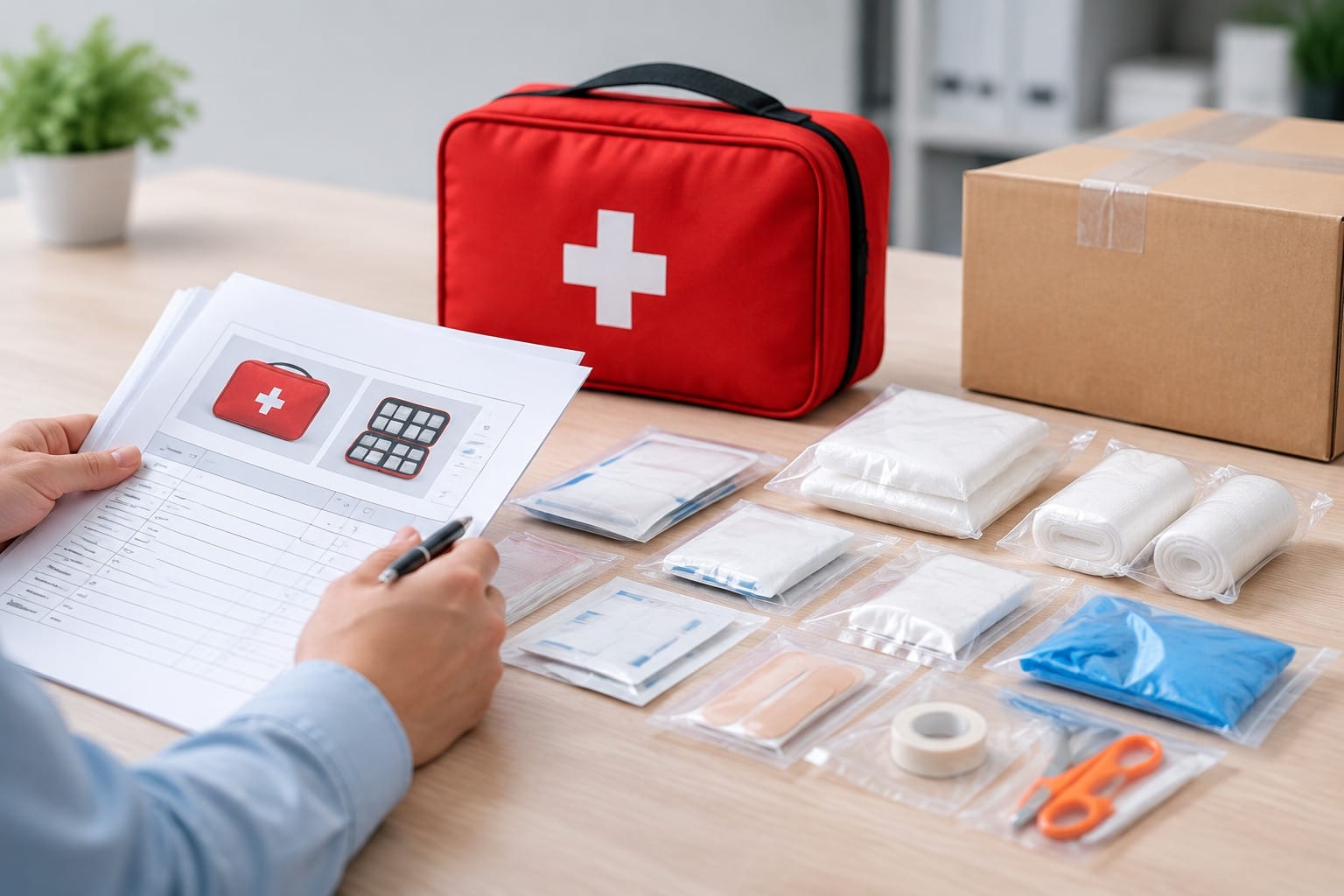
The Harmonized System is administered by the World Customs Organization. It covers more than 5,000 commodity groups, each identified by a six-digit code. More than 200 countries and economies use it as the basis for their customs tariffs and for trade statistics, and the WCO states that over 98% of merchandise in international trade is classified in HS terms. That is the framework agreement sitting behind every first aid kit you import. WCO — What is the Harmonized System?
Chapter 30 of the HS covers pharmaceutical products. Note 4 to that chapter lists the goods falling under heading 3006, and first-aid boxes and kits are named in the list. The naming matters. It means an assembled kit is declared as a single item under subheading 3006.50 instead of being itemised component by component.
The same reasoning shows up in ordinary trade guidance. The US International Trade Administration uses the example of an unassembled bicycle sold in one box. It is classified as a bicycle, because it is sold as one unit rather than as a frame, handlebars and pedals. A first aid kit follows that logic. Trade.gov — Harmonized System codes
That is also why an HS code first aid kit is not the sum of its contents. You do not declare gauze under one heading, tape under a second and scissors under a third when those items ship packed together as a finished kit. One HS code first aid kit line replaces that whole list.
Which HS Code Applies to Each Part of a Kit
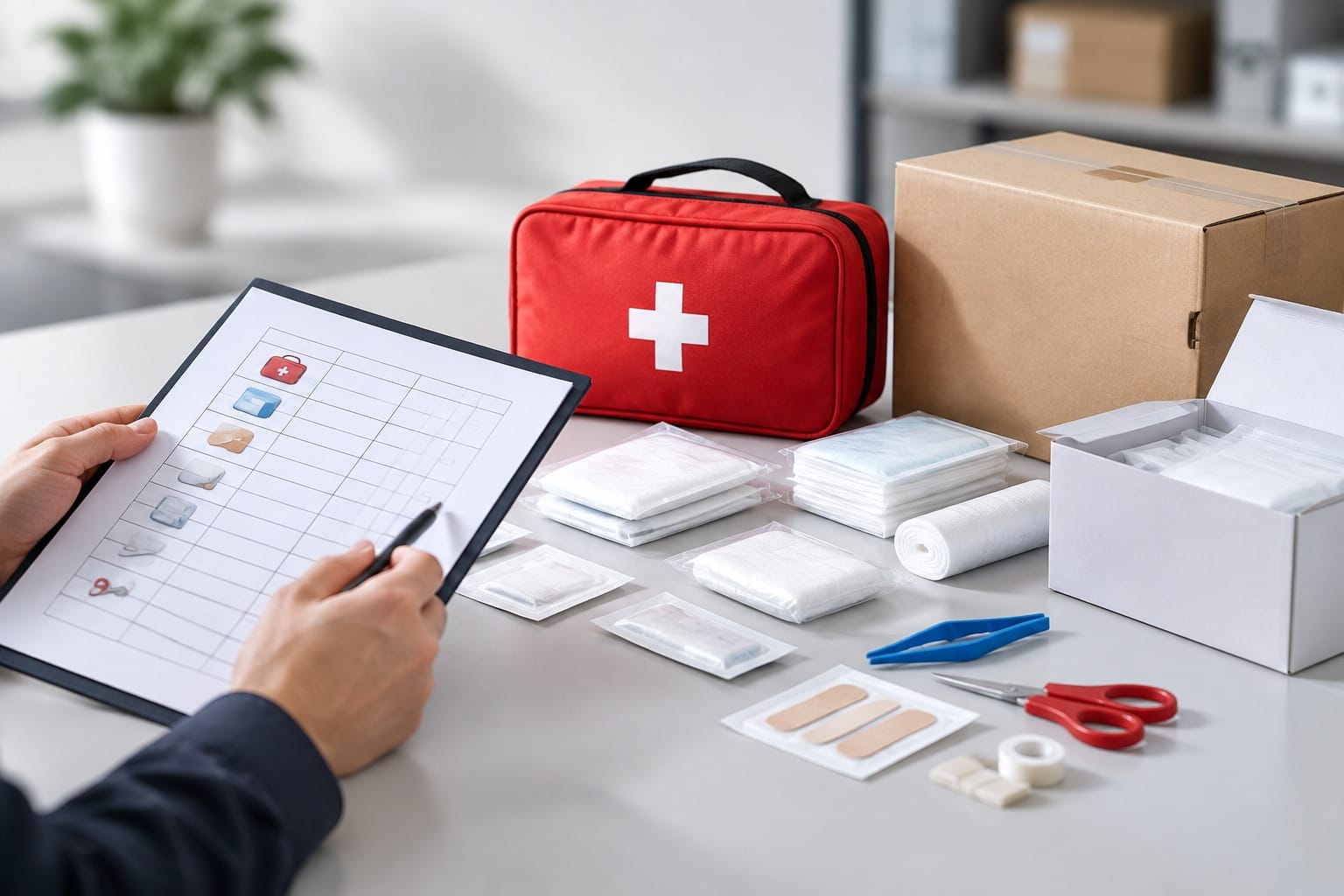
Composition still decides the outcome, which is why the HS code first aid kit answer depends on the bill of materials rather than on the product name. The table below sets the main component families against the subheading that normally takes over once they are packed as a first aid kit.
| What is shipping | Typical HS heading | What it means for a kit |
|---|---|---|
| Assembled first aid kit, packed for first-aid use | 3006.50 — first-aid boxes and kits | The kit is declared as one item |
| Bandages, dressings, gauze and similar articles sold on their own | 3005 | Individually sold stock keeps its own heading; inside a kit it is covered by 3006.50 |
| Medicaments put up in measured doses | 3004 | A kit that is mainly a medicine pack moves out of 3006.50 |
| Instruments and appliances used in medical or surgical work | 9018 | A kit that is mainly tools rather than dressings can be classified here |
| Empty bags and boxes | Chapter 39, 42 or 63, by material | An empty container is classified by what it is made of |
Where a set is genuinely mixed, the tariff does not offer a single answer. It offers a method. Rule 3 of the General Rules of Interpretation addresses composite goods and items sold in sets, and it sets out a three-step process instead of one test. The essential-character step asks which component gives the set its character. USITC — Harmonized Tariff Schedule
This is where an empty container and a stocked kit diverge. A buyer sourcing empty bags and boxes is buying articles classified by their material. The same bag with dressings, tape and a small instrument set inside becomes part of a 3006.50 kit. Two SKUs that look almost identical on a purchase order can therefore carry different codes, different duty and different supporting documents.
Where the Six Digits Stop Being International
The six-digit HS subheading is the part buyers can rely on, because it is the same across WCO members. Everything after the sixth digit is national. The United States requires a ten-digit number for imports. Subheading 3006.50.00 covers first-aid boxes and kits, with a unit of quantity of kilograms and a Column 1 general rate of Free. USITC — HTS search
The European Union builds its own layer on top. TARIC is the integrated tariff of the EU, a database that combines the Common Customs Tariff with commercial and agricultural measures, the goods nomenclature, additional codes and supplementary units. Its legal basis is Council Regulation (EEC) No 2658/87, and it deliberately excludes national levies such as VAT and excise. European Commission — TARIC
The practical consequence is that “the HS code” is an incomplete instruction, and an HS code first aid kit line becomes a national line the moment it passes the sixth digit. Ask a supplier for the destination and the full national code, not the six-digit subheading alone. Anyone who quotes 3006.50 has given you a subheading, not a declaration.
How to Get a Classification Decision You Can Rely On
The WCO’s official interpretation of the HS sits in the Explanatory Notes, published in five volumes, together with the Compendium of Classification Opinions and the record of decisions taken by the Harmonized System Committee. These are the materials a broker consults when a component list is ambiguous, and the WCO makes them available through its own database. WCO Trade Tools
For a specific shipment, published rulings are often more useful than commentary. In the United States, the Customs Rulings Online Search System (CROSS) holds official, legally binding rulings on tariff classification for imported products, and the database is public. Reading a few rulings on comparable kits tells you more about how your own kit will be read than any general explanation. CROSS — Customs Rulings Online Search System
Two cautions follow from how these systems work. A decision is written for the goods as described, so it belongs to that specification rather than to your company name, and it is not a blanket answer for everything in your catalogue. The underlying nomenclature also moves. The WCO notes that its Harmonized System Committee prepares amendments updating the HS every five to six years, so a decision taken years ago may rest on a heading that has since been revised.
What to Settle Before the Goods Ship
Classification is easier to settle before tooling, printing and packing are locked, and most HS code first aid kit problems are preventable at that stage. Work through these points while the quote is still open.
- Name the destination and the full national code, not the six-digit subheading. A code that is correct for one market may be incomplete for another.
- Ask for a component-level bill of materials with materials and construction, not just a contents list. The composition decides the classification.
- State whether the kit ships stocked or empty. The two answers sit in different chapters.
- Confirm the HS code first aid kit position in writing, and record who holds the classification decision on each side.
- Agree which documents travel with each SKU. Our own practice is to issue documents by SKU and to leave the confirmation of destination-market requirements to the buyer.
- Fix the order and sample steps early. Our minimum order starts at 1,000 pieces, and bulk production follows sample-based validation rather than running in parallel with it.
- Decide what happens if a component changes after the order. A substituted item can move a kit’s classification without anyone intending it.
Points 5 and 6 are the ones buyers most often leave open, because they look like commercial details rather than classification details. They are not separate. A specification that changes between the sample and the bulk run changes the goods being classified, and the documents have to follow the specification.
Empty containers are a good example of where to start. Buyers sourcing emergency supply boxes or stocked standard kit configurations are buying two different classifications, even when the outer carton looks the same. Where a kit includes wound-care items such as hemostasis and bandaging supplies, the component list is what a broker will read first.
FAQ
What HS code applies to a first aid kit?
An assembled kit packed for first-aid use normally falls under subheading 3006.50, first-aid boxes and kits. That subheading sits in Chapter 30, which covers pharmaceutical products, and Note 4 to the chapter names first-aid boxes and kits among the goods it covers. The single subheading replaces separate declarations for every component inside the kit.
Is the HS code first aid kit the same in every country?
The first six digits are the same across WCO member countries, and that is the part all members share. Beyond six digits each market adds its own layer. The United States requires ten digits for imports, and the European Union applies TARIC, which adds EU-level measures, additional codes and supplementary units to the same six-digit base. Always confirm the full national code.
Does an empty first aid bag use the same code as a stocked kit?
No. An empty bag or box is classified by the material it is made of, which places it in Chapter 39, 42 or 63 depending on construction. The same container becomes part of a 3006.50 kit once the required first-aid components are packed inside and the kit is put up for first-aid use. Sourcing empty bags and sourcing stocked kits are two different HS code first aid kit exercises, and they should be quoted separately.
Why do suppliers quote different codes for the same kit?
Three reasons account for most of it. A supplier may quote the code for a dominant component, such as 3005 for dressings, rather than the HS code first aid kit line as a whole. They may read the kit as instruments if tools outweigh dressings. Or they may quote a home-market code and skip the destination-specific digits. Because Rule 3 of the General Rules of Interpretation works through essential character, genuinely mixed kits can be read differently by different people.
Can a buyer apply for a classification decision?
Yes, and it is usually the buyer rather than the supplier who needs one, because the importing entity carries the declaration. Many customs authorities issue written decisions before goods move, and published rulings are often searchable for free. Read any decision as specific to the goods as described, and remember that HS amendments are prepared every five to six years.
Where to Take This Next
The HS code first aid kit question is one document question among several, and it rarely arrives alone. If you are assembling the paperwork for an import programme, the compliance documents guide sets out the wider document set that buyers typically request. Labelling and language rules are handled separately in the labelling requirements walkthrough. Where a kit contains items that attract transport restrictions, the restricted items overview explains what exporters have to declare. And if the question is who files what, the importer technical file responsibilities note draws the line between supplier and buyer.
None of this replaces a ruling or a broker’s advice. It does mean you can arrive at that conversation with a component list, a destination and a code you are prepared to defend.