
An order clears every in-process check, the cartons are sealed, and the balance is due next week. That is the moment when a buyer holds the most leverage and the least information. Building the pre shipment inspection first aid checklist before the final cartons are closed closes that gap, because the goods are still in the factory, where a correction is cheap and a rework is still possible.
The short answer is to inspect the lot rather than the product. Count the cartons, draw a random sample, compare every sampled unit against the approved sample and the specification, classify each defect, verify the labels and the packing data, and record a pass or fail decision in writing before the balance leaves the buyer’s account.
This is the release gate in the same order file that UneedAid’s B2B first aid procurement guide describes. Quotation, sample and specification come first. The inspection is where the file meets the physical lot.
A pre shipment inspection first aid checklist answers one question: does this lot match the approved order, in the quantities and configurations the buyer is paying for? Every step below exists to make that answer defensible rather than impressionistic.
Run the same eight steps on every order:
Sampling parameters are the part of a pre shipment inspection first aid checklist that most often goes unrecorded. Acceptance sampling is what makes step four practical. Attribute sampling tables, in the family of the ISO 2859-1 series, let an inspector judge a full lot from a defined sample instead of opening every carton. The sample size follows the lot quantity, the inspection level and the agreed quality level, so those three parameters belong in the purchase order, not in a conversation on inspection day.
The reason to settle sampling before production is that the same lot can pass or fail depending on numbers nobody wrote down. Two parameters do most of the work.
Inspection level sets how strict the sample is for a given lot size. A tighter level draws more units and finds more. It also costs more time at the factory.
Defect classes decide what a finding means. Most inspection practice separates three classes, and the limits attached to each class are what the buyer is actually agreeing to.
| Defect class | What it covers | Typical limit | First aid order examples |
|---|---|---|---|
| Critical | Safety, legal or unusable conditions | No acceptance | Wrong component in a sealed kit, missing expiry data, unreadable barcode, damaged seal on a packed unit |
| Major | Functional failure or a clear departure from the approved specification | Low acceptance number | Wrong component count against the SKU list, incorrect language panel, wrong bag or box colour, closure that fails in use |
| Minor | Cosmetic issues that do not change use | Higher acceptance number | Print scuffing, uneven stitching, label alignment outside the agreed tolerance |
One rule matters more than the table. A single unit carrying a completely wrong component is not a random defect. It signals a systemic problem in picking or packing, and the inspection should stop and escalate rather than continue into the sampling arithmetic.
First aid orders are assembled goods, and assembly introduces failure modes that single-product inspections do not face. The dominant one is component substitution. A packed kit can look correct from the outside while one internal item has been swapped for a different size, a different material or a different count.
Compare the assembled kit against the SKU list line by line, and do it on opened units. UneedAid documents files per SKU precisely because the component list is the identity of a kit; if the list is not on the inspection checklist, the inspector is comparing against an impression.
Three further checks belong in the pre shipment inspection first aid checklist:
UneedAid works from a minimum order quantity of 1,000 pcs and runs sample-based validation before bulk. That sequence gives the inspection a physical benchmark to work against: the approved sample exists before the lot does, so the inspector compares against a signed unit instead of an opinion.
A pre shipment inspection first aid report has commercial value only if it is tied to a payment event. If the balance is released before the report is read, the report becomes a record of a decision that has already been made.
Three timing rules keep that from happening:
A failed report usually has four exits: sort and rework at the factory, a negotiated discount for an accepted defect level, a partial shipment, or a re-run. Each option costs time, and the inspection sits inside the production lead time rather than after it. Buyers planning a fixed sailing date should read the inspection window as part of that lead time, which is the subject of this guide to production lead time planning for custom first aid orders.
An inspection verifies a lot against the buyer’s own specification. It does not verify that the specification is correct for the destination market, and it does not transfer that responsibility to the supplier.
Two boundaries are worth stating plainly.
The first is regulatory. Destination rules decide which statements and language panels apply, and those rules change. The European Commission’s My Trade Assistant exists for exactly this step, letting an importer look up the conditions that apply to a product before it ships. The buyer or importer owns that check.
The second is documentary. Government-mandated inspection programmes exist in some trade lanes, and the World Trade Organization hosts the Agreement on Pre-Shipment Inspection, which sets rules for how those programmes operate. Those programmes are not the same thing as a buyer-arranged commercial inspection, and a commercial report does not replace them.
The practical translation for a first aid order is simple. Use the inspection to confirm that the lot matches the specification, and use a separate checklist to confirm that the specification matches the destination. The compliance document checklist for a first aid supplier RFQ covers the second half.
The buyer normally arranges and pays, because the buyer is the party that needs an independent record. An inspector paid and instructed by the supplier answers to the supplier, which removes the point of the exercise. The pre shipment inspection first aid arrangement follows the same rule. The cost is small against the value of the lot, and it is a fixed cost that can be planned per order rather than absorbed as a surprise. Buyers ordering repeatedly should keep the same inspection scope across orders, so results stay comparable between lots and between suppliers.
Book it when production is essentially complete and the goods are export-packed, and give the factory advance notice of the date. Inspecting a partially packed lot yields findings that are partly about timing rather than about quality. Inspecting too late risks the container leaving before the report is read. The workable window is the point where the lot is finished, sealed and still sitting in the factory, because that is the last moment when a correction is cheaper than a return. Buyers should plan that window as part of the production schedule.
AQL stands for acceptable quality level, and it is the defect rate a buyer is willing to accept for a given defect class. It works together with lot size and inspection level to fix the sample size and the acceptance number. Buyers benefit from naming all three in the purchase order, because the alternative is an inspector choosing on the day. The same lot can be accepted or rejected depending on those settings, and a supplier cannot be held to a limit that was never written down.
A pre shipment inspection first aid lot is an assembly, so the inspection has to verify configuration as well as appearance. The inspector opens units and checks the component list, the count per kit, the placement and the labelling against the approved SKU configuration. Component substitution is the characteristic risk, and it is invisible from the carton exterior. A single-product inspection can lean on dimensions, weight and function. A kit inspection has to add the bill of components to that list, which is why the specification sheet matters more here than in most categories.
The report should state which defect class failed and by how much, so the exits are concrete. Common outcomes are sort and rework at the factory, acceptance of the lot at a negotiated discount, a partial shipment of the conforming portion, or a re-run. Each option changes the shipping date, so the decision is commercial as much as technical. Buyers who documented the defect limits in the purchase order negotiate from a written position. Buyers who did not are negotiating from the report alone, which is a weaker starting point.
A pre shipment inspection first aid order is not an audit of the supplier. It is the final verification that a lot matches an order file both sides already approved. The checklist, the sampling parameters and the pass or fail wording can all be agreed before production starts, which is the only point at which they are genuinely cheap to agree.
Where the order file itself is still being built, the first aid supplies RFQ template sets out the fields that make quotations comparable, and the wound care and consumables range shows the kind of packed components an inspection sample will need to verify line by line.
Write the inspection plan into the purchase order, and the report arrives as a decision rather than as a problem.
Ask three suppliers for a delivery date and you may get three answers that sit two months apart. The factory line is rarely the reason. First aid kit lead time is a critical path built from dependent stages, and only some of those stages belong to the supplier.
The practical answer is to stop asking for one number. Ask for the schedule broken into stages, with the event that starts each stage and the party responsible for it. Then compare quotations against the same stage list, because a factory quoting from spec freeze and a factory quoting from deposit are describing two different first aid kit lead time clocks.
This is the delivery-planning layer of the sourcing sequence covered in the B2B first aid procurement guide. It assumes the specification, quantity and commercial terms are being settled, and focuses on what happens between an agreed specification and a booked shipment.
A critical path is the chain of dependent steps where a slip in one step moves the final date, and it is the only honest way to describe first aid kit lead time. Two properties matter for buyers.
First, stages run in sequence, not in parallel. Artwork cannot be approved against a dieline that is still moving. Components cannot be procured against a contents list that is still being edited. A supplier that starts early on a partial specification usually has to stop and restart, and restarting costs more than waiting.
Second, the buyer owns the first stages. Specification freeze and artwork approval sit upstream of everything the factory does. When a project runs late, the cause is often an approval that took two weeks rather than two days, and every downstream stage simply moved with it.
That is a mechanism, not a claim about any particular supplier. It explains why the same product can be quoted at four weeks by one factory and ten weeks by another: they are measuring from different starting points, and neither is lying.
The fix is to write first aid kit lead time down as a schedule before the order is placed. Name each stage, its trigger, its owner and its expected duration in working days. The document then becomes the reference for progress, for change orders and for any later discussion about who caused a delay.
The stages below are typical for private-label first aid supply. Durations differ by product, quantity and market, so the list is a framework for the buyer’s own schedule rather than a published promise.
| Stage | What starts it | Owner | What usually slips it |
|---|---|---|---|
| Specification freeze | Signed specification sheet | Buyer | Late decisions on contents, languages, packaging and carton marks |
| Artwork and dieline | Frozen specification | Buyer, then supplier prepress | Missing vector master, dieline revision change, unapproved symbols |
| Sample rounds | First physical sample produced | Supplier produces, buyer approves | Slow feedback, unrecorded changes between rounds |
| Tooling and component procurement | Approved sample | Supplier and its sub-suppliers | A long-pole component, or a printed part with its own minimum |
| Print and assembly | Materials available on site | Supplier | Press schedule slot, plate revision, mixed content versions |
| First-off and final QC | First-off approval criteria agreed | Supplier performs, buyer defines | Criteria agreed late, deviation disputes at the end |
| Packing and carton marking | Final QC release | Supplier, plus buyer-supplied data | Late barcode, address or carton mark information |
| Export documents | Final specification and packing list | Supplier and forwarder | Classification questions, missing language versions |
| Booking and transit | Cargo and documents ready | Forwarder, under the agreed trade rule | Space, cut-off times, routing changes |
Two entries on that table deserve expansion, because they are the ones buyers most often leave to the end.
The first is sample rounds. Sample-based validation only compresses a schedule when the round is structured: a fixed list of what will be checked, one consolidated set of comments, and a written record of what changed between rounds. A sample that comes back with scattered comments and no written change log usually produces a third round, and a third round can consume more time than the first two together.
The second is export documents. Where a consignment needs dangerous goods handling, the shipper carries the classification duty. IATA publishes the Dangerous Goods Regulations as the reference manual for shipping dangerous goods by air, and states that the regulations place responsibility for correct classification on the shipper. Classification questions belong to the planning stage, not to the day before the cargo is ready.
In most projects the buyer controls more of the timeline than the buyer expects. Four levers are worth naming, and each one moves first aid kit lead time directly.
A fifth lever belongs to both parties: change control. Once the specification is frozen, every change should be classified as either cosmetic or structural. A cosmetic change to a label may be absorbable inside an existing schedule. A structural change to the dieline, the contents list or the case mould resets stages that were already complete.
Buyers can reduce schedule risk without asking for a shorter lead time. Freezing the specification earlier, approving artwork on a single consolidated list, and preparing export data in parallel with production all shorten the path without pressing the factory.
Quantity interacts with the same path, and that is where MOQ planning for first aid kits meets scheduling. Our standard kit programmes start at 1,000 pieces. A first order that also introduces new tooling is the slowest configuration in the range, because tooling, sample approval and component procurement share the same window.
Three variables move first aid kit lead time more than any other, and buyers can decide all three.
The first is whether the product uses existing tooling or new tooling. An existing format lets the project skip mould or die development and move quickly from approved sample to production. A new format adds a tooling stage that sits between sample approval and production, and that stage cannot be compressed by ordering more units.
The second is the number of custom components. Each printed insert card, custom label, printed carton or bar-coded pouch is a separate supply item with its own minimum and its own schedule. Consolidating several custom components into one order usually shortens the path, because they can be produced and inspected together.
The third is the print method, which is the variable buyers most often overlook. A custom first aid packaging printing method with a plate or die adds a preparation step before the press can run, while a digital route removes that step at higher unit cost. Neither is universally faster; the point is that the choice belongs in the schedule discussion rather than in a late production detail.
For a first order, a staged approach is often more practical than one large release. Shipping part of the quantity against the approved sample, then releasing the balance once the first batch has been inspected, shortens the time to a first market test. It also means the critical path for the pilot quantity is shorter than the path for the full order.
Repeat orders follow a different path. Tooling exists, artwork is approved, and the specification is already frozen, so the schedule depends mainly on material availability, press capacity and component continuity. Buyers should still ask the supplier to confirm that nothing in the approved route changed.
A single delivery date hides the assumptions behind first aid kit lead time. Ask for the schedule in a form that can be checked.
| Quotation field | What the buyer should require |
|---|---|
| Stage list | The same stages as the buyer’s own schedule, in order |
| Stage duration | Working days, with the holiday calendar named |
| Trigger | The event that starts each stage, not a vague starting point |
| Owner | Which party must act for the stage to begin |
| Assumptions | What the supplier assumed about specification, artwork and deposits |
| Exclusions | Stages the supplier does not control, such as customs clearance or inland delivery |
| Change rule | What happens to the schedule when a specification change is approved |
| Date basis | Whether the date is ex-works, ready for shipment, or arrival at destination |
| Quantity basis | Whether the schedule covers one release or several |
Two fields on that table are commonly skipped.
The date basis matters because a shipment date and an arrival date are different commitments. Which one the supplier is responsible for depends on the trade rule in the contract. ICC, which publishes the Incoterms rules, explains that the rules set out standards used in contracts for the delivery of goods and clarify the tasks, costs and risks involved in delivery from seller to buyer. The rule in the order therefore decides where production lead time ends and transport time begins. The Incoterms guide for first aid supply orders walks through that split in more detail.
The change rule matters for the same reason. Without a written rule, a schedule change becomes a negotiation at the moment the buyer can least afford one. Stating in advance that a structural change restarts named stages is not a penalty; it is a shared understanding of how the plan works.
Freight selection then sits on top of the production schedule rather than replacing it. A faster mode cannot recover time lost before the cargo was ready, which is why shipping method selection for first aid supplies should be decided once the production dates are credible.
Sometimes, but only within limits. A premium can buy press priority, faster freight or additional staffing on an assembly line. It cannot compress a stage that is waiting on a buyer decision, an unapproved sample or a tool that has not been made. The useful question is therefore which specific stage the buyer wants accelerated and what that stage is waiting for. Once the blocking stage is identified, a premium can be directed at it instead of being spread across the whole order.
Production lead time covers the stages from the agreed starting event to the point where goods are ready to move, which may be ex-works or ready for shipment. Both parts together form the full first aid kit lead time that the buyer experiences. Delivery time adds booking, transit, possible transhipment, customs clearance and inland movement to the final destination. The trade rule in the contract decides which party carries each part. Quotations that merge both into one figure make it impossible to see where a delay actually occurred, so buyers should ask for the two phases separately.
Plan for at least two, and count a third as a risk rather than a routine step. The first sample confirms structure, contents and presentation; the second confirms that the agreed corrections were implemented and that the printed or branded elements match the approved reference. Rounds multiply when comments arrive in fragments or when a change is made without updating the written record. Consolidating feedback into one list per round is the least expensive schedule improvement available to a buyer.
Not automatically, but it changes which stage is critical. A larger order can be more efficient on the line, yet it may trigger new tooling, longer component procurement, or a larger print run that needs its own press slot. It can also move the order into a different tier of the factory schedule. Ask the supplier which stage the quoted quantity makes critical, and whether a staged release would shorten the time to the first usable shipment rather than the time to the final one.
Send the change in writing with a stated approval deadline, then ask for the schedule effect before confirming it. The supplier should answer two questions: which stages the change restarts, and which completed work becomes unusable. A cosmetic change may be absorbed into the current run; a structural change usually is not. Recording the answer turns a schedule dispute into a documented decision, and it protects both parties if the change alters the delivery date in the contract.
A written stage list is the single most useful document in first aid kit lead time planning. It shows where the clock starts, who holds each stage, and what a change really costs. Buyers who build the schedule before requesting dates, and who prepare artwork, data and export documents in parallel with production, usually find that the shortest path was available to them all along.
Deciding when to start the clock is the other half of the exercise. Season opening dates and review dates set the deadline, and the stages listed above decide how much runway they need. This seasonal ordering calendar for first aid products works through that subtraction step by step.
The verification step that closes production sits inside that critical path. This pre shipment inspection framework for first aid orders sets out the checks and the sampling parameters that decide the release.
Incoterms for first aid supply orders decide three things and leave four alone. They fix where delivery happens, where risk passes, and who arranges and pays for each leg. They do not decide who owns the goods, when payment falls due, what happens if the contract is broken, or which law applies. Confusing the two lists is how a carton of trauma kits ends up uninsured in a terminal yard with nobody accountable for it.
The rules come from the International Chamber of Commerce, published since 1936 and updated most recently in 2020. There are eleven of them. Picking between them is not a matter of habit, because the rule that fits a bulk ore shipment is the wrong one for palletised kits moving in a container.

Every rule allocates the same three dimensions, and they are independent of each other.
Responsibility covers who performs a step: export clearance, main carriage, import clearance, unloading. Cost covers who pays for that step. Risk covers the moment when loss or damage stops being the seller’s problem.
The trap is assuming cost and risk move together. They often do not. Under CIF, the seller pays freight and insurance to the destination port, yet risk passed to the buyer when the goods went on board at the origin port. The seller can be paying for a voyage whose cargo is already the buyer’s risk. The same split applies to CPT and CIP.
That single distinction explains most disputes on Incoterms for first aid supply orders, because the invoice looks like a delivered price while the risk position is an origin price.

FOB is the default term in a great many export quotations. It also has a structural problem with containers, and the ICC says so directly.
FOB delivery happens when the goods are loaded on board the vessel at the named port of shipment. The rule was written for break-bulk cargo, where the seller could watch the goods swing over the rail. Containers do not work that way. The shipper hands a sealed box to the terminal, then the terminal operator and the shipping line control it until a crane lifts it onto a vessel. That gap can run several days.
During the gap the seller has no physical control of the cargo, yet under FOB the seller still carries the risk. If the stack shifts, or a fire breaks out in the yard, the loss lands on the seller’s account. The ICC’s position is that for containerised cargo the appropriate rules are FCA, CPT or CIP, with FCA the structural match for the handover point. That correction is the most useful one to make when reviewing Incoterms for first aid supply orders written out of habit.
The ICC Academy’s own comparison puts it plainly: FCA suits goods carried in containers or on pallets, and FOB suits bulk cargo moving port to port. The official Incoterms 2020 rules set out the obligations, and the ICC Academy’s FCA and FOB comparison works through a containerised example and a bulk example side by side.
One more FOB detail matters for scheduling. If the seller has the goods ready at the port on the agreed date and the buyer fails to give timely notice of the vessel, or the vessel arrives late or closes for cargo early, the buyer assumes the risks and costs even though the goods were never loaded. Read the terms of that clause before promising a shipping date.
The eleven rules split into seven for any mode of transport and four for sea and inland waterway only. The mode of the shipment eliminates half of them before price enters the conversation, so settle the mode first when you are setting Incoterms for first aid supply.
| Rule | Mode | Risk passes | What it means for a kit order |
|---|---|---|---|
| EXW | Any | At the seller’s premises, before loading | Almost never workable for export. The overseas buyer has to act as exporter in China. |
| FCA | Any | At the named place, once delivered to the buyer’s carrier | The structural fit for palletised or containerised kits. Seller completes export clearance. |
| CPT / CIP | Any | When handed to the first carrier | Seller pays freight to destination. CIP adds insurance at the higher cover level. |
| DAP | Any | At the destination, ready for unloading | Seller carries the goods to the buyer’s door. Buyer handles import clearance and duties. |
| DPU | Any | At the destination, after unloading | The only rule where the seller unloads. Formerly DAT. |
| DDP | Any | At the destination, duty paid | Maximum seller obligation. Seller must clear import and pay duties. |
| FAS / FOB / CFR / CIF | Sea and inland waterway only | Alongside or on board the vessel at origin | Written for port-to-port sea carriage, not for multimodal container moves. |
Two choices inside that table deserve a closer look when you are choosing Incoterms for first aid supply.
FCA, not FOB, when a container is involved. Name the place precisely. “FCA seller’s warehouse, Hebei, Incoterms 2020” puts the risk transfer at loading onto the collecting vehicle. “FCA Tianjin terminal, Incoterms 2020” puts it at the terminal. The two sentences produce different risk profiles and different freight quotations.
DDP is usually the wrong promise for a regulated kit. Under DDP the seller handles import formalities and pays duties in the destination. That also tends to put the seller in the position of importer of record. For kits containing items regulated as medical devices, that is a legal and commercial role, not a pricing decision. The EU framework for medical devices and the United States quality system regulation show how far those duties reach. Confirm that you can lawfully act in that role before offering DDP rather than after.
Incoterms do not require insurance except under CIF and CIP, and only there does the rule specify a cover level. Where insurance is not required, the party carrying the risk still has an exposure. Buying cover is a separate decision from the delivery term.
Payment terms are separate again, which is why a quotation for Incoterms for first aid supply should state the cover and the payment structure separately from the term itself. A 30 percent deposit with the balance against documents is a commercial agreement about cash flow. It does not change where risk passes. This is why the payment terms used on first aid supply orders have to be read alongside the delivery term rather than instead of it.
The same applies to mode selection. Choosing express, air or sea for a first aid consignment changes the trip, not the risk transfer rule. If the mode changes from sea to air, the sea-only rules stop being available and one of the seven any-mode rules has to be used instead.
FCA is the usual structural fit. The seller completes export clearance and delivers to the buyer’s carrier at a named place, and risk passes there. That point matches where the seller actually loses control of the goods, which for a containerised consignment is the terminal rather than the vessel. FOB is still available, but it leaves the seller carrying risk through the terminal waiting period.
No. FOB is restricted to sea and inland waterway transport, so it cannot describe an air or road movement. Use FCA for air and express consignments, CPT instead of CFR, and CIP instead of CIF. Applying a sea-only rule to an air shipment creates an undefined risk transfer point, and insurers can question cover on that basis.
Only after confirming that the supplier can lawfully act as importer in the destination market. DDP makes the seller responsible for import formalities and duties. Where the goods are regulated, the importer of record may also carry registration and documentation duties. Many suppliers therefore offer DAP instead, which leaves import clearance and duties with the buyer while still providing door delivery.
Three elements: the rule, the named place, and the year. For example, “FCA Tianjin Terminal, Incoterms 2020”. Add clauses for the items the rules do not cover, which includes title transfer, payment terms, applicable law, and dispute resolution. Where a letter of credit is involved and the rule is FCA, add the agreement that the buyer will instruct the carrier to issue an on-board bill of lading.
It depends on where the named place sits, which is why the place has to be written into the contract. If delivery is at the seller’s premises, the seller’s cost ends when the goods are loaded onto the collecting vehicle. If delivery is at a container terminal, the seller’s costs run to that point. Charges after the named place belong to the buyer. Name the place and the argument has nowhere to start.
The rule is not a price format. It is a risk map, and the map has to match how the cargo physically moves. That is the whole of the Incoterms for first aid supply decision. For first aid supply orders moving in containers and on pallets, that usually means FCA or one of the other any-mode rules rather than the sea-only set.
Get the delivery point named, get the year written down, and keep the insurance, title and payment questions in their own clauses. Buyers building the rest of the sourcing structure can start from the B2B first aid procurement guide and the RFQ template for first aid supplies, then line the term up against the documents that travel with the goods using the compliance checklist for a first aid supplier RFQ and the importer technical file responsibilities.
Our own MOQ starts at 1,000 pcs, with sample-based validation before production and documentation issued by SKU. Where a destination market requirement or a delivery term involves a role we cannot lawfully take on, we say so before quoting rather than after.
Three quotes arrive for the same 500-kit order, priced at 8.10, 8.40 and 8.95 per kit. None of them is a price for the same thing. A first aid supplies RFQ template earns its cost at that moment, because the comparison you run after the quotes land is decided by the fields you asked for before the document went out.
The template has one job: force every reply into the same shape. It fixes the unit of measure, the price boundary and the delivery term, and it adds two fields that most buyer forms skip — a compliance column the supplier completes line by line, and a split between repeat, one-time and optional charges. Once those exist, the arithmetic at the end is a subtraction rather than a judgement call.

An RFQ that asks for “assorted plasters” receives two replies that both look correct. One supplier reads a plaster as 19 mm by 72 mm, another as 25 mm by 72 mm, and a third counts a strip of ten as a single unit. The totals then differ by a factor that has nothing to do with price. Vague content lines do not produce vague quotes; they produce confident quotes built on different definitions.
Pack size creates the same effect one level up. A quote of 8.10 per kit against a carton of 24 and a quote of 8.40 per kit against a carton of 20 are not two prices for one product. The carton quantity changes handling, freight volume and the cost of the outer packaging, and those differences land in whichever line the supplier chose to put them.
The third gap is the price boundary. Loose wording such as “price includes standard packaging” leaves the buyer guessing whether inner label printing, carton overprint, palletisation and export clearance sit inside or outside the number. Every one of those items is recoverable, but only if the template names it as a separate line and asks the supplier to mark it included, excluded or priced.
A workable first aid supplies RFQ template closes those three gaps first and then asks for prices. The five blocks below are the structure that does it.

Send the blocks as one spreadsheet workbook, one sheet per block. A supplier can then answer row by row instead of writing prose in an email.
A first aid supplies RFQ template that carries all five blocks returns replies that can be read side by side. The evaluation block is the one buyers most often leave out, and it is the block that lets a supplier price the work sensibly rather than pad the quote against uncertainty.
One of those blocks is the delivery term, and writing it as rule, named place and year is the discipline set out in this guide to Incoterms for first aid supply orders.
Ask every supplier to return the specification block unchanged and to price each row. Then pick one output unit — in this example, cost per kit delivered, before duty, on a 500-kit pilot order — and convert each reply into it. Everything the supplier left outside its headline number becomes a row rather than a footnote.
| Cost element | Supplier A | Supplier B | Supplier C |
|---|---|---|---|
| Basis as quoted | 8.40 per kit, FOB | 8.10 per kit, EXW | 8.95 per kit, DAP |
| Goods value, 500 kits | 4,200.00 | 4,050.00 | 4,475.00 |
| Inner label print | included | 110.00 | included |
| Inland transport and export clearance | included | 380.00 | included |
| International freight | 950.00 | 950.00 | included |
| Marine insurance at 0.30% of goods | 12.60 | 12.48 | included |
| Import duty at 6.5% | excluded | excluded | 290.88 |
| Destination customs clearance | excluded | excluded | 85.00 |
| One-time print plate | included | 120.00 | 120.00 |
| Total to the destination | 5,162.60 | 5,622.48 | 4,970.88 |
| Cost per kit delivered | 10.33 | 11.24 | 9.94 |
The headline order and the delivered order are not the same order. B opened as the lowest headline at 8.10 per kit and closes as the highest delivered cost at 11.24, because 610.00 of charges sat outside its number. C opened as the highest headline at 8.95 and closes as the lowest delivered cost at 9.94. Across 500 kits the spread between the two extremes is 651.60, which is the amount the headline comparison would have hidden.
Insurance is calculated on the goods value plus the printing charge where that charge is part of the invoice value. Duty is estimated on the customs value, which usually excludes international freight and insurance under a CIF-based valuation and includes them under others. Confirm the valuation basis with a customs broker before you put duty in the sheet; the number belongs in the comparison either way, marked as an estimate.
Suppliers who cannot meet a line rarely say so in words. They substitute a comparable item and price it, and the substitution surfaces at the sample stage or after arrival. A single column with five codes removes that failure mode. Ask for one code per row, and state that a row without a code is read as a deviation.
| Code | Meaning | How the buyer reads it |
|---|---|---|
| C | Complies with the line as written | Enter the price as quoted |
| D | Deviates; the deviation is described in the adjacent cell | Price the deviation, not the line |
| N | Not offered | Leave the cell blank, never zero |
| Q | Query; clarification needed before pricing | Chase the answer before comparing |
| I | Included in another named row | Follow the cross-reference |
The codes also make the clarification round shorter. A Q on the specification sheet means the supplier is waiting, and the buyer can answer once for every supplier rather than discovering the same ambiguity five times in five separate emails. Set a clarification deadline in the evaluation block so the round does not run indefinitely.
The most common hidden cost in a first aid supplies comparison is not freight. It is a one-time charge disguised as a per-unit line, or a one-time charge quoted as “to be advised” and discovered after the award. Three buckets, filled in by the supplier, separate them.
| Bucket | Recovers through | Lines to list in the template |
|---|---|---|
| Repeat | Every unit, every order | Unit price, inner label print, carton overprint, per-carton packaging |
| One-time | Once, absorbed across the specification lifetime | Print plate or screen setup, artwork proof rounds, custom bag tooling, first-article inspection |
| Optional | Only when the buyer selects it | Partial shipment, third-party pre-shipment inspection, palletisation, expedited freight, document courier |
Two rules keep the buckets honest. Never spread a one-time charge across the pilot order alone, because the pilot then looks expensive and the repeat order looks free. And require every optional line to carry a price, even when the buyer is certain it will not be used — a blank optional line is the line that gets filled in at invoice stage.
A duration is not a commitment. Two suppliers quoting a lead time of 45 days can start that clock on two different events, and neither is late under its own wording. The timeline block converts durations into dates.
| Field | What the supplier returns | What breaks when it is blank |
|---|---|---|
| Quote validity | Days the price holds, plus the date the clock starts | Prices drift between comparison and award |
| Sample lead time | Working days from artwork approval, with the approval date named | The sample slips quietly into the bulk schedule |
| Sample approval window | Days the buyer has to accept, reject or request changes | Approval is assumed rather than given |
| Bulk lead time | Working days from sample approval or deposit, whichever is later | Two suppliers book different start dates |
| Pre-shipment check | Whether third-party inspection is allowed and who pays for it | Inspection is refused after the deposit is paid |
| Document release | Which documents travel with the goods and which follow | Goods arrive without the paperwork the importer needs |
| Earliest ship-ready date | A calendar date | The date is discovered in week six |
The timeline block is the part of a first aid supplies RFQ template most buyers shorten, and it is the part that decides whether the order is late. A supplier that will not name a calendar date is telling you something useful about how it plans production.
State the rule before the quotes arrive, because suppliers price differently when they know how they will be judged. The two workable rules are lowest delivered cost among compliant responses, and a weighted award that scores specification fit, lead time and terms alongside cost.
Lowest delivered cost is simpler and defensible when every row of the specification block is mandatory and the compliance column is enforced. It becomes a liability when the specification allows legitimate variation, because the offered alternative may be cheaper and genuinely unsuitable, and the rule leaves no room to say so. Public procurement bodies publish their criteria for exactly this reason, and the World Trade Organization’s overview of the Government Procurement Agreement is a useful reference for how award criteria are stated in tender documents.
If you choose a weighted award, publish the weights with the RFQ and keep them. Changing a weighting after the quotes arrive is the fastest way to make a comparison indefensible. The scoring method itself is covered separately in the matrix for comparing OEM first aid kit suppliers, which sorts claims by how they can be verified rather than by how persuasive they sound.
No template settles the regulatory route into the destination market. Where first aid kits are regulated as medical devices, classification and the importer’s obligations are published by the market authority, not by a supplier, and they apply regardless of how well a quote scores. For the European Union, the European Commission’s medical devices pages are the starting point for checking which route a product falls under.
Delivery terms sit in the same category. FOB, EXW and DAP move cost and risk between the two parties differently, and the boundary is defined by the terms themselves rather than by negotiation. The ICC’s Incoterms 2020 reference is the version to name in the logistics block, with the place filled in, because “DAP” without a named destination is not a delivery term.
Source selection methodology is the third limit. Where the order runs under a formal procurement regime, the regime’s own rules govern how responses may be evaluated — the United States federal framework, for instance, sets out its source selection processes in Part 15 of the Federal Acquisition Regulation. A commercial template can align with those rules, but it does not replace them.
Both, in sequence. The buyer fills in the specification, logistics and evaluation blocks, because those define what is being asked for. The supplier then returns the same sheet with prices, the compliance codes and the timeline fields completed, plus the additional cost lines it wants to declare. The value of the exercise comes from the supplier writing on the buyer’s sheet rather than on its own quotation form, since a supplier’s own form is designed to show its product in the most favourable light.
Ask for both, on one delivery term. A single price at the pilot quantity tells you the entry cost; bands at pilot, repeat and annual volumes tell you whether the cost curve falls with volume or stays flat. The slope between bands carries more information than the numbers themselves, because a flat curve usually signals a labour-driven cost base while a steep one signals material and tooling. Break bands out separately in the tiered pricing structure, which covers how the bands are constructed and what moves a price between them.
Convert both to a common unit before comparing anything. Divide the quoted price by the piece count in the stated unit, then rebuild the total at your own handling unit. A quote per carton of 24 and one per carton of 20 both become a cost per kit and a cost per pallet once the carton dimensions are known. Where the pack size cannot be changed, the freight and handling difference belongs in the comparison as its own line rather than being absorbed silently into the unit price.
Price the refusal. A supplier that returns its own form is asking you to rebuild the comparison by hand, which takes an afternoon and usually introduces an error. You can re-key the answer into your template yourself and mark every field the supplier left out as unanswered rather than zero. If a supplier will not complete the timeline and one-time charge fields at all, read the response as incomplete and compare it only after every compliant response has been scored.
When the specification permits variation the buyer actually values, or when a component failure would cost more than the price difference. A few cents per kit is not worth a container that arrives without the traceability records the importer needs. In those cases a weighted award, with the traceability and document rows carrying real weight, gives you a defensible reason for paying more. Publish the weighting with the RFQ so the reasoning is visible to every supplier from the start.
Keep one first aid supplies RFQ template on file and reuse it. The second run takes a fraction of the first, the returned sheets line up without re-keying, and the comparison becomes a table you can hand to a colleague with the reasoning attached.
Two pages round out the sequence. If the eight lines that make quotes comparable are not yet closed, start with the emergency first aid kit RFQ checklist, which covers the specification sides of the same document. For the wider buying process around it, from first brief to release, the B2B first aid procurement guide sets the template in its place. Where a custom bag or printed pack is part of the order, the custom medical bag specification sheet fills the container rows before the sheet goes out, and the OEM and private label first aid kits guide covers the customisation routes behind them.
The template settles quotation comparability. The lot-level verification that follows it is described in this pre shipment inspection guide for first aid orders, including the sampling parameters worth writing into the purchase order.
First aid supplies shipping is not one decision. A buyer chasing a tender deadline and a distributor restocking a warehouse for next quarter are solving different problems with the same catalog. The mode follows the numbers rather than the other way round. Carton density, order volume, declared value and the date the goods must sit on a shelf decide whether an order moves by express courier, by air freight or in a container.
This guide works through the four numbers that settle the question for most orders, the paperwork that has to match the cargo, and the way importers split a single order across two modes when one deadline is tighter than the rest.
Couriers and airlines do not bill on weight alone. They bill on chargeable weight, which is the greater of the actual weight and the volumetric weight of the packed carton. Volumetric weight is length times width times height in centimetres, divided by a carrier divisor. Express services commonly use 5,000 and air freight commonly uses 6,000. The divisor is set by the carrier, so it is worth confirming rather than assuming.
That single rule changes how a catalog behaves. Sealed bottles, gauze rolls and cold packs are dense. A carton of them is charged on what it weighs. Empty kit bags, folded cases and foam-padded boxes are bulky and light, so the same carton is charged on the space it occupies. An order of empty bags can therefore cost more to fly than an order of filled kits of the same weight.
| Factor | Express courier | Air freight | Sea freight |
|---|---|---|---|
| Typical door-to-door transit | 3–5 days | 7–12 days | 25–40 days |
| Charged on | greater of actual or volumetric weight | greater of actual or volumetric weight | CBM for LCL, or a container for FCL |
| Volumetric divisor | usually 5,000 | usually 6,000 | not applied |
| Practical fit | samples, spares, under about 100 kg | roughly 100–1,000 kg or a hard deadline | from about 2 CBM upward |
| Destination clearance | normally handled by the courier | arranged separately | arranged separately |
| Documentation carried | courier manages most of it | air waybill plus broker paperwork | bill of lading plus broker paperwork |

Take one carton measuring 60 by 40 by 40 centimetres. The volume is 96,000 cubic centimetres. At a divisor of 6,000 the volumetric weight is 16 kilograms. If the carton actually weighs 9 kilograms, the airline bills 16 kilograms. If the same carton is packed with dense consumables and weighs 19 kilograms, the airline bills 19.
The practical consequence is that you should measure the carton as it will be handed over, sealed and strapped, not as it sits flat in the warehouse. Bulking out a master carton to protect fragile contents can raise the freight bill even when the product weight has not changed.
There is a second threshold worth knowing. Air freight generally carries a minimum chargeable weight, often around 45 kilograms per shipment, and express services bill in small increments with their own minimums. A 20-kilogram parcel sent as air freight can therefore be billed as though it weighed more than twice that.
Sea freight is charged differently. Loose cargo that shares a container, known as less than container load or LCL, is billed per cubic metre. A full container load or FCL is billed per container regardless of how much of it you use. The same 60 by 40 by 40 centimetre carton is 0.096 cubic metres, so roughly ten such cartons make up one cubic metre.
The break-even between LCL and FCL sits somewhere around 15 cubic metres on many routes, though it moves with the route and the season. Below that line, LCL is usually the only practical ocean option. Above it, paying for a whole container tends to cost less per unit and involves less handling, because the cargo is not consolidated and deconsolidated twice.
This is where order size and the first aid supplies shipping mode interact. Because our kit orders start at 1,000 pieces, a first order is often small enough to sit comfortably in LCL territory, while a repeat order for a distributor network can cross into FCL. The catalog covers 190 product pages grouped into 26 category hubs, so a single buyer frequently ships several SKUs at once. Checking whether three orders can share one container is often worth more than negotiating a rate on any one of them.
Whatever the mode, the same core set moves with the cargo: a commercial invoice, a packing list, and the transport document issued for that mode. Express and air shipments travel under an air waybill. Ocean shipments travel under a bill of lading. The description on the invoice has to match what is actually in the cartons, because a mismatch between the paperwork and the goods is what turns a routine clearance into an inspection.
Trade terms decide who books the freight, who insures the cargo and who clears it at destination. The rules are published by the International Chamber of Commerce, and the United States International Trade Administration publishes a plain-language overview of all eleven terms that is worth working through before a first aid supplies shipping quote is agreed.
The point that trips up new buyers is that cost and risk do not always move together. Under CIF the seller pays freight and insurance through to the destination port, yet the risk in the goods passes to the buyer once they are loaded at origin. Paying for the journey is not the same as carrying the risk on it, and the two need to be checked separately in the contract.
Mode selection decides the trip, while the delivery term decides where risk sits, and this guide to Incoterms for first aid supply orders shows which rules remain available once the mode is fixed.
Customs classification follows the same logic of confirming rather than assuming. Published tariff references place first-aid boxes and kits under a single heading rather than splitting the kit into dressings, instruments and plastic cases. The classification your broker files is the one that determines duty, so it is worth agreeing before any first aid supplies shipping booking rather than after.
Palletised cargo brings its own requirement. Wood packaging material thicker than 6 millimetres has to be heat-treated to a core temperature of 56 degrees Celsius held for at least 30 continuous minutes, and it has to be debarked, with no remaining bark piece wider than 3 centimetres. The treated wood then carries the IPPC mark on at least two opposite sides, in black ink.
Processed wood is exempt. Plywood, particle board and oriented strand board do not need the mark, nor does wood under 6 millimetres thick, nor plastic pallets. The exemption is useful for export crating because a plywood case sidesteps the question entirely.
This matters more than it looks. A single non-compliant pallet can hold up an entire container, and the cost of that hold is measured in storage days rather than in the price of the pallet. It is one of the few shipping items worth confirming in writing with the supplier before the goods leave the factory.
Some first aid products contain lithium cells, and that changes which services will accept them. Lithium batteries travel as regulated dangerous goods, and the air cargo industry publishes separate packing instructions for batteries travelling on their own and for equipment that ships with the battery installed. A device with its battery fitted is handled under a different instruction from a box of spare batteries.
Mode decides more than transit time, because each instrument carries its own entry and its own ceiling, set out for kits in this [restricted items first aid kit export guide](https://uneedaid.com/restricted-items-first-aid-kits-export/).
The practical effect is a narrower set of options and a longer preparation time. Equipment with batteries needs to be secured so it cannot switch on in transit, and the paperwork has to state the correct classification. If an order contains devices with installed batteries, raise it with the forwarder early, because it can rule out some consolidation options entirely.
The most common way importers resolve the tension between cost and deadlines is to stop treating the order as one shipment. The approach separates the order by purpose. The approval sample goes by express, because it is small and the decision it unblocks is immediate. The launch quantity goes by air so the first sales happen while the bulk is still on the water. The replenishment quantity goes by sea, where the volume finally justifies the transit time.
That first aid supplies shipping split costs a second set of documents and a second clearance, so it only makes sense when the early arrival is worth more than the extra handling. It also depends on the order being divisible without breaking the case pack, which is a carton configuration question rather than a shipping one. Our sample-based validation approach exists precisely so the early sample and the later bulk match, and shipping the sample separately is part of that sequence.
Work through this first aid supplies shipping checklist in order and the mode usually selects itself.
No, and it is worth checking the door-to-door figure rather than the port-to-port one. Air freight normally arrives faster on the long leg, but a sea shipment that clears at a nearby port can beat an air shipment that has to be trucked inland. Compare the full journey, including clearance and final delivery, before committing to a first aid supplies shipping mode.
Multiply the carton length, width and height in centimetres together, then divide by the carrier divisor, which is commonly 6,000 for air freight and 5,000 for express. Compare the result with the actual weight and the higher of the two is what you pay for. Measuring the sealed carton matters, because loose packing changes the volume.
Expect to prepare a commercial invoice, a packing list and the transport document for the mode, which is an air waybill for express and air freight or a bill of lading for ocean freight. The invoice description must match the cargo. Additional documents depend on the destination market, so confirm that list with the buyer before the goods leave.
Solid wood packaging thicker than 6 millimetres normally has to be heat-treated and carry the IPPC mark on at least two opposite sides. Plywood, particle board and oriented strand board are exempt, as are plastic pallets and wood under 6 millimetres thick. A non-compliant pallet can hold up the whole container, so confirm it in writing before dispatch.
Split the order when a partial arrival earns more than the cost of a second clearance and a second set of documents. The usual pattern is a sample by express, a launch quantity by air and the bulk by sea. The order also has to be divisible without breaking the case pack, which makes carton configuration part of the decision.
Most first aid supplies shipping questions resolve once the carton has been measured and the order has been converted into chargeable weight and cubic metres. The mode is then a comparison rather than a preference. The remaining work is documentary, and that is where an order is usually delayed rather than on the water.
Buyers building the rest of the sequence can start from the B2B first aid procurement guide, then set quantities against the MOQ planning worksheet and the tiered pricing structure. Freight settles the landed cost alongside payment terms for supplier orders, so the four are worth reading as one set.
Freight choice sits on top of the production schedule rather than replacing it, because no mode can recover time lost before the cargo was ready. The first aid kit lead time planning framework covers the stages that run before a shipment can be booked.
Payment terms decide who funds the production run. On an international first aid supply order, four structures cover almost every deal: full payment in advance, a deposit with the balance against shipping documents, a documentary letter of credit, or open account credit. Which one applies moves with order value, lead time and how much of the supplier you can verify.
This guide sets out how first aid supplier payment terms are structured on real export orders, what each structure costs the buyer, and how to write the terms into an RFQ so the quotes you receive can actually be compared.

A first aid kit is an assembly, not a single unit. Contents come from several production lines: hemostasis items, dressings, antiseptic supplies, bandages, gloves, and the bag or box that holds them. A custom project adds tooling for the housing, printed labels, and an instruction leaflet that has to survive review in the destination market.
That structure shapes payment. Money does not move against one finished good. It moves against stages: artwork approval, component consolidation, assembly, inspection, and release to freight. Suppliers who assemble kits from bought-in components carry a working-capital exposure that a single-line manufacturer does not.
There is also a documentation layer. Buyers commonly need file sets matched to each SKU before release, and responsibility for confirming destination-market requirements sits with the buyer rather than the supplier. A payment schedule is the lever that keeps both sides aligned on which documents must exist before the final balance is released.

Most export orders settle into one of four patterns. They differ less in price than in who carries the risk of a run going wrong, which is why first aid supplier payment terms are more usefully read as a risk allocation than as a price concession.
| Structure | Typical trigger | Who carries the risk | What to confirm in writing |
|---|---|---|---|
| Full payment in advance | Low order value, new relationship, or a custom run with no resale value if cancelled | Buyer carries all of it | Written cancellation and delay remedies |
| Deposit plus balance against documents | Standard for first bulk orders | Shared; the balance is protected until documents exist | Which documents count as documents |
| Documentary letter of credit | High value, or where the buyer’s bank is the funding source | Bank interposes; both sides accept conditions | Exact document set and discrepancy rules |
| Open account credit | Established repeat orders with a payment history | Supplier carries the risk | Credit limit, credit period, and review date |
The deposit plus balance structure is the default for a first bulk order of kits. The deposit funds component purchasing, and the balance releases when shipping documents are presented. The weak point is the definition of documents. If the RFQ does not name them, a supplier can present an invoice and a bill of lading and consider the condition met.
For the letter of credit, the governing rules are published by the ICC as UCP 600, which sets out how banks examine documents and how discrepancies are handled. Read the document list as a checklist, because that list is what a bank will apply. For pricing tiers that sit above the payment structure, the way quote tiers are built for first aid supplies is a separate negotiation and should not be bundled into the payment discussion.
Payment milestones and delivery milestones have to line up. First aid supplier payment terms that ignore the Incoterm tend to break at the exact point where the buyer believed protection started. The ICC’s Incoterms rules define where the seller’s obligation ends, and that boundary decides which documents a buyer can hold back payment against.
Three practical consequences follow:
A payment schedule that releases the balance on shipment while the contract is DDP leaves the buyer with nothing to hold. Match the milestone to the term in the RFQ, and the same term appears in the proforma invoice.
Payment terms should move as the relationship matures. Applying the same schedule to a sample, a first bulk run and the fourth repeat order wastes either money or leverage.
This is where MOQ interacts with payment. Our own production starts at 1,000 pieces per configuration, and terms are set against that quantity. If a buyer splits a launch across three configurations to test the market, each line carries the minimum, and total working capital rises sharply. Buyers who plan a launch this way usually get more value from planning quantity tiers around the MOQ than from pushing on price.
Put the payment question in the RFQ rather than negotiating it after the quote. Terms requested late are priced late.
Ask for all of the following, and require a single answer format so quotes can be compared:
For buyers mapping this onto their own funding, the US Commercial Service overview of payment methods sets out the same menu from the importer’s side. It is useful for briefing an internal finance team that has not handled an import before. Where a destination market imposes its own registration or labeling conditions, those belong in the file set that gates the balance, not in a separate email thread. The division of those obligations between buyer and supplier is set out in the import requirements responsibility matrix.
A schedule that looks generous can be a signal rather than a concession. The same suspicion applies to first aid supplier payment terms offered with no documentation gate attached.
The payment schedule is also a document schedule. Tie the final instalment to the file set you need: batch records, test reports by model, and the declaration that names your SKU. Buyers who place the documentation gate before the balance report fewer release disputes than buyers who chase files after delivery.
When we structure a first bulk order, the feasibility review happens before production and the sample is validated before the run starts. Those two gates are commercial, not technical, and they exist because a run that begins on an unapproved sample is expensive for both sides. Payment terms make the gates enforceable, and that is the practical test of any set of first aid supplier payment terms.
A deposit with the balance against shipping documents. The split varies, but the balance is normally released when a named document set is presented. Insist on that list being written into the proforma invoice, because an unnamed document set gives the supplier discretion over when the condition is met and leaves the buyer with no lever.
Usually by demonstrating a payment and delivery history first. Ask for the credit terms at the RFQ stage so you know what becomes available later, then negotiate a period after two or three clean cycles. Approach it as a shared risk decision: the supplier is funding your inventory, so a limit, a period and a review date should be agreed together.
Usually not. Banks charge issuance, amendment and discrepancy fees, and those costs are material against a small order value. A documentary letter of credit makes sense when the order value is high enough that the fees are a small percentage, or when your own bank is the funding source and requires the instrument.
The Incoterm sets where the supplier’s obligation ends, so it sets the last point at which you still hold leverage. Under FOB or FCA, a balance against a bill of lading works well. Under DAP or DDP, the milestone should sit after arrival, because the supplier still carries the goods until then and a payment on shipment removes your protection early.
Payment structure is one agreement and the delivery term is another, and this guide to choosing Incoterms for first aid supply orders explains where the two meet.
Name them individually: invoice, packing list, bill of lading or air waybill, certificate of origin where applicable, and the product documentation your market requires by SKU. Add batch records and test reports if your internal quality process needs them before release. If a document cannot be produced, the buyer should know that before the balance is scheduled.
Yes, and they normally are. A supplier that has been paid in full on three consecutive runs has a track record to price from, so the case for a credit period is commercial rather than relational. Put the request in writing with the volume you expect over the next twelve months, then ask for a limit rather than an open-ended extension.
Read first aid supplier payment terms as a procurement instrument, not an administrative detail. The schedule decides who funds the components, who holds leverage at each gate, and whether your documentation arrives before or after the money. Get the structure into the RFQ, tie it to a named Incoterm and a named document set, and set a review date on the credit side. Buyers running a multi-line sourcing programme tend to fold this into a standard B2B first aid procurement process rather than negotiating each order from scratch.
Payment terms release the goods, and the shipping mode decides when they arrive, so planning the shipping method alongside payment keeps both clocks moving together.
Payment mechanics in public contracts follow their own path, and the bidder’s overview of public sector first aid products tenders covers how they interact with the award method and with call-offs under a framework agreement.
A distributor asks for a price at 1,000 units, then discovers that the quote assumed one SKU, one carton artwork, one label language, and one delivery batch. When the same order is split across markets, the unit price can change even though the total annual demand is unchanged. First aid supplies wholesale pricing is therefore a model of quantities, fixed work, specifications, and delivery scope, not a single number copied into a spreadsheet.
The practical way to read a tiered quotation is to freeze the specification, request at least three quantity points, and separate unit costs from setup, packaging, inspection, and freight assumptions. A higher tier may lower the unit figure while increasing inventory exposure. A smaller tier may cost more per piece but reduce launch risk. The useful comparison is the one that matches the approved SKU mix and purchasing plan.
UneedAid discusses B2B projects from 1,000 pieces where product feasibility allows. The applicable quantity and price depend on the defined supply, customization, packaging, destination, and order type. A current RFQ response is required before a buyer accepts any tier as available.
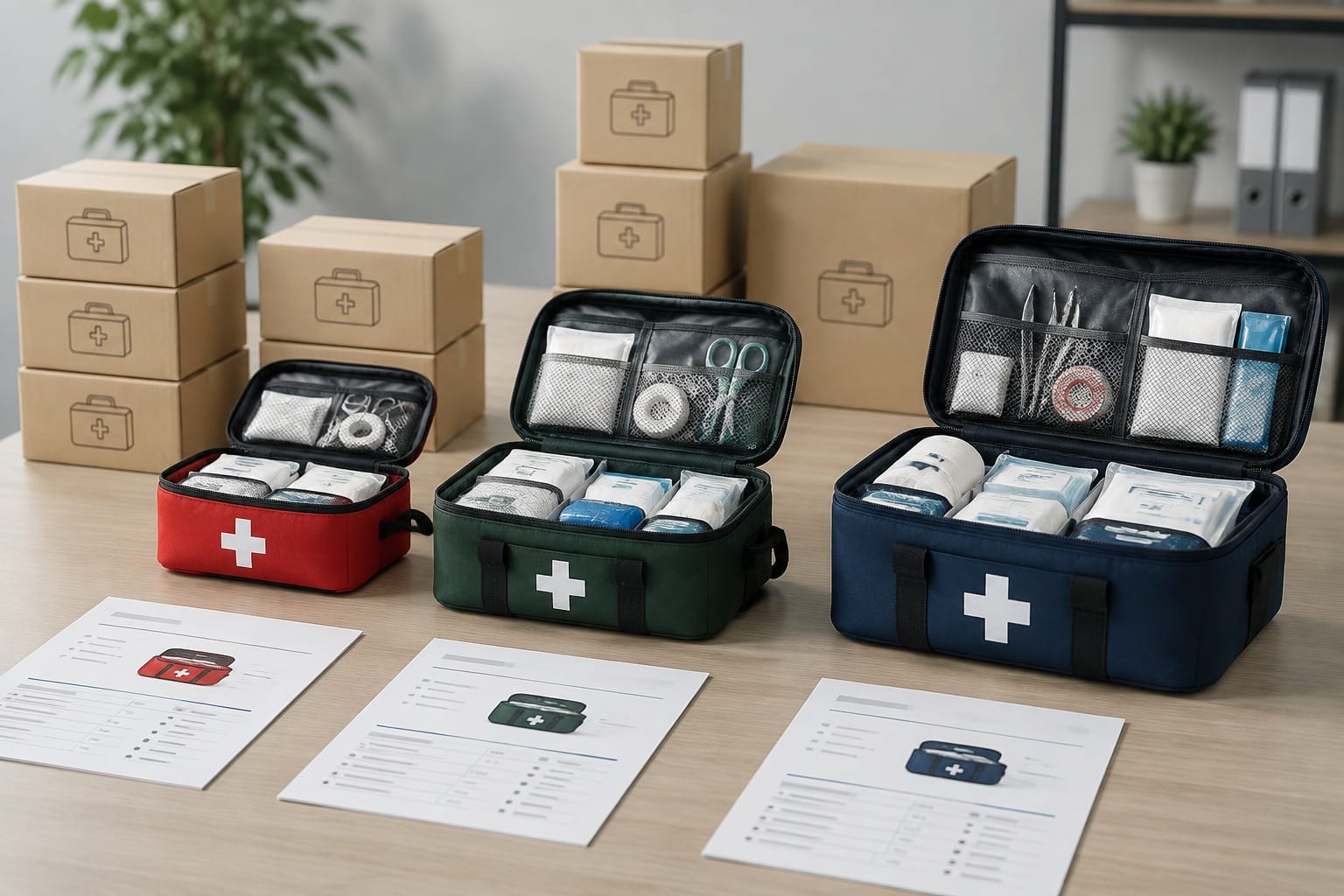
Wholesale pricing usually combines several cost layers. Suppliers may show them as one unit price, separate line items, or a mixture of both. Ask which method is being used before comparing two quotations.
| Cost layer | What it can cover | Question to ask in the RFQ |
|---|---|---|
| Product input | Bandages, gauze, tape, dressings, gloves, barriers, or other specified supplies | Is the material, size, pack format, and source fixed? |
| Assembly or kitting | Counting, folding, sealing, labeling, or placing items into a pack | Is labor included in the quoted unit price? |
| Branding setup | Screens, transfer setup, plates, embroidery programming, or label preparation | Is the charge one-time, per artwork, or per batch? |
| Packaging | Polybags, cartons, inserts, stickers, shipping marks, and language versions | Is packaging standard, custom, or supplied by the buyer? |
| Quality work | Incoming checks, in-process checks, final inspection, or documentation | Which inspection scope and record are included? |
| Export packing | Inner packs, master cartons, palletization, and marks | What carton quantity and dimensions support the freight estimate? |
| Delivery scope | Pickup, port handling, freight, insurance, duties, or local delivery depending on the term | Which Incoterms rule and named place apply? |
The phrase “unit price” is incomplete without the basis. One supplier may quote a factory or port term, while another includes delivery to a named warehouse. The International Chamber of Commerce explanation of Incoterms rules is a useful reference for separating delivery tasks, costs, and risk from the product price. Incoterms do not set an MOQ or make two product specifications equivalent.
For a broader RFQ workflow, use the B2B first aid procurement process to keep specifications, samples, commercial terms, and shipment planning in one controlled sequence. The same discipline keeps first aid supplies wholesale pricing comparable when several suppliers return different quote formats.
A quantity tier is a commercial point at which the supplier expects a different cost structure. The break may reflect fixed setup being spread over more units, a component purchase moving into a lower bracket, more efficient assembly, or a packaging run becoming practical. It is not automatically a discount that applies to every part of the order.
Use this sequence when reviewing a quotation:
An illustrative calculation can show the logic. Suppose a supplier quotes 1,000 packs at $2.40 each plus a $180 artwork and setup charge. The product subtotal is $2,400 and the quoted-scope total before freight is $2,580. At 3,000 packs, the unit figure falls to $2.10, but the buyer spends $6,480 before freight. The second tier has a lower unit cost and a higher cash commitment. These figures are examples only, not a UneedAid price list.
The fixed charge may disappear from a later repeat quote if the same controlled artwork and production route remain valid. It may return when the buyer changes a label language, bag material, component source, or pack format. Request the reuse assumption in writing.
The most common drivers are visible in the product specification, but buyers often overlook how they interact. Review each factor rather than asking for a general discount.
| Pricing driver | Why it can change the tier | Evidence to request |
|---|---|---|
| Total finished quantity | Spreads setup and planning work over more units | Unit price at agreed quantity points |
| Quantity by SKU or version | Small sub-lots may require separate purchasing or packing | Allocation table by SKU |
| Component pack size | Supplier purchase units may not match finished-pack quantities | Pack conversion and overage assumption |
| Material and color | Separate fabric, resin, adhesive, or printed-color runs can create new lots | Material and color confirmation |
| Branding and artwork | Each logo, position, or language can create setup and approval work | Artwork count, revision, and setup reuse |
| Unit and export packaging | Custom cartons and inserts often have print minimums | Packaging MOQ and carton specification |
| Inspection and documentation | Additional checks or records consume labor and may require sampling | Inspection plan and document list |
| Delivery pattern | Multiple batches can add handling and split freight | Batch plan and shipment basis |
| Payment and quote validity | Cash timing, currency movement, and validity period affect commercial risk | Payment proposal and expiry date |
Product category matters too. A replenishment order for loose consumables can have different cost and packing logic from a finished kit containing several components. The first aid supplies sourcing guide helps buyers define product form, pack format, and specification questions before requesting tiers. Exact availability, component continuity, and pricing still require a current quote. For packaging identifiers, GS1’s GTIN Management Standard explains when a product change can require a new GTIN. Record that decision because a new identifier can create another pricing version.
Ask for a lower trial tier, a planned launch tier, and a repeat or scale tier. Keep the requested specification identical, then let the supplier identify what changes. A simple comparison sheet prevents a low number from hiding a different scope.
| Comparison field | Trial tier | Launch tier | Repeat or scale tier |
|---|---|---|---|
| Finished quantity | Enter requested quantity | Enter requested quantity | Enter requested quantity |
| SKU and market split | List every version | List every version | List every version |
| BOM and pack format | Frozen revision | Same revision | Same revision or approved change |
| Branding and artwork | Method, colors, positions, files | Same fields | State reuse or new setup |
| Packaging | Standard or custom details | Same details | State print-run or replenishment assumption |
| Fixed charges | Sample, setup, tooling, testing if applicable | Same fields | State which charges repeat |
| Unit price basis | Currency and Incoterms | Same basis | Same basis |
| Lead-time factors | Supplier states assumptions | Supplier states assumptions | Supplier states assumptions |
| Cash and inventory | Trial exposure | Launch exposure | Scale exposure |
Then compare three outputs: cost per finished unit, total quoted-scope spend, and cash tied up before the goods are consumed or sold. Add expected demand timing. A 12-month forecast split into four deliveries may have a different working-capital profile from one shipment, even when annual volume is identical.
Tier prices only compare once the surrounding charges are separated, and the RFQ template for first aid supplies is where that separation is requested line by line, before any quote is issued.
Do not average prices across mixed specifications. If one tier uses a standard carton and another uses a private-label carton, the result is not a quantity comparison. Ask for an alternate quote that changes one factor at a time.
MOQ is the minimum feasible or quoted quantity for a defined configuration. A quantity tier is a price point above, at, or below that minimum. The two values should be shown together but not viewed as synonyms. A clear first aid supplies wholesale pricing sheet shows both fields side by side.
For example, a supplier may accept 1,000 finished packs with one shared label, while a four-language carton requires a larger print run per language. The finished-pack MOQ and the packaging MOQ are different constraints. A buyer can ask whether a standard carton, a controlled label, or a combined print run is feasible, but the alternative must preserve approved identification and destination requirements.
When a quote shows “1,000 MOQ” and “500-piece price break,” ask what the 500 figure describes. It may refer to a component purchase unit, a per-color lot, or a repeat-order threshold rather than 500 finished units. Put the answer beside the line in the RFQ worksheet.
For a practical breakdown of quantity constraints, see the first aid kit MOQ planning worksheet. It can be adapted for loose supplies by adding component pack conversions and packaging versions.
Send a controlled specification and ask the supplier to return assumptions and exceptions in the same structure. Include:
Ask the supplier to answer four questions for each tier: What stays common? What is split? Which input controls the minimum? What changes at the next tier? Those answers make first aid supplies wholesale pricing auditable when the project moves from an estimate to a purchase order. They also make a later quote easier to reconcile with the original first aid supplies wholesale pricing assumptions.
No. A higher tier often reduces the unit figure, but it also increases the number of units purchased and the cash committed before use. Fixed setup may be spread across more pieces, while packaging, storage, inspection, freight, and obsolete-label exposure can rise. Compare the total quoted-scope spend and expected consumption timing. Use the same product specification and delivery basis at each tier. If the supplier changes the carton, BOM, or shipment term, record that as a separate scenario rather than calling it a price break. The suitable tier is the one that fits demand, cash limits, inventory policy, and approved configuration. Keep the chosen first aid supplies wholesale pricing tier linked to the approved revision.
Sometimes, where the supplier confirms that the relevant purchasing, assembly, and packing inputs are common. Shared quantities cannot be assumed from similar product names. Different sizes, adhesive constructions, colors, labels, pack counts, or component sources may create separate lots. Give the supplier an allocation by SKU and ask which lines can be combined. Request the response in writing so the same assumption appears in the purchase order and repeat-order review. If the quote uses one combined tier, keep the allowed mix and any minimum per version in the commercial notes.
They may be included, separated, or absorbed under a stated assumption. Sampling, artwork preparation, screens, plates, tooling, testing, and special packaging can each have different reuse rules. Ask the supplier to list every fixed charge and say whether it is one-time, per artwork version, per color, or repeated for a new batch. A low unit figure can look attractive when setup is hidden, while a higher unit figure may include work that another supplier bills separately. Compare the complete quoted scope, not the unit line alone.
State the currency, Incoterms rule, named place, shipment mode, carton basis, and requested delivery window. A factory or port quotation cannot be compared directly with a delivered-to-warehouse quotation without adding the missing scope. Also ask whether insurance, export handling, destination charges, duties, and local delivery are included or excluded. The delivery term does not establish product compliance or an MOQ. Keep freight assumptions in their own worksheet fields so a change in shipment plan does not silently alter the product comparison.
Reconfirm before a purchase order when the quote validity period has expired, the specification has changed, or the delivery plan is different. Relevant changes include BOM, component source, material, color, logo method, artwork language, barcode, pack count, carton, inspection scope, payment terms, currency, and shipment basis. Even when the SKU name is unchanged, one controlled input can alter the cost or minimum. Reference the approved sample and revision numbers, then ask the supplier to confirm current material availability, tier thresholds, fixed-charge reuse, and lead-time assumptions.
Reading first aid supplies wholesale pricing as a version-controlled model gives procurement teams a clearer decision record. Freeze the scope, expose fixed work, compare three quantity points, and document the MOQ driver and delivery basis. Then carry the selected tier into the approved RFQ, sample record, and purchase order.
Payment structure sits alongside price tiers in the same negotiation, and buyers who want both settled before the order is placed normally work through the payment terms used on first aid supply orders at the same time.
A buyer requests 1,000 kits, but the quote assumes one color, one contents list, one logo, and one packaging version. Then the order is divided across four markets and eight SKUs. The apparent quantity stays the same while the production quantities become much smaller.
Effective first aid kit MOQ planning starts by identifying every layer that creates a separate production lot. Supplier capacity is only one layer. SKU, component BOM, container color, material, logo method, artwork version, packaging, label language, and batch rules can each set a different minimum. Buyers should request quantity tiers, sample terms, and feasibility assumptions before treating any number as an order commitment.
UneedAid discusses projects from 1,000 pieces where product feasibility allows. That starting point is not universal. It depends on the SKU, customization scope, packaging, and order type, and it requires quotation confirmation for the defined configuration.
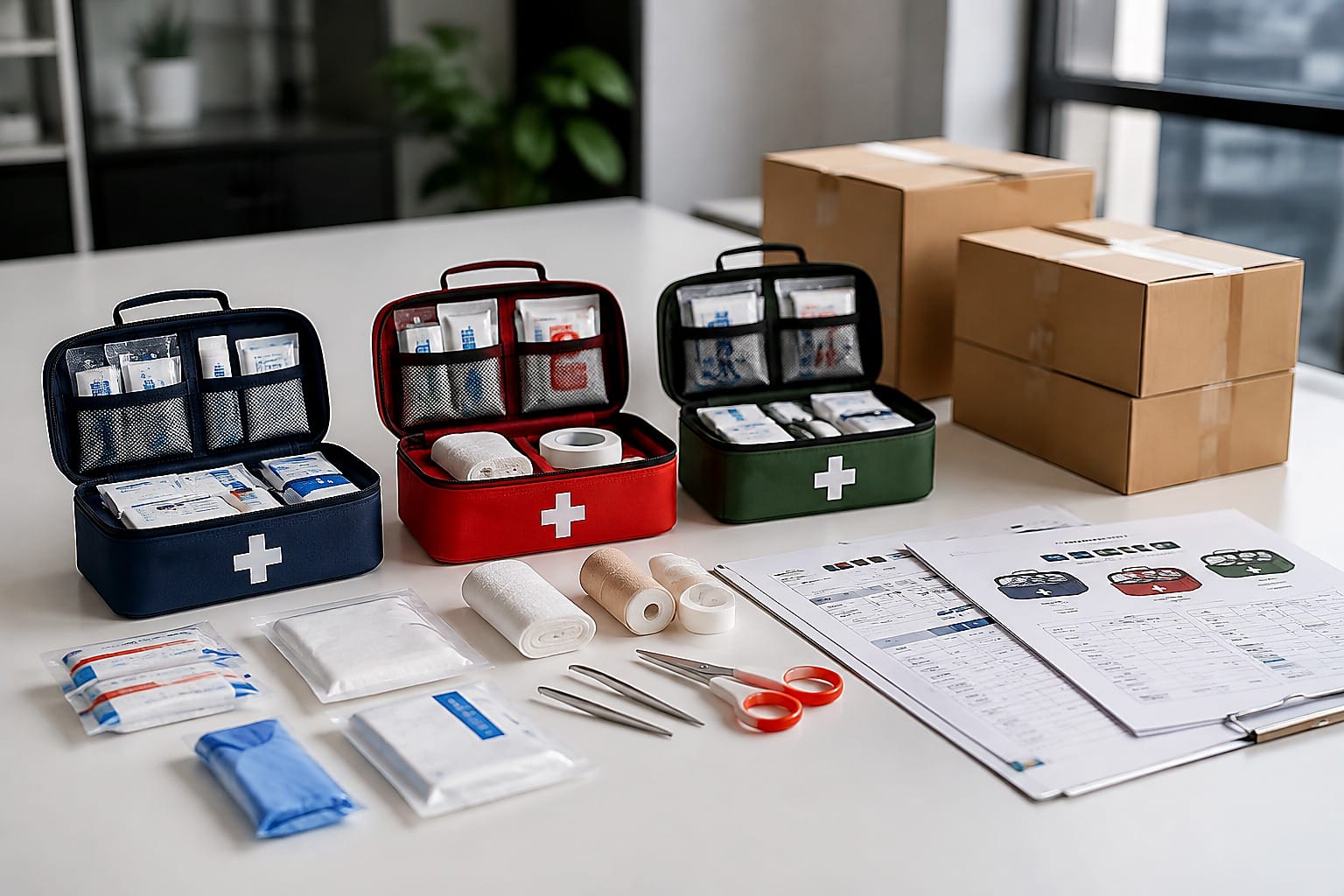
An MOQ is the smallest quantity a supplier is prepared to quote or produce under a defined set of assumptions. It is not a complete product specification. The number is meaningful only when the buyer and supplier agree on what remains common across the lot.
Use these nine layers to locate the real constraint:
The highest active constraint normally controls the feasible lot. Suppose a standard bag can be assembled at the requested total quantity, but each language carton has a higher print minimum than the allocation for that market. The packaging split, not final assembly, becomes the issue. The supplier may propose a standard carton with a controlled label, a larger combined print run, or another feasible route. Each option needs buyer approval.
Order size and delivery term interact, because the rule chosen decides who pays the freight that volume produces, as this breakdown of Incoterms for first aid supply sets out.
For a wider view of supplier qualification, samples, specifications, commercial terms, and shipment planning, connect this worksheet to the B2B first aid procurement process. MOQ should sit inside that process rather than replace it.
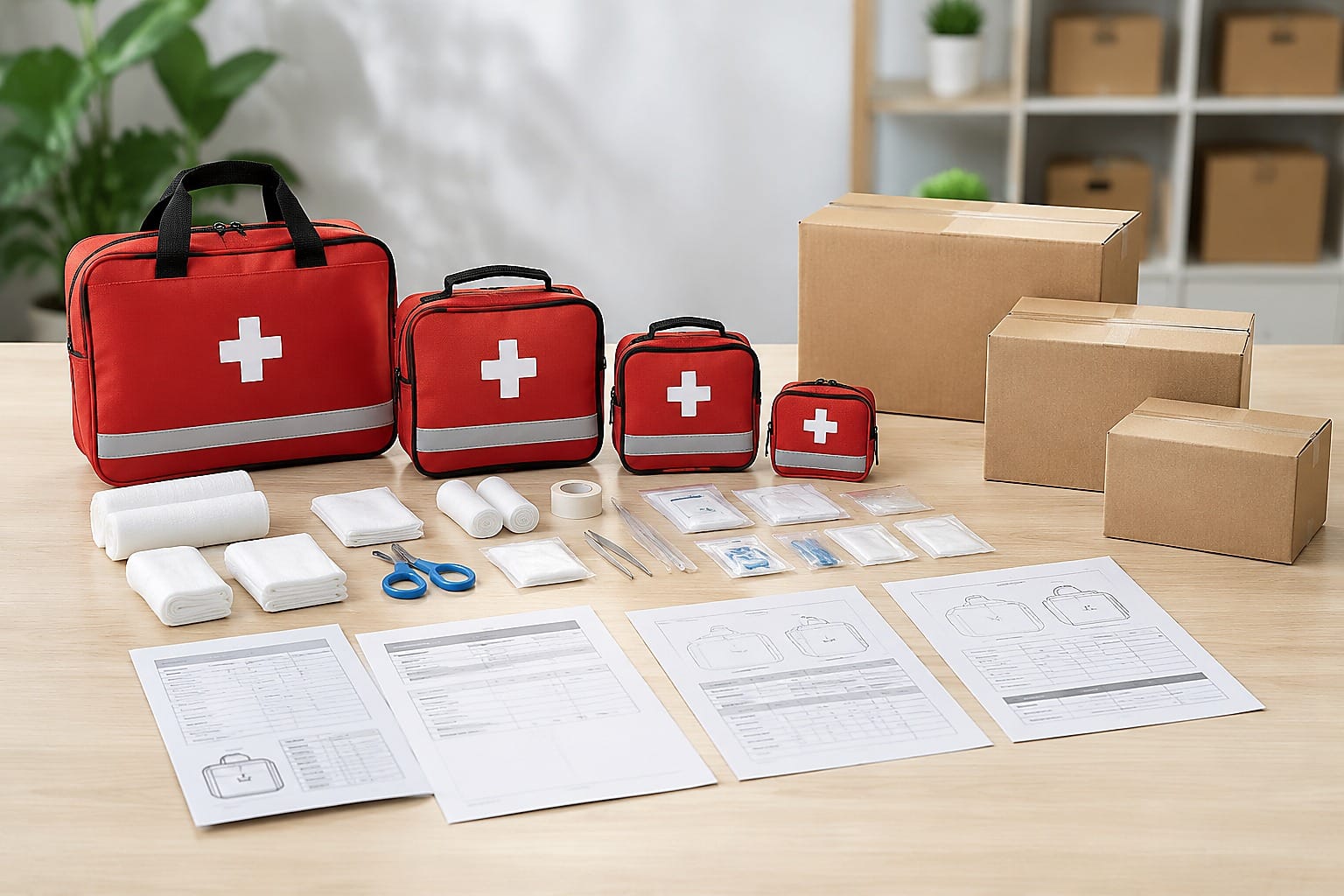
These terms answer different questions. Combining them in one number creates false certainty.
| Commercial item | What it means | What it does not prove | Buyer action |
|---|---|---|---|
| MOQ | Lowest quoted or feasible quantity for a defined configuration | Final unit price, production slot, or acceptance of every customization | Record the exact SKU, BOM, artwork, packing, and assumptions attached to it |
| Quote tier | Price and terms at a stated quantity | That every tier is feasible with the same setup, packing, freight, or schedule | Ask for the same specification at several quantities and separate fixed charges |
| Sample | A unit or small set used for specification and approval work | Bulk quantity, bulk consistency, or automatic production authorization | Define sample type, revision, cost, preparation factors, and approval record |
| Forecast | A planning signal for expected demand over time | A binding order or reserved capacity unless the contract says so | State horizon, confidence, expected SKU mix, and update frequency |
| Purchase order | A formal order under agreed commercial documents | Completeness when specifications or referenced attachments are missing | Reference the approved BOM, artwork, packing, sample, quote, and change rules |
A forecast can help a supplier discuss material reservations or repeat production, but it should remain separate from a firm PO. A sample can confirm size, layout, branding, and packing choices without establishing the economics of a bulk run. A price tier can reveal the effect of fixed setup across volume, yet the lowest unit-price tier may create excess stock or an unsuitable market allocation.
Shipping terms also belong in a separate field. The International Chamber of Commerce explains that Incoterms rules define responsibilities for delivery tasks, costs, and risks. They do not define the product MOQ. Ask suppliers to state the Incoterms rule and named place with the quote so a quantity comparison does not mix product cost with different delivery scopes.
Request at least three relevant tiers using one frozen specification. The purpose of a first aid kit MOQ comparison is not to force a lower price. It is to show where fixed setup, component purchasing, packaging, and logistics assumptions change.
The table below is a comparison method, not a price or lead-time promise:
| Comparison field | Lower trial tier | Planned launch tier | Repeat or scale tier |
|---|---|---|---|
| Finished quantity | Buyer enters quantity | Buyer enters quantity | Buyer enters quantity |
| Number of SKUs | Confirm allocation | Confirm allocation | Confirm allocation |
| BOM versions | List each version | List each version | List each version |
| Colors and materials | State common or split lots | State common or split lots | State common or split lots |
| Branding | Method, colors, positions, artwork versions | Same fields | Same fields |
| Unit packaging | Standard or custom, language count | Same fields | Same fields |
| Fixed charges | Sample, artwork, screen, plate, die, tooling, testing if applicable | Separate each charge | State reuse or replacement assumptions |
| Unit price basis | Incoterms rule, named place, currency | Same basis | Same basis |
| Production factors | Supplier states assumptions after approval | Supplier states assumptions after approval | Supplier states assumptions after approval |
| Forecast or PO status | Planning estimate or firm order | Planning estimate or firm order | Planning estimate or firm order |
Compare total landed-scope inputs, not unit price alone. A lower unit price can sit beside higher artwork setup, more packaging inventory, a different delivery basis, or a larger cash commitment. Keep the comparison on one worksheet so differences remain visible.
Product choice can expose different MOQ drivers. An equipped tactical set for specification review combines a finished container with a component configuration, while safety pins as a kit component represent one possible BOM line. These pages are useful starting points for defining what should be quoted. Exact quantities, availability, price, timing, and configuration still require a current RFQ response.
Create one row for every version that could split purchasing or production. Do not start with a total annual quantity and hide the mix in a note.
| Worksheet field | Entry required |
|---|---|
| Project and market | Project ID, buyer entity, destination market, intended channel |
| Finished SKU | Buyer SKU, supplier reference if known, kit or supply type |
| Quantity status | Trial estimate, forecast, requested quote tier, or firm PO quantity |
| Allocation | Quantity by SKU, color, size, market, language, and delivery batch |
| Container | Bag, box, case, pouch, material, color, dimensions, construction revision |
| BOM | Component description, quantity per kit, pack format, source restriction, substitution rule |
| Branding | Logo method, color count, size, position, artwork file and revision |
| Labels | Product ID, barcode, language, importer detail, warnings, artwork revision |
| Unit packaging | Polybag, carton, insert, seal, label, retail presentation, pack count |
| Export packing | Inner quantity, master-carton quantity, marks, pallet request if applicable |
| Sample control | Sample type, quantity, approval criteria, approved sample ID |
| Commercial | Currency, quantity tiers, fixed charges, payment proposal, quote validity |
| Delivery basis | Incoterms rule, named place, shipment mode assumption, requested window |
| Change control | Fields frozen at quotation, resampling triggers, substitution approval route |
The BOM deserves line-level attention. A kit ordered as 1,000 finished units may require several thousand pieces of one component, but that arithmetic does not confirm availability or a supplier minimum. Record units per kit, pack conversion, expected overage handling, and whether substitution is prohibited or allowed only after written approval.
Barcode and packaging versions can also create separate identities. GS1’s GTIN Management Standard provides rules for when product changes require a new GTIN. Buyers should decide product identification with the responsible market and data teams. The supplier should receive the approved number, symbol file, placement, and verification requirements rather than inventing product identity data.
Send a structured response sheet with the drawings and specifications. Ask the supplier to mark assumptions and exceptions directly beside each field.
Include these RFQ fields:
Ask the supplier to answer four questions for every quoted tier: What is common across the lot? What is split? Which input sets the minimum? What changes at the next tier? Those answers are more useful than a bare MOQ number.
Avoid sending an open request such as “quote 1,000 custom first aid kits” when the project already has several markets or brand versions. The supplier may assume one universal SKU. The buyer may assume the quantity can be divided freely. A version matrix makes the disagreement visible before sampling.
The strongest first aid kit MOQ lever is usually fewer custom layers, not a vague request for an exception. Keep the controls that define the product while simplifying the elements that create small production lots.
Consider these approaches where the supplier confirms feasibility:
Do not solve a print minimum by mixing unapproved labels or destinations. Do not replace a specified component silently. Simplification needs the same revision control as customization.
An MOQ discussion also needs an exit condition. If a proposed configuration cannot meet the requested allocation, decide whether to increase one version, consolidate versions, use a standard input, change the launch plan, or stop that option. Record the decision in the RFQ comparison rather than leaving it in email.
No universal quantity applies to every configuration. UneedAid discusses projects from 1,000 pieces where product feasibility allows, but the applicable starting point depends on the SKU, customization, packaging, and order type. It must be confirmed in a quotation for the defined scope. Several colors, BOM versions, logos, carton artworks, or market labels can divide one total into smaller production lots. Give the supplier the allocation by version and ask which layer controls the minimum. A total of 1,000 pieces does not mean ten versions of 100 pieces are automatically feasible.
Sometimes a supplier may combine shared purchasing or assembly, but this cannot be assumed. The answer depends on which inputs are common. Two SKUs may share a bag and logo while using different components or labels. Another pair may look similar but use separate materials, colors, or packaging runs. List the quantity for each SKU and identify the shared container, BOM lines, branding, and packing. Ask the supplier to state which operations can be combined and which remain separate. The written quote should preserve that allocation so a later PO does not rely on an informal conversation.
A higher tier may reduce unit cost by spreading setup across more pieces, but it increases inventory and cash exposure. Total sourcing cost also includes samples, artwork, tooling, packaging, inspection, freight scope, storage, and obsolete versions. Compare several tiers on the same Incoterms basis and specification. Add expected sell-through or internal consumption timing, not just the unit price. The useful tier is the one that fits the approved product, demand plan, cash constraints, and replenishment route. A lower unit figure is not automatically the better procurement decision.
Yes, as a clearly labeled planning input. A forecast can show expected annual volume, SKU mix, seasonality, and reorder cadence. It may help the supplier discuss component continuity or production planning. It is not a purchase order unless the governing agreement makes it binding. Separate forecast quantity from the firm quantity being quoted or ordered. State the forecast horizon, confidence, update frequency, and expected batch pattern. Ask what the supplier can reserve, what requires a deposit or PO, and how long any commercial proposal remains valid.
Reconfirm it whenever a controlled input changes or the earlier quote has expired. Relevant changes include the finished SKU, BOM, component source, bag material, color, logo method, artwork, label language, barcode, unit packaging, master-carton arrangement, shipment basis, or delivery batch. Also ask whether the supplier’s material and production assumptions remain available. A repeat order should reference the prior approved sample and revisions, but that reference does not prove every input is unchanged. Written reconfirmation gives both parties a current basis before materials are committed.
Good first aid kit MOQ planning turns one headline number into a version-controlled commercial model. Freeze the specification, expose every split, compare tiers on the same basis, and record the supplier’s assumptions. Then move the selected first aid kit MOQ tier into a complete PO package with its BOM, artwork, packaging, sample, delivery basis, and change rules.
Quantity tiers decide what you buy, but they also decide how it travels, and choosing between express, air and sea is where the freight line in a landed cost finally gets settled.
Quantity is also a scheduling decision. A larger release can be more efficient on the line while making a different stage critical, and this production lead time planning guide for first aid orders sets out which stages the order size puts on the critical path.
Fleet orders divide quantity differently from project orders. Containers, consumables and a spares pool are sized separately, and this guide to vehicle first aid kit planning explains how that split interacts with tier pricing.
An international buyer can receive three quotations for the same first aid project and still have no valid basis for comparison. One supplier may price a stock kit, another may assume buyer artwork, and a third may omit documentation, samples, or export packing. A reliable B2B first aid procurement process removes those hidden differences before price approval.
The practical method is to define the requirement, identify the destination-market responsibilities, lock a line-level specification, qualify the supplier against relevant evidence, compare quotations on the same commercial basis, and approve a controlled sample before bulk production. This framework is for importers, distributors, institutional buyers, and private-label teams. It does not replace legal, regulatory, customs, or medical advice for a specific market.
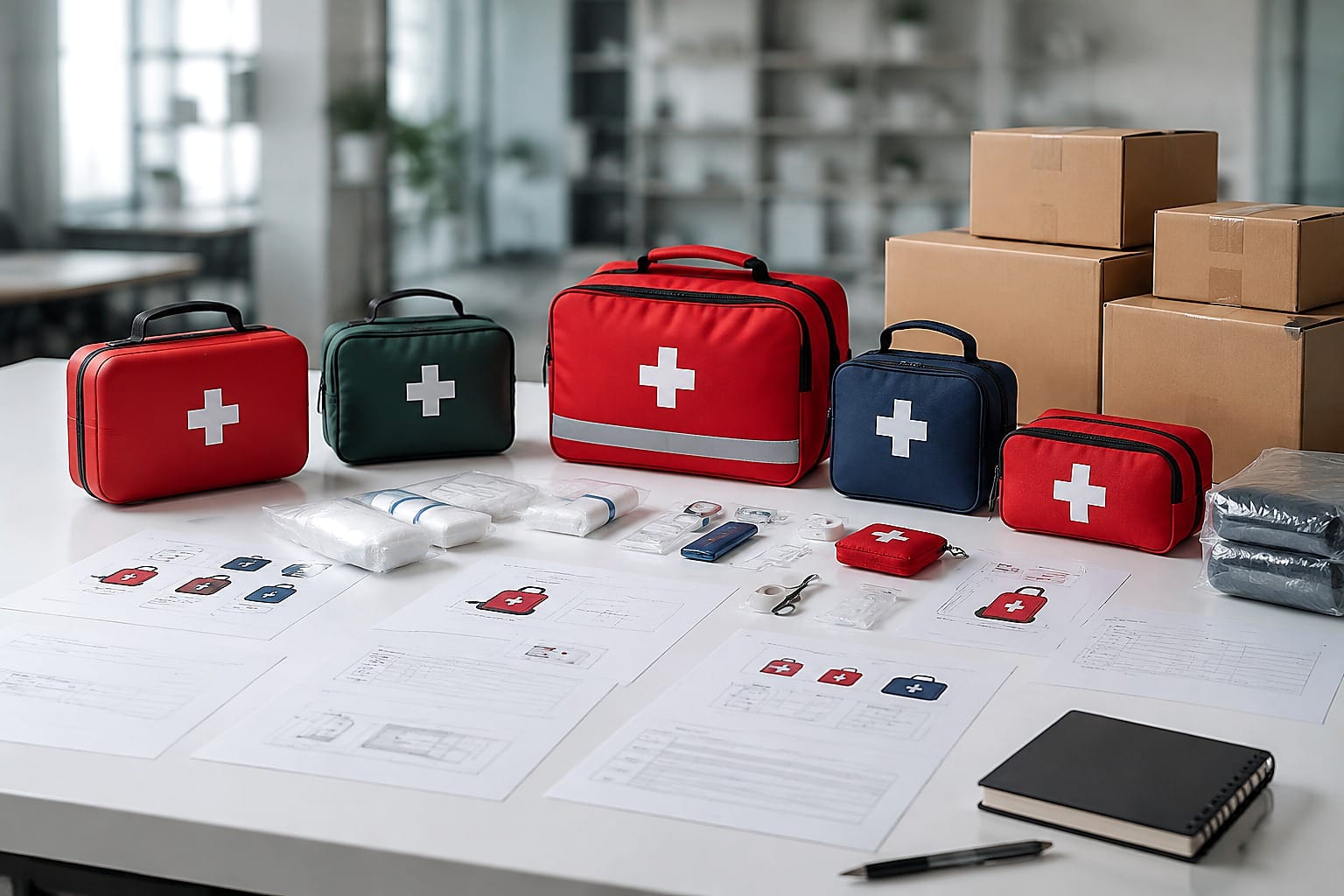
The procurement brief should explain the project before it asks for a price. A request such as “quote 2,000 first aid kits” leaves the supplier to make decisions about contents, packaging, labeling, quality evidence, delivery scope, and substitutions. Those assumptions later appear as price gaps or production disputes.
Start with ten controlled inputs:
Buyers still developing an assortment can scan the UneedAid product category hub to identify product families before creating the RFQ. The hub is a planning reference. The final brief must use the buyer’s own requirements and destination review.
The brief should also state what the supplier must not assume. Examples include no unapproved component substitution, no artwork production before written approval, and no change to packing quantities without a revised packing file. Clear exclusions reduce the chance that a supplier fills blank fields with its usual practice.
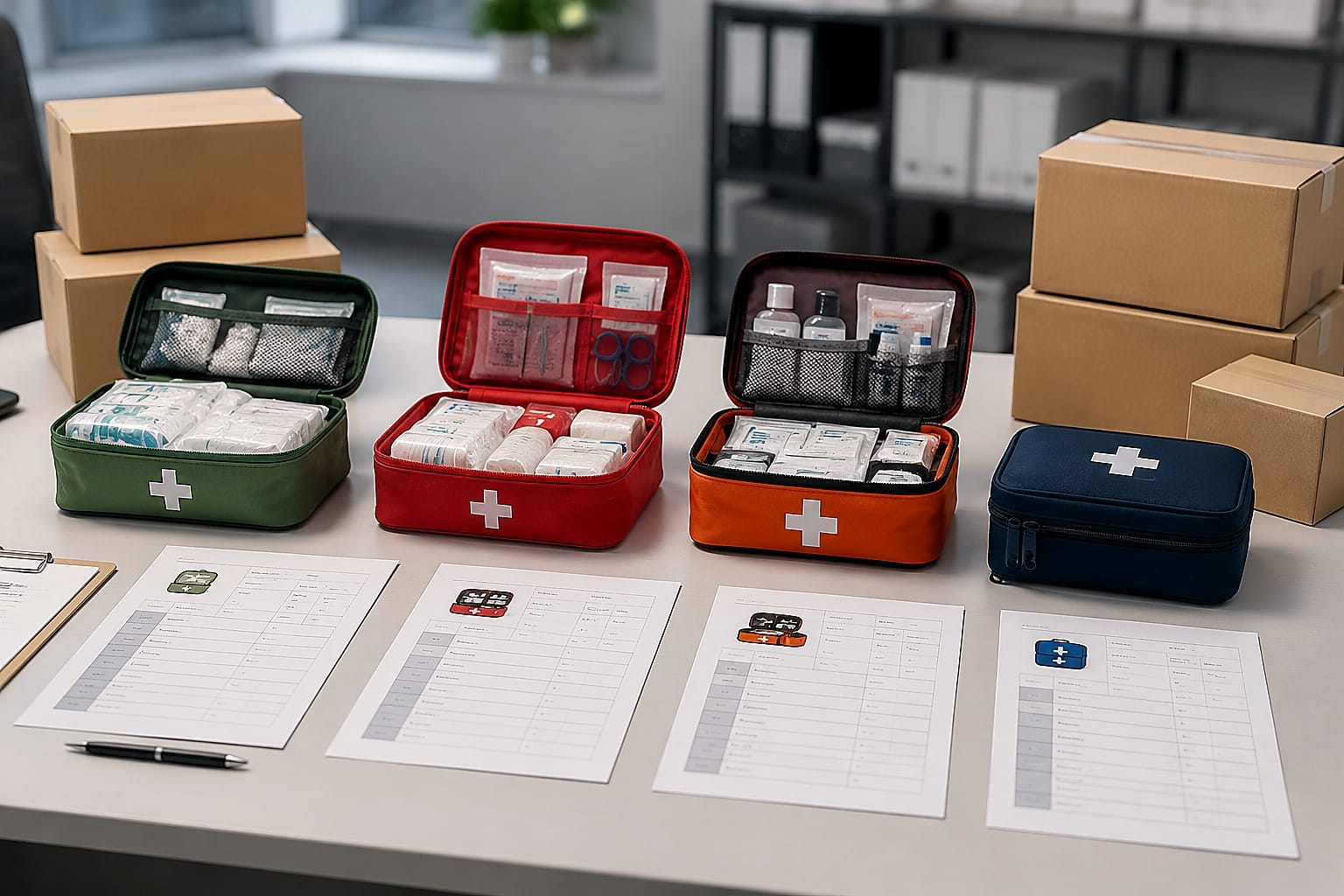
A procurement team needs two connected records: a program requirement matrix and a product-level specification. The requirement matrix covers commercial, documentation, packing, and approval rules for the whole project. The product specification defines what is being purchased.
For individual supplies, record the supplier SKU, buyer code, product description, dimensions, material or construction where relevant, unit packaging, label route, quantity, lot or expiry display where applicable, and requested evidence. For assembled kits, add the container specification, BOM revision, component location, refill code, and loaded-unit packing data.
| Specification layer | Minimum buyer record | Supplier response | Approval evidence |
|---|---|---|---|
| Product identity | Buyer code, supplier SKU, exact description | Offered SKU and any deviation | Approved specification line |
| Physical details | Size, format, material or construction fields | Actual quoted values | Data sheet or measured sample |
| Unit packaging | Pack count, seal, label, barcode, language | Proposed packaging route | Artwork proof and sample |
| Kit contents | BOM line, quantity, position, substitution status | Returned BOM with comments | Frozen BOM revision |
| Export packing | Units per carton, carton dimensions, gross and net weight | Packing estimate, then final file | Approved packing specification |
| Evidence | Required document by SKU or organization | File name, issuer, scope, validity | Buyer review record |
Avoid relying on photos or total piece counts. A photo cannot confirm size, material, label text, pack unit, lot traceability, or the exact SKU planned for repeat orders. A “120-piece kit” can also use repeated low-unit-value items to reach the count. Procurement approval should follow the written BOM and physical reference sample.
For kit projects, standard kit configurations can provide a starting structure. Buyers should then adapt the contents to the intended use, channel, and market rather than adopting a stock list without review. The related emergency kit sourcing framework explains how use case, container format, and refill logic affect a complete kit.
Supplier qualification should test whether the organization can control the quoted project, not whether it can send a polished catalog. Evidence must connect to the legal entity, site, process, product, or SKU that it is meant to support.
Use four evidence groups:
The buyer should record the difference between manufacturer, assembler, trading company, and export service provider. More than one party may participate in an order. The concern is not the number of parties by itself. The concern is whether responsibilities, product identity, document ownership, and change control are visible.
The evidence groups are only useful once each one has a confirmation route, and a first aid supplier compliance checklist pairs every document with the register or issuer that can verify it.
For products that fall within the European Union Medical Device Regulation, Article 13 assigns specific verification and record duties to importers. Buyers should review the current consolidated legal text and their role with qualified counsel or a regulatory specialist. The official Regulation (EU) 2017/745 text is the primary reference. A supplier statement alone does not determine the importer’s obligations or a product’s status.
Build a qualification record with dated files and conclusions. “Certificate received” is too vague. Record the document name, holder, issuer, scope, reference number, validity information if present, related SKU or site, reviewer, and unresolved question. This makes the B2B first aid procurement decision auditable and easier to revisit before a repeat order.
Price comparison starts after scope normalization. A low unit price may exclude artwork setup, labels, inner boxes, inspection, export cartons, freight, bank charges, or destination costs. Another quote may include a different component size or a lower packing quantity.
Use a comparison table that forces each supplier to answer the same fields:
| Quote field | Supplier response required | Buyer comparison check |
|---|---|---|
| Offered SKU and revision | State the exact offered SKU, specification revision, and every deviation from the RFQ. | Confirm all quotations use the same specification or price declared deviations separately. |
| Quantity tier and MOQ | Give the price quantity and explain whether MOQ applies per SKU, color, artwork, or total order. | Compare like-for-like tiers and identify any MOQ that could split or delay the order. |
| Unit price and currency | State the unit basis, currency, applicable quantity tier, and included packaging. | Use the same unit, currency date, and inclusion scope before comparing prices. |
| Included customization | List logo, label, insert, barcode, retail box, and carton-mark work included in the price. | Separate included work from setup charges and buyer-supplied materials. |
| Sample cost and timing | State sample type, cost, production time, freight method, and any refund or credit rule. | Confirm each supplier is quoting the same sample stage and approval scope. |
| Production lead-time basis | Define when the lead-time clock starts and which approvals can pause it. | Compare timelines from the same trigger, such as deposit plus final artwork and sample approval. |
| Packing data | Provide unit packing, units per carton, carton dimensions, and gross and net weight. Mark estimates clearly. | Compare confirmed production packing separately from early estimates and calculate shipment volume consistently. |
| Shipment rule and named place | Quote the Incoterms rule, named place, freight inclusion, and document responsibility. | Check that tasks, costs, and risk transfer are allocated on the same basis. |
| Payment proposal | State deposit, balance percentage, payment trigger, bank method, and bank-charge allocation. | Compare cash-flow exposure and confirm the balance trigger can be verified. |
| Quote validity and exclusions | Give the validity date, material or freight assumptions, taxes, tooling, and all excluded costs. | Record open assumptions and add missing costs before supplier selection. |
Commercial terms should include the Incoterms rule and named place, such as FCA with the named terminal or DAP with the named destination. The rule does not replace the sales contract, product specification, payment terms, insurance decisions, or import compliance work. ICC maintains the official Incoterms rules overview, which buyers can use to confirm the current rule set and obtain official publications or training.
Calculate a landed-cost scenario only from identified inputs. Keep estimated freight, duties, taxes, brokerage, inspection, storage, and local delivery visible as separate lines. Do not make a supplier responsible for a cost that the selected shipment term leaves with the buyer.
The comparison runs on the buyer’s own sheet, and the first aid supplies RFQ template is what produces it: five blocks, a compliance column on every row, and a separate line for each outside charge.
The sample process should move from feasibility to production authorization. A loose catalog sample can show a product direction. It should not authorize bulk production when the final SKU, BOM, logo, label, color, packing, or documents differ.
A controlled approval pack can include:
Inspect the sample against the records, then inspect it as a working packed unit. Count components. Measure critical dimensions. Read every label. Open and close the container. Check whether the full load strains seams, zippers, hinges, or latches. Confirm that the carton plan uses the same loaded configuration.
For bag-led orders, compare formats through the emergency medical bag directory and request a loaded reference. Empty dimensions do not show access order, compartment fit, weight distribution, or closure stress.
The purchase order should identify the approved revisions rather than saying “same as sample.” Samples can be lost or interpreted differently. A revision number links the order to files that both parties can retrieve.
No international order is completely static. A material, component, label, carton, production slot, or vessel plan may change. The control question is whether the change is detected, assessed, approved, and recorded before it reaches the shipment.
Require a change notice that identifies:
Silence is not approval. The supplier should not substitute a visually similar item and report it after assembly. The buyer should also respond within an agreed period so the order does not remain blocked without a decision.
Delivery planning needs the same discipline. Record when the lead time starts, which buyer approvals can stop the clock, when packing data becomes firm, who books transport, which documents travel with the goods, and what event releases the balance payment. Add schedule margin for custom materials, artwork revisions, inspections, consolidation, customs processing, and peak transport periods where relevant.
The delivery term belongs in that same block, and this explanation of Incoterms for first aid supply sets out how each rule splits cost from risk.
This stage often exposes a counterintuitive point in B2B first aid procurement: the shortest quoted production time is not always the shortest usable delivery plan. A quote that excludes sample approval, document review, or confirmed packing can move those tasks outside the stated lead time.
The inspection plan should mirror the specification. If the RFQ asks for component size, label language, barcode, logo position, carton quantity, and document references, the inspection record should check those same fields.
At minimum, define checks for product identity, quantity, dimensions, visible construction, packaging, label content, artwork position, kit BOM count, container operation, carton marks, and shipping quantities. Identify which issues stop shipment, which require rework, and which may be accepted through a written concession.
Receipt checks continue after shipment. Compare the packing list, carton count, purchase order, batch or lot information where applicable, and visible condition. Record shortages or damage with carton references and photographs. Keep the received sample or retained unit connected to the B2B first aid procurement order revision.
Repeat orders should not default to “same as last time.” Ask the supplier to reconfirm the SKU, BOM, materials, artwork, packing, documents, price, and lead-time basis. A one-page delta report can show what changed and what remains identical. That record protects continuity without forcing the buyer to repeat the entire qualification process blindly.
The complete workflow can be managed through eight gates:
Each gate should have an owner and a written acceptance record. This keeps procurement, quality, regulatory, logistics, finance, and sales teams from approving different versions of the same project.
Send the destination market, intended use, product list or provisional BOM, quantities, customization scope, packaging route, required evidence, sample plan, target shipment timing, and requested commercial terms. Mark unknown fields as open questions rather than leaving them blank. Ask suppliers to return the same file with comments and deviations. This creates a comparable record and reduces follow-up messages based on different assumptions.
There is no universal number. The useful number is one the buyer can qualify and compare with the same depth. Three credible candidates often provide enough contrast for price, capability, and communication, but a specialized product may justify fewer or more. Avoid collecting many shallow quotes that use different specifications. A smaller normalized comparison gives stronger evidence than a long price list with unresolved scope differences.
Unit price is one decision field. Compare the offered specification, included customization, evidence, sample route, packing, inspection, payment, shipment rule, and change controls. Then model identified landed costs and operational risks. A lower quote can remain valid, but the buyer should know why it is lower. Missing labels, smaller sizes, different pack units, or excluded export packing can create a false price advantage.
Approve a production reference after the product or BOM revision, container, artwork, label, packaging, and written exceptions are stable enough to represent bulk output. Record a sample ID, photographs, revision numbers, measurements, and approver. If production uses a different component or material, require a documented change review. A concept sample can support feasibility discussion, but it should not silently become the bulk-order authority.
Responsibility depends on the product, jurisdiction, transaction structure, and each party’s legal role. Supplier files can support review, but they do not transfer every importer, distributor, or economic-operator duty. The buyer should map responsibilities before ordering and obtain qualified advice when needed. Record which party checks product status, labels, language, registration, customs classification, and post-market duties instead of relying on a general statement that the goods are “compliant.”
Use stable SKUs, revision-controlled specifications, a substitution rule, and a pre-order delta confirmation. Ask the supplier to identify changes in materials, source, dimensions, labels, evidence, packing, price, and lead time before accepting the repeat order. Require a new sample when the change affects a critical field or the loaded kit. Consistency comes from visible change control, not from assuming the previous configuration remains available.
A dependable B2B first aid procurement program makes specifications, evidence, approvals, commercial terms, and changes visible before goods move. The result is not a promise that every order will be simple. It is a record that lets the buyer compare suppliers fairly, find unresolved assumptions, and decide who owns each next action.
Begin with the requirement matrix and line-level specification. Qualify the supplier against the offered scope, normalize the quotation, approve a controlled sample, and carry the same revisions into the purchase order and inspection plan. That sequence gives international buyers a repeatable procurement system rather than a collection of disconnected emails and product photos.
The RFQ should also fix the payment schedule, because payment terms on first aid supply orders decide which documents gate each instalment and therefore what the buyer can hold back if the file set is incomplete.
Where the buyer is a public body rather than a private distributor, the same sequence runs inside a formal notice with its own eligibility gate and its own lot structure. The bidder’s overview of public sector first aid products tenders covers how the requirement matrix maps onto lots, award methods and framework call-offs.
Before the container is released, the lot is verified against the order file. The pre-shipment inspection checklist covers the carton count, the sample drawn from the lot and the written release decision.