
A distributor asks for a price at 1,000 units, then discovers that the quote assumed one SKU, one carton artwork, one label language, and one delivery batch. When the same order is split across markets, the unit price can change even though the total annual demand is unchanged. First aid supplies wholesale pricing is therefore a model of quantities, fixed work, specifications, and delivery scope, not a single number copied into a spreadsheet.
The practical way to read a tiered quotation is to freeze the specification, request at least three quantity points, and separate unit costs from setup, packaging, inspection, and freight assumptions. A higher tier may lower the unit figure while increasing inventory exposure. A smaller tier may cost more per piece but reduce launch risk. The useful comparison is the one that matches the approved SKU mix and purchasing plan.
UneedAid discusses B2B projects from 1,000 pieces where product feasibility allows. The applicable quantity and price depend on the defined supply, customization, packaging, destination, and order type. A current RFQ response is required before a buyer accepts any tier as available.
What does first aid supplies wholesale pricing include?
Wholesale pricing usually combines several cost layers. Suppliers may show them as one unit price, separate line items, or a mixture of both. Ask which method is being used before comparing two quotations.
| Cost layer | What it can cover | Question to ask in the RFQ |
|---|---|---|
| Product input | Bandages, gauze, tape, dressings, gloves, barriers, or other specified supplies | Is the material, size, pack format, and source fixed? |
| Assembly or kitting | Counting, folding, sealing, labeling, or placing items into a pack | Is labor included in the quoted unit price? |
| Branding setup | Screens, transfer setup, plates, embroidery programming, or label preparation | Is the charge one-time, per artwork, or per batch? |
| Packaging | Polybags, cartons, inserts, stickers, shipping marks, and language versions | Is packaging standard, custom, or supplied by the buyer? |
| Quality work | Incoming checks, in-process checks, final inspection, or documentation | Which inspection scope and record are included? |
| Export packing | Inner packs, master cartons, palletization, and marks | What carton quantity and dimensions support the freight estimate? |
| Delivery scope | Pickup, port handling, freight, insurance, duties, or local delivery depending on the term | Which Incoterms rule and named place apply? |
The phrase “unit price” is incomplete without the basis. One supplier may quote a factory or port term, while another includes delivery to a named warehouse. The International Chamber of Commerce explanation of Incoterms rules is a useful reference for separating delivery tasks, costs, and risk from the product price. Incoterms do not set an MOQ or make two product specifications equivalent.
For a broader RFQ workflow, use the B2B first aid procurement process to keep specifications, samples, commercial terms, and shipment planning in one controlled sequence. The same discipline keeps first aid supplies wholesale pricing comparable when several suppliers return different quote formats.
How are quantity tiers calculated?
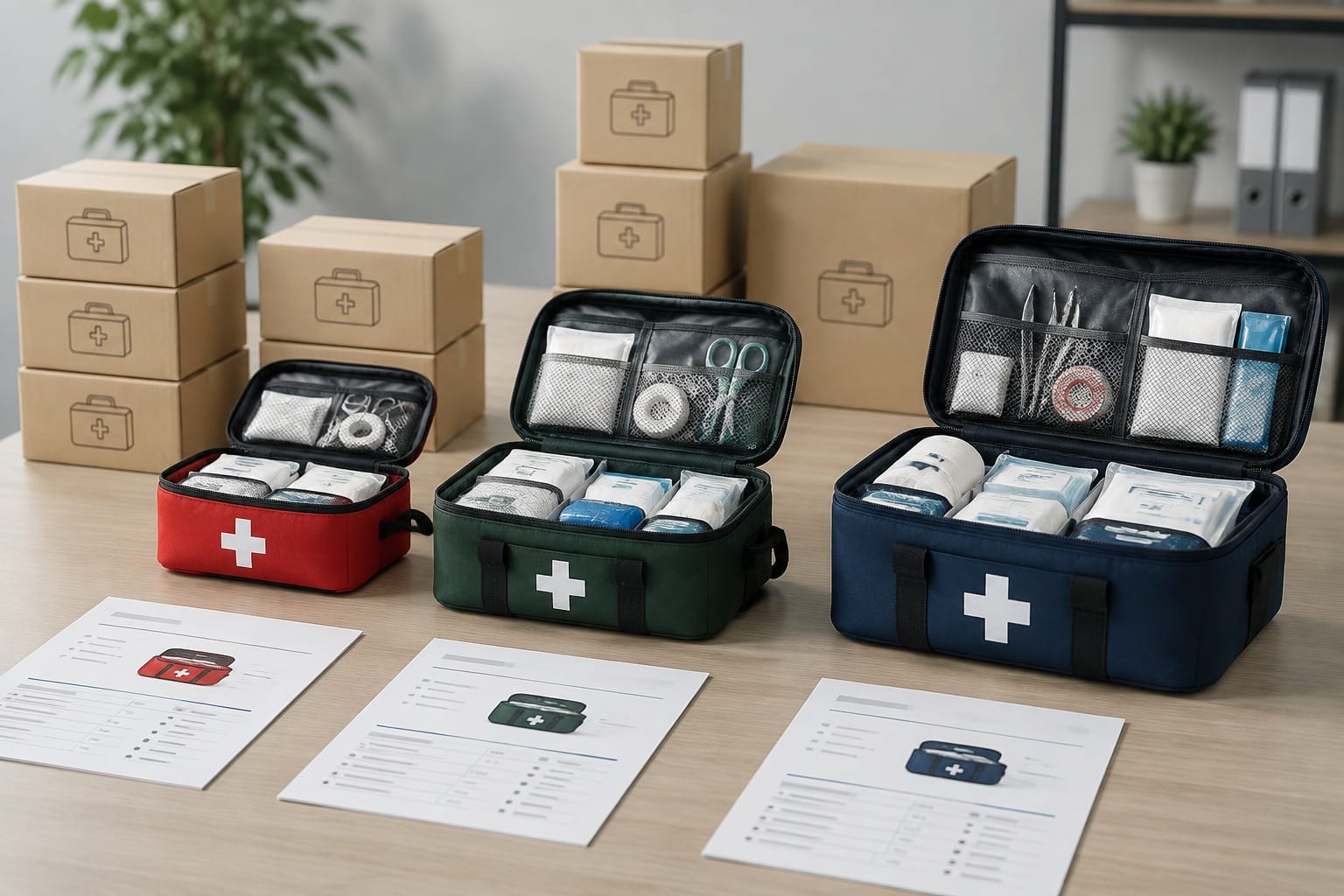
A quantity tier is a commercial point at which the supplier expects a different cost structure. The break may reflect fixed setup being spread over more units, a component purchase moving into a lower bracket, more efficient assembly, or a packaging run becoming practical. It is not automatically a discount that applies to every part of the order.
Use this sequence when reviewing a quotation:
- Freeze the comparison specification. Use the same SKU, BOM, material, color, logo method, artwork revision, pack count, label language, inspection scope, and delivery term at each tier.
- List the fixed charges. Record sampling, artwork, screen or plate, tooling, testing, and special packing separately. Note whether each charge is one-time or repeated by version.
- Check the quantity definition. Confirm whether 1,000 means finished packs, individual components, inner cartons, or a combined quantity across approved SKUs.
- Map the split. State how many pieces belong to each size, color, label language, market, and delivery batch. The smallest split may control feasibility.
- Normalize delivery scope. Compare currency, Incoterms rule, named place, shipment mode, insurance assumption, and any destination charges on the same basis.
- Calculate total cash exposure. Multiply the unit price by quantity, then add fixed charges, packaging commitments, inspection, freight scope, and expected storage or handling.
An illustrative calculation can show the logic. Suppose a supplier quotes 1,000 packs at $2.40 each plus a $180 artwork and setup charge. The product subtotal is $2,400 and the quoted-scope total before freight is $2,580. At 3,000 packs, the unit figure falls to $2.10, but the buyer spends $6,480 before freight. The second tier has a lower unit cost and a higher cash commitment. These figures are examples only, not a UneedAid price list.
The fixed charge may disappear from a later repeat quote if the same controlled artwork and production route remain valid. It may return when the buyer changes a label language, bag material, component source, or pack format. Request the reuse assumption in writing.
Which factors move a wholesale price between tiers?
The most common drivers are visible in the product specification, but buyers often overlook how they interact. Review each factor rather than asking for a general discount.
| Pricing driver | Why it can change the tier | Evidence to request |
|---|---|---|
| Total finished quantity | Spreads setup and planning work over more units | Unit price at agreed quantity points |
| Quantity by SKU or version | Small sub-lots may require separate purchasing or packing | Allocation table by SKU |
| Component pack size | Supplier purchase units may not match finished-pack quantities | Pack conversion and overage assumption |
| Material and color | Separate fabric, resin, adhesive, or printed-color runs can create new lots | Material and color confirmation |
| Branding and artwork | Each logo, position, or language can create setup and approval work | Artwork count, revision, and setup reuse |
| Unit and export packaging | Custom cartons and inserts often have print minimums | Packaging MOQ and carton specification |
| Inspection and documentation | Additional checks or records consume labor and may require sampling | Inspection plan and document list |
| Delivery pattern | Multiple batches can add handling and split freight | Batch plan and shipment basis |
| Payment and quote validity | Cash timing, currency movement, and validity period affect commercial risk | Payment proposal and expiry date |
Product category matters too. A replenishment order for loose consumables can have different cost and packing logic from a finished kit containing several components. The first aid supplies sourcing guide helps buyers define product form, pack format, and specification questions before requesting tiers. Exact availability, component continuity, and pricing still require a current quote. For packaging identifiers, GS1’s GTIN Management Standard explains when a product change can require a new GTIN. Record that decision because a new identifier can create another pricing version.
How should buyers compare three quotation tiers?
Ask for a lower trial tier, a planned launch tier, and a repeat or scale tier. Keep the requested specification identical, then let the supplier identify what changes. A simple comparison sheet prevents a low number from hiding a different scope.
| Comparison field | Trial tier | Launch tier | Repeat or scale tier |
|---|---|---|---|
| Finished quantity | Enter requested quantity | Enter requested quantity | Enter requested quantity |
| SKU and market split | List every version | List every version | List every version |
| BOM and pack format | Frozen revision | Same revision | Same revision or approved change |
| Branding and artwork | Method, colors, positions, files | Same fields | State reuse or new setup |
| Packaging | Standard or custom details | Same details | State print-run or replenishment assumption |
| Fixed charges | Sample, setup, tooling, testing if applicable | Same fields | State which charges repeat |
| Unit price basis | Currency and Incoterms | Same basis | Same basis |
| Lead-time factors | Supplier states assumptions | Supplier states assumptions | Supplier states assumptions |
| Cash and inventory | Trial exposure | Launch exposure | Scale exposure |
Then compare three outputs: cost per finished unit, total quoted-scope spend, and cash tied up before the goods are consumed or sold. Add expected demand timing. A 12-month forecast split into four deliveries may have a different working-capital profile from one shipment, even when annual volume is identical.
Tier prices only compare once the surrounding charges are separated, and the RFQ template for first aid supplies is where that separation is requested line by line, before any quote is issued.
Do not average prices across mixed specifications. If one tier uses a standard carton and another uses a private-label carton, the result is not a quantity comparison. Ask for an alternate quote that changes one factor at a time.
How do MOQ and tiered pricing interact?
MOQ is the minimum feasible or quoted quantity for a defined configuration. A quantity tier is a price point above, at, or below that minimum. The two values should be shown together but not viewed as synonyms. A clear first aid supplies wholesale pricing sheet shows both fields side by side.
For example, a supplier may accept 1,000 finished packs with one shared label, while a four-language carton requires a larger print run per language. The finished-pack MOQ and the packaging MOQ are different constraints. A buyer can ask whether a standard carton, a controlled label, or a combined print run is feasible, but the alternative must preserve approved identification and destination requirements.
When a quote shows “1,000 MOQ” and “500-piece price break,” ask what the 500 figure describes. It may refer to a component purchase unit, a per-color lot, or a repeat-order threshold rather than 500 finished units. Put the answer beside the line in the RFQ worksheet.
For a practical breakdown of quantity constraints, see the first aid kit MOQ planning worksheet. It can be adapted for loose supplies by adding component pack conversions and packaging versions.
What should a buyer include in a tiered-pricing RFQ?
Send a controlled specification and ask the supplier to return assumptions and exceptions in the same structure. Include:
- Project ID, buyer entity, destination market, sales channel, and requested delivery window.
- Finished SKU list, component specification, pack count, quantity by version, and target quantity tiers.
- Material, dimensions, color, adhesive or closure details, and any source restrictions.
- Logo method, artwork files, language versions, barcode ownership, and revision numbers.
- Unit packaging, export carton, inner quantity, shipping marks, and pallet request if applicable.
- Sample type, approval criteria, reference sample ID, and resampling triggers.
- Unit price, fixed charges, currency, payment proposal, quote validity, and tax handling if relevant.
- Incoterms rule, named place, shipment mode, freight assumptions, and destination responsibilities.
- MOQ driver for each exception and a feasible alternate configuration where available.
Ask the supplier to answer four questions for each tier: What stays common? What is split? Which input controls the minimum? What changes at the next tier? Those answers make first aid supplies wholesale pricing auditable when the project moves from an estimate to a purchase order. They also make a later quote easier to reconcile with the original first aid supplies wholesale pricing assumptions.
FAQ
Does a higher quantity tier always mean a lower total cost?
No. A higher tier often reduces the unit figure, but it also increases the number of units purchased and the cash committed before use. Fixed setup may be spread across more pieces, while packaging, storage, inspection, freight, and obsolete-label exposure can rise. Compare the total quoted-scope spend and expected consumption timing. Use the same product specification and delivery basis at each tier. If the supplier changes the carton, BOM, or shipment term, record that as a separate scenario rather than calling it a price break. The suitable tier is the one that fits demand, cash limits, inventory policy, and approved configuration. Keep the chosen first aid supplies wholesale pricing tier linked to the approved revision.
Can several first aid supply SKUs share one quantity tier?
Sometimes, where the supplier confirms that the relevant purchasing, assembly, and packing inputs are common. Shared quantities cannot be assumed from similar product names. Different sizes, adhesive constructions, colors, labels, pack counts, or component sources may create separate lots. Give the supplier an allocation by SKU and ask which lines can be combined. Request the response in writing so the same assumption appears in the purchase order and repeat-order review. If the quote uses one combined tier, keep the allowed mix and any minimum per version in the commercial notes.
Are setup charges included in the wholesale unit price?
They may be included, separated, or absorbed under a stated assumption. Sampling, artwork preparation, screens, plates, tooling, testing, and special packaging can each have different reuse rules. Ask the supplier to list every fixed charge and say whether it is one-time, per artwork version, per color, or repeated for a new batch. A low unit figure can look attractive when setup is hidden, while a higher unit figure may include work that another supplier bills separately. Compare the complete quoted scope, not the unit line alone.
What delivery information is needed to compare price tiers?
State the currency, Incoterms rule, named place, shipment mode, carton basis, and requested delivery window. A factory or port quotation cannot be compared directly with a delivered-to-warehouse quotation without adding the missing scope. Also ask whether insurance, export handling, destination charges, duties, and local delivery are included or excluded. The delivery term does not establish product compliance or an MOQ. Keep freight assumptions in their own worksheet fields so a change in shipment plan does not silently alter the product comparison.
How often should a buyer reconfirm a tiered quotation?
Reconfirm before a purchase order when the quote validity period has expired, the specification has changed, or the delivery plan is different. Relevant changes include BOM, component source, material, color, logo method, artwork language, barcode, pack count, carton, inspection scope, payment terms, currency, and shipment basis. Even when the SKU name is unchanged, one controlled input can alter the cost or minimum. Reference the approved sample and revision numbers, then ask the supplier to confirm current material availability, tier thresholds, fixed-charge reuse, and lead-time assumptions.
Reading first aid supplies wholesale pricing as a version-controlled model gives procurement teams a clearer decision record. Freeze the scope, expose fixed work, compare three quantity points, and document the MOQ driver and delivery basis. Then carry the selected tier into the approved RFQ, sample record, and purchase order.
Payment structure sits alongside price tiers in the same negotiation, and buyers who want both settled before the order is placed normally work through the payment terms used on first aid supply orders at the same time.