
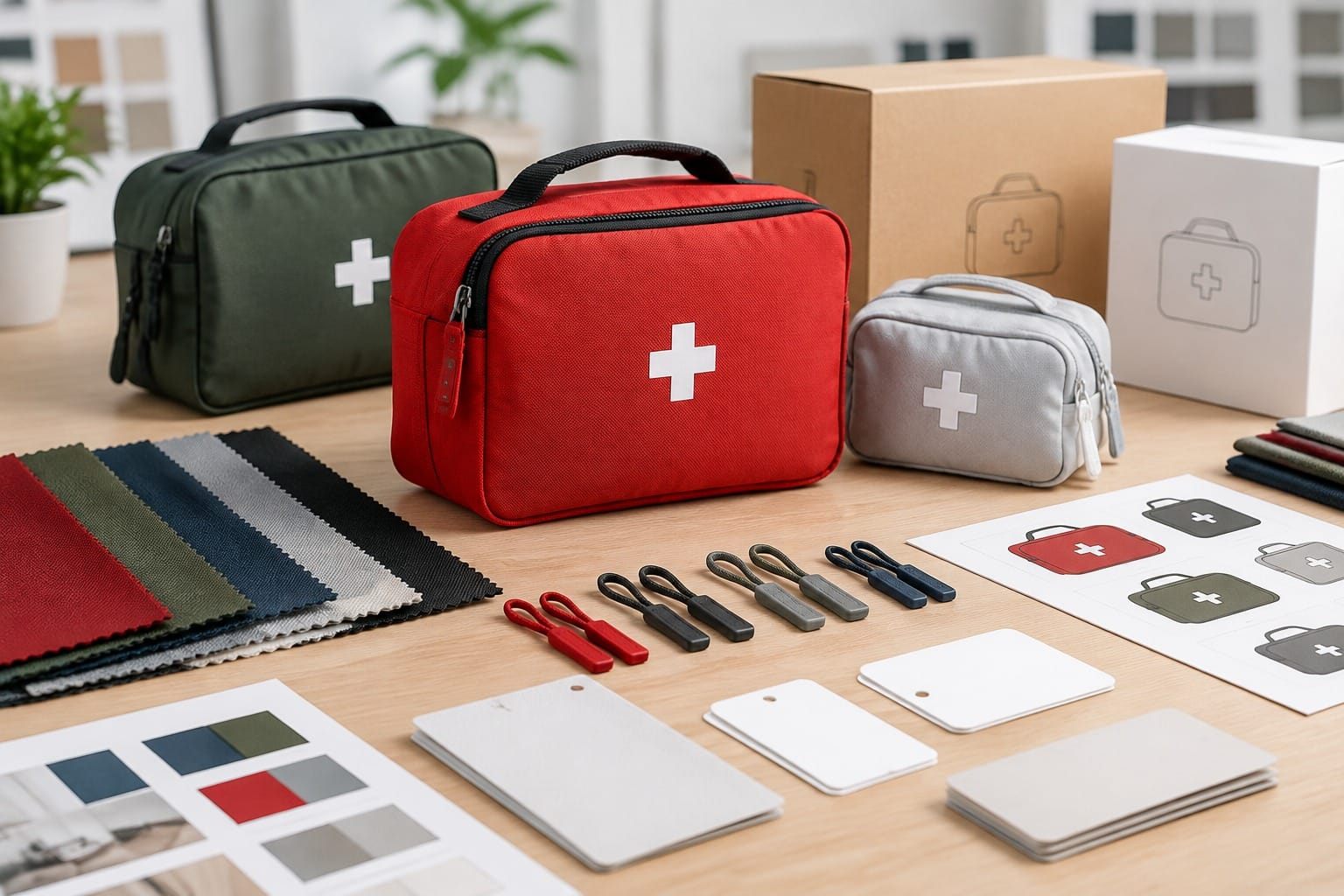
Five quotations arrive for the same private label kit, and none of them can be compared. One prices a 20-piece contents list, another prices a 24-piece list, a third assumes printing on the bag, and two leave delivery terms blank. The differences are not commercial. They are differences in what each factory thought it had been asked to make.
An oem first aid manufacturer brief is the document that prevents this. It is not a purchase order and it is not a specification sheet on its own. It is the one file that carries the product definition, the packaging definition, the commercial envelope and the evidence requirements together, so that every reply answers the same question.
Getting the oem first aid manufacturer brief right matters more than choosing the factory, because a well-briefed factory will tell you where the design cannot be built, while a badly briefed one will price something else and discover the problem in sampling.
Why an OEM First Aid Manufacturer Brief Decides the Comparison
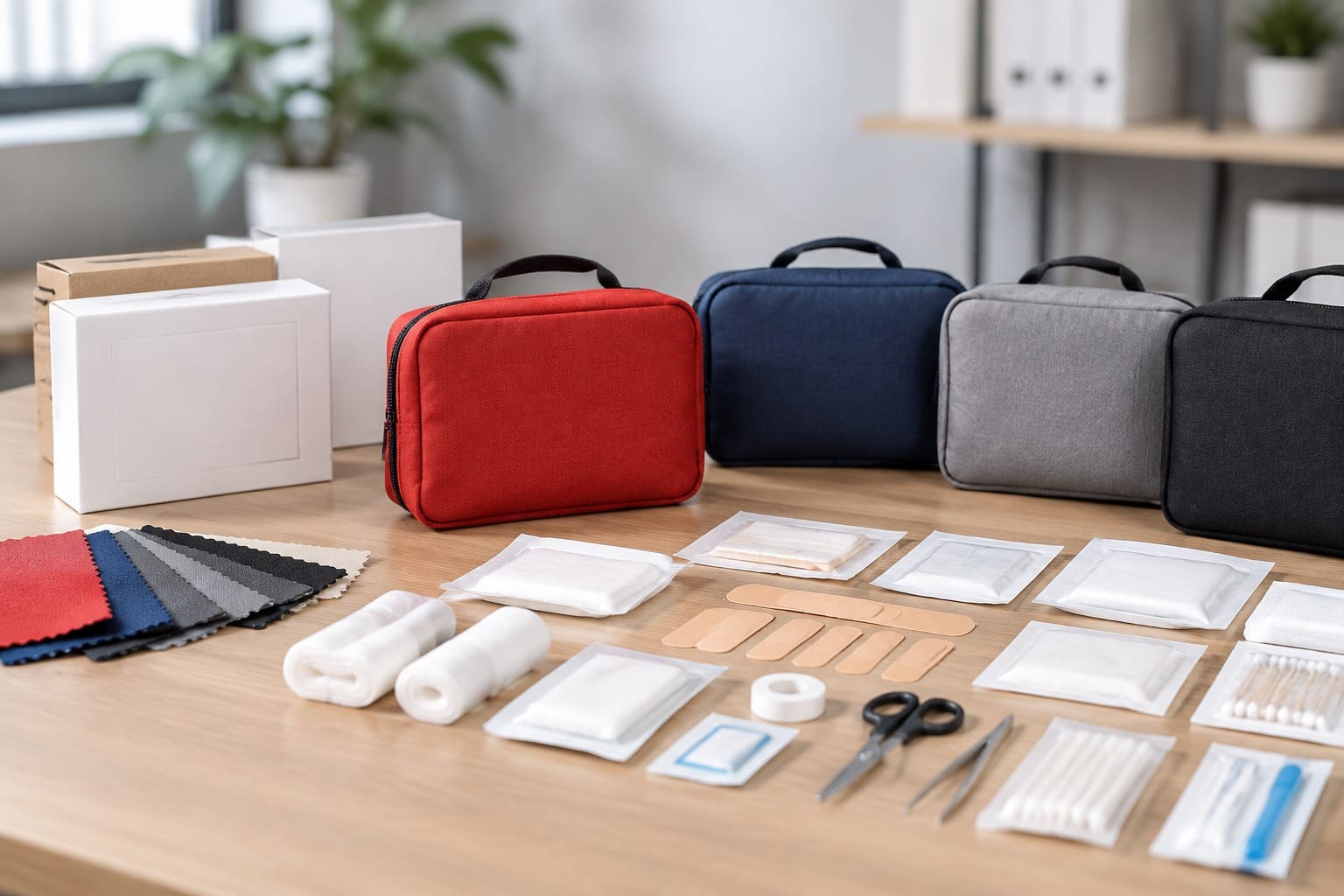
The brief removes two kinds of ambiguity, and both of them distort price.
The first is product ambiguity. Two factories given a written description of a first aid kit will fill the gaps differently, because a kit is a bundle of separately specified items and every gap becomes a component decision. A brief that names the component list, the quantities and the case specification removes those decisions.
The second is scope ambiguity. Printing, instruction cards, retail cartons, pallet configuration and delivery terms each sit somewhere between product and logistics. When they are not assigned explicitly, some factories absorb them into the unit price and others exclude them, and the resulting numbers look far apart while describing the same product.
The test of a brief is simple: hand it to two suppliers and ask each to list anything left undefined. A short list of items from both means the brief is complete. A long list means the brief is a wish, not a request.
The Six Blocks of a Brief
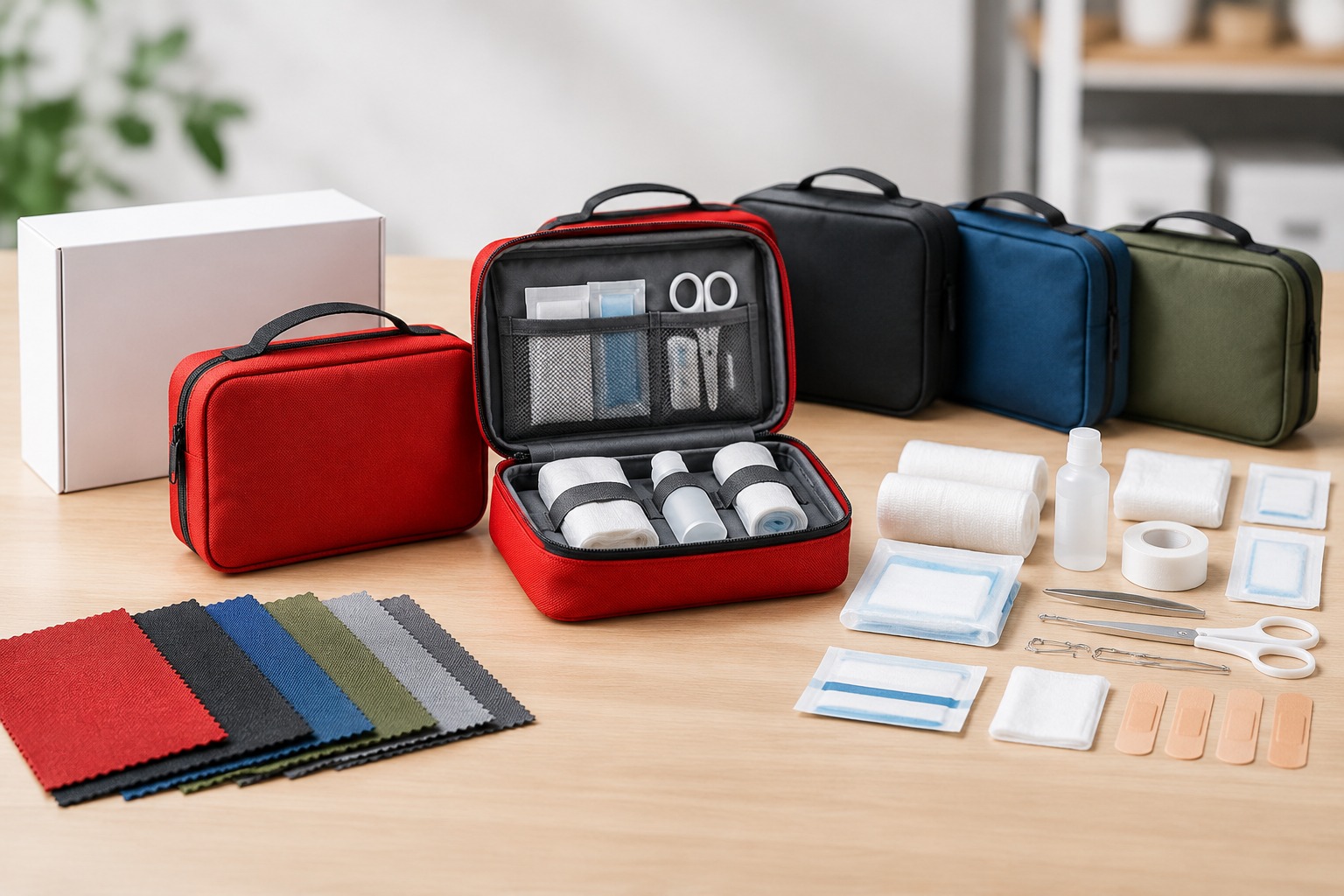
Six blocks, in this order, and an oem first aid manufacturer brief is only as strong as the weakest of them. Order matters because the later blocks depend on decisions taken in the earlier ones.
| Block | What it contains | Why it changes the quote |
|---|---|---|
| 1. Product definition | Component list with quantities, case format, dimensions, materials | Sets the bill of materials the price is built from |
| 2. Packaging definition | Inner packaging, retail carton, artwork method, instruction format | Separates internal packing from retail-ready packing |
| 3. Compliance inputs | Destination market, requested documents, labelling language | Determines which file formats and test evidence are quoted |
| 4. Commercial envelope | Order quantity, delivery term, payment split, price validity | Fixes the basis on which all replies can be normalised |
| 5. Evidence | Sample requirement, validation criteria, revision control | Turns the sample into a check rather than an opinion |
| 6. Timeline | Sample date, production date, shipment window | Converts lead time into a committed schedule |
Blocks one and two are the ones buyers most often compress, and they are the two that drive the unit price most directly. A packing change inside the kit is not a cosmetic change, because it alters the number of components and the assembly step count.
Specification Detail That Changes the Quotation
Three specification areas move a quotation more than buyers expect, and each one belongs in the oem first aid manufacturer brief rather than in a later email.
Case and bag construction. Material, closure type, interior dividers and hardware are separate line items in a factory’s costing. The variables are set out in more depth in the notes on fabric, colour and hardware for custom first aid bags, and the brief should state a choice rather than a preference for each one. A brief that says “durable material” is asking the factory to price its own assumption.
Artwork and prepress readiness. Printing adds a setup step, and the setup depends on how finished the artwork is when it arrives. The checks that make artwork production-ready are covered in the private label artwork and prepress checklist, and a brief that references those checks will get a printing price that does not move after the first proof.
Inner packaging and instruction format. Whether instruction cards are printed, folded or language-specific affects both the print run and the assembly sequence. Buyers who need a versioned document inside the kit should say so in the brief, because the format is settled at this stage rather than after design approval.
A specification sheet can carry the first of those three on its own. The custom medical bag specification sheet guide sets out the minimum fields and the revision numbering practice that keeps a sheet referenceable across reorders. The brief then wraps that sheet together with the other five blocks rather than replacing it.
Commercial Terms That Belong in the Same Document
In an oem first aid manufacturer brief, commercial terms are not a separate negotiation to be held after the specification is agreed. Sending them later is what produces quotations that cannot be lined up.
Four terms belong in the brief itself.
- Order quantity and its structure. A single number is not enough. State the first order quantity and the expected repeat pattern, because both affect how a factory loads the line and what it is willing to commit on price.
- Delivery term. Naming the term changes who pays for which leg of the movement, and each of the standard terms assigns risk and cost differently. The Incoterms rules published by the International Chamber of Commerce are the reference point suppliers work from, so the brief should name the term and the named place rather than describing the arrangement in words.
- Payment split. Deposit, balance and any inspection-linked release should be stated, not inferred.
- Price validity. A validity window that is shorter than the production cycle forces a re-quote before the order is even placed.
Volume structure interacts with all four. The way quantity bands are set, and what causes a band to move, is covered in the first aid kit MOQ planning notes; the useful brief states the likely annual volume even when the first order is small, because that figure is what a factory actually prices against.
What the Brief Should Not Try to Settle
Two questions get pulled into briefing documents that do not belong there, and including them slows every reply.
The first is regulatory classification. Which category a product falls into is a decision made under the rules of the destination market, and it is not something a manufacturer can settle on a buyer’s behalf. The device classification guidance published by the US Food and Drug Administration illustrates how market-specific that process is. The brief should therefore request documents and evidence, and leave the classification conclusion to the buyer or their importer.
The second is quality-system expectations. Buyers often want to know which standards a factory works to, and referencing a standards body is useful shorthand, as the AAMI standards library shows for medical device standards. The brief should ask which certificates or reports the supplier can evidence, in writing, rather than assuming any particular status.
Leaving both questions out of the oem first aid manufacturer brief does not weaken it. It keeps the brief to things a factory can answer with a number.
FAQ
What is an oem first aid manufacturer brief and how does it differ from an RFQ?
The brief is the content, and the RFQ is the request that carries it. In practice the two travel together as one document sent to several factories. What separates a useful brief from a vague one is that it defines six blocks explicitly: product definition, packaging definition, compliance inputs, commercial envelope, evidence requirement and timeline. An RFQ that carries only a product description will produce replies that are individually plausible and mutually incomparable, which is the outcome the brief exists to prevent.
How much component detail should the brief include?
Enough that two factories would build the same kit. That normally means a component list with quantities, a case specification with dimensions and materials, and a packaging specification covering inner packing and outer carton. Naming every component matters more in first aid kits than in single-item products, because a kit is assembled from separately specified parts and each part carries its own minimum order quantity and lead time. Where a component is still open, say so explicitly and mark it as buyer-selectable rather than leaving it unstated.
Should samples be requested in the brief or afterwards?
Both, at different levels. The brief should state that a sample will be required, what the sample will be checked against, and which revision of the specification governs it. The sample itself is usually quoted as a separate line and ordered once the specification is settled. Requesting a sample before the brief is complete wastes a cycle, because the sample will be checked against a sheet that is still moving, and any discrepancy found will be a specification problem rather than a production problem.
How many factories should receive the brief?
Three is usually the workable number for a first pass. Fewer than three makes it difficult to separate a market price from one factory’s pricing, and more than three multiplies the specification-reading work without improving the comparison. If all three replies come back with the same field left blank, the brief is the constraint rather than the market, and it is worth tightening the request and running the pass again rather than negotiating against an incomplete reply.
What should happen when a factory proposes a substitution?
Read it as information, not as a rejection. Factories propose substitutions for real reasons, including component availability, minimum order quantities and tooling constraints. The question for the buyer is whether the substitute changes the specification, the classification or the buyer’s own documentation. A substitution that changes none of those is a routine variance. One that changes any of them has to be recorded, and the brief should state the notice period required before any substitution is regarded as acceptable.
Sending the Brief Before the Sample
An oem first aid manufacturer brief is a low-cost document that saves expensive iterations. Written once and versioned like any other controlled document, it turns a series of individual negotiations into a single comparable exercise, and it gives a factory a fair chance to answer accurately rather than to guess.
The sequence that works is straightforward: product definition, packaging definition, compliance inputs, commercial envelope, evidence, timeline. Send the same file to every candidate, require written answers against each block, and compare the replies block by block before comparing totals. The OEM and private label programme guide covers how that brief fits into a programme from first sample to repeat order, and the OEM supplier comparison framework shows how to score the replies once they arrive.
Two further decisions sit alongside the brief and are worth settling at the same time. The logo and marking method is one, and the options are set out in the custom logo branding methods guide; the packing structure is the other, covered in the private label packaging options guide. Buyers still deciding whether the product should ship filled or as a carrier can settle that first using the stocked kits and empty bags comparison, because it changes what the brief has to define.
A brief that answers the same six questions for every recipient is the difference between five quotations and one decision.