
A distributor wins a fleet account and discovers that the order is not one order. Forty vans, six trucks, two minibuses and a handful of pool cars share a logo and nothing else. Each vehicle class raises its own question about a vehicle first aid kit: which rule applies, which format fits, and how thirty kits get checked and restocked without a full-time administrator.
Buyers who answer those three questions separately, in that order, end up with a programme. Buyers who order one kit for the whole fleet end up with kits in the wrong vehicles and a replacement problem they cannot see until an inspection or an incident exposes it.
This article sets out the sequence. It covers where vehicle kit requirements come from, how format follows vehicle type and duty cycle, and how the arithmetic of fleet quantities interacts with a minimum order quantity. UneedAid’s B2B sourcing guide for emergency kits and bags covers the range itself; this article deals with fleet-level planning.
Vehicle first aid kit scope: three decisions, in order
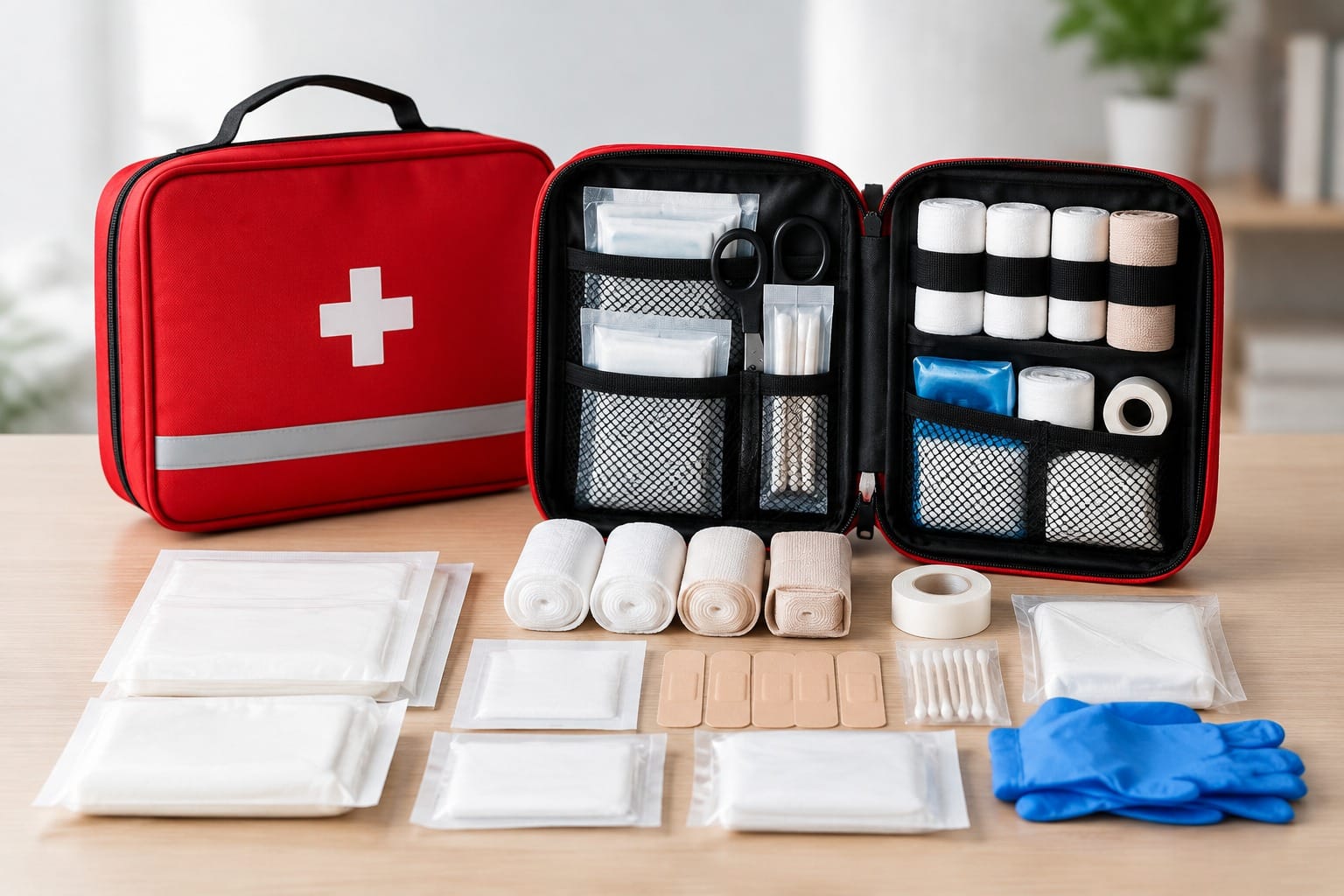
The order matters because each decision constrains the next. Choosing a format before establishing the applicable standard produces a kit that fails inspection. Choosing a quantity before the standard and format are fixed produces stock that cannot be redistributed across the fleet.
| Decision | What it settles | What it depends on |
|---|---|---|
| Standard | What the kit has to contain, and which document set follows it | The destination market and whether the vehicle counts as a place of work |
| Format | Bag, case or box, and where it lives in the vehicle | Vehicle class, crew size, access in a roadside stop |
| Replacement | How the fleet stays complete over time | Shelf life, vehicle count, who owns the check |
A fleet that reverses the order usually ends up re-ordering inside twelve months. The first order is spent on a format that fits the vehicle, and the second order is spent on contents that satisfy the market.
Which standard applies, and why the answer varies by market
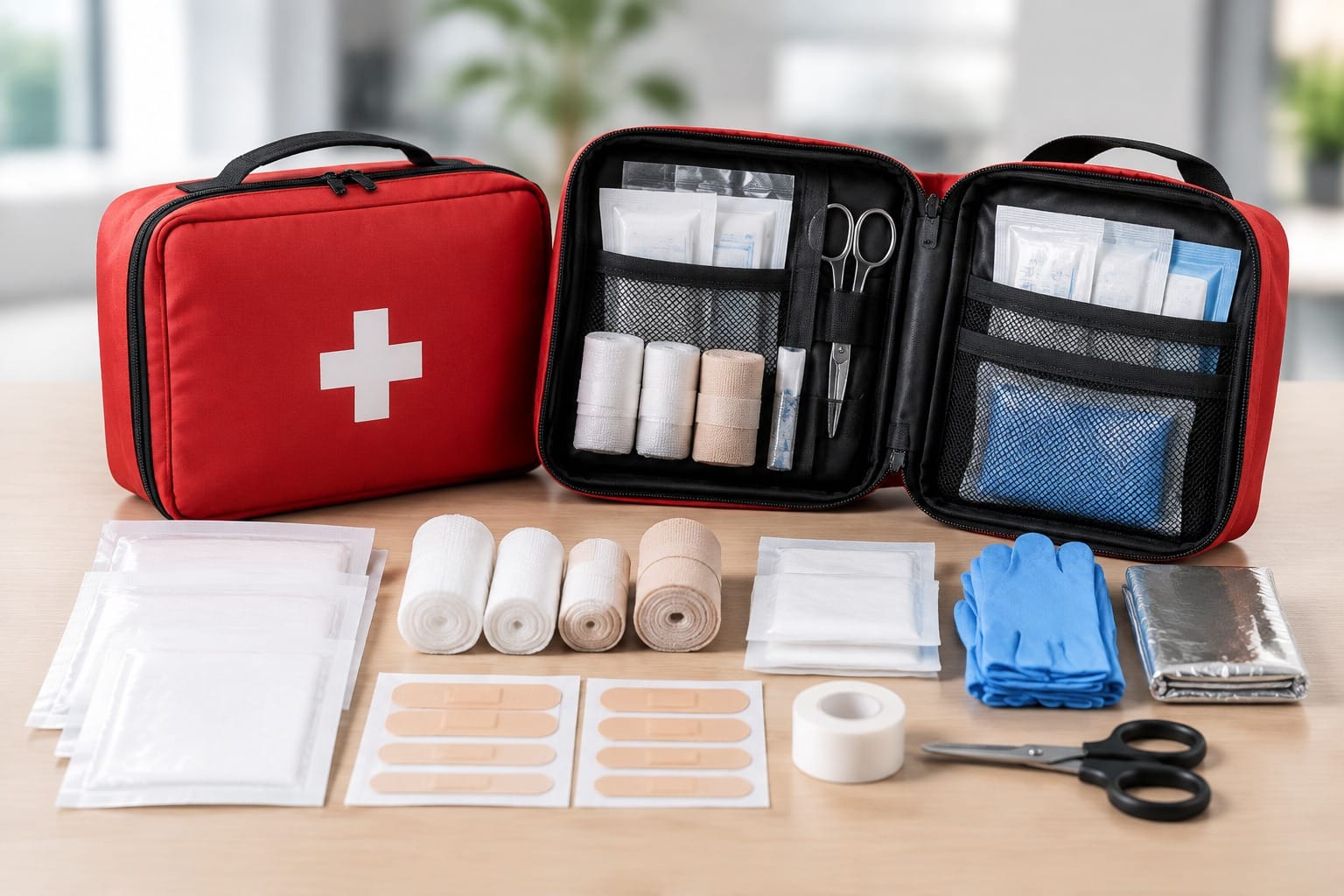
Vehicle kit requirements are not one rule applied everywhere. They come from two different sources, and a fleet that crosses a border can be subject to both.
The first source is workplace health and safety law. In the United Kingdom, the Health and Safety (First-Aid) Regulations 1981 place the duty on the employer in regulation 3: equipment and facilities must be “adequate and appropriate in the circumstances” for first aid to be given to employees who are injured or become ill at work. A driver on the road is still at work, which is why fleets in that market classify a vehicle kit as part of first aid provision rather than as vehicle equipment. The Health and Safety Executive’s guidance, including its section on first aid for travelling, remote and lone workers, is where fleet managers look for how the duty is interpreted in practice.
The second source is transport regulation, which is narrower and sometimes explicit about vehicles. The UK guidance on daily walkaround checks for buses and coaches lists the first aid kit as an inspected item and states which passenger service vehicles must carry one, adding that it has to be present, in good condition and easy to access. That is a different kind of obligation from a general employer duty: it is tied to vehicle category, and it is checked as part of the vehicle’s condition.
Two consequences follow for anyone sourcing a vehicle first aid kit at fleet scale.
- For a vehicle first aid kit, the applicable standard is a property of the market the vehicles operate in, not of the fleet’s head office. A single fleet operating in three markets may need three kit specifications.
- Vehicle category can create an obligation even where the workplace duty would not apply, which is why the specification should be confirmed against the market’s transport rules as well as its safety rules.
Neither point can be settled by a supplier. UneedAid supplies documentation by SKU and coordinates the export file set, while confirming that a specification satisfies a given destination market remains the buyer’s decision, taken with the fleet’s own advisers.
Matching kit format to vehicle type and duty cycle
Once the vehicle first aid kit standard is fixed, format becomes a practical question: where does the kit live, who reaches it, and under what conditions.
| Vehicle type | Usual format | What drives the choice |
|---|---|---|
| Delivery van, single driver | Hand-carry case or compact bag | One person, one kit, storage near the cab rather than the load bay |
| Service and utility vehicle | Waist or shoulder bag | The kit travels with the technician away from the vehicle |
| Truck and HGV | Case-style supply box | More occupants and more storage volume, so a rigid case survives daily handling |
| Minibus and coach | Fixed box at an accessible point | Inspection looks for presence and access; the kit is not a personal item |
| Pool car or shared vehicle | Flat, low-profile kit | Multiple users, no owner, so the kit has to be obvious and self-explanatory |
| Mixed fleet depot | Wall-mounted provision plus portable kits | The depot is a workplace in its own right, and vehicles leave it |
Formats differ less in contents than in how a kit is opened and carried. A workplace kit configuration checklist covers the contents side of that decision; the fleet decision is about the container and the mounting.
Duty cycle matters as much as vehicle type. A van that returns to a depot nightly can rely on a fixed kit and a restock routine. A vehicle that stays out for weeks needs a kit that carries its own replacement items and a check that happens at service intervals rather than at the end of a shift. This is the same reasoning that shapes bag formats for outdoor and field use, applied to a commercial fleet Replacement timing adds a second layer, and the seasonal ordering calendar for first aid products covers how a purchasing window is dated back from a season or a review.
Fleet arithmetic: quantities, tiers and the pilot decision
Fleet purchasing behaves differently from single-site purchasing because the total quantity is large while the per-unit need is modest. That mismatch is where the planning usually goes wrong.
A vehicle first aid kit order covering forty vehicles is not forty kits in any simple sense. Kit sizes differ by vehicle class, spares are needed for vehicles off the road, and restock items are consumed at a different rate from the containers. The practical split is three lines rather than one: containers by vehicle class, consumables by consumption rate, and a spares pool sized to the number of vehicles in service.
Our kit programmes start at 1,000 pieces, and the tier structure means that a consolidated fleet order generally sits in a different bracket from a series of small top-up orders. Consolidation has a real cost as well, which is shelf life. Consumables age whether or not a vehicle is on the road, so a fleet that buys a year of stock in one movement needs somewhere controlled to keep it. The MOQ and quantity tier planning framework sets out how a supplier divides those tiers; the fleet-side question is how many of them are worth taking.
Sample-based validation belongs in the fleet plan rather than after it. Our standard practice is to validate a sample before bulk production, and for a fleet that is the moment to confirm that the chosen format actually fits the vehicle: whether the case clears the under-seat space, whether the mounting holds on a rough route, whether the contents list is legible in the conditions the crew will work in. A format decision made from a catalogue image is the single most common reason a fleet re-orders in the first year.
A pilot is worth running when more than one vehicle class is involved. Two or three vehicles, one full duty cycle, then a decision. The pilot costs a small amount of kit and saves the cost of a fleet-wide order built on an assumption.
Replacement is the part that fails
Most fleet failures are not supply failures. They are maintenance failures, and they appear as missing items and expired stock rather than as late deliveries.
Three mechanisms keep a vehicle first aid kit programme complete, and a programme owner should name which one applies before the first order ships:
- Restock packs by vehicle class. A matched pack means a driver or a fitter replaces consumed items without deciding what to order.
- A check tied to an existing routine. Vehicle servicing, safety inspections and walkaround checks already exist. Adding a kit check to a routine that already happens is far more reliable than creating a new one.
- A substitution rule. When an item is unavailable at the moment of a repeat order, something will be substituted unless the rule says otherwise. Agreeing that components stay identical across orders, and putting the rule in writing, avoids finding out at the next inspection that two hundred kits no longer match their own specification.
Documentation follows the same logic. A fleet file that holds one specification per vehicle class, one contents list per kit code, and one record of what was substituted travels well between markets and survives staff changes. It also answers the question an inspector or an insurer actually asks, which is not what the kit contains today but how the employer knows.
Where a fleet covers several markets, that file is also the lowest-cost protection against a specification that satisfies one regulator and not the next.
FAQ
Does every vehicle in a fleet need its own first aid kit?
Not automatically, and the answer differs by market. In some markets the obligation follows the vehicle category, so specific vehicle types must carry a kit regardless of how the fleet is organised. In others it follows the employer duty to provide adequate first aid at work, which covers drivers because they are at work, and the kit may be per vehicle, per crew or per route depending on how the work is done. The practical approach is to fix the standard per market first, then decide provision per vehicle class rather than per registration number.
How do we decide between a bag, a case and a wall-mounted box?
Start from where the kit has to be reachable. A kit that never leaves the vehicle can be fixed, which favours a rigid case or a mounted box. A kit that travels with a technician favours a waist or shoulder bag. A depot used by many vehicles may need both, because the building is a workplace and the vehicles leave it. Contents drive the specification; usage drives the container, and getting the container wrong is the most common reason a fleet re-orders early.
How many spare kits should a fleet hold?
Size the spares pool against vehicles in service rather than against total fleet size. Vehicles off the road do not consume kit, and a pool sized on the register tends to sit unused until it expires. A common starting point is a spare ratio tied to the number of vehicles that are simultaneously in service, reviewed after the first full year when actual consumption is known. The spares pool should be drawn from the same production run as the working kits so that contents match.
Should the whole fleet use one kit specification?
Only if every vehicle does the same work in the same market. Vehicle class changes both the applicable rule and the physical format, and duty cycle changes how much self-contained restock a kit needs. Standardising where it is possible and differentiating where it is required is usually cheaper than either extreme, because it keeps one documentation set for the common lines while allowing a small number of vehicle-specific variants.
What tends to go wrong after the first fleet order?
Missing items and expired stock, usually within eighteen months. Replacement is rarely planned at the same time as the initial purchase, so the fleet ends up with kits that were complete on delivery and incomplete at the first inspection. A fleet vehicle first aid kit order is usually the easy part; keeping every kit complete is the part that fails. Building restock packs, a check tied to an existing servicing routine and a written substitution rule into the original order costs very little at that stage and is expensive to add later.
Where fleet planning meets the rest of the programme
A vehicle first aid kit programme is a small version of everything else in B2B first aid supply. It has a specification set by the market, a format set by use, a quantity set by the fleet register, and a maintenance obligation that outlives the order.
Getting the sequence right is what turns a fleet enquiry into a repeatable account. The specification protects the buyer, the format protects the crew, and the replacement plan is what keeps the account alive after the first delivery.