
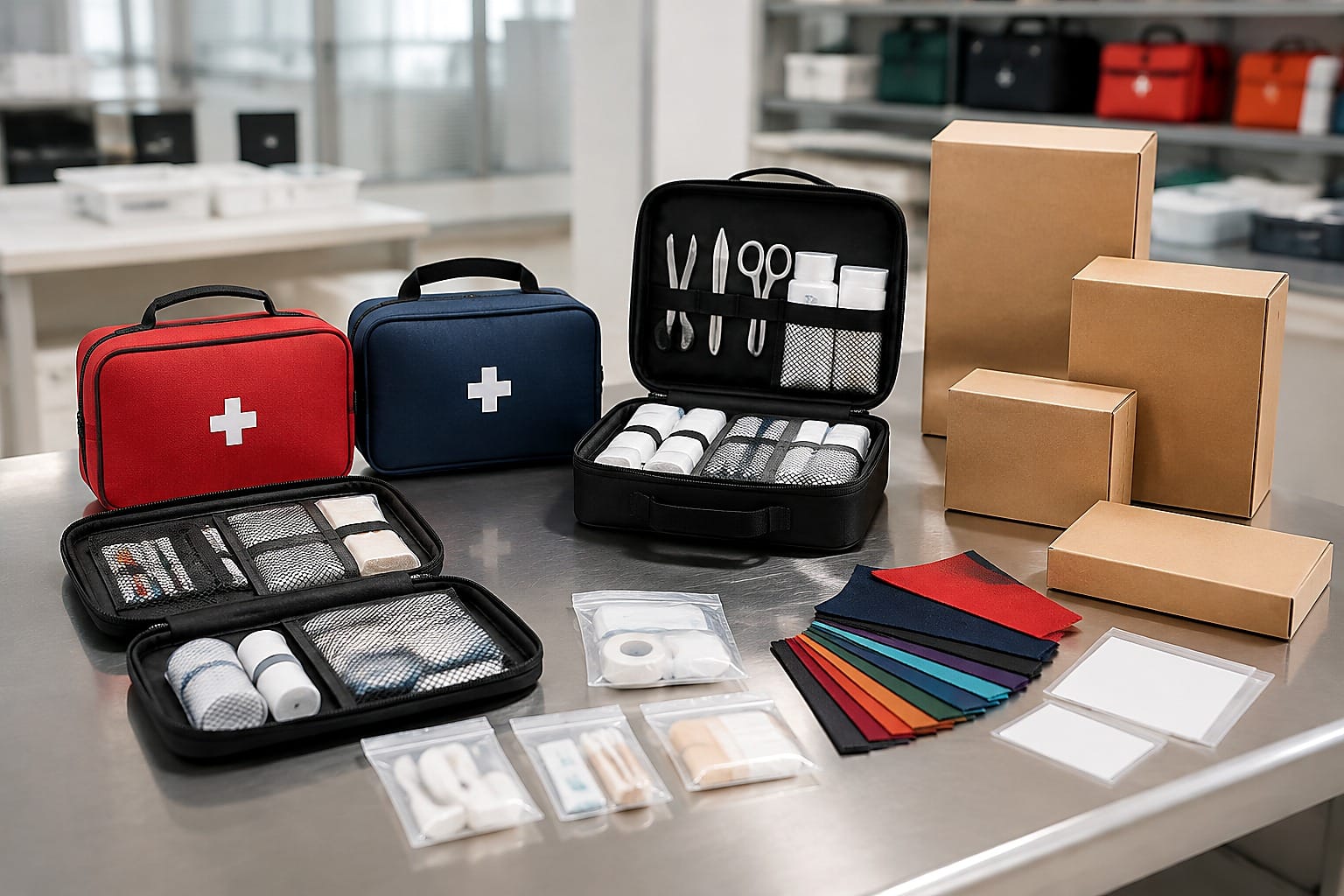
A private-label kit can have the right contents and still arrive as the wrong product if the packaging cannot hold the load, the label omits required information, or the logo process fails on the chosen surface. Private label first aid kit packaging should therefore be specified as a sourcing system: container format, substrate, closure, decoration, label data, packing configuration, sample approval, and export documentation are one connected decision.
The practical approach is to choose a packaging family first, map the physical and information requirements second, and release production only after a representative sample is checked. A logo-only instruction is too thin for a factory quotation. The supplier needs enough detail to confirm feasibility, tooling, setup costs, minimum order quantities, carton use, and any destination-market review the buyer must complete.
What should private label first aid kit packaging achieve?
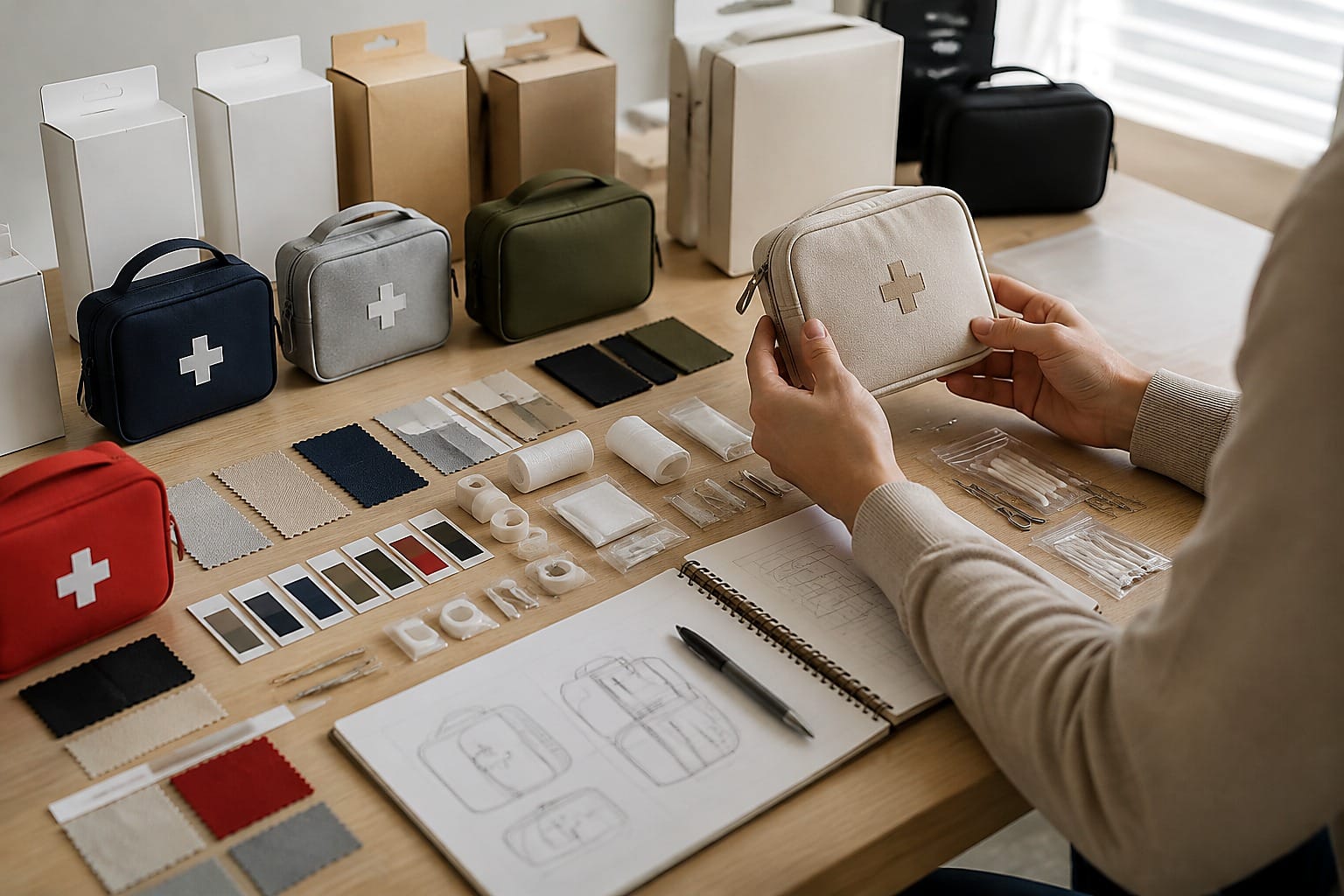
Packaging has four jobs in a B2B first aid project. It must protect the contents during storage and transport, make the assortment understandable to the intended user, present the buyer’s brand consistently, and provide controlled information for downstream sales and import review. Those jobs can pull in different directions. A rigid case may protect contents but add freight volume. A soft pouch may reduce cube but require better internal organization and seam checks.
Before asking for artwork, write a short packaging brief with these inputs:
- Intended channel and use environment, such as workplace, vehicle, outdoor, retail, or institutional supply.
- Finished kit dimensions, component count, maximum loaded weight, and any sharp or liquid items.
- Container preference: soft bag, hard case, folding box, drawer box, or a mixed presentation.
- Opening method, access frequency, tamper evidence, carry method, and refill expectation.
- Brand elements, legal entity details, language versions, barcode needs, and artwork ownership.
- Quantity tiers, target delivery window, shipment terms, and carton or pallet restrictions.
- Sample stages and the person authorized to approve a production reference.
This brief lets a supplier price the same object that the buyer intends to sell. It also gives the buyer a record against which substitutions can be reviewed. A packaging change that appears minor on a screen can alter the bill of materials, packed dimensions, or label area. That control is central to private label first aid kit packaging because the brand owner must approve the physical product, not only an artwork file.
Which packaging formats fit a private-label kit?
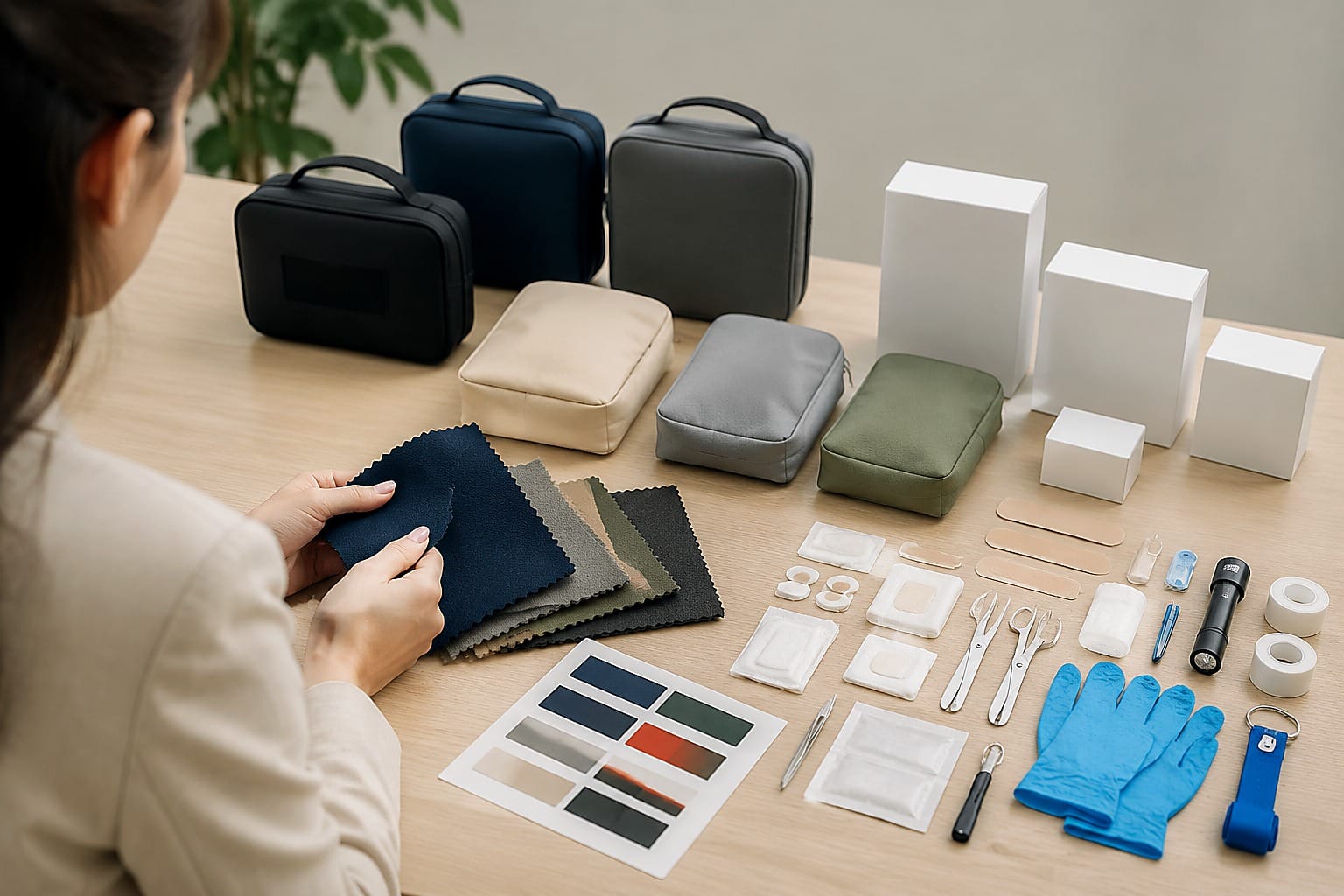
The format should follow the use case and refill pattern rather than the logo. Soft bags suit programs that value low empty weight and flexible storage. Hard cases provide a more defined shell and can protect components from compression. Folding cartons create a broad print area and efficient flat shipment, but the inner organization must prevent items from moving into a single pile. A hybrid approach can combine a branded carton with a reusable pouch.
| Format | Useful strengths | Questions to resolve before quoting | Typical branding routes |
|---|---|---|---|
| Soft pouch or bag | Low empty weight, flexible storage, multiple carry formats | Fabric, coating, seam access, zipper or hook-and-loop, loaded sag | Screen print, heat transfer, woven label, patch, embroidery |
| Rigid plastic or metal case | Defined protection, stackable shape, repeatable cavities | Wall thickness, hinge, latch, gasket, insert fit, tooling | Pad print, UV print, label, molded mark |
| Folding carton | Large printable panel and efficient flat shipment | Board grade, folding tolerance, internal tray, moisture exposure | Offset or digital print, label, spot finish where feasible |
| Hybrid pouch and carton | Reusable inner pack with retail presentation | Two-part BOM, fit between components, separate approval samples | Printed carton plus textile or plastic marking |
The equipped and customizable first aid kit category is a useful reference when comparing loaded formats. It does not replace a buyer-approved component list. Ask for the loaded dimensions and a sample because empty measurements cannot show whether the contents remain accessible or whether the closure is under strain.
How do branding methods change the packaging decision?
Branding is a process choice tied to the substrate and artwork. Screen printing can suit simple, solid-color marks on a stable fabric panel. Heat transfer can carry finer details on compatible textiles, but the supplier should confirm the coating and the press conditions. Woven labels and patches create a separate badge that may be useful when the bag is reused across programs. Embroidery adds texture and thread but can reduce detail in small lettering. Rigid cases may need pad printing, UV printing, or a pressure-sensitive label instead.
The method should be written into the sample record with the artwork version, color reference, dimensions, position, and acceptable tolerance. Do not approve a digital mock-up alone. Inspect a physical sample after the actual decoration process. Check registration, fine text, contrast, edge lift, surface distortion, and how the mark sits beside seams, handles, zippers, hinges, or molded ribs. The earlier guide to custom first aid kit logo methods explains why the same artwork can behave differently on woven fabric, coated nylon, and rigid plastic.
For recurring orders, keep the approved mark as a controlled reference. Record the Pantone or other agreed color reference where applicable, but also record the physical sample ID. Color references do not describe every coating or fabric surface. A retained sample gives the factory and buyer a shared comparison point when a repeat order is reviewed.
What label and information controls belong in the brief?
Packaging information should be separated into brand content, product identification, and market-specific information. The importer or brand owner remains responsible for confirming which statements, symbols, languages, and registrations apply in each destination. A supplier can prepare artwork and provide technical evidence, but a factory quotation is not a regulatory determination.
At minimum, ask the supplier to reserve space for the information that the buyer has confirmed, such as:
- Product or kit description and configuration reference.
- Brand owner, manufacturer, or responsible economic operator details where required.
- Lot or batch reference, production date, shelf-life or expiry statement when applicable.
- Component count, size, material, or other declared specification.
- Storage or handling instructions supported by the product documentation.
- Barcode or GTIN placement, quiet zones, and scan orientation.
- Country-of-origin and shipping marks for the master carton when applicable.
GS1 explains the role of identification keys and barcode structures for products and logistics units in its standards library. The U.S. Food and Drug Administration also describes general device labeling responsibilities in its medical device labeling guidance. These are reference sources, not a conclusion that a particular kit is regulated in the same way in every market. Confirm the actual classification and label duties with the destination-market importer or qualified adviser.
How should buyers compare cost, MOQ, and protection?
The lowest-unit-price package can become the most expensive option after setup, tooling, inserts, color changes, and freight volume are included. Compare private label first aid kit packaging options on a landed-cost worksheet rather than unit price alone. Request a separate line for packaging material, decoration, insert or tray, assembly, sample charges, tooling, and master-carton packing.
Use this comparison sequence:
- Compare the same loaded bill of materials and finished dimensions.
- Separate one-time charges from recurring unit cost.
- Request quantity tiers that show the MOQ for each decoration method and format.
- Add packed cube, gross weight, cartons per pallet, and shipment assumptions.
- Ask which substitutions would trigger a new sample or artwork approval.
- Calculate the cost of a controlled pilot run before the target bulk tier.
MOQ is often driven by the least flexible element, not the bag itself. A custom molded case, printed carton, woven label, or special zipper color may each have a different threshold. Ask the supplier to identify the binding MOQ and whether a stock component can be used for a pilot without changing the approved production specification. This is a frequent cost checkpoint in private label first aid kit packaging projects.
What should the sample and inspection plan cover?
A packaging sample should represent the production process. A blank sample is useful for dimensions, but it cannot confirm print quality, label hierarchy, or packed fit. For private label first aid kit packaging, request a sequence that matches the project risk:
- Structural sample: dimensions, opening, closure, handle, pocket layout, and insert fit.
- Decorated sample: actual logo method, colors, label stock, and artwork revision.
- Loaded sample: the agreed components, packing order, weight, and access check.
- Carton sample or packing data: master-carton dimensions, marks, and protection during shipment.
Record who approved each stage and what changed. If the loaded sample requires force to close, leaves liquid items unrestrained, hides a label, or creates a sharp contact point, pause the approval and request a correction. Keep photographs and measurements with the purchase specification. The private-label first aid kit sourcing guide provides a broader sample-to-bulk control structure that can be adapted to packaging-led projects.
FAQ
What is the most flexible private label first aid kit packaging format?
There is no single flexible format for every channel. A soft pouch usually gives the buyer more freedom on pocket layout, carry options, and low-volume logo testing. A folding carton offers broad print coverage but depends on a reliable inner tray or pack order. A hybrid can separate retail presentation from reuse. Select the private label first aid kit packaging format after measuring the loaded components and stating the expected access and refill pattern. Then ask the supplier which existing structures can meet the brief without a new mold or an untested material combination.
Can a buyer use stock packaging for a private-label pilot?
Often, a stock bag, case, or carton can reduce setup time for a pilot, but the assumption must be written into the quote. Confirm that the stock structure has enough label area, the same loaded dimensions, and the closure or insert needed for the final configuration. Mark the pilot as a separate revision if the bulk package will use a custom structure. This prevents a pilot sample from becoming an accidental production reference with different materials, decoration, or packing behavior.
How many packaging samples should a supplier provide?
The number depends on the risk and the number of variables. At least one structural sample and one decorated, loaded sample are sensible starting points for a private-label kit. Add a carton or packing sample when freight cube, stacking, or shipping protection affects the commercial decision. If the project uses several bag sizes, languages, or decoration methods, approve a representative sample for each meaningful variant. List every sample ID and artwork revision on the purchase record.
Who confirms labeling requirements for the destination market?
The importer, brand owner, or designated compliance adviser should confirm the destination-market requirements. A supplier can identify available label fields, provide material and process information, and prepare artwork against buyer instructions. That support does not transfer the importer’s responsibility. Confirm product classification, language, symbols, responsible-party details, barcode rules, and any registration or documentation obligations before the final artwork is released for bulk production.
What should be written into a packaging RFQ?
Include the loaded bill of materials, finished dimensions, container format, substrate, closure, decoration method, artwork files, label fields, carton data, quantity tiers, sample stages, inspection points, and shipment assumptions. Ask the supplier to mark each item as stock, modified stock, or new development. Request separate one-time and recurring charges. This makes quotes comparable and exposes the assumptions that can otherwise surface as a late change, new MOQ, or revised delivery window.
Printing is the layer of packaging that outlives the first shipment, because the carton, sleeve or insert stays with the buyer after the kit contents are consumed. A custom first aid packaging printing specification framework sets out the substrate, dieline revision, colour reference and tolerance fields that make two packaging quotations describe the same object.
Artwork is the next release point after packaging selection. The private label artwork prepress checklist covers the fields that must be recorded before a packaging file is handed to a supplier.
Packaging choices set what the buyer sees first, and the printed information inside the pack is what they read second, and that split is covered in instruction card printing for private label kits.
Colour specification belongs on that list, and this guide to Pantone colour matching for packaging explains why one reference is rarely enough.
Before releasing custom packaging, apply the OEM sample validation process to connect physical packaging checks with the approved BOM, artwork, and packing revisions.
Bag material and printed packaging are separate decisions, and this guide to first aid bag fabric options covers the substrate side before print method enters the conversation.