
The sample looks complete on a meeting table, but the zipper strains when the kit is loaded and two component labels do not match the buyer’s approved files. First aid kit sample validation is the controlled comparison of a physical sample against the agreed BOM, container specification, artwork, packing rules, and documented exceptions before an OEM buyer releases bulk production.
The sample should answer one practical question: can this exact, recorded configuration become the production reference? A visual approval alone cannot answer it. Buyers need line-by-line counts, functional checks, file revisions, photographs, exception decisions, and named approval authority. This process supports commercial control; it does not replace destination-market regulatory review or bulk inspection.
What must be ready before first aid kit sample validation starts?
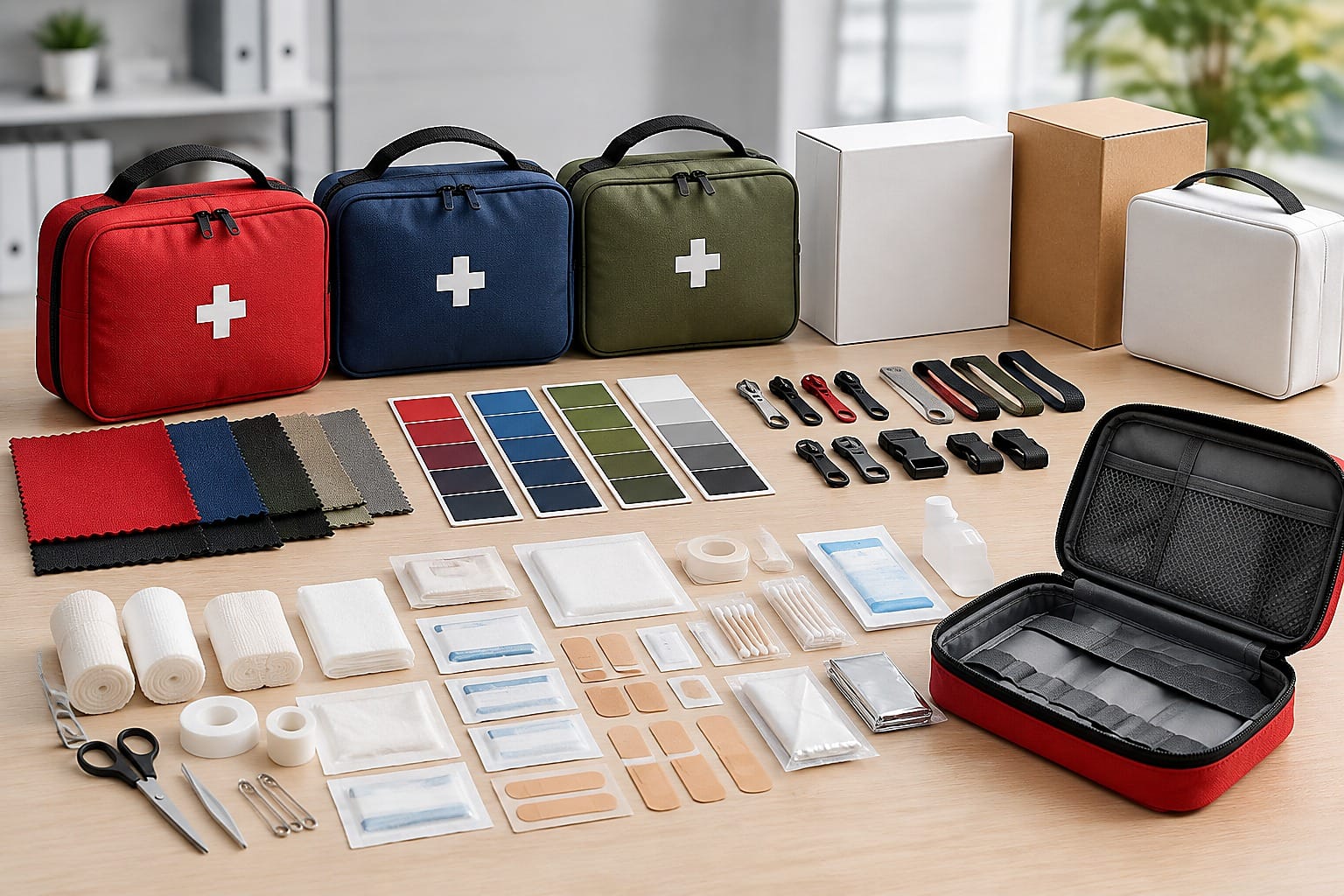
A sample cannot be checked against an unwritten expectation. Before inspection, the buyer and supplier should identify the records that define the proposed unit. At minimum, the review pack should contain the BOM revision, container specification, current artwork register, unit-packing instructions, master-carton proposal, and an exception list.
The BOM needs enough detail to distinguish similar components. Record a stable line number, supplier SKU or buyer code, description, size, quantity per kit, pack unit, label route, dated-field requirement where applicable, and substitution status. A photograph may help recognition, but it does not define a specification.
Prepare these inputs before opening the sample:
- Record the project code, sample ID, preparation date, and courier receipt date.
- State whether the unit is a concept sample, revised sample, or proposed pre-production reference.
- Attach the exact BOM, artwork, container, label, insert, and packing revisions under review.
- List every known temporary component, missing file, hand-made feature, or substitute.
- Name the buyer approver, supplier owner, response deadline, and permitted approval outcomes.
- Define which deviations require a revised physical sample rather than a photograph or digital proof.
- Keep an untouched reference unit when the project quantity and shipping arrangement permit.
The broader OEM private-label project workflow explains how these records connect to quotation, bulk inspection, and repeat orders. Sample review is one release gate inside that workflow, not a substitute for the other controls.
Which type of OEM first aid kit sample is being reviewed?
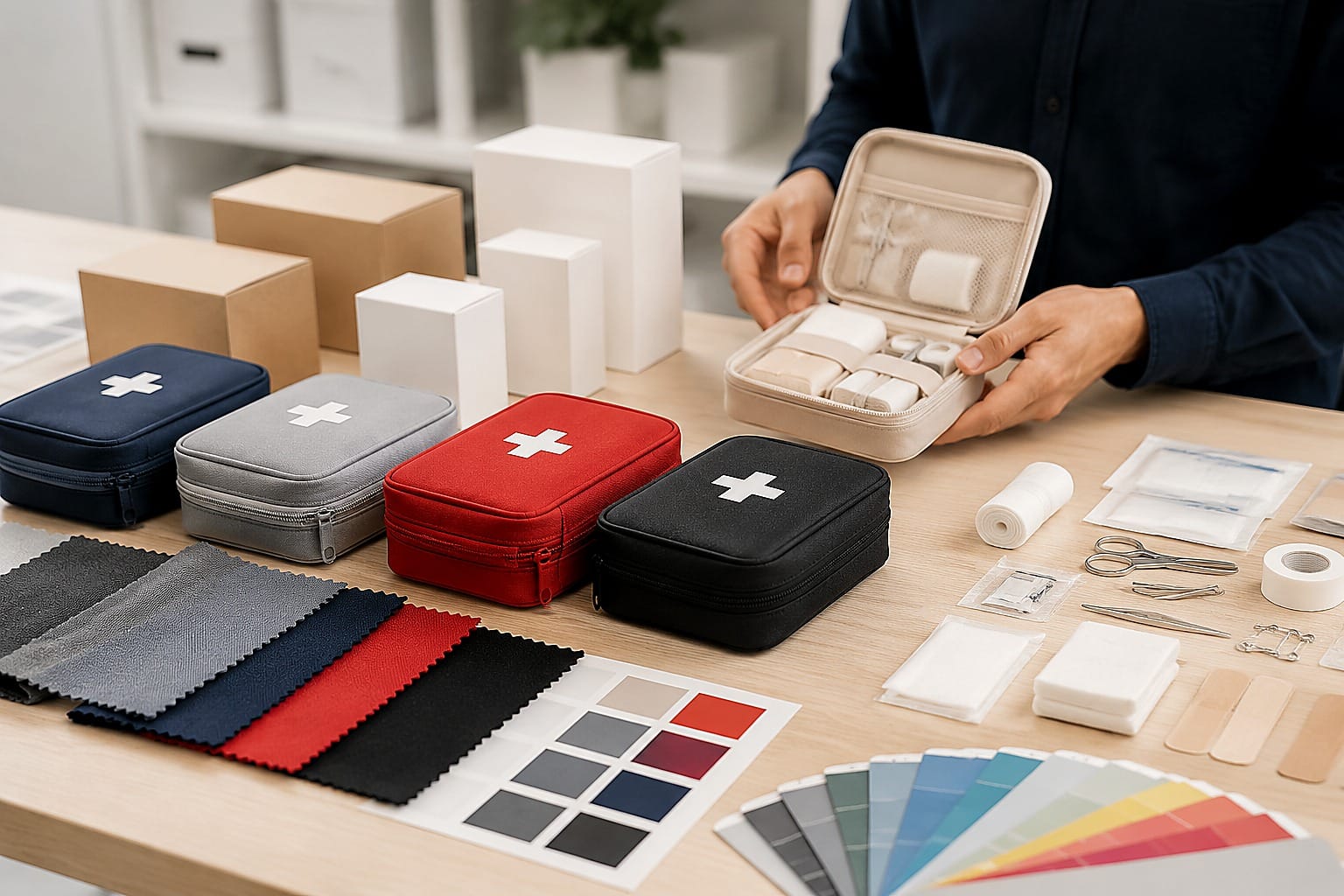
Buyers often use the word “sample” for items with different purposes. The approval record should name the stage because a print swatch cannot authorize a loaded kit, and a concept unit may contain deliberate placeholders.
| Sample stage | Main decision | What may remain open | Suitable approval result |
|---|---|---|---|
| Material or print swatch | Color, substrate, coating, or logo application | Kit structure, BOM, labels, and packing | Approve only the tested attribute |
| Empty-container sample | Dimensions, pockets, seams, closures, carrying method | Final contents and loaded fit | Approve container design with stated conditions |
| Concept loaded sample | General capacity, layout, access, and presentation | Some SKUs, artwork, or retail packing | Request revision or approve project direction |
| Pre-production reference | Proposed bulk configuration and packing | Only written, accepted exceptions | Release, conditional release, or reject |
The pre-production reference should resemble the proposed bulk unit closely enough to test counts, loaded fit, printed applications, labels, inserts, closure function, and packing. If a production component is unavailable for the sample, mark the substitute on the BOM and in the exception list. Do not rely on a verbal promise that it will change later.
Projects still choosing a baseline can compare standard first aid kit configurations before requesting custom changes. The page supports format discussion. The quoted specification and physical sample remain the evidence for the order under review.
How should buyers perform first aid kit sample validation?
Run the inspection in a fixed order. Start with identity and records, then verify contents, branding, function, and packing. This prevents a polished logo from distracting the reviewer from a wrong component or an unrecorded substitution.
Use the following first aid kit sample validation sequence:
- Confirm identity. Match the sample ID, project code, BOM revision, container revision, and artwork register to the review request.
- Photograph the received state. Capture the sealed unit, every side, closure, compartment, label type, insert, unit pack, and carton mark.
- Count the BOM. Remove and count each line. Record missing, extra, damaged, or substituted units without silently correcting the sample.
- Check attributes. Compare descriptions, dimensions, pack units, visible dated fields, and label identities with the approved records.
- Review artwork. Check file revision, language, dimensions, placement, orientation, barcode data supplied by the buyer, and legibility on the actual surface.
- Test the loaded container. Open and close every zipper, latch, buckle, hook-and-loop panel, and seal. Carry or mount the unit in the intended way.
- Repack the kit. Confirm the layout is repeatable, labels remain reasonably visible, and contents do not place abnormal strain on seams or closures.
- Check unit and export packing. Measure the packed unit and compare unit count, carton arrangement, marks, and protection with the packing proposal.
- Classify every finding. Link it to a BOM line, drawing, artwork ID, or packing rule. Assign an owner and due date.
- Issue a controlled decision. Release, conditionally release, or reject the sample in writing. State whether another physical sample is required.
For projects built around a custom bag, the logo and branding methods comparison can help buyers identify which physical applications need sample evidence. Digital artwork confirms content and placement, but the applied sample shows how the chosen process behaves on the actual material and shape.
How should sample findings and exceptions be recorded?
A useful finding identifies the requirement, observed condition, evidence, decision, and next action. “Logo wrong” is too broad. A workable entry might state that artwork revision C was required, revision B appeared on the front panel, photograph 08 records the issue, and a new applied panel is required before release.
| Record field | What to enter | Why it matters |
|---|---|---|
| Finding ID | Stable number such as SV-012 | Keeps comments traceable across revisions |
| Requirement reference | BOM line, drawing, artwork ID, or packing clause | Connects the issue to agreed evidence |
| Observed condition | Specific count, dimension, mismatch, or function result | Removes subjective wording |
| Evidence | Photograph number, measurement, or file comparison | Lets both teams review the same fact |
| Classification | Critical project stop, major, minor, or observation as contractually defined | Supports consistent disposition |
| Disposition | Accept, rework, replace, clarify, or resample | Records the commercial decision |
| Owner and due date | Named buyer or supplier contact and date | Prevents open points from disappearing |
An exception is not automatically a defect. It may be a declared difference between the sample and the intended bulk unit. The buyer still needs to decide whether the difference is acceptable, whether documentary evidence is enough, and whether it changes fit, labeling, documents, cost, lead time, or inspection criteria.
Avoid signing a sample while unresolved points remain in scattered emails. Consolidate them into one exception register. If the buyer grants conditional release, state the conditions and the evidence required before assembly begins.
Does sample approval replace bulk inspection?
No. The approved sample defines a reference configuration; it does not demonstrate that every bulk unit matches it. Production introduces repeated assembly, printing, packing, and material-handling steps. The purchase agreement should separately define in-process checks, pre-shipment inspection, defect categories, sampling method, acceptance criteria, and required records.
ISO 2859-1 describes sampling procedures indexed by acceptance quality limit for lot-by-lot inspection. A citation alone does not choose an inspection level, sample size, or defect limit for a buyer. Those decisions must be defined for the order and its risks.
Private-label roles also require market-specific review. The US FDA’s page on who must register and list discusses activities that include manufacturing, repackaging, relabeling, and specification development. Buyers should map their actual products and activities to applicable requirements rather than assuming that supplier documents or sample approval settle their responsibilities.
Keep sample validation and compliance review connected but distinct. The sample record can verify that a specified label or document was supplied. Qualified market review determines whether the specified information and evidence are appropriate for the destination and commercial role.
What should the final sample approval record contain?
The final record should be short enough to use and precise enough to audit. It needs a clear decision, not a folder of photographs without context. Both parties should be able to identify which physical unit and file set were approved months later.
Include these release fields:
- Project, purchase-order reference, sample ID, and review date.
- BOM, container, artwork, label, insert, and packing revision numbers.
- Photograph index and measurement record.
- Closed findings and accepted exceptions.
- Items still required before material purchase or assembly.
- Approval outcome and whether it applies to one attribute or the complete unit.
- Buyer approver, supplier acknowledgement, and dates.
- Storage location or custody of the reference samples.
- Rule for changes after approval.
A change after release should trigger an impact review. Compare the old and proposed SKU, attribute, artwork, or packing instruction. Record effects on labels, documents, fit, cost, timing, and inspection. Then decide whether approval by document, component sample, applied artwork sample, or a new loaded kit is proportionate.
Keep the first aid kit sample validation record with the purchase-order file so production, inspection, and repeat-order teams use the same approved baseline.
The same control should continue into repeat orders. First aid kit sample validation creates a baseline, while change records preserve that baseline without pretending components and materials will remain available indefinitely.
FAQ
How many OEM first aid kit samples should a buyer request?
There is no universal quantity. The buyer needs enough units for the planned reviews without confusing different revisions. One unit may support an early capacity discussion, while separate buyer and supplier reference units can improve control after final approval. Additional units may be needed for packaging, transport, laboratory, customer, or tender checks when the project specifically requires them. State the purpose and custody of each sample before ordering. More samples do not correct an unclear BOM or approval process. A smaller set of clearly identified units, each tied to the same revision pack, is more useful than several untracked samples.
Can first aid kit sample validation be completed by video?
Video can close some visual questions, such as confirming a revised label position or showing the count of a simple component. It has limits. The buyer cannot directly measure dimensions, assess color under controlled conditions, operate closures, inspect print texture, repack the contents, or retain the unit as a future reference. Decide based on the finding and its effect. A low-impact clarification may need photographs or video, while container construction, loaded fit, material application, or several interacting changes may justify another physical sample. Record why the selected evidence was accepted.
What is a golden sample in an OEM first aid kit project?
Teams sometimes use “golden sample” to mean the final approved physical reference. The label itself has no value unless the unit is identified and connected to controlled records. Record the sample ID, BOM, container and artwork revisions, approved exceptions, date, photographs, approvers, and storage location. Seal or mark the reference in a way that prevents routine use or accidental component replacement. The purchase documents should state how the sample will be used during production and inspection. If a later approved change makes it obsolete, update its status and create a new reference rather than silently modifying it.
Who should sign the sample approval?
The buyer should assign someone with authority over the relevant decision. A brand reviewer may approve logo appearance but lack authority to approve component substitutions, destination labeling, commercial changes, or bulk release. Complex projects may need input from sourcing, quality, packaging, regulatory, and brand owners, followed by one named release authority. The supplier should acknowledge the same revision pack and exceptions. Define this responsibility in the project brief. Approval from an unnamed email account or messaging thread makes later disagreements harder to resolve, especially when several samples and artwork versions circulated at the same time.
What happens when the bulk unit differs from the approved sample?
First identify the governing requirement and determine whether the difference was an approved change, an accepted exception, or an unapproved deviation. Preserve photographs, measurements, labels, cartons, affected quantities, and lot information received with the shipment. Do not rely only on a side-by-side visual judgment. Review the purchase order, BOM, specifications, artwork, reference-sample record, change log, and inspection terms. The parties can then determine containment, rework, replacement, concession, or another contractual action. The appropriate response depends on the difference, product, market, quantity, agreement, and evidence, so one generic remedy should not be promised in advance.
First aid kit sample validation works when the physical unit and the project records tell the same story. Freeze the review pack, inspect in a repeatable order, record each exception, and issue a named release decision. That gives procurement and production teams a shared reference for bulk work while leaving bulk inspection and destination-market responsibility visible.