
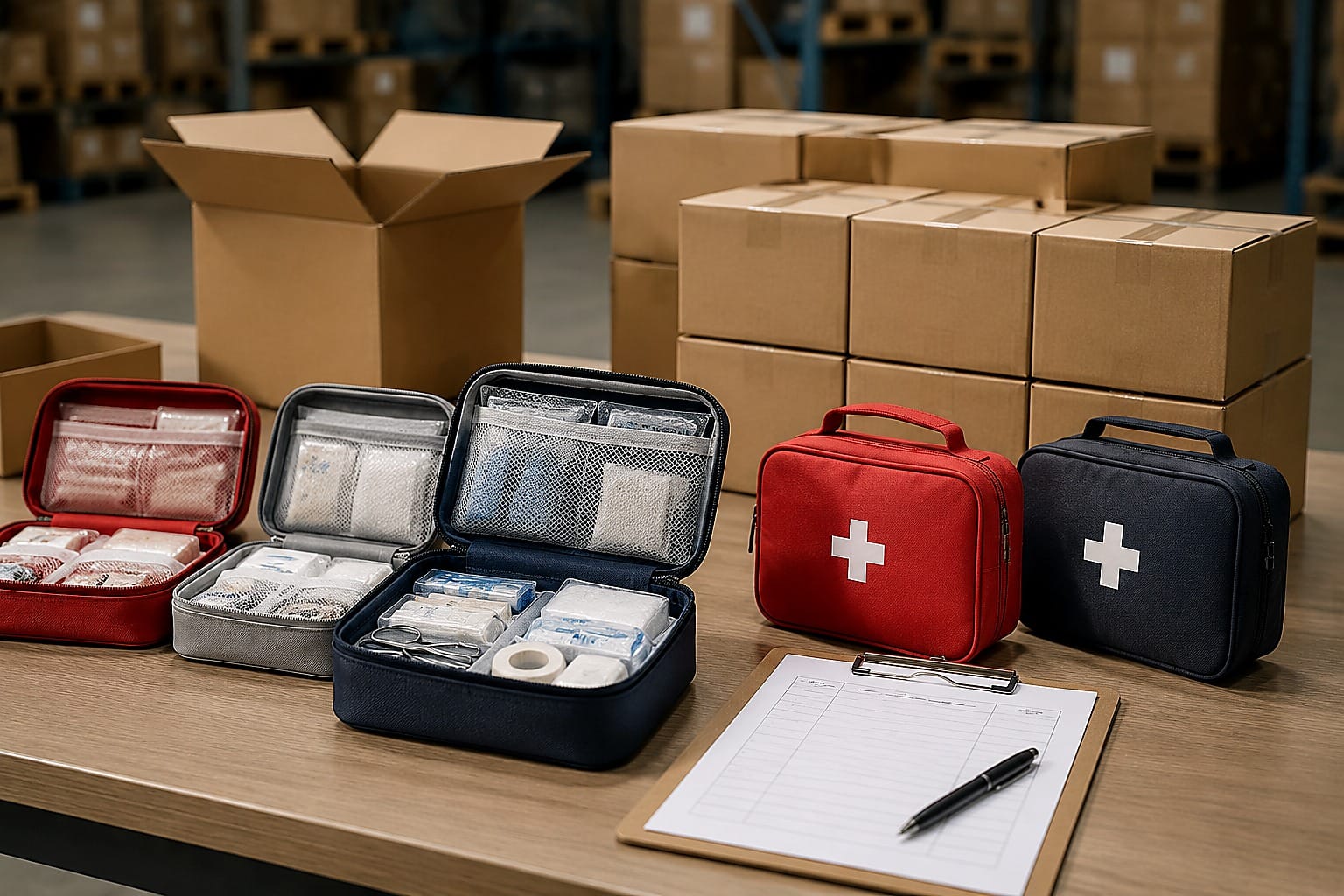
An international buyer can receive three quotations for the same first aid project and still have no valid basis for comparison. One supplier may price a stock kit, another may assume buyer artwork, and a third may omit documentation, samples, or export packing. A reliable B2B first aid procurement process removes those hidden differences before price approval.
The practical method is to define the requirement, identify the destination-market responsibilities, lock a line-level specification, qualify the supplier against relevant evidence, compare quotations on the same commercial basis, and approve a controlled sample before bulk production. This framework is for importers, distributors, institutional buyers, and private-label teams. It does not replace legal, regulatory, customs, or medical advice for a specific market.
What belongs in a B2B first aid procurement brief?
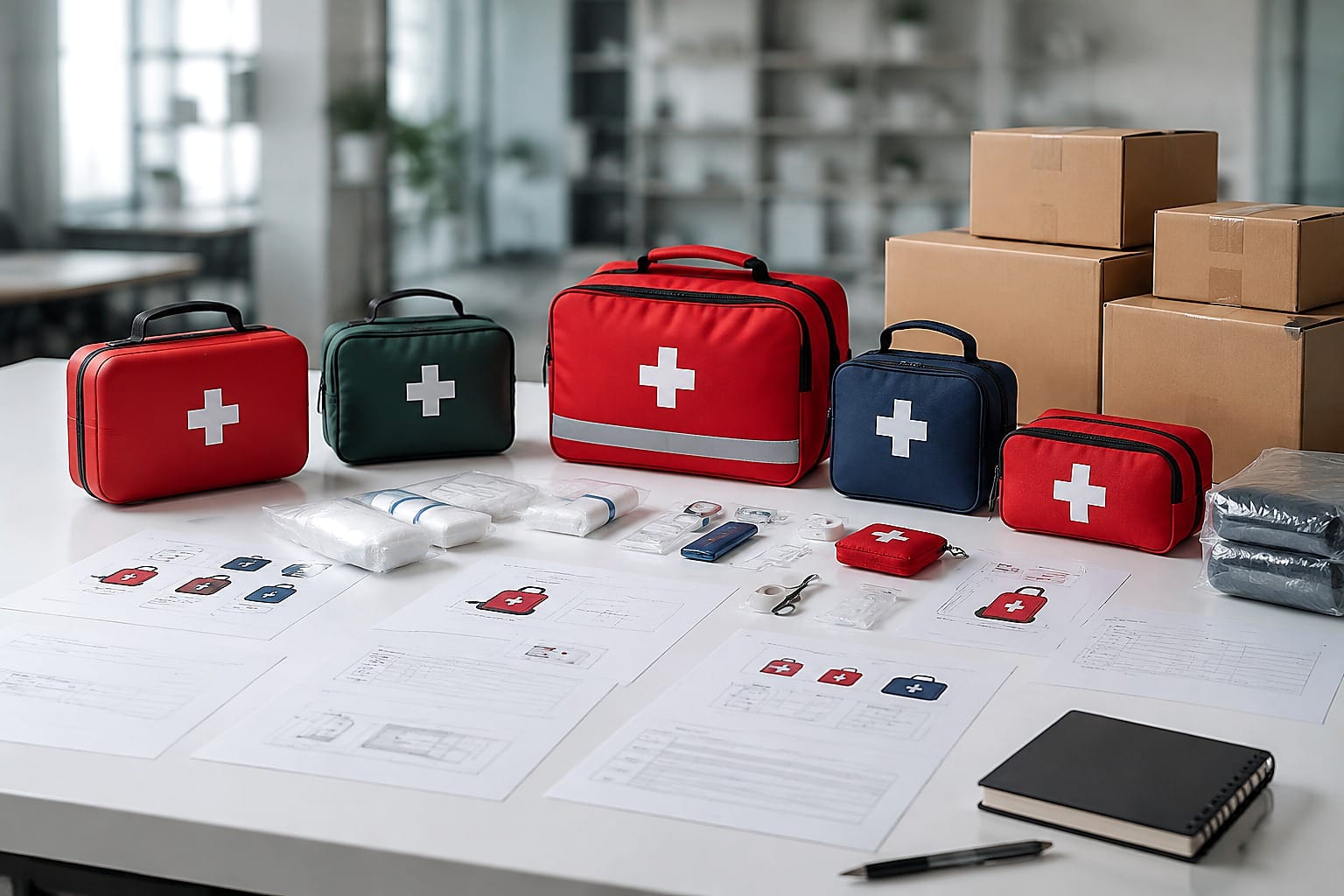
The procurement brief should explain the project before it asks for a price. A request such as “quote 2,000 first aid kits” leaves the supplier to make decisions about contents, packaging, labeling, quality evidence, delivery scope, and substitutions. Those assumptions later appear as price gaps or production disputes.
Start with ten controlled inputs:
- Identify the buyer entity, sales channel, intended users, and use environment.
- Name the destination country or countries and the party responsible for import review.
- State whether the request covers individual supplies, empty bags, complete kits, or a mixed assortment.
- Attach a line-level bill of materials with sizes, quantities, pack units, and buyer references.
- Separate stock products from logo, label, packaging, color, or structural customization.
- List the documents required for each relevant SKU and for the supplier organization.
- Define the sample stages, inspection method, and approval authority.
- Provide firm quantity tiers and distinguish them from non-binding forecasts.
- Request unit packing, master-carton data, lead-time factors, and shipment terms.
- Set the quotation currency, validity period, payment proposal, and response deadline.
Buyers still developing an assortment can scan the UneedAid product category hub to identify product families before creating the RFQ. The hub is a planning reference. The final brief must use the buyer’s own requirements and destination review.
The brief should also state what the supplier must not assume. Examples include no unapproved component substitution, no artwork production before written approval, and no change to packing quantities without a revised packing file. Clear exclusions reduce the chance that a supplier fills blank fields with its usual practice.
How should buyers structure the product specification?
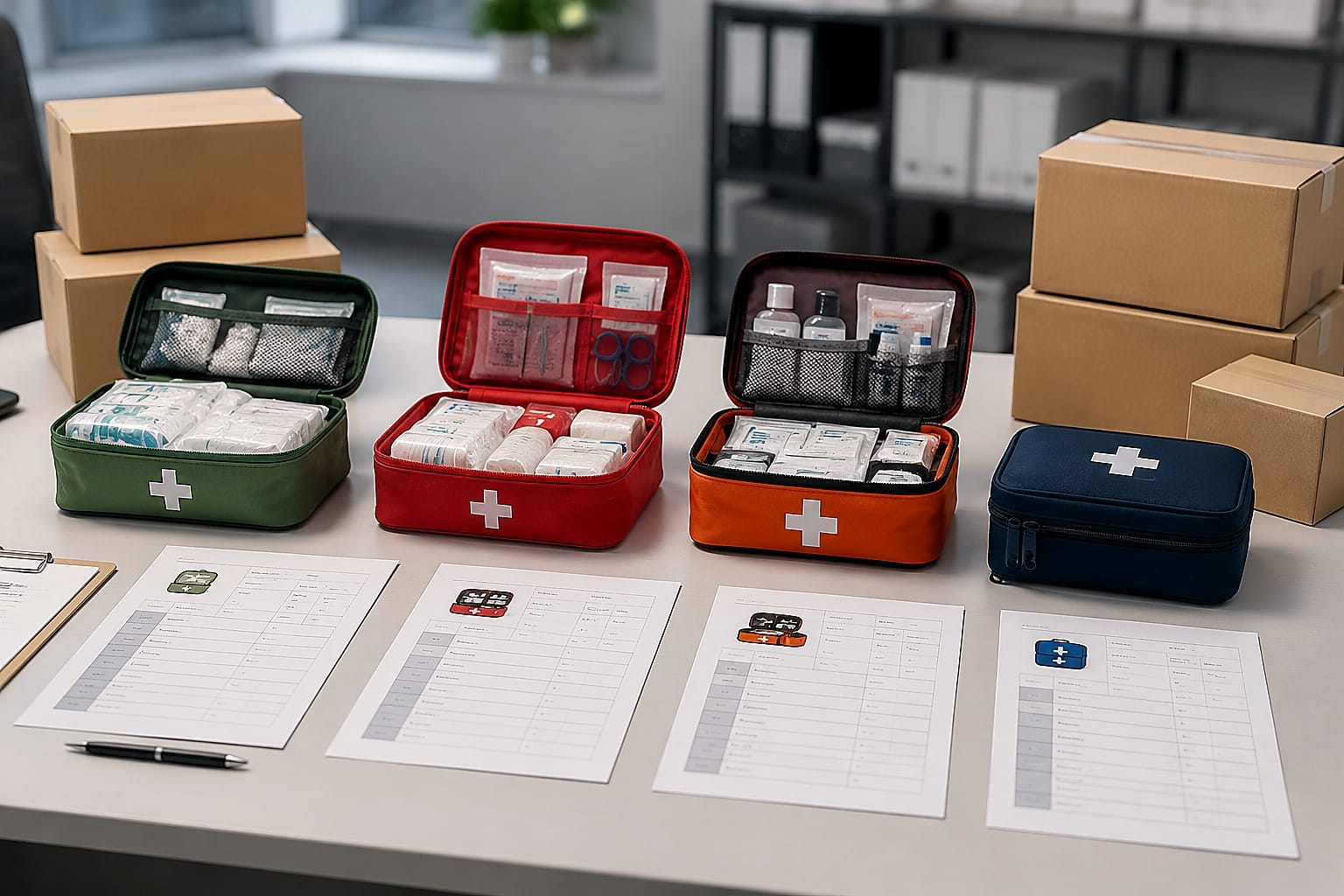
A procurement team needs two connected records: a program requirement matrix and a product-level specification. The requirement matrix covers commercial, documentation, packing, and approval rules for the whole project. The product specification defines what is being purchased.
For individual supplies, record the supplier SKU, buyer code, product description, dimensions, material or construction where relevant, unit packaging, label route, quantity, lot or expiry display where applicable, and requested evidence. For assembled kits, add the container specification, BOM revision, component location, refill code, and loaded-unit packing data.
| Specification layer | Minimum buyer record | Supplier response | Approval evidence |
|---|---|---|---|
| Product identity | Buyer code, supplier SKU, exact description | Offered SKU and any deviation | Approved specification line |
| Physical details | Size, format, material or construction fields | Actual quoted values | Data sheet or measured sample |
| Unit packaging | Pack count, seal, label, barcode, language | Proposed packaging route | Artwork proof and sample |
| Kit contents | BOM line, quantity, position, substitution status | Returned BOM with comments | Frozen BOM revision |
| Export packing | Units per carton, carton dimensions, gross and net weight | Packing estimate, then final file | Approved packing specification |
| Evidence | Required document by SKU or organization | File name, issuer, scope, validity | Buyer review record |
Avoid relying on photos or total piece counts. A photo cannot confirm size, material, label text, pack unit, lot traceability, or the exact SKU planned for repeat orders. A “120-piece kit” can also use repeated low-unit-value items to reach the count. Procurement approval should follow the written BOM and physical reference sample.
For kit projects, standard kit configurations can provide a starting structure. Buyers should then adapt the contents to the intended use, channel, and market rather than adopting a stock list without review. The related emergency kit sourcing framework explains how use case, container format, and refill logic affect a complete kit.
How should an international buyer qualify a first aid supplier?
Supplier qualification should test whether the organization can control the quoted project, not whether it can send a polished catalog. Evidence must connect to the legal entity, site, process, product, or SKU that it is meant to support.
Use four evidence groups:
- Business identity: registered entity name, address, invoicing entity, export role, and named contacts.
- Operational capability: manufacturing or assembly scope, outsourced processes, storage, inspection equipment, and order-traceability method.
- Product evidence: specifications, test reports or declarations where applicable, sample identity, label files, and document scope.
- Commercial execution: quotation discipline, change communication, packing accuracy, lead-time explanation, and repeat-order records.
The buyer should record the difference between manufacturer, assembler, trading company, and export service provider. More than one party may participate in an order. The concern is not the number of parties by itself. The concern is whether responsibilities, product identity, document ownership, and change control are visible.
The evidence groups are only useful once each one has a confirmation route, and a first aid supplier compliance checklist pairs every document with the register or issuer that can verify it.
For products that fall within the European Union Medical Device Regulation, Article 13 assigns specific verification and record duties to importers. Buyers should review the current consolidated legal text and their role with qualified counsel or a regulatory specialist. The official Regulation (EU) 2017/745 text is the primary reference. A supplier statement alone does not determine the importer’s obligations or a product’s status.
Build a qualification record with dated files and conclusions. “Certificate received” is too vague. Record the document name, holder, issuer, scope, reference number, validity information if present, related SKU or site, reviewer, and unresolved question. This makes the B2B first aid procurement decision auditable and easier to revisit before a repeat order.
How can quotations be compared on the same basis?
Price comparison starts after scope normalization. A low unit price may exclude artwork setup, labels, inner boxes, inspection, export cartons, freight, bank charges, or destination costs. Another quote may include a different component size or a lower packing quantity.
Use a comparison table that forces each supplier to answer the same fields:
| Quote field | Supplier response required | Buyer comparison check |
|---|---|---|
| Offered SKU and revision | State the exact offered SKU, specification revision, and every deviation from the RFQ. | Confirm all quotations use the same specification or price declared deviations separately. |
| Quantity tier and MOQ | Give the price quantity and explain whether MOQ applies per SKU, color, artwork, or total order. | Compare like-for-like tiers and identify any MOQ that could split or delay the order. |
| Unit price and currency | State the unit basis, currency, applicable quantity tier, and included packaging. | Use the same unit, currency date, and inclusion scope before comparing prices. |
| Included customization | List logo, label, insert, barcode, retail box, and carton-mark work included in the price. | Separate included work from setup charges and buyer-supplied materials. |
| Sample cost and timing | State sample type, cost, production time, freight method, and any refund or credit rule. | Confirm each supplier is quoting the same sample stage and approval scope. |
| Production lead-time basis | Define when the lead-time clock starts and which approvals can pause it. | Compare timelines from the same trigger, such as deposit plus final artwork and sample approval. |
| Packing data | Provide unit packing, units per carton, carton dimensions, and gross and net weight. Mark estimates clearly. | Compare confirmed production packing separately from early estimates and calculate shipment volume consistently. |
| Shipment rule and named place | Quote the Incoterms rule, named place, freight inclusion, and document responsibility. | Check that tasks, costs, and risk transfer are allocated on the same basis. |
| Payment proposal | State deposit, balance percentage, payment trigger, bank method, and bank-charge allocation. | Compare cash-flow exposure and confirm the balance trigger can be verified. |
| Quote validity and exclusions | Give the validity date, material or freight assumptions, taxes, tooling, and all excluded costs. | Record open assumptions and add missing costs before supplier selection. |
Commercial terms should include the Incoterms rule and named place, such as FCA with the named terminal or DAP with the named destination. The rule does not replace the sales contract, product specification, payment terms, insurance decisions, or import compliance work. ICC maintains the official Incoterms rules overview, which buyers can use to confirm the current rule set and obtain official publications or training.
Calculate a landed-cost scenario only from identified inputs. Keep estimated freight, duties, taxes, brokerage, inspection, storage, and local delivery visible as separate lines. Do not make a supplier responsible for a cost that the selected shipment term leaves with the buyer.
The comparison runs on the buyer’s own sheet, and the first aid supplies RFQ template is what produces it: five blocks, a compliance column on every row, and a separate line for each outside charge.
What should happen before a bulk order is released?
The sample process should move from feasibility to production authorization. A loose catalog sample can show a product direction. It should not authorize bulk production when the final SKU, BOM, logo, label, color, packing, or documents differ.
A controlled approval pack can include:
- Final quotation and purchase terms.
- Frozen product specification or BOM revision.
- Approved physical sample ID and dated photographs.
- Approved artwork files and print-position proof.
- Unit and export packing specification.
- Document register with open and accepted items.
- Inspection checklist, sampling instruction, and defect classification.
- Written exceptions and approved deviations.
Inspect the sample against the records, then inspect it as a working packed unit. Count components. Measure critical dimensions. Read every label. Open and close the container. Check whether the full load strains seams, zippers, hinges, or latches. Confirm that the carton plan uses the same loaded configuration.
For bag-led orders, compare formats through the emergency medical bag directory and request a loaded reference. Empty dimensions do not show access order, compartment fit, weight distribution, or closure stress.
The purchase order should identify the approved revisions rather than saying “same as sample.” Samples can be lost or interpreted differently. A revision number links the order to files that both parties can retrieve.
How should production changes and delivery risks be controlled?
No international order is completely static. A material, component, label, carton, production slot, or vessel plan may change. The control question is whether the change is detected, assessed, approved, and recorded before it reaches the shipment.
Require a change notice that identifies:
- The original SKU, specification, or revision.
- The proposed replacement or process change.
- The reason and effective quantity.
- Effects on dimensions, materials, labeling, evidence, price, packing, and schedule.
- Whether a new sample, artwork proof, or document review is required.
- The buyer approver and approval date.
Silence is not approval. The supplier should not substitute a visually similar item and report it after assembly. The buyer should also respond within an agreed period so the order does not remain blocked without a decision.
Delivery planning needs the same discipline. Record when the lead time starts, which buyer approvals can stop the clock, when packing data becomes firm, who books transport, which documents travel with the goods, and what event releases the balance payment. Add schedule margin for custom materials, artwork revisions, inspections, consolidation, customs processing, and peak transport periods where relevant.
The delivery term belongs in that same block, and this explanation of Incoterms for first aid supply sets out how each rule splits cost from risk.
This stage often exposes a counterintuitive point in B2B first aid procurement: the shortest quoted production time is not always the shortest usable delivery plan. A quote that excludes sample approval, document review, or confirmed packing can move those tasks outside the stated lead time.
What should buyers verify at inspection and receipt?
The inspection plan should mirror the specification. If the RFQ asks for component size, label language, barcode, logo position, carton quantity, and document references, the inspection record should check those same fields.
At minimum, define checks for product identity, quantity, dimensions, visible construction, packaging, label content, artwork position, kit BOM count, container operation, carton marks, and shipping quantities. Identify which issues stop shipment, which require rework, and which may be accepted through a written concession.
Receipt checks continue after shipment. Compare the packing list, carton count, purchase order, batch or lot information where applicable, and visible condition. Record shortages or damage with carton references and photographs. Keep the received sample or retained unit connected to the B2B first aid procurement order revision.
Repeat orders should not default to “same as last time.” Ask the supplier to reconfirm the SKU, BOM, materials, artwork, packing, documents, price, and lead-time basis. A one-page delta report can show what changed and what remains identical. That record protects continuity without forcing the buyer to repeat the entire qualification process blindly.
A practical B2B first aid procurement workflow
The complete workflow can be managed through eight gates:
- Requirement gate: intended use, destination, assortment, quantity, and customization scope are written.
- Specification gate: product lines, BOM, packaging, evidence, and substitution rules are complete enough to quote.
- Supplier gate: business identity, operational role, capability, and relevant evidence are reviewed.
- Quotation gate: prices, inclusions, MOQs, lead-time assumptions, payment, and shipment terms share one comparison basis.
- Sample gate: the physical reference matches the stated revision, artwork, packing plan, and written exceptions.
- Order gate: the purchase order names every approved revision and change-control rule.
- Inspection gate: the produced goods are checked against the same records used for approval.
- Receipt and repeat-order gate: discrepancies are closed, supplier performance is recorded, and later orders begin with a delta review.
Each gate should have an owner and a written acceptance record. This keeps procurement, quality, regulatory, logistics, finance, and sales teams from approving different versions of the same project.
FAQ about international first aid procurement
What information should a buyer send in the first RFQ?
Send the destination market, intended use, product list or provisional BOM, quantities, customization scope, packaging route, required evidence, sample plan, target shipment timing, and requested commercial terms. Mark unknown fields as open questions rather than leaving them blank. Ask suppliers to return the same file with comments and deviations. This creates a comparable record and reduces follow-up messages based on different assumptions.
How many suppliers should be included in a first comparison?
There is no universal number. The useful number is one the buyer can qualify and compare with the same depth. Three credible candidates often provide enough contrast for price, capability, and communication, but a specialized product may justify fewer or more. Avoid collecting many shallow quotes that use different specifications. A smaller normalized comparison gives stronger evidence than a long price list with unresolved scope differences.
Is the lowest unit price the right choice for B2B first aid procurement?
Unit price is one decision field. Compare the offered specification, included customization, evidence, sample route, packing, inspection, payment, shipment rule, and change controls. Then model identified landed costs and operational risks. A lower quote can remain valid, but the buyer should know why it is lower. Missing labels, smaller sizes, different pack units, or excluded export packing can create a false price advantage.
When should a buyer approve a production sample?
Approve a production reference after the product or BOM revision, container, artwork, label, packaging, and written exceptions are stable enough to represent bulk output. Record a sample ID, photographs, revision numbers, measurements, and approver. If production uses a different component or material, require a documented change review. A concept sample can support feasibility discussion, but it should not silently become the bulk-order authority.
Who is responsible for destination-market compliance?
Responsibility depends on the product, jurisdiction, transaction structure, and each party’s legal role. Supplier files can support review, but they do not transfer every importer, distributor, or economic-operator duty. The buyer should map responsibilities before ordering and obtain qualified advice when needed. Record which party checks product status, labels, language, registration, customs classification, and post-market duties instead of relying on a general statement that the goods are “compliant.”
How can repeat orders remain consistent when components change?
Use stable SKUs, revision-controlled specifications, a substitution rule, and a pre-order delta confirmation. Ask the supplier to identify changes in materials, source, dimensions, labels, evidence, packing, price, and lead time before accepting the repeat order. Require a new sample when the change affects a critical field or the loaded kit. Consistency comes from visible change control, not from assuming the previous configuration remains available.
Move from a price request to a controlled buying process
A dependable B2B first aid procurement program makes specifications, evidence, approvals, commercial terms, and changes visible before goods move. The result is not a promise that every order will be simple. It is a record that lets the buyer compare suppliers fairly, find unresolved assumptions, and decide who owns each next action.
Begin with the requirement matrix and line-level specification. Qualify the supplier against the offered scope, normalize the quotation, approve a controlled sample, and carry the same revisions into the purchase order and inspection plan. That sequence gives international buyers a repeatable procurement system rather than a collection of disconnected emails and product photos.
The RFQ should also fix the payment schedule, because payment terms on first aid supply orders decide which documents gate each instalment and therefore what the buyer can hold back if the file set is incomplete.
Where the buyer is a public body rather than a private distributor, the same sequence runs inside a formal notice with its own eligibility gate and its own lot structure. The bidder’s overview of public sector first aid products tenders covers how the requirement matrix maps onto lots, award methods and framework call-offs.
Before the container is released, the lot is verified against the order file. The pre-shipment inspection checklist covers the carton count, the sample drawn from the lot and the written release decision.
Packing specification belongs in that list, and this carton and pallet configuration guide for first aid exports explains why the carton decision has to come before the quotation.
The quotation stage has its own set of hidden lines, and this breakdown of sample fee and courier charges treats them as four separate decisions rather than one total.
Documentation obligations continue after delivery, and this summary of import record keeping explains what has to stay retrievable once the goods have cleared.