
A buyer can receive a complete-looking kit and still discover that it is difficult to place, inspect, refill, or reproduce across several sites. A reliable workplace first aid kit configuration starts with the workplace risk profile, workforce and shift pattern, response distance, deployment location, and buyer-controlled bill of materials. The container, quantities, labels, inspection cycle, sample approval, and reorder method should follow those inputs.
This checklist is for importers, distributors, institutional buyers, and private-label project teams. It supports sourcing and configuration decisions. It does not replace a workplace needs assessment, destination-market review, or advice from the responsible local authority or qualified professional.
What information should buyers collect before choosing kit contents?
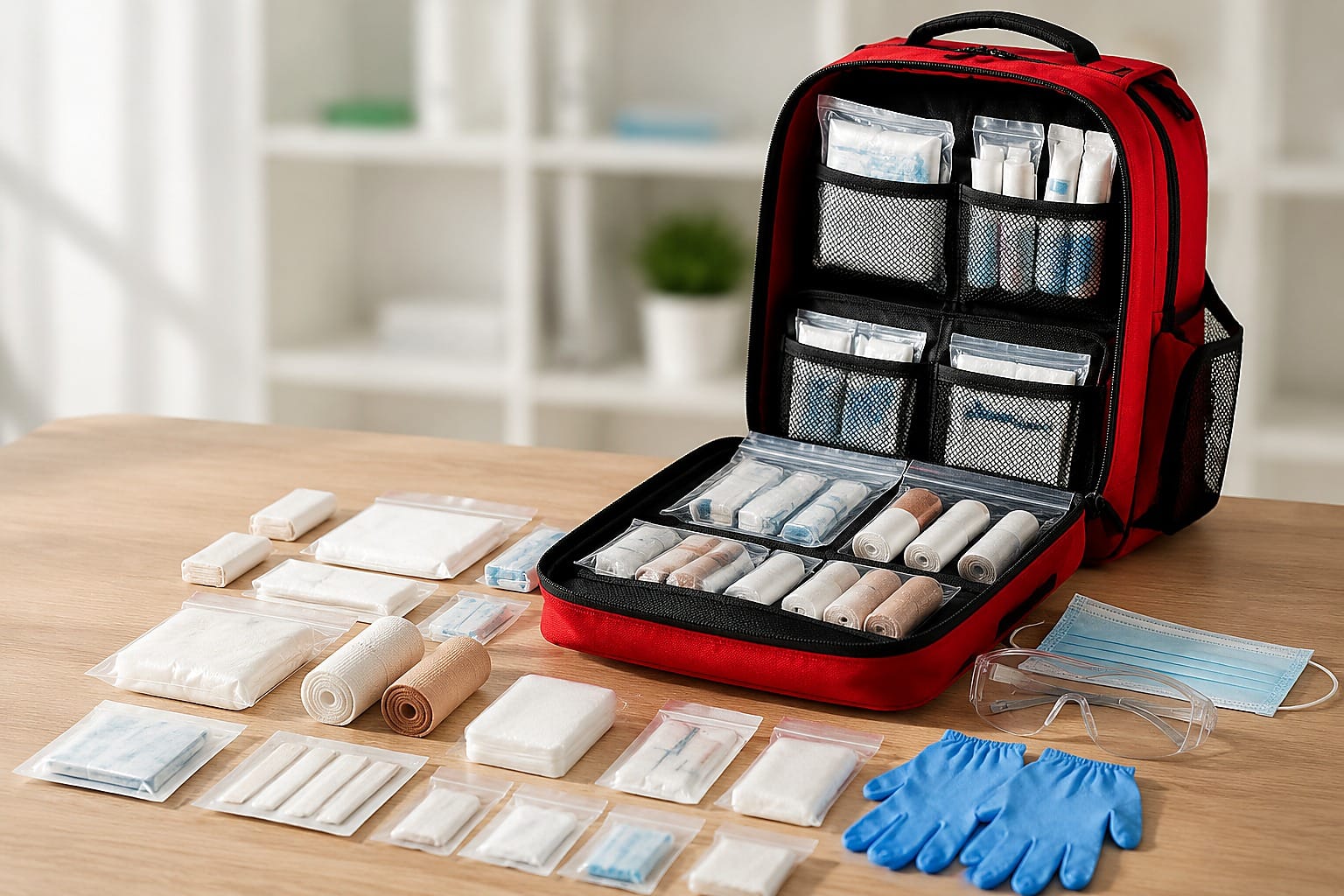
The first task in a workplace first aid kit configuration is not selecting a prepacked item count. It is documenting where the kit will be used and who must manage it. A single office floor, a warehouse with powered equipment, a remote service crew, and a multi-building campus may require different placement, container, quantity, and refill controls.
Collect these inputs before requesting a quotation:
- Record the number of workers by shift, including contractors and visitors where relevant.
- List the work areas, vehicles, remote points, shared spaces, and restricted-access zones.
- Describe the credible workplace hazards without converting the article into clinical guidance.
- Record the distance and expected access route to external emergency support.
- Identify who owns inspection, replenishment, incident logging, and purchase approval.
- State the destination country, workplace rule set, language needs, and buyer-side compliance reviewer.
- Decide whether the project needs stock configurations, buyer-defined contents, private labeling, or a mixed program.
In the United States, OSHA 29 CFR 1910.151 requires adequate first-aid supplies to be readily available. Its non-mandatory Appendix A explains that kit contents should reflect workplace needs and cites a consensus standard as one example. That appendix is not a universal global bill of materials. The United Kingdom’s HSE first-aid needs assessment guidance similarly asks employers to consider hazards, workforce, work patterns, travel, remote work, and distance from emergency services.
The procurement lesson is consistent: document the operating context first, then have the responsible buyer confirm the applicable requirements and approve the configuration.
How should risk, workforce, location, and shifts shape the configuration?
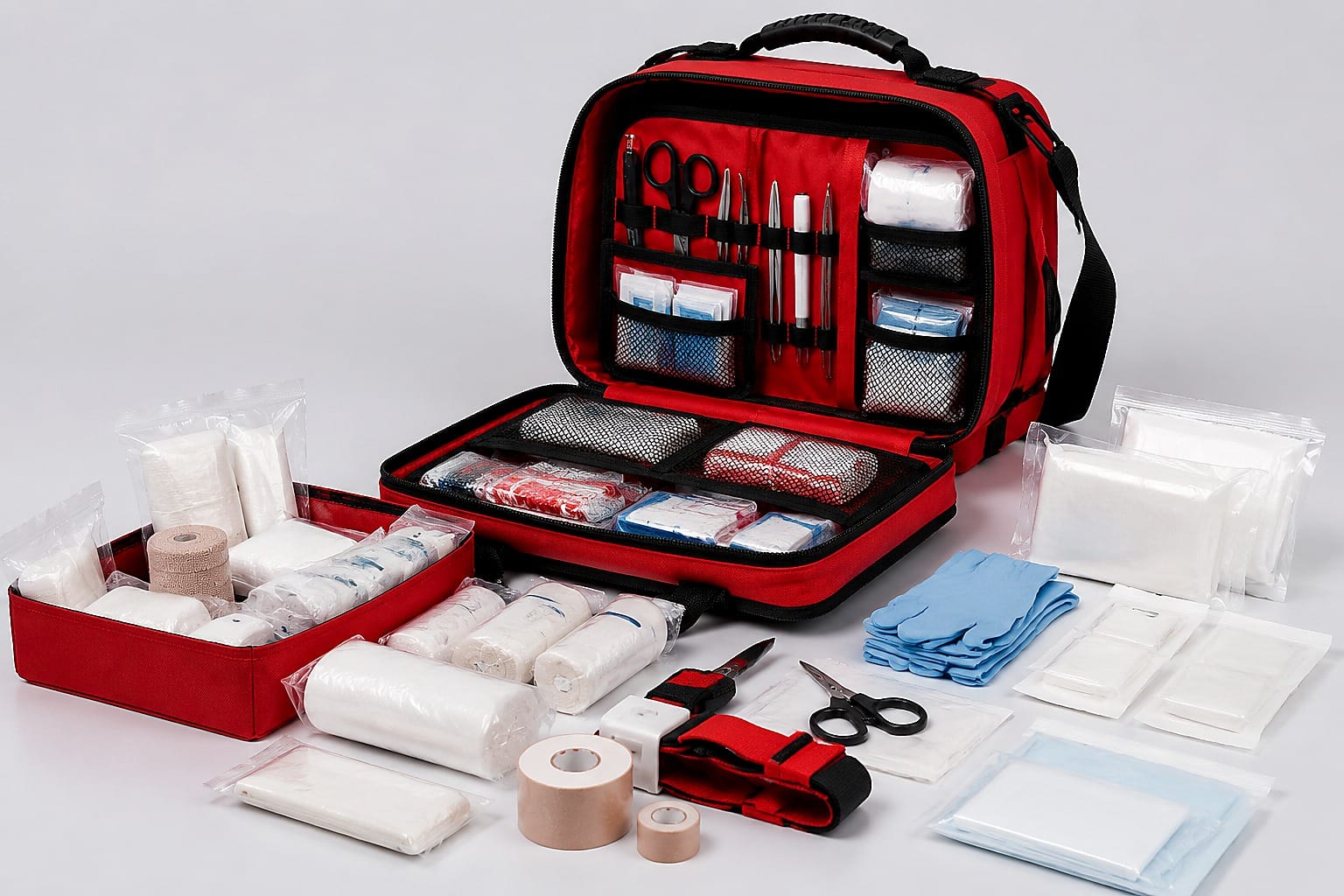
Four variables usually change the project more than the advertised piece count.
| Input | Configuration effect | Buyer evidence to capture |
|---|---|---|
| Workplace risk | Changes item classes, protective barriers, tools, and escalation planning | Needs assessment, hazard register, responsible reviewer |
| Workforce and shifts | Changes consumption assumptions, placement count, and refill stock | Headcount by shift, contractors, visitors, peak periods |
| Site layout | Changes the number of stations and whether fixed or portable formats are practical | Floor plan, walking route, vehicle or remote-work points |
| Response distance | Changes placement and the need for site-specific response arrangements | Local response plan and authority guidance |
Do not multiply one generic list by employee count and assume the result fits every location. A large office may need several visible stations because of floor layout. A smaller warehouse may require separate fixed and mobile points because workers move between loading, storage, and maintenance areas. A field team may need portable bags plus a controlled refill location.
The buyer should create a site map with a stable station ID for each location. The station ID can link the physical kit, inspection record, BOM version, refill history, and responsible person. This makes a multi-site workplace first aid kit configuration easier to audit and reorder.
Which item classes belong in the buyer’s BOM review?
A procurement BOM should organize contents by function and specification, not by a marketing total such as 50 pieces or 100 pieces. The responsible reviewer must decide which classes and quantities apply. Suppliers should quote against the approved document and identify every exception.
| BOM class | Fields to specify | Procurement check |
|---|---|---|
| Dressings and bandages | Type, size, material, sterile status where applicable, quantity, pack unit | Does the line match the sample label and quoted SKU? |
| Protective barriers | Glove material and size plan, CPR barrier format, individual packaging | Are sizes and pack units clear for each station? |
| Cleansing and irrigation | Product format, volume or count, packaging, lot and date fields | Is the proposed item suitable for the buyer-approved use and market route? |
| Burn and cold-response supplies | Format, dimensions, storage limitations, pack unit | Are storage conditions and replacement rules documented? |
| Tools and accessories | Scissors, tweezers, tape, pins, blanket, waste bags, or other approved items | Are material, size, finish, and packaging specified? |
| Records and identification | Contents card, inspection card, station ID, seal, reorder code | Can staff inspect and replenish without guessing? |
Every line should include a buyer line number, supplier SKU, description, size, quantity per kit, pack unit, label route, lot or expiry field where relevant, approved substitute rule, and refill code. Use an explicit status such as confirmed, alternative proposed, unavailable, or pending review.
The broader first aid supplies sourcing framework explains why evidence should be tied to the quoted SKU. The emergency kits and bags sourcing guide covers the same control from the full kit and container perspective.
How can buyers set quantities without relying on a universal number?
Quantity decisions in a workplace first aid kit configuration should connect needs assessment, expected consumption, inspection frequency, site access, and refill lead time. A practical method uses five steps:
- Confirm the applicable minimum or reference list with the buyer’s responsible reviewer.
- Map each item class to the workplace risks and locations it supports.
- Estimate usage and replacement demand by site, shift, and replenishment interval.
- Add controlled refill stock for items likely to be consumed or expire between deliveries.
- Review the proposal after incidents, workplace changes, headcount changes, and inspection findings.
This method separates compliance confirmation from commercial planning. The supplier can explain stock pack sizes, MOQ effects, and replacement options, but the buyer remains responsible for approving the workplace quantity.
Record quantity logic in the BOM notes. For example, write “two stations on each warehouse level due to access route” instead of “four kits required.” The first statement can be reassessed when the layout changes. The second becomes an unexplained number that may persist after its basis has disappeared.
Should the kit use a wall-mounted box, portable case, or medical bag?
Container selection affects visibility, access, inspection work, refill organization, shipping cube, and branding. Compare the format with the loaded BOM, not as an empty sample.
| Format | Useful operating condition | Limitation to test | Loaded-sample check |
|---|---|---|---|
| Wall-mounted box | Fixed, visible station with a defined inspection owner | Door clearance, mounting surface, shelf layout | Open at the installed height and verify every label is readable |
| Portable hard case | Shared area, vehicle, or mobile crew needing shape retention | Latch, hinge, insert, and internal-space limits | Carry, stack, open, and recount the full configuration |
| Soft zip bag | Compact program with flexible packing and lower empty weight | Contents can shift or become difficult to count | Test zipper load, dividers, handle, and refill access |
| Fold-out medical bag | Program that benefits from visible modules and rapid inventory review | Overpacking can strain folds and closures | Hang or open fully, then repack to the approved compartment map |
| Backpack | Mobile work requiring hands-free transport | Weight distribution and access order need review | Load the approved BOM and check straps, back panel, and module sequence |
Buyers comparing fixed locations can review workplace emergency-care categories and wall-mounted emergency-box formats as starting points. A category page is a shortlist, not proof that one model matches the workplace rule set or the approved BOM.
The specification should state outer material, dimensions, color, closure, hinges or zippers, internal layout, handle or mounting method, label area, logo method, empty weight, loaded dimensions, and master-carton data. Performance claims require corresponding product-specific evidence; appearance alone is insufficient.
What inspection and refill system keeps the kit usable?
Procurement is incomplete if the buyer cannot maintain the installed workplace first aid kit configuration. Create the inspection and replenishment method before the first bulk order ships.
The station record should contain:
- Station ID and physical location.
- Approved BOM version and kit model.
- Responsible inspector and backup owner.
- Inspection interval set by the buyer’s needs assessment and local requirements.
- Seal or tamper-evidence status where used.
- Missing, used, damaged, or expired item log.
- Reorder threshold and refill SKU.
- Last inspection date, next due date, and corrective action.
Separate a complete kit SKU from refill SKUs. Replacing the entire kit after one item is used creates waste and obscures consumption. A refill program can use individual component SKUs, grouped modules, or a prepacked replenishment set. The buyer should decide which method fits the number of stations, staff capacity, order volume, and shelf-life control.
For dated items, ask how lot and expiry information appears on the unit, inner pack, kit contents record, and master carton. Require written notice before an approved SKU changes. A silent substitution can change size, packaging, documentation, carton count, or refill compatibility even when the item name looks similar.
Which labels and documents should be approved before production?
The label and document pack should identify what the buyer is receiving without making unsupported claims. At minimum, review the kit contents list, unit label, station label, inspection card, instructions supplied by the responsible party, barcode data, importer or distributor information where applicable, inner packaging, and master-carton marks.
Use a controlled artwork register:
| File | Required control | Approval evidence |
|---|---|---|
| Kit contents list | BOM revision, quantity, language, date | Signed or recorded buyer approval |
| Unit label | Product name, responsible-party fields, barcode, warnings where applicable | Approved artwork version |
| Inspection card | Station ID, inspection fields, refill route | Site-owner approval |
| Inner and master carton | Quantity, dimensions, weight, marks, destination data | Packing confirmation |
| Product and quality files | Exact SKU, model, scope, issuer, validity where relevant | Buyer compliance review |
Avoid treating a general company certificate or catalog as evidence for every component. Ask for documents linked to the quoted SKU or model. The importer, distributor, or institutional buyer should confirm classification, language, registration, labeling, workplace, and market-access obligations for the destination and intended use.
How should a loaded workplace kit sample be approved?
An empty bag or box sample verifies only part of the project. Approve a loaded sample against the BOM and artwork register.
Use this sample sequence:
- Photograph the sealed kit, label, every compartment, and the complete laid-out contents.
- Count each BOM line and record missing, extra, or substituted items.
- Compare size, material, pack unit, lot field, expiry field, and artwork revision.
- Check the container while fully loaded, including closures, dividers, handles, hinges, mounting points, and label visibility.
- Simulate inspection and refill work using the station record and refill codes.
- Confirm unit dimensions, loaded weight, master-carton quantity, carton dimensions, and gross weight.
- Assign the approved sample an ID and link it to the BOM, artwork, and quotation revisions.
The approved sample becomes a purchasing reference, not a substitute for the buyer’s production and receiving controls. The RFQ should state how pre-production confirmation and receiving inspection will compare bulk units with that reference.
What belongs in a workplace first aid kit RFQ?
A supplier can quote accurately only when assumptions are visible. Include the following fields in the RFQ.
| RFQ section | Buyer input | Supplier response |
|---|---|---|
| Workplace context | Country, use case, workforce, shifts, site count, deployment points | Feasibility notes and questions |
| BOM | Revision, item descriptions, sizes, quantities, pack units, substitute rules | Confirmed SKU, exception, price, and document notes |
| Container | Format, material, dimensions, layout, mounting or carrying method | Base model, custom limits, sample option |
| Identification | Station ID, label languages, barcode, logo, inspection card | Artwork template, print method, setup and MOQ drivers |
| Evidence | Product-specific file request and buyer review route | Available files by SKU and identified gaps |
| Sample | Loaded sample quantity, checks, address, target date | Sample charge, preparation time, courier method |
| Commercial terms | Trial quantity, volume tiers, Incoterm request, target schedule | MOQ, unit price tiers, lead-time factors, payment and packing |
| Continuity | Reorder horizon, refill model, substitution policy | Change notice, component continuity, refill availability |
Ask suppliers to price stock, label-only, content-customized, and container-customized options separately. The MOQ may be driven by printed packaging, fabric color, molded parts, component batch size, or assembly requirements rather than the complete kit alone.
Final workplace first aid kit configuration checklist
Before approving a purchase, confirm each item below:
- [ ] Workplace, workforce, shifts, locations, and response distance are documented.
- [ ] The responsible buyer has confirmed the applicable workplace and destination requirements.
- [ ] Every station has an ID, location, owner, and inspection route.
- [ ] The BOM uses exact item descriptions, sizes, quantities, pack units, and substitute rules.
- [ ] Quantity logic is recorded by risk, location, access, usage, and refill interval.
- [ ] The selected box, case, bag, or backpack has been checked while fully loaded.
- [ ] Labels, contents list, inspection card, barcode, language, and carton marks have approved revisions.
- [ ] Requested files are linked to the quoted SKU or model and reviewed for scope.
- [ ] A loaded sample is linked to the quotation, BOM, artwork, and packing revisions.
- [ ] Lot, expiry, inspection, usage, refill, and change-notice controls are defined.
- [ ] MOQ, price tiers, sample cost, lead-time factors, packing, and delivery terms are separated.
- [ ] The quotation records every exception instead of silently changing the BOM.
FAQ
Is there one standard workplace first aid kit configuration for every site?
No single configuration fits every country, workplace, workforce, shift pattern, layout, and risk profile. Official guidance commonly starts with a needs assessment and requires the responsible party to consider the actual working environment. Buyers can use a recognized reference list as an input, but they should confirm its scope and applicability. The approved purchase specification should record why each station, item class, and quantity was selected. This makes later inspection, replenishment, and reassessment more reliable than copying a generic piece-count list.
How often should workplace first aid kits be inspected?
The buyer should set the interval from applicable local requirements, workplace needs, usage, item dating, site access, and internal responsibility. High-use or remote stations may need a different cadence from a low-use office cabinet. The inspection record should identify the station, approved BOM, seal status, missing or used items, damaged packaging, expiry issues, refill action, inspector, and next due date. An interval without a named owner and reorder route is difficult to sustain across multiple sites.
Should a buyer purchase complete replacement kits or refill modules?
Use the method that preserves the approved BOM with the least counting and purchasing error. Individual refills provide precise control but create more SKU lines. Grouped modules simplify replenishment but may replace unused items. Complete replacement kits are simple to issue but can create waste and hide consumption patterns. Many B2B programs use a complete initial kit plus controlled refill SKUs. Ask the supplier to show refill availability, pack units, minimum quantities, shelf-life information, and change-notice rules before the initial order.
What should be checked in a wall-mounted first aid box sample?
Check mounting points, door clearance, hinge and latch operation, shelf or divider layout, label area, station identification, and visibility at the intended installation height. Load the exact BOM and confirm that staff can inspect labels and remove items without unloading the full box. Record the loaded dimensions and weight, especially when the mounting surface or hardware has limits. The buyer should also verify how refill stock is stored and whether a seal or inspection card remains visible after installation.
Can a supplier choose substitutions when an item is unavailable?
Only under the buyer’s written substitution rule. The supplier should identify the unavailable SKU, proposed alternative, specification difference, document effect, price effect, packaging change, and sample requirement. The buyer can then approve or reject the change before assembly. Silent substitution weakens repeat-order control because the same kit name can contain different sizes, materials, labels, or pack units. Keep the accepted change with the BOM revision and require the same notice process for future production.
What information helps a supplier quote a workplace kit accurately?
Provide the workplace context, destination, site count, station plan, approved or provisional BOM, container format, materials and dimensions, label languages, artwork scope, document request, loaded-sample checks, quantity tiers, refill plan, packing limits, and commercial terms. Mark which fields are fixed and which are open to a supplier proposal. A structured RFQ lets buyers compare equivalent configurations and shows where MOQ, lead time, or pricing depends on packaging, component availability, customization, or documentation work.
A controlled workplace first aid kit configuration links the needs assessment, station map, BOM, container, artwork, evidence, loaded sample, inspection log, and refill plan. Keep those records under revision control. That gives the buyer and supplier one traceable reference from quotation through repeat orders.