
A buyer requests 1,000 kits, but the quote assumes one color, one contents list, one logo, and one packaging version. Then the order is divided across four markets and eight SKUs. The apparent quantity stays the same while the production quantities become much smaller.
Effective first aid kit MOQ planning starts by identifying every layer that creates a separate production lot. Supplier capacity is only one layer. SKU, component BOM, container color, material, logo method, artwork version, packaging, label language, and batch rules can each set a different minimum. Buyers should request quantity tiers, sample terms, and feasibility assumptions before treating any number as an order commitment.
UneedAid discusses projects from 1,000 pieces where product feasibility allows. That starting point is not universal. It depends on the SKU, customization scope, packaging, and order type, and it requires quotation confirmation for the defined configuration.
What actually determines a first aid kit MOQ?
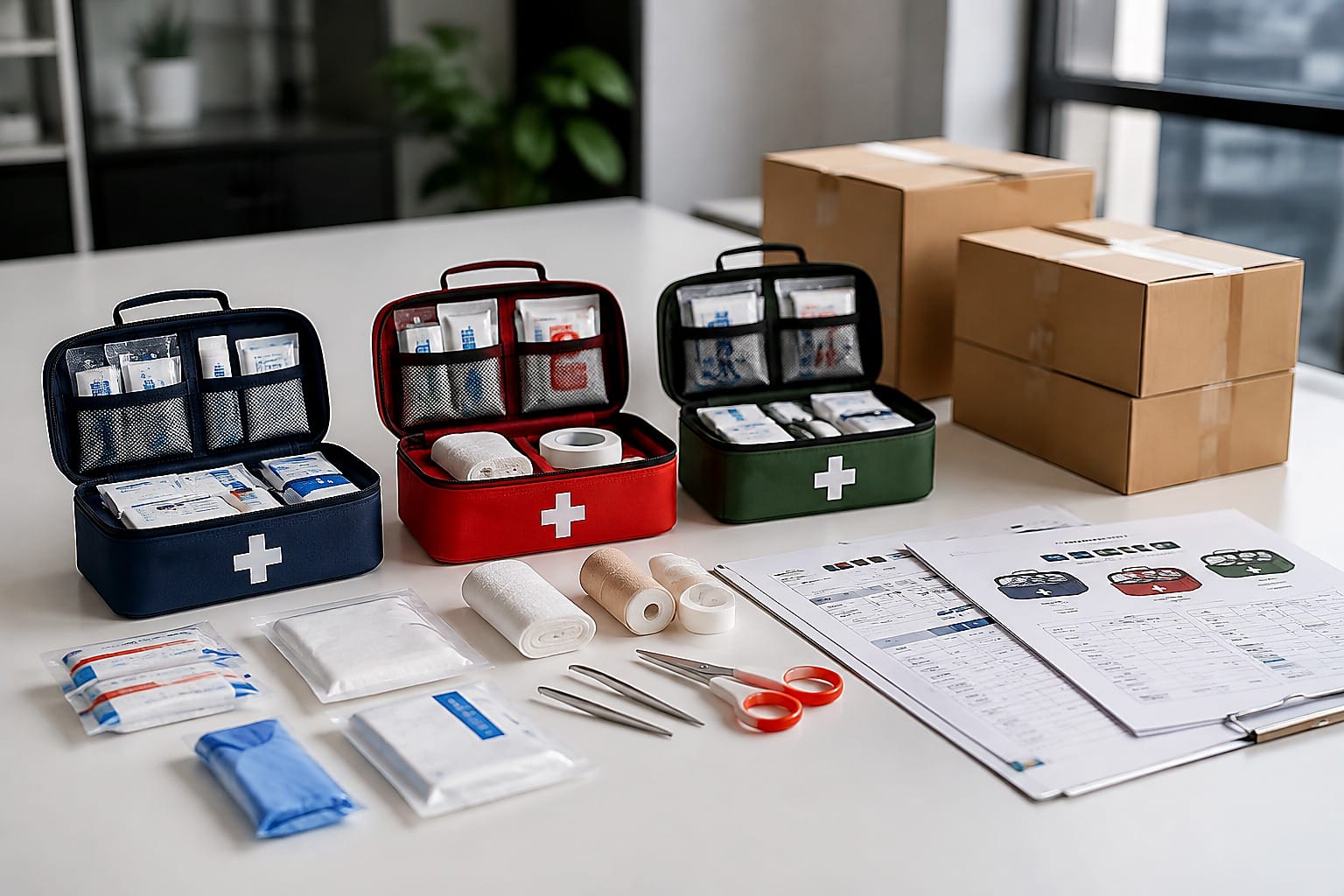
An MOQ is the smallest quantity a supplier is prepared to quote or produce under a defined set of assumptions. It is not a complete product specification. The number is meaningful only when the buyer and supplier agree on what remains common across the lot.
Use these nine layers to locate the real constraint:
- Supplier or production-line layer. A factory may need a practical run size for assembly, setup, inspection, and packing.
- SKU layer. Each finished configuration may be planned as a separate item, even when several kits share the same bag.
- BOM layer. A custom component, size, pack count, or source can carry its own purchase minimum.
- Color layer. Fabric dyeing, molded resin, printed case color, or stock availability may divide the order into separate lots.
- Material layer. A change in fabric, coating, case resin, metal grade, or component construction can create a new sourcing route.
- Logo layer. Screen setup, transfer production, embroidery programming, labels, patches, or molded marks can have distinct setup and quantity drivers.
- Artwork layer. Different logos, addresses, barcodes, languages, or regulatory text create separate controlled versions.
- Packaging and label layer. Unit cartons, inserts, polybags, stickers, and shipping marks may each be ordered separately.
- Batch layer. Buyers may require separated production, inspection, expiry, traceability, or destination records even when the commercial SKU looks similar.
The highest active constraint normally controls the feasible lot. Suppose a standard bag can be assembled at the requested total quantity, but each language carton has a higher print minimum than the allocation for that market. The packaging split, not final assembly, becomes the issue. The supplier may propose a standard carton with a controlled label, a larger combined print run, or another feasible route. Each option needs buyer approval.
For a wider view of supplier qualification, samples, specifications, commercial terms, and shipment planning, connect this worksheet to the B2B first aid procurement process. MOQ should sit inside that process rather than replace it.
How are MOQ, quote tiers, samples, forecasts, and purchase orders different?
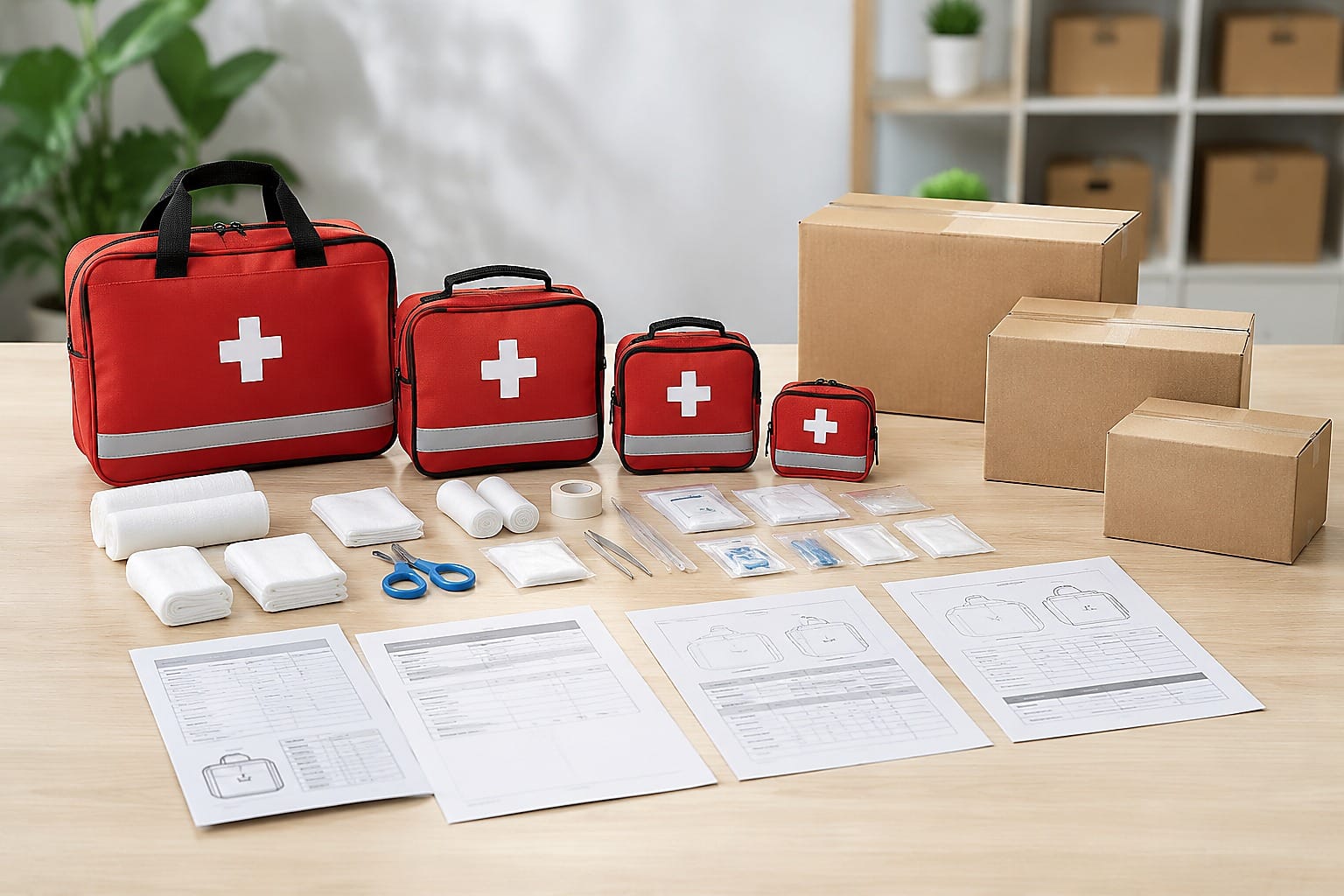
These terms answer different questions. Combining them in one number creates false certainty.
| Commercial item | What it means | What it does not prove | Buyer action |
|---|---|---|---|
| MOQ | Lowest quoted or feasible quantity for a defined configuration | Final unit price, production slot, or acceptance of every customization | Record the exact SKU, BOM, artwork, packing, and assumptions attached to it |
| Quote tier | Price and terms at a stated quantity | That every tier is feasible with the same setup, packing, freight, or schedule | Ask for the same specification at several quantities and separate fixed charges |
| Sample | A unit or small set used for specification and approval work | Bulk quantity, bulk consistency, or automatic production authorization | Define sample type, revision, cost, preparation factors, and approval record |
| Forecast | A planning signal for expected demand over time | A binding order or reserved capacity unless the contract says so | State horizon, confidence, expected SKU mix, and update frequency |
| Purchase order | A formal order under agreed commercial documents | Completeness when specifications or referenced attachments are missing | Reference the approved BOM, artwork, packing, sample, quote, and change rules |
A forecast can help a supplier discuss material reservations or repeat production, but it should remain separate from a firm PO. A sample can confirm size, layout, branding, and packing choices without establishing the economics of a bulk run. A price tier can reveal the effect of fixed setup across volume, yet the lowest unit-price tier may create excess stock or an unsuitable market allocation.
Shipping terms also belong in a separate field. The International Chamber of Commerce explains that Incoterms rules define responsibilities for delivery tasks, costs, and risks. They do not define the product MOQ. Ask suppliers to state the Incoterms rule and named place with the quote so a quantity comparison does not mix product cost with different delivery scopes.
How should buyers compare quantity tiers?
Request at least three relevant tiers using one frozen specification. The purpose of a first aid kit MOQ comparison is not to force a lower price. It is to show where fixed setup, component purchasing, packaging, and logistics assumptions change.
The table below is a comparison method, not a price or lead-time promise:
| Comparison field | Lower trial tier | Planned launch tier | Repeat or scale tier |
|---|---|---|---|
| Finished quantity | Buyer enters quantity | Buyer enters quantity | Buyer enters quantity |
| Number of SKUs | Confirm allocation | Confirm allocation | Confirm allocation |
| BOM versions | List each version | List each version | List each version |
| Colors and materials | State common or split lots | State common or split lots | State common or split lots |
| Branding | Method, colors, positions, artwork versions | Same fields | Same fields |
| Unit packaging | Standard or custom, language count | Same fields | Same fields |
| Fixed charges | Sample, artwork, screen, plate, die, tooling, testing if applicable | Separate each charge | State reuse or replacement assumptions |
| Unit price basis | Incoterms rule, named place, currency | Same basis | Same basis |
| Production factors | Supplier states assumptions after approval | Supplier states assumptions after approval | Supplier states assumptions after approval |
| Forecast or PO status | Planning estimate or firm order | Planning estimate or firm order | Planning estimate or firm order |
Compare total landed-scope inputs, not unit price alone. A lower unit price can sit beside higher artwork setup, more packaging inventory, a different delivery basis, or a larger cash commitment. Keep the comparison on one worksheet so differences remain visible.
Product choice can expose different MOQ drivers. An equipped tactical set for specification review combines a finished container with a component configuration, while safety pins as a kit component represent one possible BOM line. These pages are useful starting points for defining what should be quoted. Exact quantities, availability, price, timing, and configuration still require a current RFQ response.
What belongs in a first aid kit MOQ worksheet?
Create one row for every version that could split purchasing or production. Do not start with a total annual quantity and hide the mix in a note.
| Worksheet field | Entry required |
|---|---|
| Project and market | Project ID, buyer entity, destination market, intended channel |
| Finished SKU | Buyer SKU, supplier reference if known, kit or supply type |
| Quantity status | Trial estimate, forecast, requested quote tier, or firm PO quantity |
| Allocation | Quantity by SKU, color, size, market, language, and delivery batch |
| Container | Bag, box, case, pouch, material, color, dimensions, construction revision |
| BOM | Component description, quantity per kit, pack format, source restriction, substitution rule |
| Branding | Logo method, color count, size, position, artwork file and revision |
| Labels | Product ID, barcode, language, importer detail, warnings, artwork revision |
| Unit packaging | Polybag, carton, insert, seal, label, retail presentation, pack count |
| Export packing | Inner quantity, master-carton quantity, marks, pallet request if applicable |
| Sample control | Sample type, quantity, approval criteria, approved sample ID |
| Commercial | Currency, quantity tiers, fixed charges, payment proposal, quote validity |
| Delivery basis | Incoterms rule, named place, shipment mode assumption, requested window |
| Change control | Fields frozen at quotation, resampling triggers, substitution approval route |
The BOM deserves line-level attention. A kit ordered as 1,000 finished units may require several thousand pieces of one component, but that arithmetic does not confirm availability or a supplier minimum. Record units per kit, pack conversion, expected overage handling, and whether substitution is prohibited or allowed only after written approval.
Barcode and packaging versions can also create separate identities. GS1’s GTIN Management Standard provides rules for when product changes require a new GTIN. Buyers should decide product identification with the responsible market and data teams. The supplier should receive the approved number, symbol file, placement, and verification requirements rather than inventing product identity data.
Which RFQ fields produce a comparable supplier response?
Send a structured response sheet with the drawings and specifications. Ask the supplier to mark assumptions and exceptions directly beside each field.
Include these RFQ fields:
- Buyer project ID, contact, destination, and intended order status.
- Finished SKU list and quantity allocation by version.
- Requested quantity tiers using the same baseline specification.
- Container model, dimensions, material, color, and construction revision.
- BOM with quantity per kit, component specification, pack format, and substitution rules.
- Logo method, artwork files, colors, dimensions, positions, and version count.
- Label and packaging files by language or market.
- Sample type, quantity, approval sequence, and whether the sample matches the proposed bulk route.
- Separate fixed charges, unit prices, taxes if applicable, currency, and quote validity.
- Incoterms rule, named place, packing basis, shipment assumptions, and production factors.
- MOQ driver for every exception, plus a feasible alternative where available.
- Change-notice requirements for materials, sources, artwork, packaging, or production route.
Ask the supplier to answer four questions for every quoted tier: What is common across the lot? What is split? Which input sets the minimum? What changes at the next tier? Those answers are more useful than a bare MOQ number.
Avoid sending an open request such as “quote 1,000 custom first aid kits” when the project already has several markets or brand versions. The supplier may assume one universal SKU. The buyer may assume the quantity can be divided freely. A version matrix makes the disagreement visible before sampling.
How can buyers reduce MOQ pressure without weakening control?
The strongest first aid kit MOQ lever is usually fewer custom layers, not a vague request for an exception. Keep the controls that define the product while simplifying the elements that create small production lots.
Consider these approaches where the supplier confirms feasibility:
- Use one common container material and color across several finished SKUs.
- Keep a shared base BOM and separate only the components required by a defined market or channel.
- Apply a controlled label or insert to standard packaging when that route fits the product and destination requirements.
- Use one approved logo version and placement rather than several artwork variants.
- Combine production while separating final packing only when traceability and approval records remain clear.
- Provide a rolling forecast for discussion, then issue firm POs under agreed terms.
- Plan repeat orders around controlled components instead of redesigning the kit each cycle.
- Ask for an alternate quote that identifies exactly which customization has been removed.
Do not solve a print minimum by mixing unapproved labels or destinations. Do not replace a specified component silently. Simplification needs the same revision control as customization.
An MOQ discussion also needs an exit condition. If a proposed configuration cannot meet the requested allocation, decide whether to increase one version, consolidate versions, use a standard input, change the launch plan, or stop that option. Record the decision in the RFQ comparison rather than leaving it in email.
FAQ
Is a 1,000-piece first aid kit MOQ available for every project?
No universal quantity applies to every configuration. UneedAid discusses projects from 1,000 pieces where product feasibility allows, but the applicable starting point depends on the SKU, customization, packaging, and order type. It must be confirmed in a quotation for the defined scope. Several colors, BOM versions, logos, carton artworks, or market labels can divide one total into smaller production lots. Give the supplier the allocation by version and ask which layer controls the minimum. A total of 1,000 pieces does not mean ten versions of 100 pieces are automatically feasible.
Can several SKUs be combined to reach one MOQ?
Sometimes a supplier may combine shared purchasing or assembly, but this cannot be assumed. The answer depends on which inputs are common. Two SKUs may share a bag and logo while using different components or labels. Another pair may look similar but use separate materials, colors, or packaging runs. List the quantity for each SKU and identify the shared container, BOM lines, branding, and packing. Ask the supplier to state which operations can be combined and which remain separate. The written quote should preserve that allocation so a later PO does not rely on an informal conversation.
Does a higher quantity always produce a lower total sourcing cost?
A higher tier may reduce unit cost by spreading setup across more pieces, but it increases inventory and cash exposure. Total sourcing cost also includes samples, artwork, tooling, packaging, inspection, freight scope, storage, and obsolete versions. Compare several tiers on the same Incoterms basis and specification. Add expected sell-through or internal consumption timing, not just the unit price. The useful tier is the one that fits the approved product, demand plan, cash constraints, and replenishment route. A lower unit figure is not automatically the better procurement decision.
Should a forecast be included in an MOQ discussion?
Yes, as a clearly labeled planning input. A forecast can show expected annual volume, SKU mix, seasonality, and reorder cadence. It may help the supplier discuss component continuity or production planning. It is not a purchase order unless the governing agreement makes it binding. Separate forecast quantity from the firm quantity being quoted or ordered. State the forecast horizon, confidence, update frequency, and expected batch pattern. Ask what the supplier can reserve, what requires a deposit or PO, and how long any commercial proposal remains valid.
When should MOQ be reconfirmed for a repeat order?
Reconfirm it whenever a controlled input changes or the earlier quote has expired. Relevant changes include the finished SKU, BOM, component source, bag material, color, logo method, artwork, label language, barcode, unit packaging, master-carton arrangement, shipment basis, or delivery batch. Also ask whether the supplier’s material and production assumptions remain available. A repeat order should reference the prior approved sample and revisions, but that reference does not prove every input is unchanged. Written reconfirmation gives both parties a current basis before materials are committed.
Good first aid kit MOQ planning turns one headline number into a version-controlled commercial model. Freeze the specification, expose every split, compare tiers on the same basis, and record the supplier’s assumptions. Then move the selected first aid kit MOQ tier into a complete PO package with its BOM, artwork, packaging, sample, delivery basis, and change rules.