
A distributor can win a first aid tender and still lose money if the assortment is too broad, the replenishment cycle is unclear, or every reseller receives a different quote. A workable first aid distribution strategy starts with the channel’s job: who creates demand, who holds stock, who owns the customer relationship, and which records must travel with each SKU.
For most international B2B programs, the practical sequence is to segment channels, select a small launch assortment, define partner rules, run a measured pilot, and then expand only when sell-through and replenishment data support it. This framework is for importers, distributors, resellers, safety suppliers, and institutional procurement teams. It is a commercial planning guide, not medical or legal advice.
What does a first aid distribution strategy need to decide?

The word “distribution” can mean four different activities: importing goods, stocking them in a regional warehouse, selling through a reseller, or supplying an institutional contract. Those activities should not share one vague price list. Each has a different cash cycle, service burden, and evidence requirement.
Write the channel brief before requesting supplier pricing. Record:
- Customer and use environment: workplace, industrial safety, outdoor retail, tactical, school, public-sector, or general wholesale.
- Route to market: direct account, regional distributor, safety reseller, e-commerce B2B seller, tender, or a mixed route.
- Stock owner: importer, distributor, reseller, or customer under a scheduled-order model.
- Service promise: stock-only supply, kit configuration, private label, refill program, documentation support, or field training arranged by the buyer.
- Destination responsibility: which party checks labels, product status, language, registration, customs classification, and post-market obligations.
- Commercial boundary: territory, customer ownership, quote validity, minimum order, payment terms, freight rule, returns, and change approval.
McKinsey’s 2024 B2B Pulse research describes buyers using an average of ten interaction channels during a purchasing journey. That finding matters for first aid because a distributor may acquire a lead through a marketplace, validate a specification by email, approve a sample on a video call, and reorder through an EDI or spreadsheet workflow. A channel plan that names only “online” or “offline” will miss the handoffs where pricing and product data become inconsistent. See the McKinsey B2B Pulse research for the multi-channel finding and its commercial context.
Which B2B channels fit first aid products?
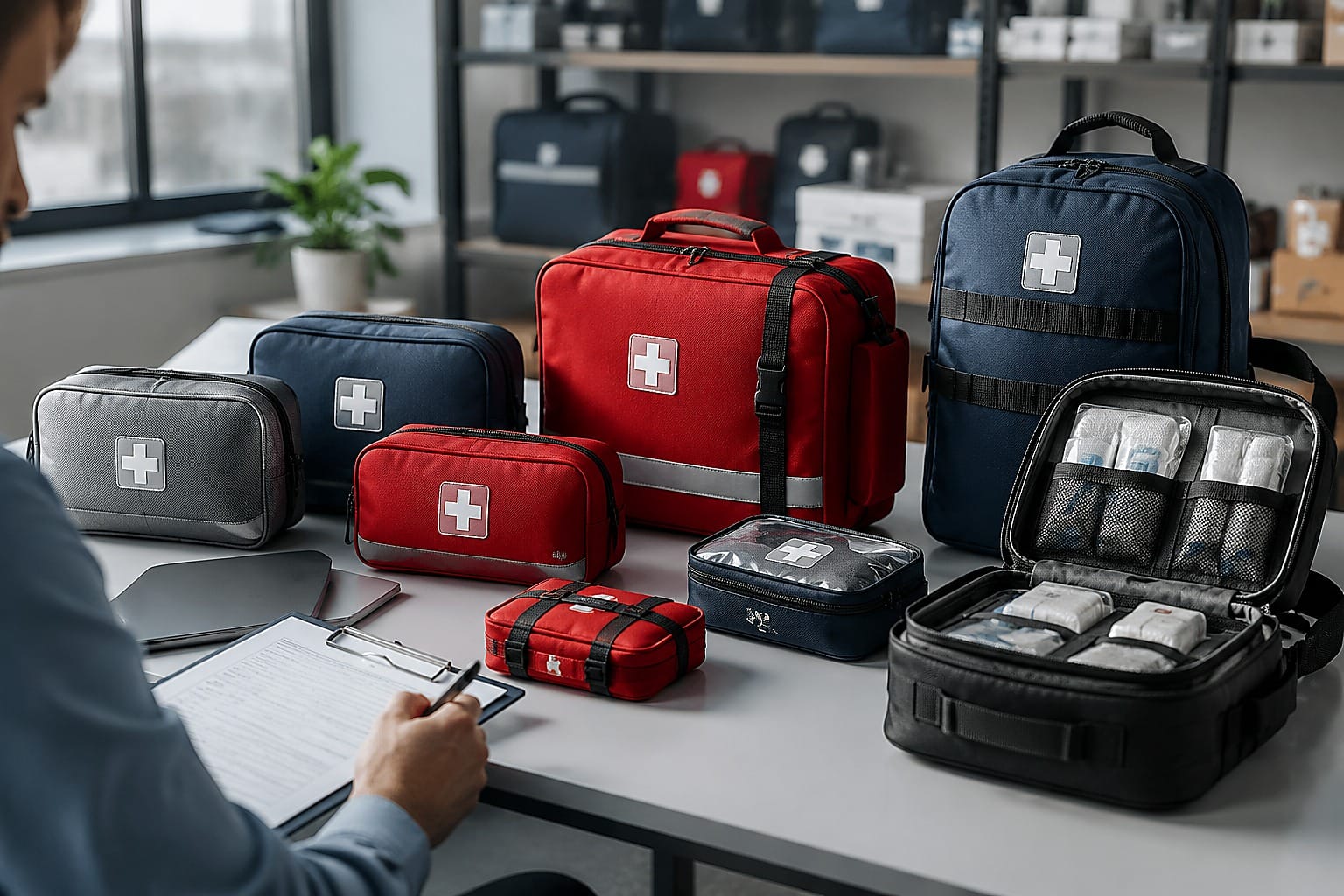
Choose a channel by the work it performs, not by its audience size. A first aid distribution strategy should assign a job to each route before a partner is recruited. First aid products are often replenishment items, but a distributor may still need to educate the buyer, bundle components, manage expiry rotation, or support a destination-market review.
| Channel | Where it fits | What the partner must do | Main control point |
|---|---|---|---|
| Regional importer-distributor | Multi-country or multi-city coverage with local stock | Import, warehouse, local sales, customer service, and replenishment | Territory, forecast ownership, and document scope |
| Industrial safety reseller | Workplace, construction, manufacturing, and EHS accounts | Convert hazard or site requirements into a practical assortment | Use-case fit, refill cadence, and label route |
| Medical or emergency equipment reseller | Higher-specification kits, bags, and response tools | Explain configuration, accessory compatibility, and service needs | SKU identity, sample approval, and technical evidence |
| B2B e-commerce seller | Search-led demand and small account orders | Maintain accurate listings, stock status, pack units, and delivery promises | Content revision, inventory feed, and returns |
| Institutional or public tender | Contracted volume with defined specifications | Meet bid documents, delivery milestones, and reporting rules | Tender compliance, lot traceability, and change control |
The same kit can appear in more than one route, but it should not have five uncoordinated specifications. Use a master SKU record and let each channel add its own pack, label, or service layer. A B2B first aid procurement guide can help teams turn that master record into a comparable RFQ.
How should a distributor build the launch assortment?
Start with a narrow assortment that can be explained, stocked, and replenished. A distributor that lists every possible dressing, bag, box, and kit before measuring demand creates dead stock and weak product pages. The first release should have a clear reason for each SKU.
Use a three-layer assortment:
- Core items: products with a repeatable use case and simple replenishment, such as standard dressings, gloves, barriers, cold packs, or a defined workplace kit.
- Channel-fit items: products selected for one route, such as wall-mount boxes for workplace resellers or compact bags for outdoor retailers.
- Test items: a small number of higher-variance products used to measure demand before adding depth, colors, or custom packaging.
For each SKU, document the following before the first shipment:
| Record | Why it matters to the channel |
|---|---|
| Buyer and supplier SKU | Prevents a reseller listing from drifting to a visually similar item |
| Unit and inner-pack quantity | Sets the order unit, margin calculation, and carton plan |
| Dimensions and packed weight | Supports freight quotes, storage planning, and marketplace content |
| Lot, expiry, or shelf-life field where applicable | Enables rotation rules and customer communication |
| Label and language revision | Keeps the sales listing aligned with the shipped unit |
| Document reference and scope | Shows which file belongs to which SKU, site, or model |
| Substitution rule | Stops a stock change from becoming an unapproved channel promise |
The counterintuitive point is that a larger catalog can reduce channel reach. Resellers often delay onboarding when every item requires a separate document review, photo set, carton calculation, and reorder rule. A smaller launch range with complete data can reach more accounts than a large range with unresolved fields.
For category discovery, the UneedAid product category hub can help buyers group supplies, emergency bags, boxes, tools, and customizable kits before the assortment is frozen. The hub is a planning reference; the distributor still needs a line-level specification and destination review.
What partner rules should be agreed before the first quote?
Channel conflict usually begins with an undefined rule rather than a bad intention. A distributor may quote a reseller below the importer’s direct-account price, or two partners may believe they own the same customer. Put the operating rules in writing before samples or market launch.
Define at least these eight controls:
- Territory and account ownership: state whether protection applies by country, named account, vertical, or registered opportunity.
- Price architecture: separate factory, importer, distributor, reseller, and tender assumptions. State currency, validity, included packing, and any setup charges.
- MOQ and order unit: identify whether the threshold applies per SKU, color, artwork, carton, or total order.
- Lead-time trigger: define when the clock starts, such as deposit plus approved artwork and sample.
- Data ownership: specify who maintains product pages, translations, barcodes, compliance files, and revision history.
- Forecast status: distinguish a non-binding forecast from a purchase commitment and record the review date.
- Returns and non-conformance: define evidence, response time, replacement or credit review, and the party that inspects the goods.
- Change control: require written review for component, label, packaging, material, or document changes.
Do not promise exclusivity only because a partner asks for it. Tie any protection to measurable actions such as approved listings, trained sales staff, quarterly forecast updates, or a minimum number of active accounts. A channel rule should describe the evidence that keeps the rule active.
How can a distributor test demand without overstocking?
A pilot should answer a commercial question, not create a smaller version of a full launch. In a first aid distribution strategy, select one channel, one geography, and a defined assortment. Then set a review date before the first order ships.
A practical pilot design is:
- Select 3–5 SKUs that share a clear buyer problem and compatible pack data.
- Work with 2–3 qualified partners or one partner with multiple named accounts.
- Set a 90-day review window with weekly stock and quote feedback.
- Define a minimum data pack: product page, specification, unit packing, document register, images, and reorder form.
- Record every quotation, lost-order reason, sample issue, substitution request, and replenishment inquiry.
- Decide in advance what triggers expansion, revision, hold, or removal.
Track sell-through rather than shipment volume alone. Useful measures include active accounts, quote-to-order conversion, units sold per active account, days of stock on hand, reorder interval, gross margin after freight, document-related delays, and return or complaint reason. A shipment to a distributor is not demand validation if the stock remains in the warehouse.
The mechanism is simple: a controlled pilot separates product-market signal from channel loading. This is the measurement core of a first aid distribution strategy. If three partners all ask for the same missing pack unit or label language, the issue is probably an information or configuration gap. If partners view a product but do not request a quote, the problem may be positioning, price architecture, or channel fit. Those are different decisions and should not be mixed.
How should replenishment and inventory be planned?
Replenishment needs a visible trigger. A useful starting point is:
Reorder point = average demand during supplier lead time + agreed safety stock
The formula is only as good as its inputs. Separate confirmed sales from forecasts, and record whether the lead time includes artwork, sample approval, production, inspection, export packing, and transit. For dated or regulated items, add the buyer’s remaining-shelf-life requirement to the decision.
Set a review rhythm by channel:
- Weekly: stock exceptions, open quotes, urgent shortages, and changed delivery dates.
- Monthly: sell-through by SKU, margin after freight, aged stock, and partner activity.
- Quarterly: assortment role, territory performance, document refresh, and forecast accuracy.
Do not use one safety-stock percentage for every item. A fast-moving glove pack, a custom-color bag, and a slow-moving emergency box have different demand variance, MOQ, and replenishment constraints. The distributor should model each SKU family and show the assumptions to the supplier.
Which product data and documents help partners sell responsibly?
Product data is part of channel infrastructure. GS1 describes the GTIN as an identifier for trade items in the supply chain. A distributor can use a stable identifier to connect the supplier record, warehouse unit, carton, reseller listing, and reorder file. That does not replace destination-market review, but it reduces the chance that two systems refer to different items by the same short name. See the GS1 GTIN reference for the identifier’s supply-chain role.
Build one controlled data pack per SKU:
- SKU, GTIN or buyer code where applicable, and revision number.
- Product description, dimensions, materials or construction fields, and unit pack.
- Product and carton photographs that match the current revision.
- Label, language, barcode, and insert files.
- Document register with issuer, scope, model, site, revision, and validity information where present.
- Storage, expiry, lot, or rotation fields where applicable.
- Approved substitutions and the person who can authorize a change.
For workplace-oriented channels, context still controls the assortment. In the United States, OSHA 29 CFR 1910.151 requires adequate first-aid supplies to be readily available when the standard’s conditions apply, while its non-mandatory Appendix A points to workplace hazards and professional consultation. That is a U.S. workplace reference, not a universal kit list. A distributor should ask the buyer to confirm the applicable destination and use-case requirements.
How do freight terms affect channel economics?
The supplier quote and the channel margin can look healthy until freight scope is compared. State the shipment rule and named place in every quote. ICC’s official Incoterms rules overview explains how the rules allocate tasks, costs, and risk between seller and buyer. The rule does not replace the sales contract, product specification, payment terms, insurance decision, or import review.
Model at least three scenarios when launching a channel:
| Scenario | Buyer should show |
|---|---|
| Small trial shipment | Express or air cost, handling, brokerage, and the price basis for low volume |
| Consolidated replenishment | Carton count, dimensions, gross weight, freight mode, and expected handoff |
| Planned container or pallet order | Forecast, loading assumptions, inspection timing, destination charges, and stock exposure |
Keep freight, duties, taxes, local delivery, inspection, storage, and payment charges as separate lines. A distributor can then decide whether to change the order unit, consolidate SKUs, or adjust the channel price without hiding a cost inside the product figure.
A first aid distribution strategy checklist
Before expanding beyond a pilot, confirm that the team can answer these questions in one shared file:
- Which channel owns demand creation, stock, customer service, and replenishment?
- Which 3–5 launch SKUs have complete data and a documented reason to exist?
- Are territory, account ownership, price levels, MOQ, lead-time triggers, and change rules written?
- Can every listing, carton, and reorder record resolve to the same SKU and revision?
- Which metrics will decide expansion after 90 days?
- Which party confirms destination-market labels, product status, documentation, and import duties?
- Are freight and local charges visible in the channel margin model?
The strongest first aid distribution strategy is usually the one that makes fewer assumptions. It gives each channel a clear role, keeps the launch range manageable, and turns partner feedback into a documented product or process decision.
FAQ about first aid distribution strategy
Should a first aid manufacturer sell directly or use distributors?
The answer depends on destination coverage, account density, service capacity, and who can hold compliant stock. Direct sales can preserve customer visibility but require local lead handling, quotation work, and post-sale support. A distributor can provide warehousing, local language coverage, and established accounts, but the supplier must set data, price, and account-ownership rules. Many programs use a mixed route: direct management for strategic accounts and distributors for regional coverage. Decide by channel role and measurable service requirements, not by a blanket preference for one route.
How many SKUs should a distributor launch first?
There is no universal number. A controlled starting point is 3–5 SKUs with a shared buyer problem, complete product data, and a realistic replenishment path. Add depth only after the team records sell-through, quote feedback, stock age, margin after freight, and repeat inquiries. A larger range is justified when the channel can maintain the additional listings, documents, pack units, and inventory controls. If each added SKU creates a new packaging or evidence workflow, include that workload in the launch decision.
How can channel conflict be reduced?
Write territory, named-account, quote validity, price-level, and opportunity-registration rules before partners begin selling. Define what evidence activates or renews protection, such as a forecast, approved listing, or documented account activity. Keep one master specification and revision history so partners do not sell different versions under the same name. When an exception is necessary, record the customer, quantity, period, and approving person. A written exception is easier to review than an informal promise made in a sales conversation.
What data should a first aid reseller receive from the supplier?
Provide a stable SKU and revision, product description, dimensions, unit and carton packing, current photos, label and language files, barcode or buyer-code information where applicable, document register, shelf-life or storage fields where applicable, and approved substitution rules. The reseller also needs clear commercial fields: MOQ, order unit, quote validity, lead-time basis, shipment term, and who pays which charges. Product data should match the physical sample and the shipped revision. A catalog image alone is not enough for a listing, tender, or reorder record.
Is a distributor forecast the same as an order commitment?
No. A forecast is a planning signal unless the parties expressly make it binding. Record the period, SKU, quantity, confidence level, and review date. Ask the distributor to separate expected demand, approved purchase orders, and stock already on hand. The supplier can use the forecast to plan materials or capacity, but custom packaging, special colors, or dated components may require a separate commitment. Keeping the categories distinct protects both sides from treating a planning estimate as a fixed shipment obligation.
What should be reviewed after a 90-day pilot?
Review active accounts, quote-to-order conversion, units sold per account, reorder interval, stock age, gross margin after freight, document questions, sample issues, returns, and lost-order reasons. Then classify each SKU as expand, revise, hold, or remove. Also review the partner’s data maintenance and response time. If demand is weak because listings lacked pack units or the quote excluded freight, fix the process before rejecting the product. If the product repeatedly misses the channel’s use case or margin requirement after a controlled test, keep the result as a documented decision.
For the wider commercial workflow, connect this channel plan with the B2B first aid procurement guide, the first aid supplies sourcing guide, and the emergency first aid kits and bags guide. Those articles cover RFQ normalization, product-family sourcing, and use-case configuration that support a channel launch.