
A buyer can approve a polished bag sample and still receive a kit that is difficult to count, refill, label, or reorder. An emergency first aid kits supplier should therefore be compared through the full program: use case, component list, bag or box format, materials, internal layout, documentation, sample checks, and repeat-order controls.
The practical answer is to specify the operating environment before selecting contents or a container. Then lock the bill of materials, verify the actual sample against the quoted files, and send an RFQ that separates stock options from custom work. This guide is for distributors, importers, institutional buyers, and private-label project teams. It is a procurement framework, not medical guidance or a substitute for destination-market review.
What should an emergency first aid kits supplier ask before quoting?
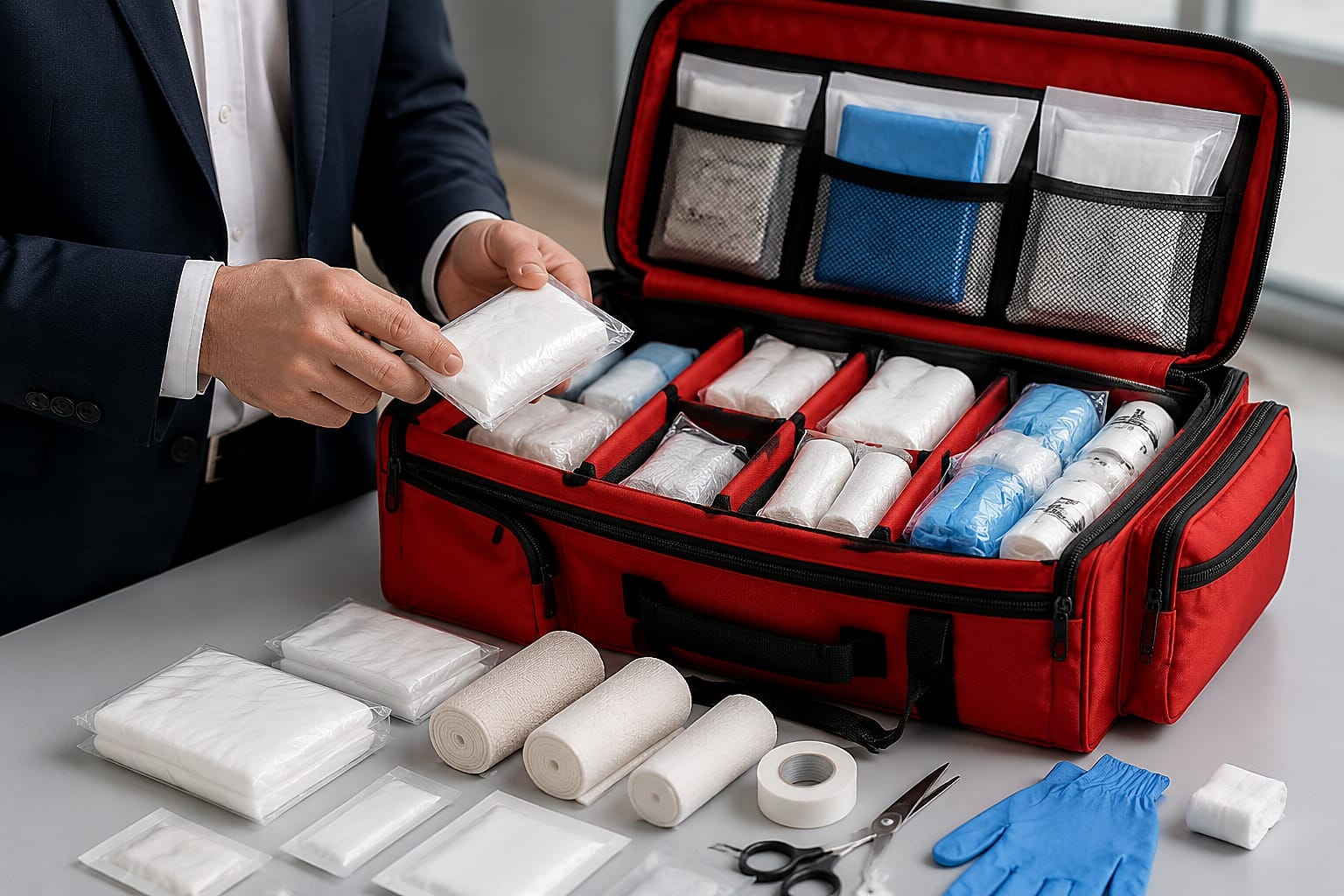
The first supplier question should be “Where and by whom will the kit be used?” A generic request for 1,000 emergency kits leaves too many variables open. A workplace wall box, a vehicle case, an outdoor waist bag, and a responder backpack require different access, storage, component, and labeling decisions.
Start the brief with seven decisions:
- Define the use case and expected user group.
- Identify the hazards or incident types the buyer intends the kit to support.
- Decide whether the kit stays at a fixed point or moves with a person or vehicle.
- Draft the component list with quantity, size, pack unit, and dated-item fields.
- Select the bag, backpack, case, or box format.
- State the documentation, artwork, sample, and inspection requirements.
- Give the target quantity, delivery market, and RFQ response format.
This sequence keeps container appearance from driving the entire project. It also exposes whether the supplier is quoting an existing configuration, assembling a buyer-defined list, or proposing substitutions.
For United States workplaces, OSHA 29 CFR 1910.151 requires adequate first-aid supplies to be readily available. Its non-mandatory Appendix A says kit selection should reflect workplace risks and can use professional consultation. That is a US workplace reference, not a universal product list. In the United Kingdom, HSE first-aid needs guidance likewise considers the work, hazards, workforce, travel, work patterns, and distance from emergency services. Both sources support the same sourcing principle: context comes before configuration.
How does the use case change kit configuration?
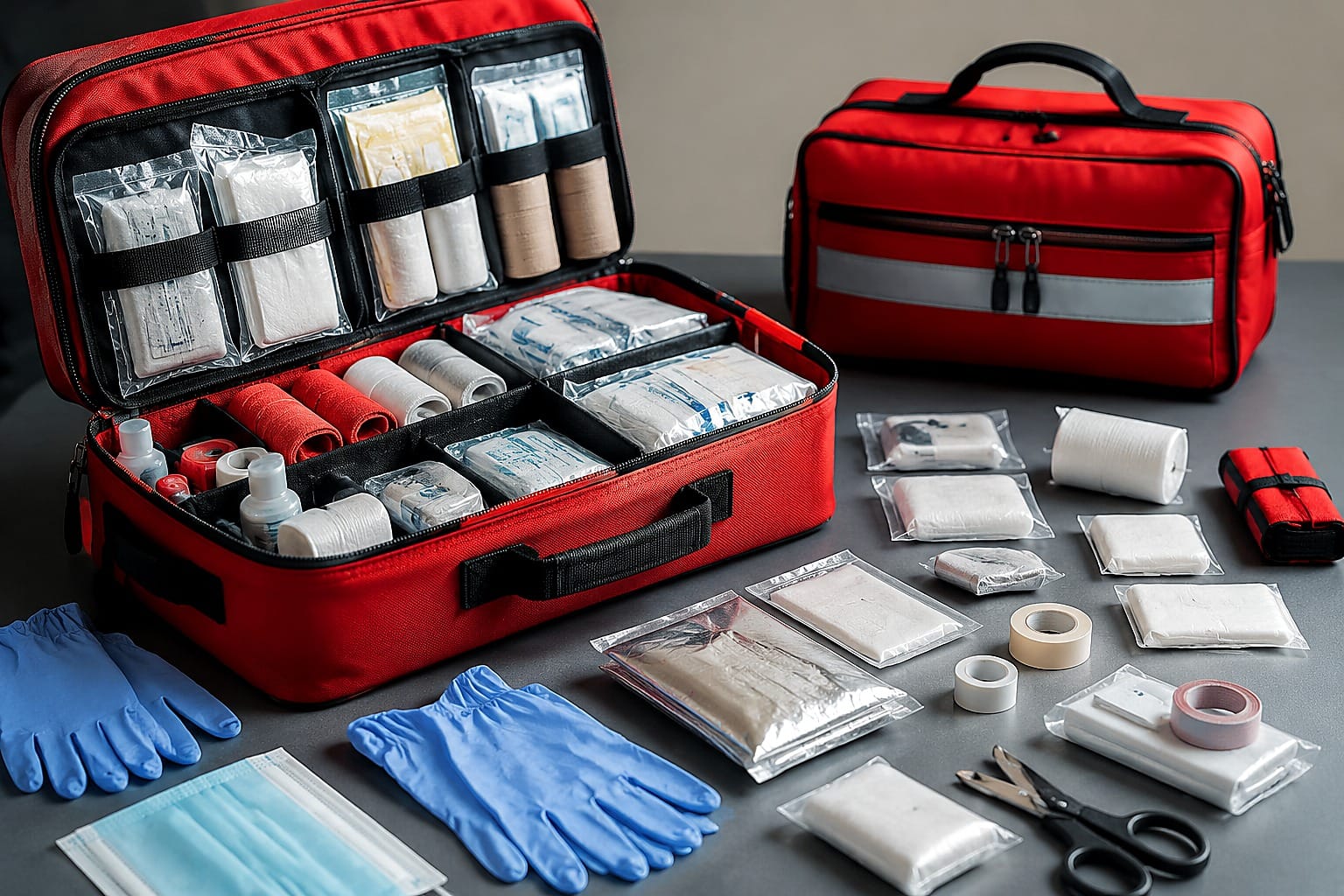
Use case changes more than the item count. It changes how quickly a user can reach a component, how the kit is stored, what must be visible on the label, and how a buyer manages refills.
| Use case | Configuration priority | Suitable format to evaluate | Buyer-side questions |
|---|---|---|---|
| Workplace fixed point | Visibility, inspection, refill access, organized compartments | Wall-mounted box or portable case | Who inspects it, where is it mounted, and how are dated items replaced? |
| Vehicle or field service | Compact storage, closure security, vibration resistance, portability | Molded case, zip bag, or compact backpack | Will it stay in one vehicle, move between crews, or face heat and moisture? |
| Outdoor or event operations | Carry comfort, weather exposure, fast access, modular packing | Waist bag, shoulder bag, or backpack | How long is it carried, what equipment shares the load, and are modules removable? |
| Responder or tactical-style channel | Rapid identification, compartment logic, attachment points, controlled access | Backpack, fold-out bag, or modular pouch system | Which modules must be reached first, and which claims are supported by the actual specification? |
| Distributor or private-label retail | Shelf presentation, barcode space, multilingual text, repeatable SKU structure | Retail-ready case, bag, or boxed configuration | Is the kit sold as one SKU, a size family, or a refill program? |
A buyer comparing an emergency first aid kits supplier should ask for a configuration rationale, not only a photo and total piece count. “100 pieces” can describe many different assortments. Ten repeated low-cost items can increase the count without improving the fit for the stated use case.
For a broad review of ready bag formats, the emergency medical bag directory can be used to shortlist waist, hand-carry, backpack, and fold-out structures. The shortlist still needs a buyer-approved component plan.
How should buyers choose between a bag, backpack, case, and box?
The container is an operating tool. Its format affects access, refill work, shipping cube, display method, and private-label options. Compare it after the use case and approximate component volume are known.
| Format | Strength for B2B programs | Limitation to test | Sample check |
|---|---|---|---|
| Soft zip bag | Flexible packing, low empty weight, several branding methods | Contents can shift if the internal structure is weak | Load the full component list and test zip access and label visibility |
| Fold-out medical bag | Clear module display and quick inventory review | Folded thickness and closure stress rise with overpacking | Open, hang, close, and recount the loaded sample |
| Backpack | Hands-free transport and capacity for separated modules | Poor weight distribution can reduce carrying comfort | Check loaded weight, strap adjustment, back panel, and access order |
| Molded case | Shape retention, stackability, and wipe-clean surfaces | Fixed geometry can waste space or restrict bulky components | Test hinges, latches, inserts, labels, and carton loading |
| Wall-mounted box | Visible fixed-point storage and controlled refill location | Mounting hardware and door clearance depend on the site | Confirm mount pattern, opening clearance, shelves, and inspection label area |
The tradeoff is not simply soft versus hard. A soft bag can use dividers, elastic loops, mesh pockets, hook-and-loop panels, or removable pouches. A hard case can use trays, molded inserts, adjustable partitions, or empty internal space. Each feature should correspond to a component or inspection need.
For mobile, higher-capacity programs, buyers can compare emergency backpack structures and then request a loaded sample. Empty-bag dimensions alone do not show whether the proposed contents remain accessible.
Which materials and construction details belong in the specification?
Material names are useful only when paired with construction details. “Nylon bag” or “plastic box” does not define fabric weight, coating, reinforcement, panel stiffness, latch design, or seam quality. An emergency first aid kits supplier should state what is offered for the quoted model and identify which details can change under private-label work.
For soft bags and backpacks, record these fields:
- Outer fabric description and color reference.
- Lining, coating, or backing where applicable.
- Main zipper type, zipper pull, and opening direction.
- Stitch density, binding, and reinforcement at handles or strap anchors.
- Internal divider, loop, pocket, and removable-module layout.
- Handle, shoulder strap, backpack strap, or attachment-point construction.
- Logo method and maximum artwork area.
- Empty dimensions, loaded dimensions, and sample loaded weight.
For cases and boxes, record the resin or metal description provided by the supplier, wall or panel structure, hinge, latch, handle, seal, mounting points, tray design, and label area. Do not infer impact, water, flame, or chemical resistance from appearance. Request the relevant test method and result if such performance is required.
Construction also affects packing. A rigid case may increase carton volume but preserve shape. A foldable textile bag can reduce empty shipping volume, yet its dividers may need separate assembly. Ask for both unit dimensions and master-carton data from the proposed production configuration.
How should the component list be controlled?
The bill of materials is the core purchasing record. A photo is not a bill of materials, and a marketing name such as “workplace kit” does not define the contents. Give every line a buyer code or supplier SKU, item description, size, quantity, pack unit, label route, and substitution status.
Use a control table like this:
| BOM field | What to record | Approval question |
|---|---|---|
| Line number and SKU | Stable identifier for each component | Can the same reference be used for repeat orders? |
| Product description | Exact format, size, material, and packaging | Does the sample match the written description? |
| Quantity per kit | Units, pairs, rolls, bottles, or pouches | Is the count clear at kit and carton level? |
| Lot and expiry field | Location and format for dated items | Can receiving staff inspect it without unpacking the full kit? |
| Label and language | Stock, importer, multilingual, or private label | Has the buyer approved the actual artwork version? |
| Substitution rule | Prohibited, equivalent with approval, or pre-approved option | Who approves a change before assembly? |
| Refill code | Individual SKU or grouped refill module | How will the buyer replenish installed kits? |
The emergency first aid kits supplier should return the BOM with comments instead of silently editing it. If one requested item is unavailable, the response should show the proposed substitute, the changed specification, price effect, document effect, and sample requirement.
Buyers that need a baseline can review standard kit configurations as starting points. A standard configuration is not automatic evidence that the same list suits every market, workplace, or tender. The buyer remains responsible for the intended assortment and destination requirements.
What documentation should be checked before sample approval?
Supplier qualification works better when evidence is linked to the quoted SKU. A company certificate, catalog, or generic laboratory file may describe the supplier without confirming the exact bag, box, or component in the kit.
Request a compact project file before approving the sample:
- Quotation with the approved BOM revision and container model.
- Component specification sheets for the items that need them.
- Available conformity, test, or quality documents tied to the relevant SKU and market route.
- Bag or box material and dimension sheet.
- Label, insert, barcode, and carton-mark artwork.
- Lot and expiry presentation for dated components.
- Master-carton quantity, dimensions, gross weight, and packing method.
- Written substitution and change-notification process.
The distinction between “available” and “applicable” matters. A supplier may hold a document that is valid for one product family, model, site, or period. The importer should confirm whether its scope matches the quoted order and the destination market. The broader first aid supplies sourcing guide explains the same evidence-by-SKU discipline for consumables.
An emergency first aid kits supplier should also identify which confirmations depend on the final artwork or configuration. Private-label changes can affect label review, carton marks, barcode placement, instruction sheets, and packing records even when the underlying stock component stays unchanged.
How should a loaded sample be inspected?
Inspect the sample as a small production system. First compare it with the approved BOM. Then check the container while it is fully loaded, because pocket access, closures, straps, dividers, and label areas behave differently under volume and weight.
Use this sample sequence:
- Photograph the sealed sample, every compartment, and all component labels.
- Count each BOM line and record any extra, missing, or substituted item.
- Compare sizes, pack units, lot fields, expiry fields, and artwork versions.
- Open and close every zipper, latch, buckle, hook-and-loop panel, and compartment.
- Carry, mount, or stack the kit in the way intended by the project.
- Repack it using the proposed compartment map and confirm that labels remain readable.
- Record the accepted sample ID, date, BOM revision, artwork revision, and approver.
This process does not prove how every production unit will perform. It creates an agreed reference for pre-production confirmation and receiving inspection. Buyers should define acceptable inspection methods and sampling levels according to their own quality process.
What belongs in an RFQ for emergency kits and bags?
A clear RFQ lets suppliers separate confirmed pricing from assumptions. It also makes quote comparison faster because every bidder responds to the same configuration.
| RFQ section | Buyer input | Supplier response |
|---|---|---|
| Project and use case | Channel, user group, operating environment, destination | Feasibility notes and proposed base model |
| Kit configuration | BOM revision with quantities and substitution rules | Confirmed items, exceptions, and alternative lines |
| Container | Format, dimensions, color, layout, carrying or mounting method | Material, structure, sample option, and customization limits |
| Branding | Logo files, label language, barcode, insert, carton mark | Print method, artwork template, setup cost, and MOQ driver |
| Evidence | Required specifications and market-specific files | Available documents by SKU and any gaps |
| Sample | Quantity, approval checks, delivery address, target date | Sample charge, preparation time, and courier plan |
| Commercial terms | Trial quantity, volume tiers, Incoterm request, target timing | MOQ, price tiers, lead-time factors, payment, and packing data |
| Continuity | Reorder horizon and change-control requirement | Component reservation, notice process, and repeat-order method |
Ask the emergency first aid kits supplier to price standard and custom elements separately. A stock bag with a buyer label, a custom-color bag, and a new bag structure involve different work. The same separation should apply to standard contents, component substitutions, printed inserts, inner boxes, and master-carton changes.
The resulting decision is easier to audit: choose the supplier that can explain the configuration, reproduce the approved sample, provide applicable files, and control changes. Unit price remains important, but it should be compared against the same BOM, container specification, packing method, and commercial terms.
FAQ
How do I compare an emergency first aid kits supplier?
Compare suppliers against one written project brief. Give each bidder the same use case, component list, container specification, branding scope, document request, sample checks, quantity tiers, and delivery market. Then mark every response as confirmed, alternative, unavailable, or pending. This prevents a low quote based on fewer components, lighter construction, different packaging, or unpriced custom work from appearing equivalent. The comparison should also show who controls substitutions, how sample approval is recorded, and what happens when a component changes on a repeat order.
Should buyers choose kit contents or the bag first?
Start with the use case and a provisional component list, then select a container that fits the required access and carrying method. Finalize both together through a loaded sample. Choosing an attractive bag first can force the buyer to remove components, overfill pockets, hide labels, or accept poor weight distribution. Contents alone are also insufficient because the same list may work in a fixed wall box but fail in a backpack that must be carried for hours. The approved BOM and loaded-container sample should become one controlled reference.
What is the difference between a standard kit and a custom kit?
A standard kit uses an existing supplier configuration and container, although label or carton changes may still be possible. A custom kit changes the component mix, quantity, layout, container features, color, branding, instructions, or packaging. Customization can create separate MOQ drivers for printed materials, fabric colors, molded parts, or component production batches. Buyers should ask the supplier to identify each custom element and its effect on sample time, tooling, price, documentation, and reorder continuity instead of treating the whole project as one undefined customization charge.
What should a buyer verify in a first aid kit sample?
Verify the sealed kit, BOM count, component sizes, pack units, labels, lot and expiry fields, artwork revision, and container construction. Then load, open, carry, mount, or stack it in the intended way. Check every closure, divider, pocket, strap, handle, hinge, latch, and label area. Record photographs and the accepted sample ID. If the supplier proposes a substitution after approval, require written review of the changed specification, price, documentation, and packing effect before the component enters bulk assembly.
Does a supplier document confirm destination-market compliance?
Not by itself. A document may apply only to a named product, model, manufacturing site, standard, report scope, or validity period. It may also address one part of a kit rather than the complete configuration. The importer or buyer should confirm the classification, labeling, language, registration, workplace, and distribution requirements for the destination and intended use. Ask the supplier for files linked to the quoted SKU, then verify scope and validity through the relevant authority, issuer, or qualified advisor before relying on them.
What information produces a more accurate emergency kit RFQ?
Provide the use case, destination, target users, BOM with quantities and pack units, bag or box format, material and layout requirements, branding files, label languages, required evidence, sample checks, quantity tiers, packing limits, and requested commercial terms. State whether substitutions are prohibited or require approval. A useful RFQ also separates the trial order from forecast volume and explains the reorder period. That gives the supplier enough information to identify MOQ drivers, quote alternatives transparently, and plan a sample that represents the proposed bulk configuration.
A strong sourcing process moves in one direction: use case, configuration, container, construction, BOM, evidence, sample, and RFQ. Keep those decisions linked by revision number. That gives the buyer and the emergency first aid kits supplier a shared reference from the first quote through repeat orders.