
A distributor can place a large first aid order, build stock, and still learn that the channel wanted a different pack size, label language, or price point. First aid product demand testing reduces that exposure by testing a small, defined offer before committing to a full production run. The test should measure real buyer actions: qualified replies, sample requests, quote conversions, sell-through, and repeat interest. Likes and unqualified enquiries are useful signals, but they do not prove purchasing demand.
The practical sequence is simple: choose one channel and use case, freeze a test specification, show a sample or controlled listing, collect comparable feedback, and set a decision rule before scaling. A supplier can discuss sample and bulk options from the starting quantity that product feasibility allows. The distributor remains responsible for confirming destination-market requirements and the commercial case.
What does first aid product demand testing need to prove?
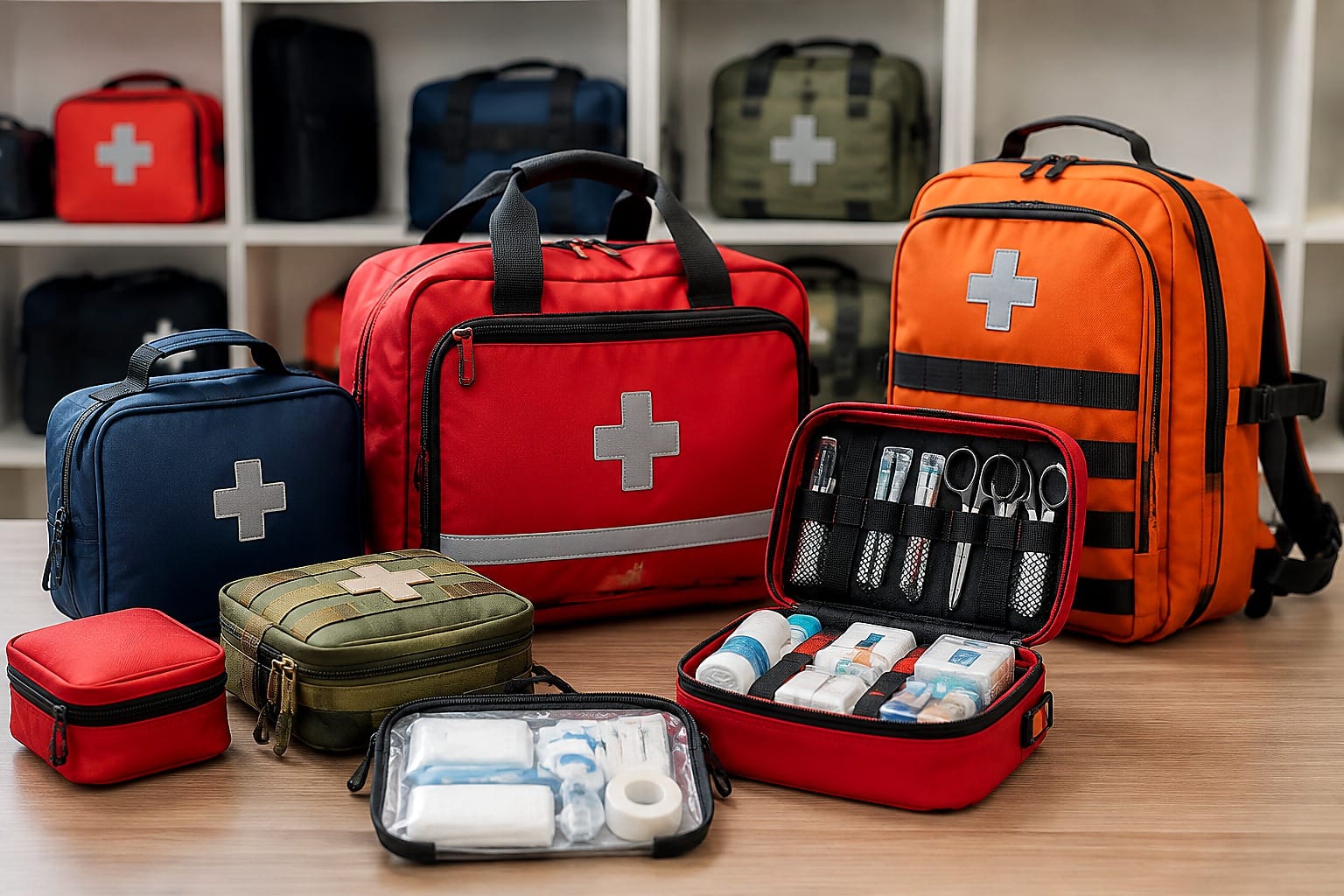
Demand is not one question. A distributor needs evidence across four points in the buying path. In a first aid product demand testing plan, each point should have a recorded event:
- Attention: Can the selected buyers find and understand the offer?
- Fit: Does the kit, bag, or consumable match a stated channel use case?
- Commercial intent: Will a buyer request a sample, quotation, or trial order at a workable price?
- Repeat potential: Can the buyer reorder the same specification after initial stock moves?
Write each point as a measurable event. For example, “ten procurement contacts open the brochure” is an attention measure. “Three qualified distributors request a sample with a destination market and target quantity” is a stronger commercial event. “Two repeat orders within the agreed review period” is evidence of continuity, not merely initial curiosity.
Avoid treating a market-size estimate as proof for a specific SKU. The U.S. Census Bureau’s guidance on wholesale trade describes business activity categories, but it does not tell a distributor which first aid configuration will move in a particular region. Use macro data to frame a hypothesis, then test the actual offer with identifiable buyers.
Which product and channel should a distributor test first?
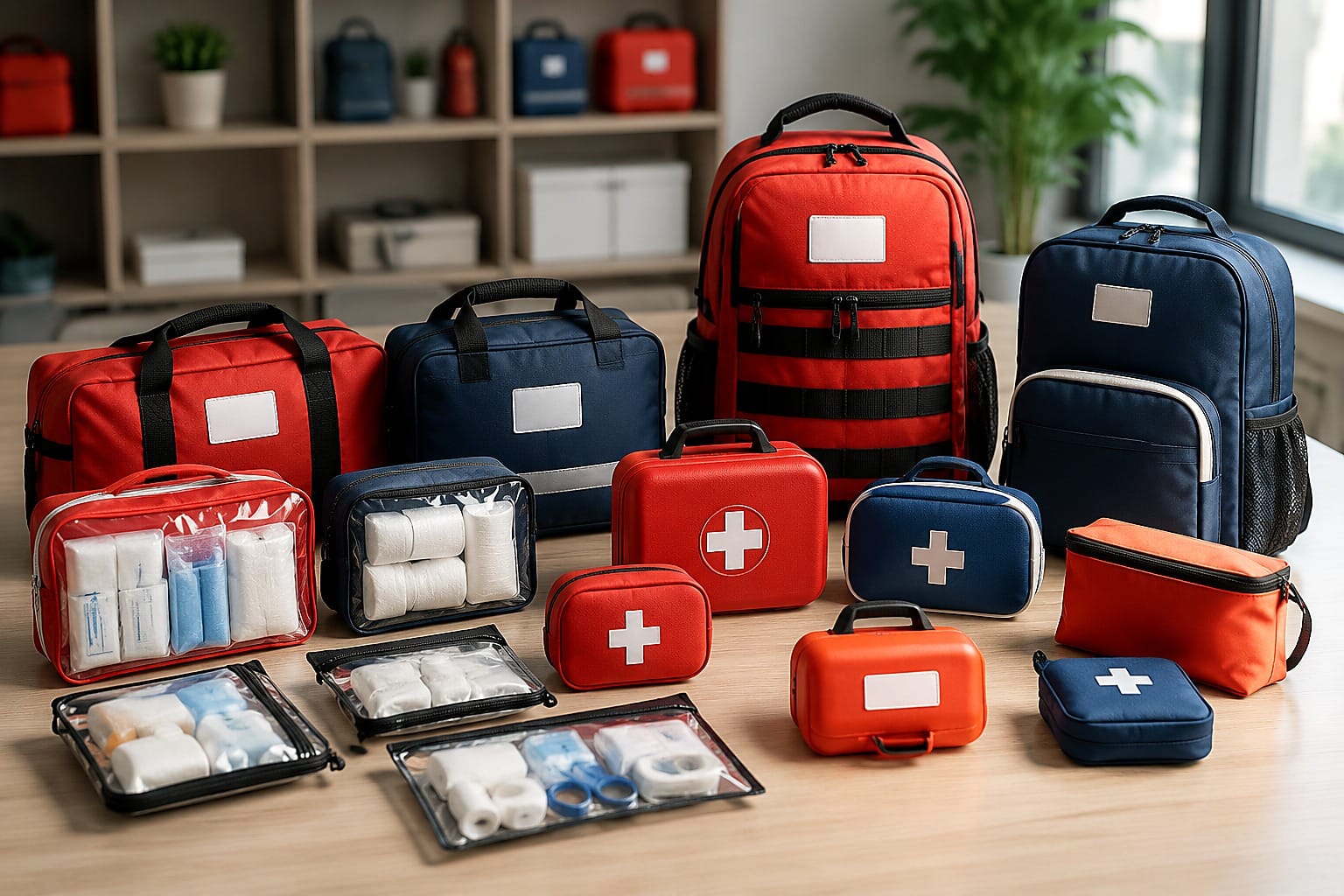
Start with one product family and one buying situation. A workplace replenishment kit, an outdoor retail bundle, and an emergency-response bag may share components but require different messages, packaging, and sales routes. Combining them in one pilot makes the result hard to interpret.
Use this selection table before requesting samples:
| Decision field | Narrow test choice | Why it matters |
|---|---|---|
| Buyer type | Regional distributor, safety reseller, pharmacy wholesaler, institutional procurement partner | Different buyers use different approval and stocking rules |
| Use case | Workplace, outdoor, vehicle, school, industrial response | Defines the relevant contents and format |
| Product format | Equipped kit, empty bag or box, consumables, emergency tool | Changes price, documentation, and replenishment pattern |
| Market | One destination country or language group | Keeps labels, standards, and freight assumptions controlled |
| Price basis | Target resale band and quoted delivery basis | Prevents a low unit price from hiding other costs |
| Test quantity | Sample, micro-pilot, or limited first order | Limits exposure while creating a real buyer event |
The first aid distribution strategy framework provides the wider channel context. For the pilot itself, keep the variable count small. If the bag, BOM, color, logo, carton, and language all change at once, a positive or negative result cannot be traced to one decision.
How should the pilot offer be structured?
Build a one-page test brief. It should be specific enough for a buyer to evaluate and simple enough for a sales team to repeat.
Include:
- Product identifier and revision number.
- Intended user, channel, and destination market.
- Component list with quantities per kit or pack.
- Container dimensions, material, color, and closure details where applicable.
- Label language, importer fields, barcode status, and artwork revision.
- Sample availability, sample cost, preparation time, and approval steps.
- Requested trial quantity and two higher comparison tiers.
- Packaging assumptions and delivery basis, including named place for an Incoterms quote.
- The feedback deadline and the action that counts as a qualified lead.
The equipped and customizable first aid kit category can be used as a starting point for kit configurations. An emergency medical bag category may fit a different channel test. These pages are reference points, not a promise that every listed format is ready for a specific destination. Confirm current specifications and feasibility in the RFQ.
Which demand signals are strong enough to scale?
Rank signals by the buyer’s commitment and the cost of collecting them. A simple scorecard keeps the pilot from being judged by the loudest comment.
| Signal | Example evidence | Interpretation |
|---|---|---|
| Low commitment | Page visit, catalogue download, general reply | Message or category interest; useful for reach only |
| Medium commitment | Named company, target market, target quantity, request for price | Qualified commercial conversation |
| High commitment | Sample request, specification review, RFQ with delivery window | Product and sourcing fit are being evaluated |
| Very high commitment | Trial PO, deposit discussion, approved sample, reorder request | Evidence for a scale decision, subject to terms and compliance |
Use a consistent lead form. Ask for company type, countries served, current category, expected monthly or seasonal volume, desired pack format, target resale band, and required documents. Without those fields, two enquiries may look equal even though one is a consumer query and the other is a distributor with an active tender. This is the data layer of first aid product demand testing.
Digital research can help set the test hypothesis. Google Trends shows relative search interest over time, while Google Ads Keyword Planner is designed for keyword planning. Neither tool proves an order. Compare their patterns with direct buyer conversations, sample requests, and quote activity for the exact product configuration.
What is a workable pilot decision rule?
Define the rule before outreach. Otherwise, a distributor may keep extending a weak test because the initial idea feels familiar. A first aid product demand testing rule should state the evidence needed to move from interest to an RFQ.
One example is a 30-day review with three gates:
- Reach gate: Contact a predetermined list of qualified accounts in one channel and record responses using the same brief.
- Intent gate: Continue only if the pilot produces a minimum number of specification-level conversations, sample requests, or RFQs. Set the number according to list quality and sales capacity rather than copying a generic conversion rate.
- Economics gate: Scale only when the expected order quantity, delivered-cost basis, working-capital need, and documentation effort fit the distributor’s plan.
Add a stop condition. Stop or revise the offer when buyers repeatedly reject the same specification for a stated reason, when the requested quantity is below feasible production assumptions, or when destination-market documentation cannot be confirmed. A failed pilot is useful if the reason is recorded and the next test changes one variable.
How can distributors keep the test comparable?
Version control matters even for a small pilot. Use one reference file for the product brief, sample photos, BOM, label artwork, and quotation assumptions. Mark every revision with a date or code. Send the same version to each account in the test group.
Track the following in a simple sheet:
- Account and buyer role.
- Date contacted and channel used.
- Product revision shown.
- Questions or objections, grouped by price, contents, format, documentation, or timing.
- Requested quantity and destination.
- Sample or RFQ status.
- Next action and owner.
- Decision outcome: scale, revise, hold, or stop.
Do not change the product halfway through the pilot without creating a new test cell. If the label language changes for one market, separate that result. If one buyer sees a lower quantity tier or a different delivery basis, flag it. Comparable inputs make the conclusion from first aid product demand testing more credible.
What should happen after a positive test?
A positive signal starts procurement work; it does not finish it. Convert the pilot evidence into an RFQ package with the approved sample, BOM, artwork, packing plan, quantity allocation, and requested delivery basis. Ask the supplier to identify the MOQ driver for each version and to separate fixed charges from unit pricing.
Review destination-market responsibilities before production. The buyer or importer should confirm whether the product, components, labels, claims, and documents meet local requirements. Keep a written record of who supplies each document and when it will be reviewed.
Then decide whether to:
- place a controlled trial order;
- consolidate versions to reduce small production lots;
- keep a standard configuration and customize only the label or insert;
- move the offer to a second channel with the same approved specification; or
- hold the project until the economics or documentation are resolved.
The scale decision should reference evidence from the pilot and the exact revision that generated it. That link protects the distributor from scaling a version buyers never actually evaluated.
FAQ
How many buyers should be included in a first aid product demand test?
There is no universal account count. A focused test with a small list of qualified distributors can produce more useful evidence than a large list of unfiltered contacts. Set the number based on channel size, expected response rate, sales capacity, and the cost of preparing samples. Define what counts as a qualified response before outreach, such as a named company, destination market, current category, and target quantity. If the first round produces only general interest, expand or refine the list rather than claiming demand. Record non-responses and objections as well as positive replies. The purpose is to compare evidence across a defined buyer group, then decide whether the next test should change the channel, product, or offer.
Is a sample order enough to prove demand?
A sample request is a strong intent signal, but it is not the same as sell-through or a repeat order. The buyer may be checking quality, documentation, or internal approval. Ask what decision follows sample approval and when that decision will be made. Link the sample to a product revision, quotation basis, and estimated quantity. After delivery, record whether the buyer approved the specification, requested changes, issued an RFQ, or stopped. A sample can validate product fit while the commercial test still needs a trial PO or a reorder signal. Handle each stage separately so the pilot does not overstate what the evidence shows.
Should a distributor test price or product configuration first?
Test the product configuration first when the contents, format, or label are still uncertain. A low price for the wrong configuration creates misleading interest. Once the specification is stable, compare a small number of price or quantity tiers on the same delivery basis. If the channel has a clear target resale band, include that band in the brief and ask buyers to explain where the offer falls short. Change one major variable at a time. Otherwise, a response cannot show whether buyers reacted to price, contents, packaging, documentation, or timing. Keep the test cell and revision code in the lead sheet.
How long should a distributor run the pilot?
Use a defined review window that matches the buying cycle. A fast reseller channel may respond within days, while institutional procurement can require several weeks for specification and document review. Set an end date and an interim checkpoint. The checkpoint is for correcting obvious data gaps, not for moving the goalposts. If buyers need additional documents, record that requirement and extend only with a stated reason. At the end of the window, classify each account as no fit, information needed, sample, RFQ, trial order, or repeat potential. The classification creates a clean next action instead of an open-ended follow-up list.
Can a distributor test several countries in one pilot?
It is possible, but it increases variables. Language, labeling, importer details, freight scope, documentation, and channel practice may differ by destination. If several countries are included, keep the product revision common and separate the market-specific fields in the test sheet. Do not combine their conversion rates into one conclusion when the offer or regulatory work differs. A staged approach is usually easier to interpret: test one priority market, document the reasons for success or failure, then reuse the approved base specification where product feasibility and local requirements allow. Confirm each destination’s responsibilities before any production commitment.
First aid product demand testing works when it connects a defined buyer, a controlled specification, and a measurable commitment. Start with one channel, keep the pilot comparable, and scale only when the evidence supports the quantity, economics, and documentation plan. Record the conclusion as part of the first aid product demand testing file so the next RFQ uses the same evidence.