

A distributor receives a request from a mechanical contractor running 38 service vans. The contractor does not want 38 identical workplace kits. It wants one kit per van, a restock rule that survives four seasons of summer heat, and a single purchase order that covers the year.
Field service first aid demand is regularly quoted as if it were warehouse demand divided by the number of vehicles. That arithmetic fails on three counts: the unit of provision is a vehicle rather than a floor, the person who uses the kit is also the person who reports the injury, and the binding constraint is space and temperature rather than headcount. Distributors who quote against those three constraints win the account. Those who quote per head lose it on the second order.
What Makes Field Service First Aid Demand Structurally Different
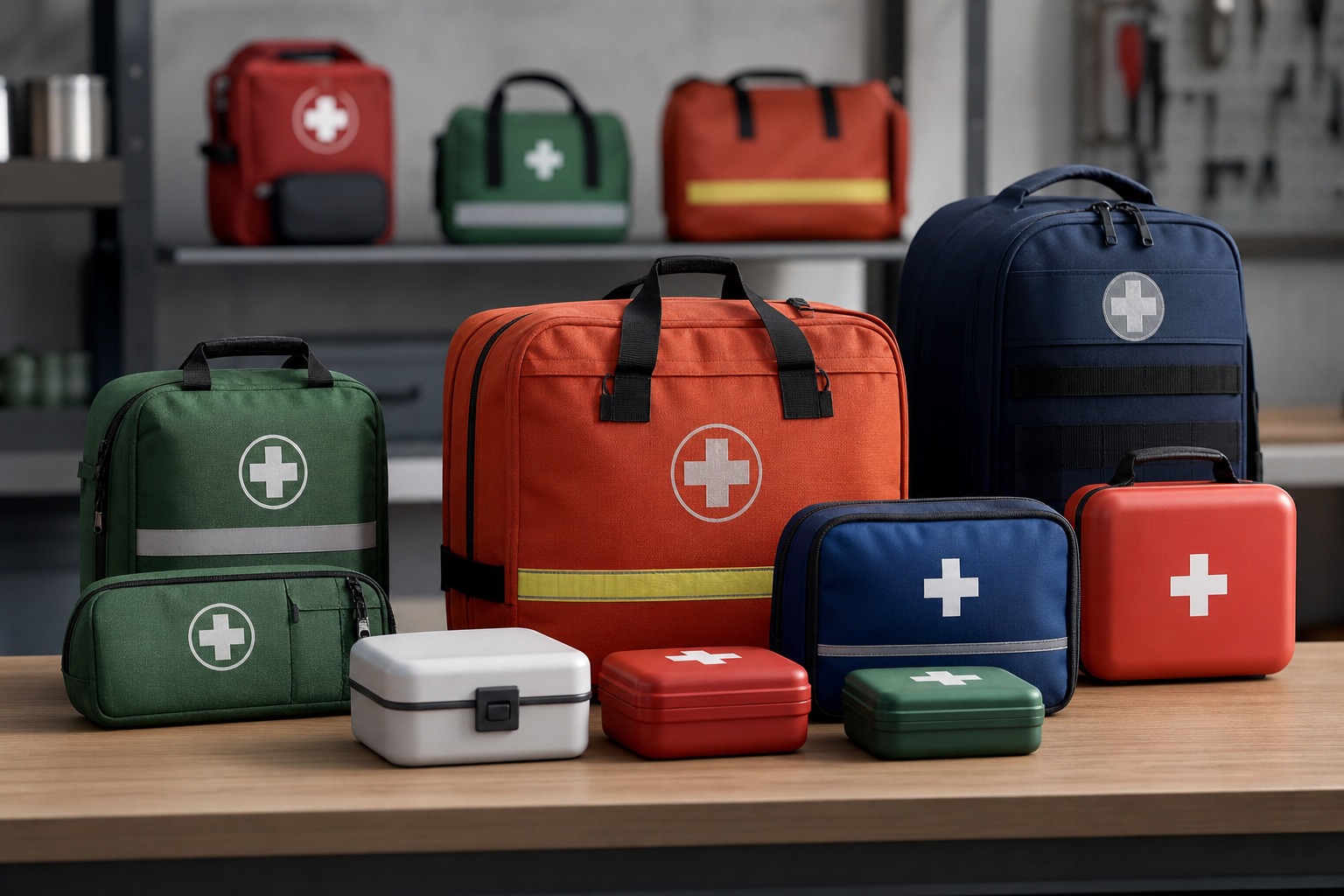
Site-based provision assumes a fixed point. Supplies sit in a cabinet, a supervisor knows where they are, and a monthly check is a walk across the building. Vehicle-based provision assumes the opposite. The kit travels, the cabinet is a door pocket, and the check happens when someone remembers.
The regulatory anchor is deliberately written in performance terms rather than equipment terms. 29 CFR 1910.151(b) requires that adequate first aid supplies be readily available, and that a trained person be present where no infirmary, clinic or hospital is in near proximity to the workplace. Nothing in the paragraph names a kit, a class or a vehicle.
The non-mandatory appendix to the same section adds the operational detail that matters for fleets: where larger operations or multiple operations are conducted at the same location, employers should determine the need for additional kits, additional types of equipment, and additional quantities of supplies. A fleet is the clearest case of multiple operations that never share a location. That sentence, more than any product specification, is why per-vehicle kits exist.
Construction work carries a parallel obligation. 29 CFR 1926.50(d)(1) requires first aid supplies to be easily accessible when required, and paragraph (g) requires flushing facilities where eyes or body may be exposed to injurious corrosive materials. A technician working on chilled water systems, battery banks or drain cleaners is exposed to that second condition far more often than the same person working in a plant.
| Dimension | Site-based provision | Vehicle-based provision |
|---|---|---|
| Unit of provision | Floor, bay or building | Vehicle, crew or technician |
| Who responds first | Trained first aider on shift | The technician alone |
| Space available | Cabinet or wall box | Door pocket, seat-back or cargo bin |
| Environmental load | Stable indoor temperature | Heat, cold, vibration, moisture |
| Inspection cadence | Monthly walk-round | Tied to vehicle service or fuel cycle |
| Failure mode | Empty cabinet discovered after use | Kit never installed, or expired unnoticed |
The injury profile supports framing mobile trades as a separate segment rather than a subset of general industry. California’s Department of Industrial Relations publishes annualised DART incidence rates by major occupation group. For installation, maintenance and repair occupations the 2023-2024 rate was 374.9 cases per 10,000 full-time workers, against 193.1 for private industry overall in the same table. That is roughly 1.9 times the all-occupation baseline. The figures are California state data for private industry, so they describe a direction rather than a global rate, and a distributor should quote them with that scope attached.
Sizing a Fleet Programme: Three Variables That Move the Kit
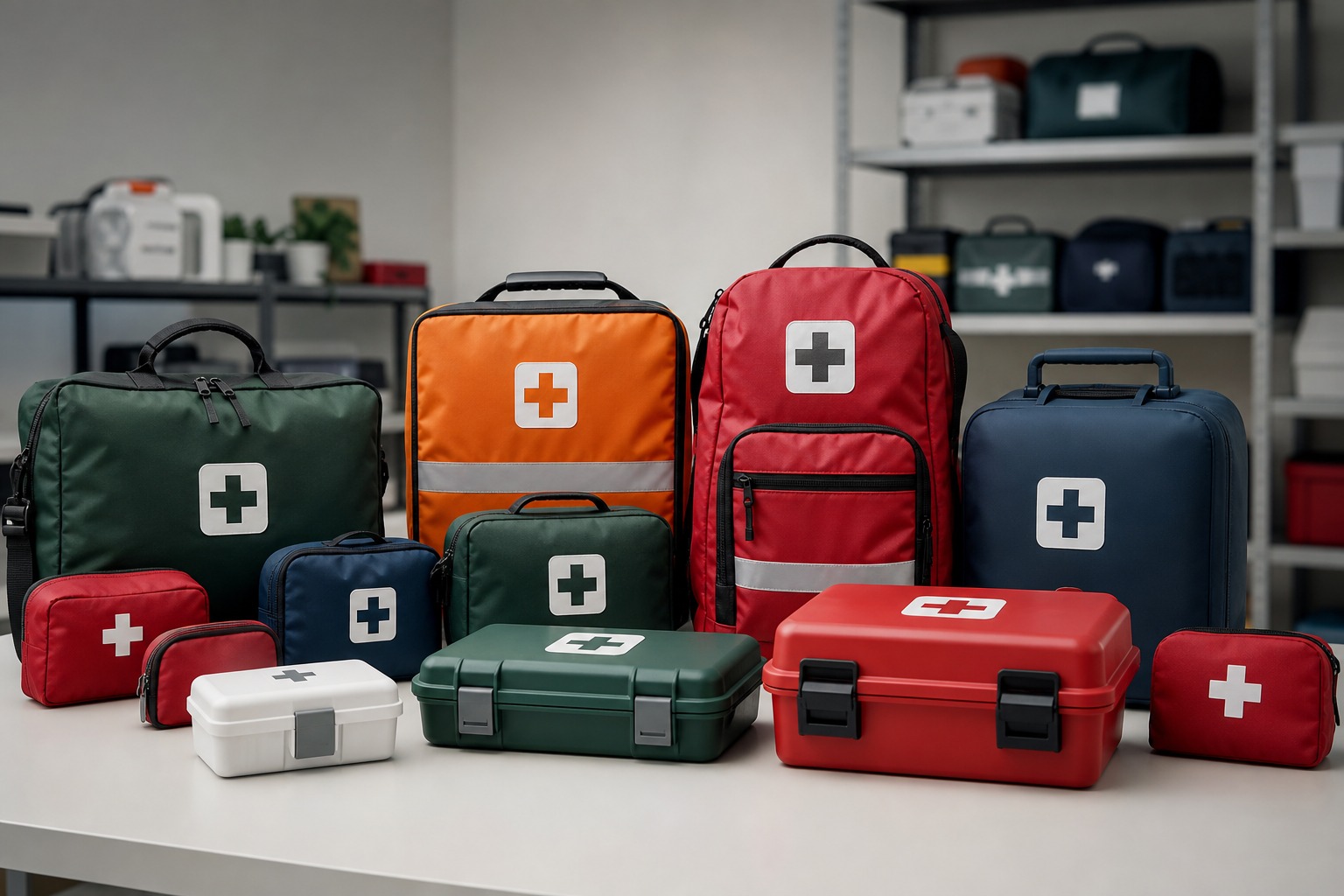
Field service first aid demand usually arrives as a headcount and nothing else. Headcount determines how many kits are needed, not what goes inside them. Three variables decide the contents.
- Crew per vehicle. A single-technician van needs a kit one person can open and use without assistance. A two-person crew can carry a larger bag and split tasks, which changes how items are packed rather than how many are bought.
- Distance and time to care. The further the worksite sits from a clinic, the more the kit has to carry in consumables that would otherwise come from a fixed station. This is the practical reading of the near-proximity language in 1910.151(b), and it is the variable most often missing from a written enquiry.
- Hazard profile. Energised work, hot work, cutting, chemical handling and work at height each add specific items. A kit specified for a domestic installer and a kit specified for an industrial maintenance crew can share a bag format and share nothing else.
Two derived quantities follow. The first is kits per vehicle, which is almost always one primary kit plus a smaller grab bag for work away from the van. The second is kits per crew, which matters when vehicles are shared across shifts and the kit stays with the vehicle rather than the person.
Distributors should also establish who owns the inspection record. A kit that is specified correctly and inspected never is a kit that fails at the moment of use, and the failure is attributed to the supplier rather than to the inspection process.
Format Choice: What Survives a Service Van
Format is where fleet specifications diverge most from workplace specifications. A wall-mounted box is the wrong object for a van, and a soft bag with no internal structure becomes a loose pile after three months of driving.
| Format | Fit for a service van | Restock visibility | Notes for the quote |
|---|---|---|---|
| Hand-carry bag | High | Medium | Fits a door pocket or seat-back; internal dividers decide whether it stays organised |
| Fold-out bag | High | High | Opens flat on a tailgate or floor; panels make missing items obvious |
| Hard case | Medium | Medium | Better crush resistance; consumes cargo space and rattles unless secured |
| Wall-mounted box | Low | High | Correct for a workshop or site cabin, not for a moving vehicle |
| Waist pack or IFAK-style pouch | Medium | Low | Suitable as a secondary grab bag for work away from the vehicle |
Two format families cover most of this demand. Hand-carry emergency bags suit single-technician vans where the kit lives in the cab, and fold-out emergency bags suit crews that work out of the rear doors and need the contents visible while the vehicle is parked.
Material claims deserve restraint here. Standard first aid bags are usually specified for general transport, not for a stated temperature range, and an uninsulated bag left on a dashboard in summer will exceed the conditions its contents were packed for. A distributor should ask the supplier whether the bag has a stated operating range, and should say plainly when it does not. Buyers who are told the limit tend to design around it. Buyers who discover it after a summer do not reorder.
Mounting is the second format question. Where a vehicle has a modular panel or a rail system, a pouch with a compatible backing attaches without drilling. Where it does not, the kit sits loose and the inspection record becomes the only control.
Consumption and Restocking: Why Par Levels Beat Annual Bulk Orders
Field service consumption is episodic. A kit may sit untouched for months and then lose three items in a week. That pattern breaks the annual bulk order model, because the buyer cannot forecast which item will be consumed and cannot hold a year of everything.
In field service first aid demand, a par level per vehicle fixes this. Each kit carries a defined quantity of each item, the technician reports what was used, and the replacement order covers the gap rather than the whole kit. Three consequences follow for the distributor.
- Order frequency rises and order size falls. The account becomes a replenishment account rather than a project account, which changes how it should be costed and how lead time is promised.
- Expiry becomes staggered. Kits installed in different months expire in different months. A single annual replacement date guarantees waste; a rolling replacement cycle matches the actual install base.
- Sealed kits need a tamper indicator. Where a kit is sealed, the seal is the inspection, and a broken seal is the trigger for a restock rather than a calendar date.
Component continuity matters more in a replenishment account than in a one-off order. If the second shipment carries a different bandage or a different glove, the technician notices and the buyer starts comparing suppliers. Our own production policy addresses this by quoting from 1,000 pieces per model and supplying documentation per SKU, while leaving destination-market confirmation with the buyer. Both halves of that sentence belong in the quote, because a replenishment account is built on repeatability rather than on a single low price.
The commercial model around refill accounts is set out in more detail in first aid refill and recurring revenue, which covers how a replenishment line is priced against a project line.
The RFQ Checklist Distributors Should Send Back
Field service first aid demand can be converted into a comparable quote with eight questions. Sending them costs one email and prevents the quote revision cycle that follows a vague specification.
| # | Question | Why it changes the quote |
|---|---|---|
| 1 | How many vehicles, and are any shared across shifts? | Sets kit count and whether kits travel with the person |
| 2 | What is the typical crew size per vehicle? | Changes bag format and internal layout |
| 3 | What is the longest typical distance to a clinic or hospital? | Drives consumable depth, not kit count |
| 4 | Which tasks involve cutting, hot work, energised systems or corrosives? | Drives the hazard-specific items and eyewash provision |
| 5 | Is the kit expected to stay in the vehicle year-round? | Raises the temperature and packaging question |
| 6 | Who inspects, and against what record? | Determines whether a sealed kit or an open kit fits |
| 7 | Is the buyer restocking per vehicle or per depot? | Decides whether par levels or bulk packs apply |
| 8 | Which destination market must the documentation support? | Determines the document set supplied per SKU |
Questions three and eight are the ones buyers most often leave blank. Both change the answer materially, and neither can be inferred from a headcount.
Demand also arrives through two different doors. Tender-driven fleet demand specifies contents in advance and rewards exact compliance. Distributor-driven demand specifies a problem and rewards a configuration proposal. The same kit can answer both, but the quote narrative is different, and mixing the two produces a document that satisfies neither.
Reading Field Service First Aid Demand in Your Own Numbers
A distributor already selling into this segment can size the opportunity without new research. Three ratios do most of the work.
- Kits per vehicle. Below one means the account is buying for the depot, not the fleet. Above two usually means a grab bag is being counted as a second kit.
- Replacement rate per hundred kits. A rate near zero suggests kits are not being used or not being inspected. A rate that spikes after a season points to expiry clustering from a single install date.
- Reorder interval. A twelve-month interval on a consumable kit is a signal that the buyer is replacing rather than replenishing, which is the pattern a par-level proposal is designed to change.
These ratios belong in a channel scorecard rather than in a single account review, and the method for building one is covered in first aid distributor channel metrics.
Two adjacent segments behave differently enough to merit separate quotes. Lone workers carry everything themselves, so weight and format dominate, as set out in lone worker first aid provisioning. Construction crews rotate between a site cabin and a vehicle, which is a dual-location problem covered in construction site first aid kit provisioning. A fleet that mixes both patterns is normal, and the answer is usually one vehicle kit plus one site kit rather than a compromise kit that suits neither.
FAQ
Does OSHA require a first aid kit in every service vehicle?
OSHA does not name vehicles in 29 CFR 1910.151. The standard requires adequate first aid supplies to be readily available and a trained person to be present where medical care is not in near proximity. For a technician whose workplace is the vehicle and the surrounding site, keeping supplies in the vehicle is the practical way to meet that requirement. State rules, customer contracts and insurer conditions can add explicit vehicle requirements, so the destination market and the contract both need checking.
How many first aid kits does a field service fleet need?
Sizing field service first aid demand starts with one primary kit per vehicle, plus a smaller grab bag for work carried out away from the van. Where vehicles are shared across shifts, the kit belongs to the vehicle rather than to the technician, so the count follows the fleet rather than the payroll. Depots, workshops and site cabins need separate provision, because a vehicle kit that is removed and used indoors leaves the van uncovered for the rest of the shift.
What should a van kit contain that a workplace kit does not?
A vehicle kit usually needs more wound closure and bleeding control than an office kit, because the nearest clinic may be an hour away, and it needs packing that survives vibration. It also needs a visible internal layout, since a technician working alone has to find an item without unpacking the bag. Eyewash provision depends on the task, not on the vehicle, and corrosive exposure brings its own requirement under 1926.50(g).
How often should vehicle first aid kits be inspected and restocked?
Tie the inspection to a cycle the fleet already runs, such as vehicle servicing or a monthly fuel reconciliation, and record it. Sealed kits can be checked by seal integrity, which takes seconds. Open kits need an item count against the par list. Expiry dates should be tracked per install month rather than per calendar year, because kits fitted in different months expire at different times and a single annual date creates avoidable waste.
Can one kit design cover both vans and job sites?
Sometimes, but the compromise is usually visible in the format. For field service first aid demand, a fold-out bag works in both settings because it opens flat and can be hung or laid down. A hard case protects contents better in a vehicle but is awkward to carry onto a site. The practical approach is to standardise the contents list across both locations and let the format differ, which keeps restocking simple while letting each location carry the right container.
Field service first aid demand rewards distributors who take the vehicle as the unit of provision. The contents list matters, but the decisions that decide reorders are format, par level and inspection ownership. A quote that answers those three is easier to approve than one that only lists items, and it is far easier to renew.
For the wider channel picture, first aid distribution strategy sets out how fleet accounts sit alongside depot, retail and tender channels. For the kit-level specification, vehicle fleet emergency kit planning works through the contents side in more depth.