

A sample box arrives, the kit looks right, and a second invoice follows with three lines nobody discussed: a sample charge, an express courier charge, and a customs advance fee. The unit price you compared against two other suppliers never contained any of them.
Sample fee courier cost B2B is not one number. It is a bundle of four separate costs, and each one is set by a different party under a different rule. Take the bundle apart before you negotiate, and comparisons between suppliers start to mean something. Leave it bundled and you are comparing which supplier chose to hide the least.
This guide works through the four lines in the order they appear: the sample charge itself, the courier charge on the shipment, the import charges that attach on arrival, and the credit that may return once a bulk order is placed.
Sample Fee Courier Cost B2B: The Four Lines in the Bundle
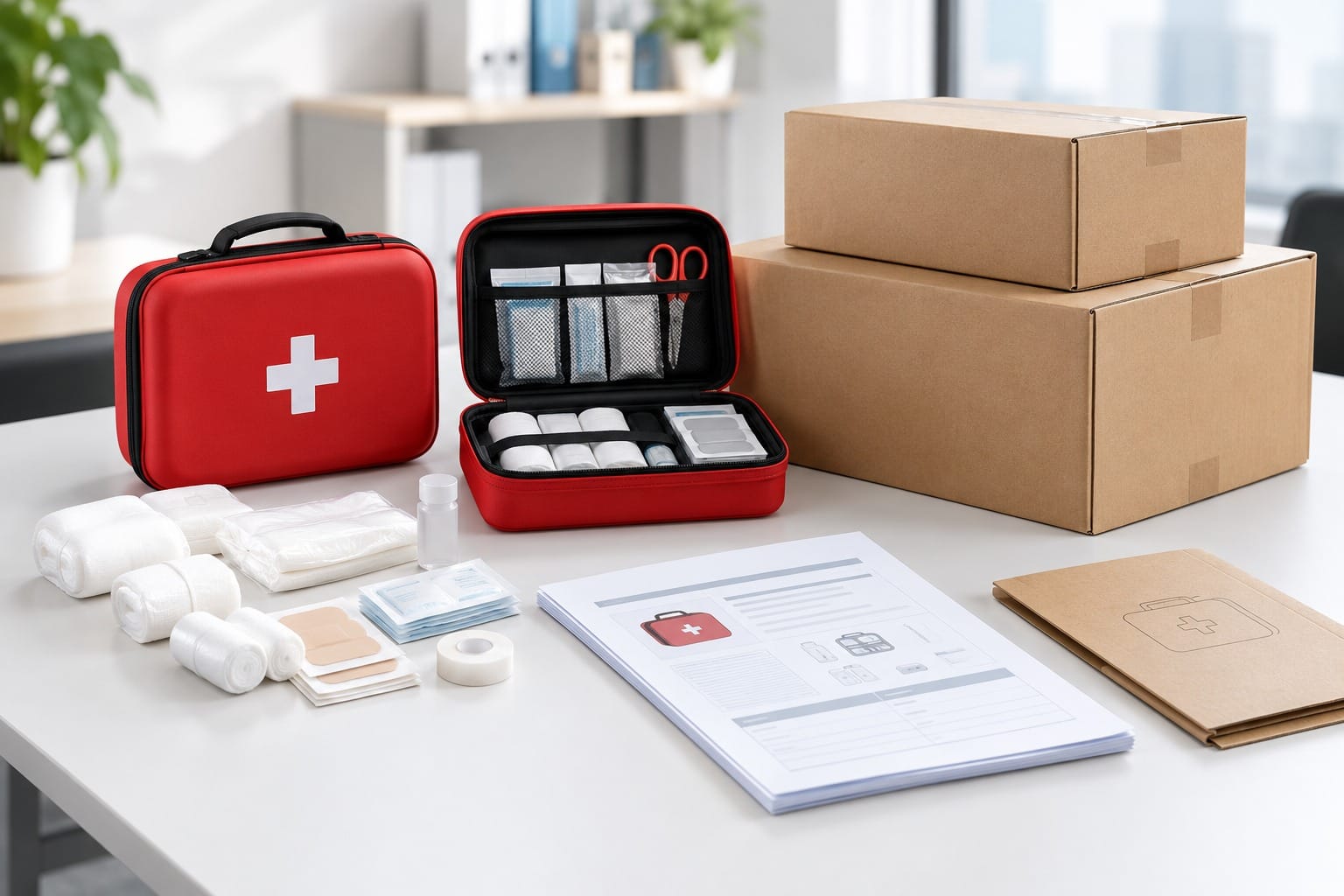
Most sourcing quotes collapse these four lines into one short sentence near the bottom. The sentence is not a price. It is a placeholder for a negotiation.
| Line | Who sets it | What drives the number | Room to negotiate |
|---|---|---|---|
| Sample charge | Supplier | Whether the sample is standard catalogue stock or built to your specification | Usually yes |
| Courier charge | Carrier | Chargeable weight, service level, destination zone | Partly |
| Import charges | Destination customs authority | Classification, declared value, agreed Incoterm | Rarely |
| Sample credit | Supplier | Whether a bulk order follows, and at what volume | Usually yes |
The first line answers a production question. A sample pulled from existing stock costs a supplier very little, and is often released without charge. A sample built to your artwork, colour and component list consumes material, machine time and a packing station, so it carries a real cost. Neither approach is a concession. They are two different products.
The second line is arithmetic, and it is the line buyers most often misread. It is covered below.
The third line is the one suppliers genuinely cannot control, because it belongs to the destination government rather than to either trading party. Anyone promising a fixed landed figure for a sample is estimating, not quoting.
The fourth line is where a supplier’s confidence in the project becomes visible. A supplier willing to credit the sample charge against the first bulk order is signalling that repeat business is the real target.
Why Does a Sample Shipment Weigh More Than the Sample?
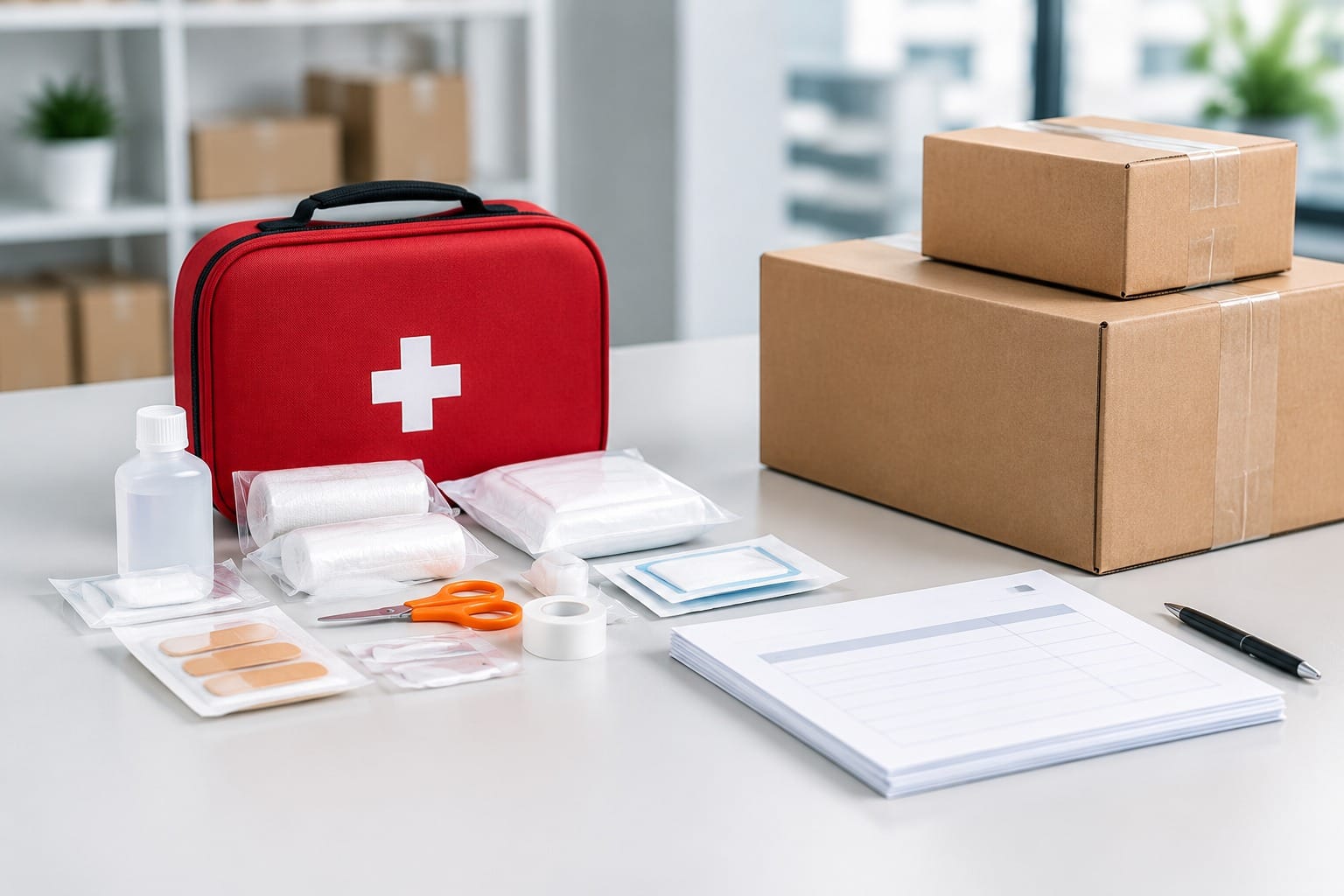
Because carriers do not bill the weight on the scale, and that is where sample fee courier cost B2B totals start to move. They bill the greater of actual weight and volumetric weight, a figure usually called chargeable or billable weight.
The logic is straightforward. A box of gauze pads is light and bulky. A box of tourniquets is heavy and compact. If carriers billed only by mass, the first shipment would take up hold space for almost nothing. Volume therefore converts into a notional weight, and the higher of the two figures is what you pay for.
DHL publishes the divisor used on express shipments in its volumetric weight reference: multiply length by width by height in centimetres, then divide by 5,000. A carton measuring 50 × 40 × 30 cm produces 60,000 cubic centimetres, so its volumetric weight is 12 kg. If that carton actually weighs 5 kg, the courier bills 12 kg. UPS applies the same principle under the name billable weight.
This is why a sample carton can be re-rated after collection. Carriers re-measure shipments inside their network, and a parcel whose dimensions differ from those declared on the airway bill is charged at the measured figure.
Three consequences matter for a buyer:
- Ask for the divisor in writing. Express, air freight and road freight use different ratios, so the same carton produces a different billable weight on each.
- Ask for the packed dimensions, not the product dimensions. Cushioning and the outer carton are part of the measurement.
- Compare service levels, not just totals. An economy service that adds four days often removes more cost than any negotiation over the sample charge.
For a light, bulky first aid kit, volumetric weight can set the courier charge entirely. Reducing empty space inside the carton is sometimes worth more than arguing about the rate.
Which Incoterm Should Govern a Sample Shipment?
The Incoterm decides who arranges carriage, where risk transfers, and who clears the goods. The International Chamber of Commerce publishes the eleven rules that make up Incoterms 2020, and the choice among them is a cost-allocation decision rather than a shipping preference.
For samples, three rules cover most situations:
- EXW leaves everything to the buyer, including export clearance. That is uncomfortable for a foreign buyer, and most trade advisers suggest FCA instead.
- DAP has the supplier deliver to your address while you remain the importer of record. Freight is included; duty and import taxes are not.
- DDP is the only rule in the set where the supplier handles import formalities and pays the duties. Buyers like it, suppliers often decline it, because it requires a tax presence or a compliant broker in the destination country.
The common misunderstanding is that a freight-inclusive term also includes duty. It does not. Under every rule except DDP, the import burden sits with the buyer, and the customs authority will look to the importer of record regardless of what the commercial invoice says.
So a sample quoted DDP and a sample quoted DAP are not comparable, even when the freight figure is identical. Note the term on the quotation before you compare sample fee courier cost B2B totals between suppliers. If two quotes use different terms, convert them to a single basis first.
Destination-specific requirements add a second layer. The United States Commercial Service maintains country commercial guides that summarise import procedures, documentation and labelling expectations market by market. Those guides describe the destination’s rules. They do not remove the buyer’s job of confirming how a specific product is classified and what documentation it needs.
How Should You Compare Sample Costs Across Suppliers?
Convert every quote to the same basis, then compare. Sample fee courier cost B2B comparison fails at this step more often than anywhere else, because two quotes that look identical often rest on different terms and different weights. Five checks do most of the work.
- Fix the Incoterm. Ask each supplier to re-quote on one term, DAP or FCA, so the freight leg is defined identically.
- Separate the sample charge from the courier charge. A supplier offering a free sample may be recovering the same amount in freight mark-up.
- Request the packed carton dimensions and actual weight. With those figures you can compute billable weight yourself instead of accepting the quoted courier total.
- Ask what the sample credit policy is. Whether the charge is credited against a bulk order changes the effective cost of the sampling stage.
- Ask how the sample maps to the production unit. A sample built with components that will not be used at volume validates the wrong thing.
The fifth point is the one that protects the larger budget. A sample exists to confirm components, artwork and packaging before volume production, which is the logic behind running validation before a purchase order rather than after it. That sequence also matters for carton and pallet geometry, since the export carton and pallet configuration you ship at volume is usually derived from the carton you sample. If the sample and the production build diverge, the sample stage has produced a photograph rather than a decision.
Order quantities interact with all of this. Where a supplier’s minimum order quantity starts at 1,000 pieces, the sample charge is economically small against the bulk order, and a credit arrangement usually turns it into a rounding difference. Where a buyer is testing three categories instead of one, three sample charges accumulate quickly, and it is worth consolidating samples into a single shipment to share one courier charge. Running a pre-shipment inspection on the bulk order is a separate safeguard, and it works better when the sample stage already fixed the specification.
What Falls Outside the Sample Quote?
Three sample fee courier cost B2B lines rarely appear on a sample quotation.
- Duty and import taxes. Under every Incoterm except DDP these land on the importer, and the amount depends on classification and declared value rather than on the supplier.
- Customs brokerage and advance fees. Couriers commonly charge a handling fee for advancing duty on your behalf, plus a disbursement charge.
- Storage and re-delivery. If documents stall at the border, warehouse charges begin, and the courier will bill a second delivery attempt.
None of these are hidden fees in the dishonest sense. They sit outside the supplier’s control, which is exactly why they are excluded from the quote rather than estimated inside it. The practical response is to budget a margin on top of the quoted sample figure and to confirm the import handling with a broker before the shipment moves.
For buyers running a first sourcing cycle, the lowest-cost correction is a written one. Put the Incoterm, the service level, the packed carton dimensions and the sample credit policy into the purchase order or the proforma invoice, and the four lines stop being a surprise. Product pages such as the empty first aid kit bags and boxes range, the emergency medical bags range and the hemostasis and bandaging supplies range describe components at the specification level, which helps a buyer decide what a sample actually needs to prove.
FAQ
Is a sample charge usually credited against the first bulk order?
It depends on the supplier, so it belongs in the quotation rather than in an assumption. Many suppliers credit a sample charge against the first production order once a defined volume is reached, and many others bill the sample as a standalone sale. Ask for the policy in writing before the sample ships, because a credit offered informally is difficult to enforce after the bulk order is placed.
Why did the courier bill more than the sample freight I was quoted?
Chargeable weight is the usual cause, and it explains why sample fee courier cost B2B quotes from two suppliers can differ by half. Carriers bill the greater of actual weight and volumetric weight, and volumetric weight is derived from packed dimensions. If the carton measured larger inside the courier network than the dimensions declared at booking, the shipment is re-rated and the difference appears on the final invoice. Surcharges for fuel, remote delivery areas and customs advances can add to it.
Who pays import duty on a sample shipment?
The importer of record does, which is usually the buyer. Under Incoterms 2020, DDP is the single rule where the supplier takes on import clearance and duties; under DAP, FCA and every other rule the buyer carries that obligation. The courier often advances the duty and then bills the buyer a handling fee on top, so the amount finally paid exceeds the duty itself. A broker can confirm the classification and the expected charge before the shipment moves.
Can I use my own courier account for sample shipments?
Frequently yes, and it is worth proposing. A buyer with an established account may have negotiated rates and a defined broker relationship, which removes the advance-fee line entirely. The trade-off is control: once the buyer arranges carriage, the supplier’s obligation usually ends when the goods are handed to the carrier, and the buyer owns the transit risk from that point. Confirm who files the export declaration before switching accounts.
Does paying for a sample change the minimum order quantity?
Not by itself. Minimum order quantities are set by production economics rather than by the sampling stage, so a paid sample does not automatically lower the volume threshold for a bulk order. What a paid sample can do is establish that a specification is feasible, which is a separate conversation from order size. Keep the two discussions separate when you negotiate, and confirm both figures in the same document.
Turning Four Lines Into One Decision
The sample stage is cheap relative to the production order it is meant to de-risk, and it is the only stage where a mistake costs a courier fee rather than a container. That is the argument for spending an extra hour on the paperwork: fix the Incoterm, capture the packed dimensions, confirm who clears the goods, and agree the credit policy in writing. Those four steps settle most sample fee courier cost B2B disputes before they arise.
Once the sample fee courier cost B2B structure is explicit, supplier comparison stops being a guess about hidden mark-up and becomes a comparison of comparable figures. The buyers who get this right are not paying less per sample. They are paying once, for a sample that answers the question they actually asked.
Sample charges and courier lines are one part of the post-order cost picture, and this guide to order amendments covers the other part, where a change lands after the material has been bought.
Sample charges are usually settled outside the order, which is why deposit and balance structures in supply contracts treats them separately from the production tranches.