Choosing an outdoor first aid kit bag is a format decision before it is a component decision. A waist pack can keep a compact load within reach. A case can make contents easy to count and replenish. A backpack can carry more equipment while leaving both hands available. For distributors and institutional buyers, the useful comparison is not which format looks attractive. It is which format fits the user, load, access pattern, label plan, and destination-market requirements.
Start with the operating situation: who carries the kit, how far it moves, how often it is opened, and whether a vehicle or base station is nearby. Then define the required contents and test them inside the proposed bag. A supplier can review dimensions, materials, compartments, and sample options according to the project. The buyer remains responsible for confirming local requirements and the commercial case.
For a broader configuration checklist, see UneedAid’s workplace first aid kit configuration guide. The same discipline applies when an outdoor first aid kit bag is sold to a distributor: define the use case, freeze the revision, and verify the loaded sample.
An outdoor bag has five practical jobs: keep the selected contents together, protect them during transport, make priority items findable, support inventory checks, and communicate ownership or use instructions. The format should help a trained user locate supplies without forcing every item into one large compartment.
Before requesting a quotation, write a short use-case brief:
The OSHA first-aid standard illustrates why workplace buyers should define hazards and access arrangements instead of copying a generic list. It does not prescribe one bag format for every outdoor setting. Use the hazard review to establish the brief, then validate the bag and contents together.
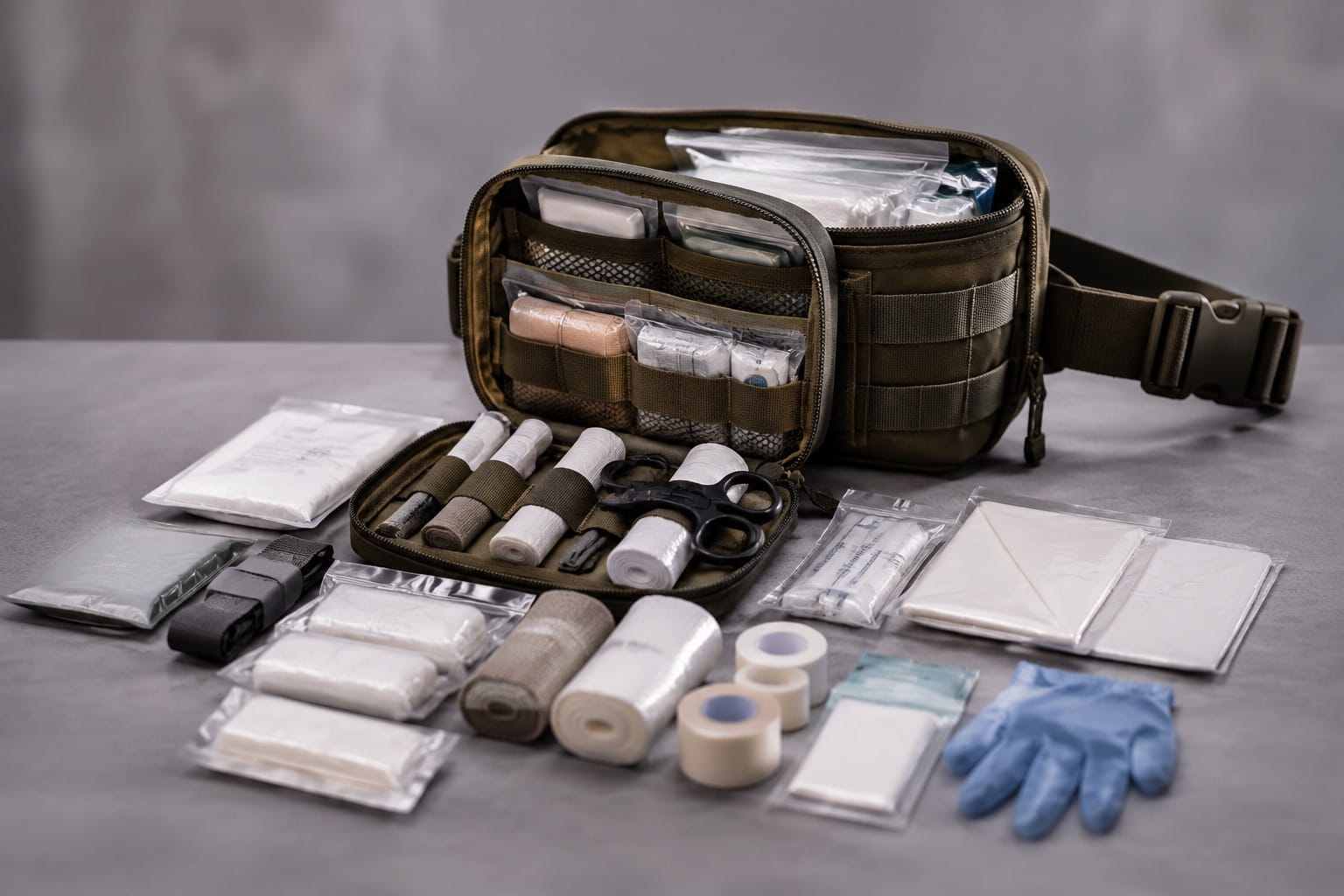
A waist format suits a small, personal load that needs to stay with one wearer. It can be useful for guided activities, event marshals, short routes, or retail bundles positioned as compact outdoor equipment. Its main advantages are immediate access and low carry burden. A wearer can reach the kit without removing a pack.
The trade-off is volume. A waist bag may not provide enough room for a larger team configuration, rigid tools, spare garments, or multiple refill groups. The belt system also needs a size range and adjustment plan. For B2B sourcing, confirm whether the target user wears a separate backpack, harness, or work belt; interference can reduce practical use.
Check these details in a sample:
For a distributor, the waist format is often a defined sub-SKU rather than a universal replacement. Keep the component list and pack-out drawing tied to a revision code so a later refill quote does not silently change the capacity.
A case format works when the kit travels in a vehicle, day pack, storage bin, or base station and the buyer values layout control. A structured case can hold dividers, elastic loops, transparent pockets, or removable pouches. Those features make a stock check easier and can support a repeatable packing method across several units.
Cases are useful for rental operators, schools, camps, vehicle fleets, and retailers that want a consistent shelf presentation. They can also be easier to label with a large front panel. However, a case may be less comfortable to carry over distance, and a rigid or semi-rigid shell can increase carton volume and freight cost.
Ask the supplier to show the empty case dimensions, usable internal dimensions, loaded weight, handle attachment, closure type, and carton packing assumptions. “Large capacity” is not a measurable specification. A packing diagram with component dimensions is more useful for procurement and later inspection.
The American Red Cross first aid kit guidance is a useful reference for thinking about organization and replenishment. It is general guidance, not a destination-market product specification. A commercial buyer should map each selected item to its own BOM, label, document, and refill plan.
A backpack format is appropriate when one person must carry a broader load over distance or keep both hands available. Outdoor instructors, response teams, field technicians, and tour operators may prefer a backpack when the kit includes several modules, protective equipment, tools, or reserve supplies.
The capacity advantage introduces more variables. A larger bag can become heavy, difficult to organize, or slow to search if every pocket is filled without a layout plan. Shoulder straps, back padding, sternum adjustment, and load distribution should be checked with the intended weight, not an empty sample. A backpack may also need a rain cover, reflective detail, or a separate documentation pocket, depending on the project brief.
Use a module map rather than a single packing list:
| Module | Typical purpose | Packing question |
|---|---|---|
| Access module | Frequently needed items | Can it be reached first? |
| Wound-care module | Dressings, tapes, and related supplies | Is the size range visible? |
| Protection module | Gloves, barriers, and protective items | Is it separated from used materials? |
| Tool module | Tools or emergency accessories | Are hard items protected from soft packs? |
| Refill module | Reserve contents | Can inventory staff count it quickly? |
This structure lets a buyer compare a backpack with a case on the same functional basis. It also gives a supplier a clearer path for sample review and quotation tiers.
The most workable format is the one with a controlled specification and a realistic replenishment plan. Compare the three options across the same fields:
| Field | Waist | Case | Backpack |
|---|---|---|---|
| Carry distance | Short to medium | Short or vehicle-based | Medium to long |
| Typical capacity | Compact | Compact to medium | Medium to large |
| Access | Very fast for wearer | Fast when opened on a surface | Fast if modules are planned |
| Inventory control | Limited by small space | Strong with dividers | Strong with modular layout |
| Branding area | Small to medium | Medium to large | Medium to large |
| Freight impact | Usually lower | Can rise with structure | Can rise with volume and padding |
For each candidate, request the same evidence: material description, dimensions, empty weight, loaded test photos, seam or closure details, artwork area, packaging, sample lead time, and a quotation basis. If the bag is equipped, tie the price to a dated component list. If it is empty, state that clearly so the distributor can build a separate contents plan.
The emergency medical bag category gives buyers a useful starting point for comparing empty formats. Use the category page as a reference for discussion, then confirm the exact outdoor first aid kit bag dimensions, materials, and feasibility in the RFQ.
The U.S. Consumer Product Safety Commission recall search is a reminder to maintain traceable product and supplier records. It is not a certification for an outdoor bag. Keep approved samples, inspection checkpoints, and revision history in the project file, and ask the importer or responsible party to confirm any market-specific obligations.
Run a sample review that mirrors the intended use. Load the bag with the proposed contents, record the loaded weight, and ask a representative user to carry, open, search, close, and repack it. Photograph the layout and note any item that is difficult to see or remove. Repeat after the bag has been folded, transported, or exposed to the conditions stated in the brief where that test is appropriate.
Distributors can also use the B2B first aid distribution strategy framework to connect bag-format testing with channel, sample, and reorder decisions. Keep the outdoor first aid kit bag revision tied to the evidence collected from each target channel.
Use a simple acceptance sheet:
Do not change the bag and the contents at the same time unless the revision is recorded. If a buyer asks for a different strap, color, or pocket layout, create a new revision and repeat the fit check. This protects later orders from mixing two versions under one SKU.
A waist bag can work for a compact personal or single-wearer load, but it may be too small for a group configuration. Start by listing the users, route duration, refill interval, and required modules. If several people rely on one kit, a case or backpack may provide better capacity and inventory control. A mixed program can use a waist bag for immediate access and a larger case or vehicle kit for reserves. Confirm the intended split in the BOM and packing diagram before requesting samples. The practical answer depends on the load and carry arrangement, not the bag label alone.
A backpack usually provides more nominal space, but useful capacity depends on layout and load weight. A deep compartment can hide small items, and an overfilled pack can slow access. Divide the contents into modules, place priority items near the opening, and test the loaded bag with the intended wearer. Measure the internal dimensions rather than relying on a litre claim. If the kit will be sold through several channels, keep a defined pack-out so buyers compare the same configuration. A smaller case may be more practical when the kit stays in a vehicle or base station.
Include the use case, carry method, external and internal dimensions, material expectations, closure, compartments, label language, artwork area, target quantity, sample requirement, packing method, carton assumptions, and requested delivery basis. For an equipped kit, attach the item list with quantities and identify which parts are fixed or open for discussion. State the destination market and who will confirm local requirements. Ask for sample timing, production lead time, inspection points, and the MOQ driver. Clear inputs make quotations comparable and reduce later revisions.
One base format can serve more than one channel when the carry needs, contents, and labeling are genuinely compatible. Keep the base bag revision stable and separate channel-specific inserts, component modules, or artwork where needed. A tour operator may need a different refill cycle from a retail reseller. Record each channel as a defined configuration rather than assuming the same pack-out fits all users. Before scaling, compare loaded weight, access, documentation, packaging, and delivery assumptions for each market. Where product feasibility allows, a common base can reduce complexity without removing the need for channel-specific validation.
Make replenishment part of the original design. Mark each component with a quantity, revision, and replacement trigger. Keep reserve contents in a separate module or refill pouch when the bag format allows it. Ask the supplier whether the same component, label, and packaging specification can be repeated, and document any item that may change because of availability or destination rules. A distributor should maintain a reorder point based on channel usage and lead time rather than the bag’s visual capacity. Confirm each repeat order against the approved BOM before production.
The right outdoor first aid kit bag is the one that matches the user’s carry pattern, the contents’ layout, and the buyer’s replenishment process. Compare waist, case, and backpack formats with a loaded sample, a revision-controlled BOM, and a clear RFQ. Then select the format that can be inspected, quoted, labeled, and repeated with the least ambiguity.
A distributor can place a large first aid order, build stock, and still learn that the channel wanted a different pack size, label language, or price point. First aid product demand testing reduces that exposure by testing a small, defined offer before committing to a full production run. The test should measure real buyer actions: qualified replies, sample requests, quote conversions, sell-through, and repeat interest. Likes and unqualified enquiries are useful signals, but they do not prove purchasing demand.
The practical sequence is simple: choose one channel and use case, freeze a test specification, show a sample or controlled listing, collect comparable feedback, and set a decision rule before scaling. A supplier can discuss sample and bulk options from the starting quantity that product feasibility allows. The distributor remains responsible for confirming destination-market requirements and the commercial case.
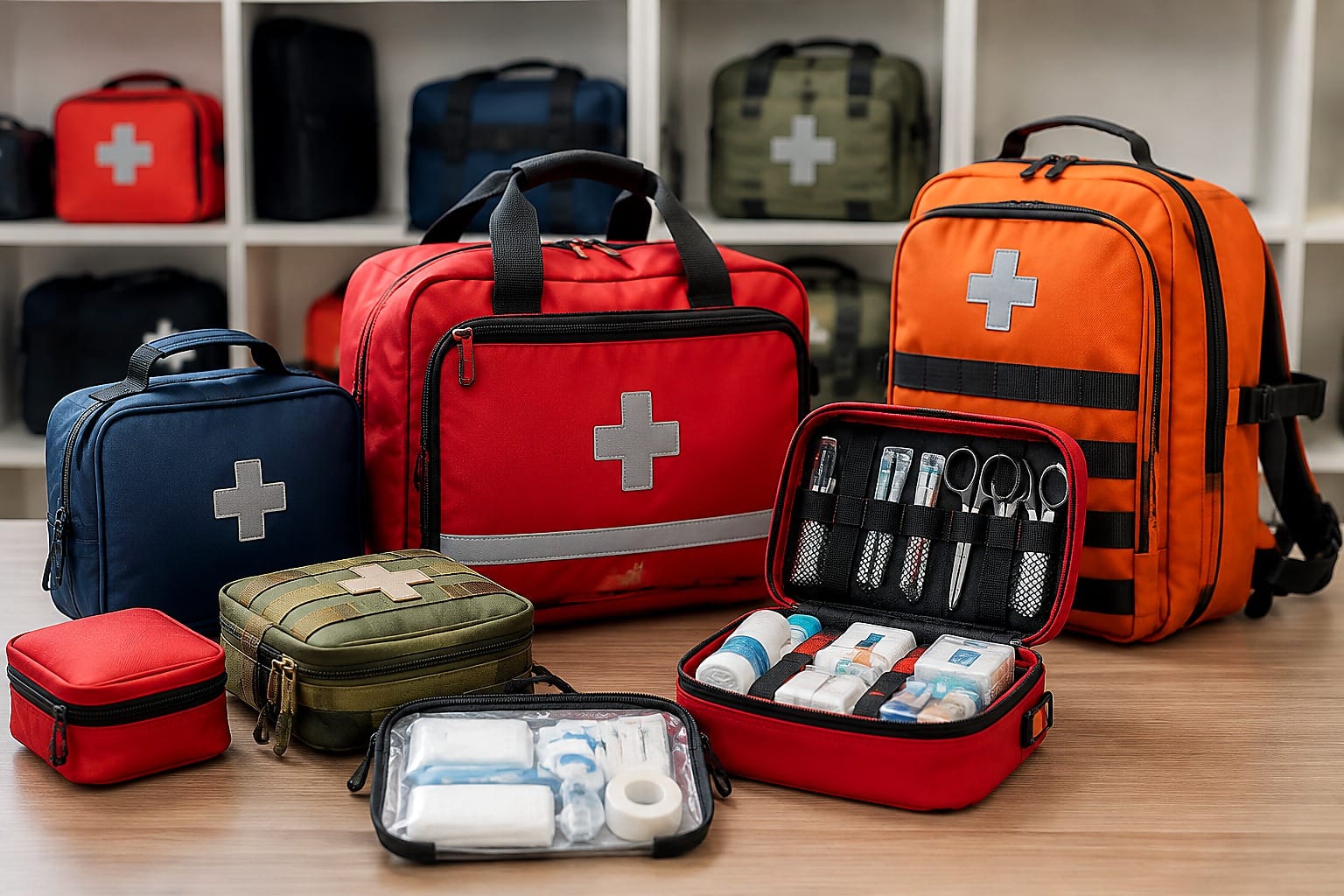
Demand is not one question. A distributor needs evidence across four points in the buying path. In a first aid product demand testing plan, each point should have a recorded event:
Write each point as a measurable event. For example, “ten procurement contacts open the brochure” is an attention measure. “Three qualified distributors request a sample with a destination market and target quantity” is a stronger commercial event. “Two repeat orders within the agreed review period” is evidence of continuity, not merely initial curiosity.
Avoid treating a market-size estimate as proof for a specific SKU. The U.S. Census Bureau’s guidance on wholesale trade describes business activity categories, but it does not tell a distributor which first aid configuration will move in a particular region. Use macro data to frame a hypothesis, then test the actual offer with identifiable buyers.
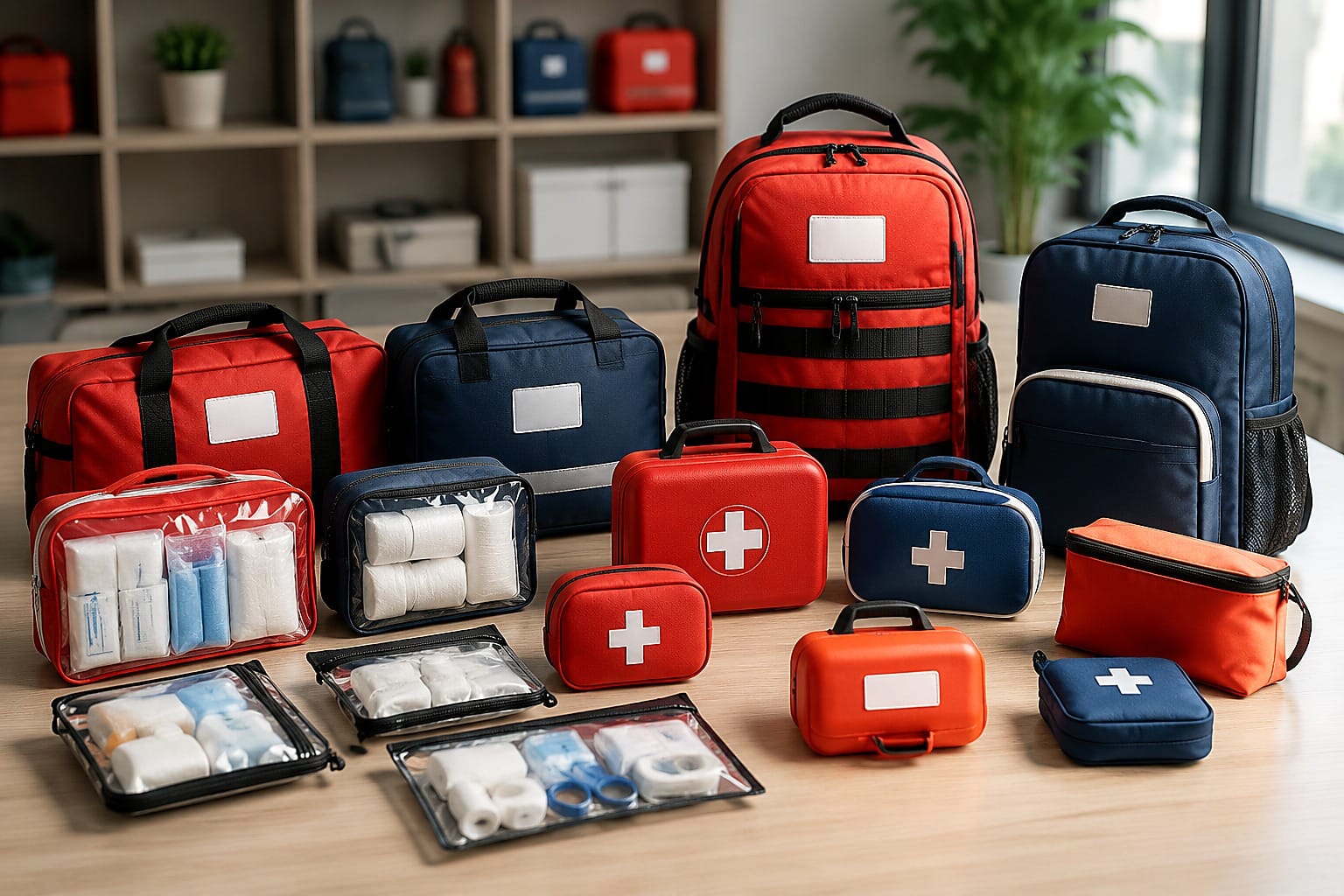
Start with one product family and one buying situation. A workplace replenishment kit, an outdoor retail bundle, and an emergency-response bag may share components but require different messages, packaging, and sales routes. Combining them in one pilot makes the result hard to interpret.
Use this selection table before requesting samples:
| Decision field | Narrow test choice | Why it matters |
|---|---|---|
| Buyer type | Regional distributor, safety reseller, pharmacy wholesaler, institutional procurement partner | Different buyers use different approval and stocking rules |
| Use case | Workplace, outdoor, vehicle, school, industrial response | Defines the relevant contents and format |
| Product format | Equipped kit, empty bag or box, consumables, emergency tool | Changes price, documentation, and replenishment pattern |
| Market | One destination country or language group | Keeps labels, standards, and freight assumptions controlled |
| Price basis | Target resale band and quoted delivery basis | Prevents a low unit price from hiding other costs |
| Test quantity | Sample, micro-pilot, or limited first order | Limits exposure while creating a real buyer event |
The first aid distribution strategy framework provides the wider channel context. For the pilot itself, keep the variable count small. If the bag, BOM, color, logo, carton, and language all change at once, a positive or negative result cannot be traced to one decision.
Build a one-page test brief. It should be specific enough for a buyer to evaluate and simple enough for a sales team to repeat.
Include:
The equipped and customizable first aid kit category can be used as a starting point for kit configurations. An emergency medical bag category may fit a different channel test. These pages are reference points, not a promise that every listed format is ready for a specific destination. Confirm current specifications and feasibility in the RFQ.
Rank signals by the buyer’s commitment and the cost of collecting them. A simple scorecard keeps the pilot from being judged by the loudest comment.
| Signal | Example evidence | Interpretation |
|---|---|---|
| Low commitment | Page visit, catalogue download, general reply | Message or category interest; useful for reach only |
| Medium commitment | Named company, target market, target quantity, request for price | Qualified commercial conversation |
| High commitment | Sample request, specification review, RFQ with delivery window | Product and sourcing fit are being evaluated |
| Very high commitment | Trial PO, deposit discussion, approved sample, reorder request | Evidence for a scale decision, subject to terms and compliance |
Use a consistent lead form. Ask for company type, countries served, current category, expected monthly or seasonal volume, desired pack format, target resale band, and required documents. Without those fields, two enquiries may look equal even though one is a consumer query and the other is a distributor with an active tender. This is the data layer of first aid product demand testing.
Digital research can help set the test hypothesis. Google Trends shows relative search interest over time, while Google Ads Keyword Planner is designed for keyword planning. Neither tool proves an order. Compare their patterns with direct buyer conversations, sample requests, and quote activity for the exact product configuration.
Define the rule before outreach. Otherwise, a distributor may keep extending a weak test because the initial idea feels familiar. A first aid product demand testing rule should state the evidence needed to move from interest to an RFQ.
One example is a 30-day review with three gates:
Add a stop condition. Stop or revise the offer when buyers repeatedly reject the same specification for a stated reason, when the requested quantity is below feasible production assumptions, or when destination-market documentation cannot be confirmed. A failed pilot is useful if the reason is recorded and the next test changes one variable.
Version control matters even for a small pilot. Use one reference file for the product brief, sample photos, BOM, label artwork, and quotation assumptions. Mark every revision with a date or code. Send the same version to each account in the test group.
Track the following in a simple sheet:
Do not change the product halfway through the pilot without creating a new test cell. If the label language changes for one market, separate that result. If one buyer sees a lower quantity tier or a different delivery basis, flag it. Comparable inputs make the conclusion from first aid product demand testing more credible.
A positive signal starts procurement work; it does not finish it. Convert the pilot evidence into an RFQ package with the approved sample, BOM, artwork, packing plan, quantity allocation, and requested delivery basis. Ask the supplier to identify the MOQ driver for each version and to separate fixed charges from unit pricing.
Review destination-market responsibilities before production. The buyer or importer should confirm whether the product, components, labels, claims, and documents meet local requirements. Keep a written record of who supplies each document and when it will be reviewed.
Then decide whether to:
The scale decision should reference evidence from the pilot and the exact revision that generated it. That link protects the distributor from scaling a version buyers never actually evaluated.
There is no universal account count. A focused test with a small list of qualified distributors can produce more useful evidence than a large list of unfiltered contacts. Set the number based on channel size, expected response rate, sales capacity, and the cost of preparing samples. Define what counts as a qualified response before outreach, such as a named company, destination market, current category, and target quantity. If the first round produces only general interest, expand or refine the list rather than claiming demand. Record non-responses and objections as well as positive replies. The purpose is to compare evidence across a defined buyer group, then decide whether the next test should change the channel, product, or offer.
A sample request is a strong intent signal, but it is not the same as sell-through or a repeat order. The buyer may be checking quality, documentation, or internal approval. Ask what decision follows sample approval and when that decision will be made. Link the sample to a product revision, quotation basis, and estimated quantity. After delivery, record whether the buyer approved the specification, requested changes, issued an RFQ, or stopped. A sample can validate product fit while the commercial test still needs a trial PO or a reorder signal. Handle each stage separately so the pilot does not overstate what the evidence shows.
Test the product configuration first when the contents, format, or label are still uncertain. A low price for the wrong configuration creates misleading interest. Once the specification is stable, compare a small number of price or quantity tiers on the same delivery basis. If the channel has a clear target resale band, include that band in the brief and ask buyers to explain where the offer falls short. Change one major variable at a time. Otherwise, a response cannot show whether buyers reacted to price, contents, packaging, documentation, or timing. Keep the test cell and revision code in the lead sheet.
Use a defined review window that matches the buying cycle. A fast reseller channel may respond within days, while institutional procurement can require several weeks for specification and document review. Set an end date and an interim checkpoint. The checkpoint is for correcting obvious data gaps, not for moving the goalposts. If buyers need additional documents, record that requirement and extend only with a stated reason. At the end of the window, classify each account as no fit, information needed, sample, RFQ, trial order, or repeat potential. The classification creates a clean next action instead of an open-ended follow-up list.
It is possible, but it increases variables. Language, labeling, importer details, freight scope, documentation, and channel practice may differ by destination. If several countries are included, keep the product revision common and separate the market-specific fields in the test sheet. Do not combine their conversion rates into one conclusion when the offer or regulatory work differs. A staged approach is usually easier to interpret: test one priority market, document the reasons for success or failure, then reuse the approved base specification where product feasibility and local requirements allow. Confirm each destination’s responsibilities before any production commitment.
First aid product demand testing works when it connects a defined buyer, a controlled specification, and a measurable commitment. Start with one channel, keep the pilot comparable, and scale only when the evidence supports the quantity, economics, and documentation plan. Record the conclusion as part of the first aid product demand testing file so the next RFQ uses the same evidence.
A shipment is ready, but the label names the wrong local company and nobody can show who checked the market registration. This is where many cross-border projects stall. First aid import requirements are not one supplier checklist. They are a destination-specific allocation of duties among the manufacturer, importer, distributor, and any appointed local representative.
The practical answer is to build a responsibility matrix before quotation approval. Map every SKU to its intended purpose, classification, destination, legal operators, required evidence, label version, registration route, and release owner. Repeat the exercise for each market. This article provides a B2B procurement control framework, not legal or regulatory advice. Buyers should confirm current duties with the relevant authority and qualified local advisers.
The words “first aid product” describe a commercial category, not a universal regulatory classification. One shipment may contain adhesive dressings, gloves, scissors, instant cold packs, an empty bag, and an assembled kit. Those lines can follow different legal routes because their intended purposes, claims, materials, classifications, and market rules differ.
Start at SKU level. Record what the item is, what it is represented to do, who manufactures it, where it will be supplied, and whether it is sold alone or inside a kit. Then document the classification conclusion and the authority source used. A supplier certificate for one component does not establish the status of the other components or of the complete assortment.
Market structure also changes the role names. The European Union uses defined economic-operator concepts under Regulation (EU) 2017/745. Great Britain may require a UK Responsible Person for a manufacturer based outside the UK. Australia commonly places market-facing responsibilities on an Australian sponsor. United States and Canadian rules use their own importer, establishment, listing, licence, and reporting concepts. Similar commercial work can therefore sit under different legal roles.
The first aid compliance documents guide explains how to connect each conclusion to the exact SKU, evidence scope, label revision, and change record. Use that document map as the evidence layer beneath the responsibility matrix.

Commercial job titles are not enough. “Supplier,” “brand owner,” “agent,” and “wholesaler” may describe a business relationship without identifying the legal role created by a particular market route. The contract, label, registrations, invoices, and physical flow should tell the same story.
| Role | Core control question | Typical evidence to map | Boundary that needs confirmation |
|---|---|---|---|
| Manufacturer | Who is legally responsible for the product design, manufacture, and placing it under a name or mark? | Product identity, intended purpose, classification rationale, technical evidence, declarations, quality records, released labels | Contract manufacturing does not automatically transfer the legal manufacturer’s duties |
| Importer | Who first places or brings the product from outside the market into its supply chain under the applicable rules? | Importer identity, product and operator verification, registration or establishment records, label checks, complaint and traceability procedures | Customs importer, buyer, and regulatory importer may not always be the same entity |
| Distributor | Who makes the product available after it has entered the market? | Supplier and customer traceability, incoming checks, storage controls, complaint escalation, hold and withdrawal procedures | A distributor may acquire extra duties if it relabels, repackages, or supplies under its own name |
| Authorised representative or local representative | Who holds a written mandate to perform specified tasks for an overseas manufacturer? | Signed mandate, role scope, local address, registration support, authority correspondence, vigilance escalation | A representative is not a general substitute for every manufacturer or importer duty |
| Sponsor or market-specific local operator | Does the destination define another locally established party for market access and ongoing control? | Local application, listing or inclusion, manufacturer evidence, post-market records, change notifications | The role and terminology must be taken from that destination’s law |
This table is a starting framework. It does not assign a legal role by itself. A named party should accept the role in writing only after the product and route have been reviewed.
Build one row per SKU and destination combination. If the same product goes to five markets, it needs five market rows. If one kit contains twenty controlled component lines, the kit record should link to the component matrix rather than hide them under one description.
Use this eight-step process:
For procurement teams, the matrix should sit inside the B2B first aid procurement process. Supplier qualification, quotation, samples, inspection, shipping terms, and repeat-order controls all depend on the same product and role definitions.
The following worksheet separates who prepares a record from who verifies and releases it. Replace every generic role with the legal entity for the actual route. “Local specialist” means a qualified adviser selected by the buyer; it does not create a new regulatory role.
| Control point | Manufacturer | Importer or local market operator | Distributor | Representative or sponsor, where required | Release evidence |
|---|---|---|---|---|---|
| Product identity and intended purpose | Prepares controlled product description and claims | Confirms ordered identity matches the market route | Uses approved identity in downstream records | Checks consistency within assigned mandate or application | Approved SKU sheet and claim set |
| Classification and route | Supplies rationale and supporting product facts | Confirms destination conclusion with local review | Does not alter claims or route without assessment | Performs assigned submission or representation tasks | Dated classification memo and authority source |
| Technical and quality evidence | Maintains evidence within its legal scope | Verifies relevance to the ordered SKU and market | Retains records needed for its activities | Holds or accesses records specified by the market and mandate | Controlled evidence index |
| Registration, listing, licence, or inclusion | Provides manufacturer and product data | Completes applicable importer or establishment actions | Completes applicable distribution actions | Files or maintains local records where the role requires it | Current authority record and renewal owner |
| Label and instructions | Prepares product facts and controlled source artwork | Confirms local operator details, language, symbols, and market fields | Checks released product before supply | Confirms information connected to its role | Approved artwork set and physical sample |
| Customs and shipment records | Supplies accurate invoice, packing, origin, and product data | Reconciles customs entry with the approved product identity | Receives only released stock | Supports market documents within mandate | Shipment pack linked to purchase order |
| Storage and transport | Defines supported conditions where applicable | Maintains conditions while stock is under its control | Maintains conditions during downstream storage and delivery | Escalates issues that affect its assigned duties | Temperature or handling record where needed |
| Complaints and authority events | Investigates product and production issues | Captures, assesses, reports, and escalates as applicable | Forwards complaints and isolates affected stock | Coordinates authority communication within its mandate | Complaint, escalation, and action log |
| Traceability and retention | Links production lots to released records | Links imported lots to suppliers and customers | Maintains upstream and downstream traceability | Retains records required for its role | Lot ledger and retention schedule |
| Changes and renewals | Notifies product, site, evidence, and label changes | Assesses market impact before accepting change | Blocks unapproved downstream substitution | Updates mandates, applications, or records when required | Approved change assessment |
Add three status fields to every line: owner, due date, and release result. Use controlled values such as Open, Accepted, Not Applicable with Rationale, or Rejected. A blank cell cannot show whether a task was missed or reviewed.
These summaries show why one matrix cannot be copied unchanged between markets. They are orientation points, not a complete statement of current law.
The official EU Medical Device Regulation defines duties for manufacturers, authorised representatives, importers, and distributors. Articles 10, 11, 13, and 14 are useful starting points for role mapping. For example, the importer has specified verification and identification duties before placing a device from a third country on the Union market. The distributor also performs defined checks before making a device available.
Do not use an EU authorised representative as a generic replacement for the importer. Record the written mandate and the tasks assigned under the regulation. Also determine whether a component is within the MDR at all, which classification and conformity route applies, and whether another framework governs the item.
The MHRA’s guidance on regulating medical devices in the UK describes current Great Britain routes, registration, manufacturer duties, and the UK Responsible Person arrangement for manufacturers based outside the UK. Northern Ireland follows a different framework in important respects, so “UK” should not be used as a single unqualified destination field.
The matrix should identify the manufacturer, UK Responsible Person where applicable, importer, distributor, registration owner, and label information for the chosen territory. Confirm current marking and transition rules before artwork or stock release.
The FDA’s medical device importing guidance explains that imported devices must meet applicable FDA requirements before entry. Establishment registration, device listing, premarket requirements, labeling, quality-system controls, and import data can each need review depending on the device and activity.
Do not describe a foreign manufacturer’s US agent as the importer or as the party responsible for every compliance task. Map the foreign manufacturer, US agent, initial importer, consignee, filer, and any domestic distributor separately. Confirm which roles apply and how reporting, corrections, removals, complaints, and records are allocated.
Canada distinguishes product licensing and establishment licensing according to device class and activity. The binding framework is available in the Medical Devices Regulations. The manufacturer, importer, and distributor fields should be assessed against the actual device class, sale route, licence status, labeling, complaint handling, recalls, distribution records, and mandatory problem reporting requirements.
A licence number alone is not the complete first aid import requirements review. Match the licensed product or family, manufacturer, identifier, class, current status, and importing or distribution establishment to the ordered SKU and transaction.
The Therapeutic Goods Administration explains the medical device inclusion process. An Australian sponsor generally provides the local interface for inclusion in the Australian Register of Therapeutic Goods and has continuing responsibilities. Manufacturer evidence, intended purpose, classification, inclusion scope, labels, advertising, post-market duties, and change notifications still need product-specific review.
Do not rename the Australian sponsor as an authorised representative simply because the commercial team uses that phrase elsewhere. Put the destination’s actual role name and obligations in the matrix.
The RFQ should ask suppliers for product facts and available evidence, but it should not shift the buyer’s destination-market decision back to the supplier. State who reviews the evidence and who gives each release approval.
Include these items in the RFQ package:
The purchase order should reference the approved revisions rather than repeat vague phrases such as “all required certificates.” For a mixed sourcing project, use the UneedAid product category directory to organize the initial family list, then replace category descriptions with exact buyer SKUs and controlled specifications.
Verification should test the connection between the role, product, evidence, and physical shipment. A polished document is not useful when it names another manufacturer, model, material, site, or market.
Before release, check four layers:
Set renewal triggers instead of relying on an annual folder review alone. Reopen the relevant first aid import requirements row after a manufacturer, site, material, component, intended purpose, claim, label, local operator, registration, or legal change. Complaints, authority notices, shipment holds, and failed verification should also trigger review.
Keep earlier versions with clear status and effective dates. A repeat order needs a delta review against the last approved BOM, artwork, evidence, and operator map. “Same as last order” is a request to compare versions, not proof that nothing changed.
No universal allocation makes the manufacturer responsible for every local task. The manufacturer controls core product identity, intended purpose, technical evidence, and production records within the applicable framework. A destination may assign separate verification, registration, labeling, traceability, reporting, or post-market duties to an importer, distributor, representative, sponsor, or another local operator. Contracts can allocate operational work, but they cannot be assumed to erase statutory duties. Record both the legal duty and the person performing the work. A qualified local reviewer should confirm the final allocation for each SKU and destination.
Not necessarily. Customs, tax, logistics, ownership, and product-regulatory rules can define or use importer concepts differently. A freight forwarder or customs broker may submit entry data without accepting the product-regulatory role. A buyer may own the goods while another entity is named for a market-specific obligation. The first aid import requirements matrix should list the importer of record, customs filer, consignee, regulatory importer, and inventory owner in separate fields when those roles differ. Confirm each definition under the destination’s current rules and make the documents consistent with the chosen route.
Do not assume it does. An authorised or local representative normally acts under a defined written mandate, and the applicable framework specifies which tasks belong to that role. The importer and distributor may retain their own verification, identification, traceability, storage, complaint, or escalation duties. Review the mandate, product scope, territory, duration, termination terms, access to evidence, and authority-contact process. Then map duties line by line. Use the exact destination-market term because an EU authorised representative, UK Responsible Person, US agent, and Australian sponsor are not interchangeable roles.
It can provide the project-level view, but it should link to component-level rows. A complete kit may contain items with different manufacturers, classifications, registrations, labels, shelf-life controls, and evidence. The bag or box can also follow a different route from the contents. Record a kit-level BOM, assembly revision, kit label, responsible operators, and traceability rule. Then connect every controlled component to its own product and destination conclusion. Substituting one line can reopen only part of the matrix, but the effect on the kit label, claims, and registration scope still needs assessment.
There is no single interval for every product, record, and market. Set dates around licence renewals, document expiry, authority verification, repeat orders, supplier monitoring, and internal review policy. Event-based review is equally important. Reassess the matrix after changes to the product, manufacturer, site, material, source, intended purpose, claim, label, packaging, legal operator, or destination rule. Keep the reviewer, date, source, outcome, and next action in the record. This creates an auditable change trail and prevents an earlier conclusion from being reused after its assumptions have changed.
Clear first aid import requirements start with one question: who must do what for this exact SKU in this exact market? Answer it before artwork and production release. Then connect each assigned task to current authority sources, controlled evidence, a named owner, and a dated decision.
A buyer requests 1,000 kits, but the quote assumes one color, one contents list, one logo, and one packaging version. Then the order is divided across four markets and eight SKUs. The apparent quantity stays the same while the production quantities become much smaller.
Effective first aid kit MOQ planning starts by identifying every layer that creates a separate production lot. Supplier capacity is only one layer. SKU, component BOM, container color, material, logo method, artwork version, packaging, label language, and batch rules can each set a different minimum. Buyers should request quantity tiers, sample terms, and feasibility assumptions before treating any number as an order commitment.
UneedAid discusses projects from 1,000 pieces where product feasibility allows. That starting point is not universal. It depends on the SKU, customization scope, packaging, and order type, and it requires quotation confirmation for the defined configuration.
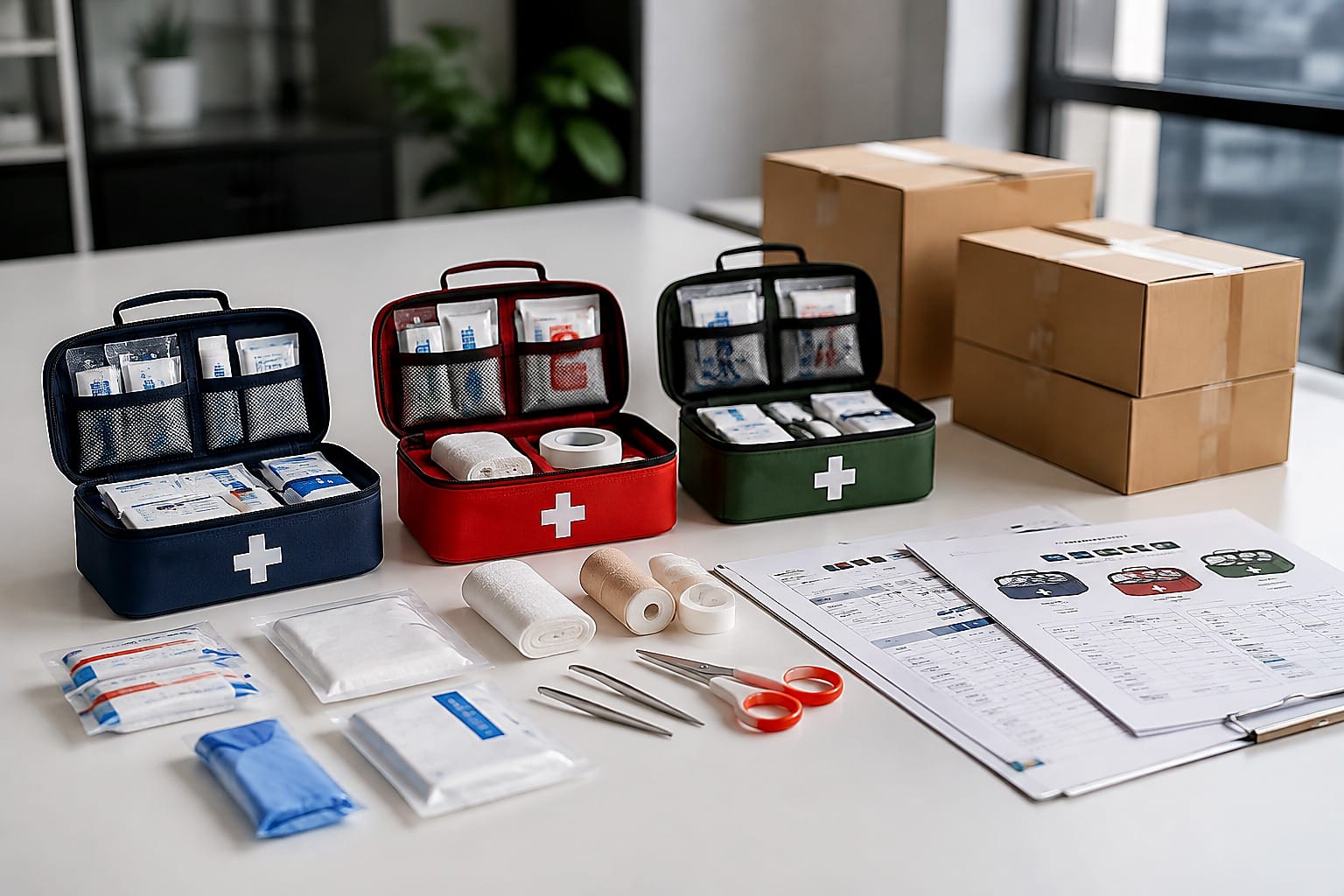
An MOQ is the smallest quantity a supplier is prepared to quote or produce under a defined set of assumptions. It is not a complete product specification. The number is meaningful only when the buyer and supplier agree on what remains common across the lot.
Use these nine layers to locate the real constraint:
The highest active constraint normally controls the feasible lot. Suppose a standard bag can be assembled at the requested total quantity, but each language carton has a higher print minimum than the allocation for that market. The packaging split, not final assembly, becomes the issue. The supplier may propose a standard carton with a controlled label, a larger combined print run, or another feasible route. Each option needs buyer approval.
For a wider view of supplier qualification, samples, specifications, commercial terms, and shipment planning, connect this worksheet to the B2B first aid procurement process. MOQ should sit inside that process rather than replace it.
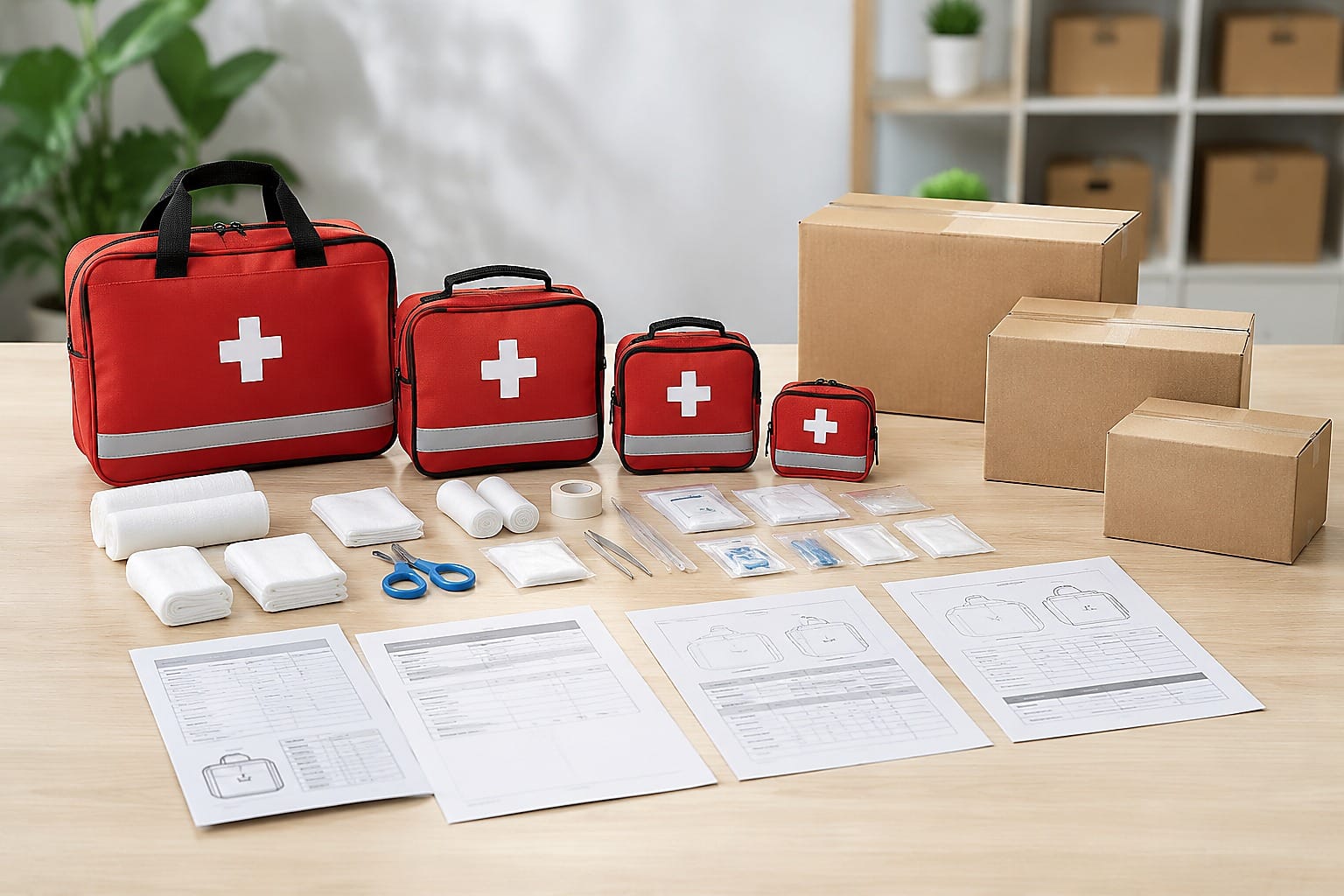
These terms answer different questions. Combining them in one number creates false certainty.
| Commercial item | What it means | What it does not prove | Buyer action |
|---|---|---|---|
| MOQ | Lowest quoted or feasible quantity for a defined configuration | Final unit price, production slot, or acceptance of every customization | Record the exact SKU, BOM, artwork, packing, and assumptions attached to it |
| Quote tier | Price and terms at a stated quantity | That every tier is feasible with the same setup, packing, freight, or schedule | Ask for the same specification at several quantities and separate fixed charges |
| Sample | A unit or small set used for specification and approval work | Bulk quantity, bulk consistency, or automatic production authorization | Define sample type, revision, cost, preparation factors, and approval record |
| Forecast | A planning signal for expected demand over time | A binding order or reserved capacity unless the contract says so | State horizon, confidence, expected SKU mix, and update frequency |
| Purchase order | A formal order under agreed commercial documents | Completeness when specifications or referenced attachments are missing | Reference the approved BOM, artwork, packing, sample, quote, and change rules |
A forecast can help a supplier discuss material reservations or repeat production, but it should remain separate from a firm PO. A sample can confirm size, layout, branding, and packing choices without establishing the economics of a bulk run. A price tier can reveal the effect of fixed setup across volume, yet the lowest unit-price tier may create excess stock or an unsuitable market allocation.
Shipping terms also belong in a separate field. The International Chamber of Commerce explains that Incoterms rules define responsibilities for delivery tasks, costs, and risks. They do not define the product MOQ. Ask suppliers to state the Incoterms rule and named place with the quote so a quantity comparison does not mix product cost with different delivery scopes.
Request at least three relevant tiers using one frozen specification. The purpose of a first aid kit MOQ comparison is not to force a lower price. It is to show where fixed setup, component purchasing, packaging, and logistics assumptions change.
The table below is a comparison method, not a price or lead-time promise:
| Comparison field | Lower trial tier | Planned launch tier | Repeat or scale tier |
|---|---|---|---|
| Finished quantity | Buyer enters quantity | Buyer enters quantity | Buyer enters quantity |
| Number of SKUs | Confirm allocation | Confirm allocation | Confirm allocation |
| BOM versions | List each version | List each version | List each version |
| Colors and materials | State common or split lots | State common or split lots | State common or split lots |
| Branding | Method, colors, positions, artwork versions | Same fields | Same fields |
| Unit packaging | Standard or custom, language count | Same fields | Same fields |
| Fixed charges | Sample, artwork, screen, plate, die, tooling, testing if applicable | Separate each charge | State reuse or replacement assumptions |
| Unit price basis | Incoterms rule, named place, currency | Same basis | Same basis |
| Production factors | Supplier states assumptions after approval | Supplier states assumptions after approval | Supplier states assumptions after approval |
| Forecast or PO status | Planning estimate or firm order | Planning estimate or firm order | Planning estimate or firm order |
Compare total landed-scope inputs, not unit price alone. A lower unit price can sit beside higher artwork setup, more packaging inventory, a different delivery basis, or a larger cash commitment. Keep the comparison on one worksheet so differences remain visible.
Product choice can expose different MOQ drivers. An equipped tactical set for specification review combines a finished container with a component configuration, while safety pins as a kit component represent one possible BOM line. These pages are useful starting points for defining what should be quoted. Exact quantities, availability, price, timing, and configuration still require a current RFQ response.
Create one row for every version that could split purchasing or production. Do not start with a total annual quantity and hide the mix in a note.
| Worksheet field | Entry required |
|---|---|
| Project and market | Project ID, buyer entity, destination market, intended channel |
| Finished SKU | Buyer SKU, supplier reference if known, kit or supply type |
| Quantity status | Trial estimate, forecast, requested quote tier, or firm PO quantity |
| Allocation | Quantity by SKU, color, size, market, language, and delivery batch |
| Container | Bag, box, case, pouch, material, color, dimensions, construction revision |
| BOM | Component description, quantity per kit, pack format, source restriction, substitution rule |
| Branding | Logo method, color count, size, position, artwork file and revision |
| Labels | Product ID, barcode, language, importer detail, warnings, artwork revision |
| Unit packaging | Polybag, carton, insert, seal, label, retail presentation, pack count |
| Export packing | Inner quantity, master-carton quantity, marks, pallet request if applicable |
| Sample control | Sample type, quantity, approval criteria, approved sample ID |
| Commercial | Currency, quantity tiers, fixed charges, payment proposal, quote validity |
| Delivery basis | Incoterms rule, named place, shipment mode assumption, requested window |
| Change control | Fields frozen at quotation, resampling triggers, substitution approval route |
The BOM deserves line-level attention. A kit ordered as 1,000 finished units may require several thousand pieces of one component, but that arithmetic does not confirm availability or a supplier minimum. Record units per kit, pack conversion, expected overage handling, and whether substitution is prohibited or allowed only after written approval.
Barcode and packaging versions can also create separate identities. GS1’s GTIN Management Standard provides rules for when product changes require a new GTIN. Buyers should decide product identification with the responsible market and data teams. The supplier should receive the approved number, symbol file, placement, and verification requirements rather than inventing product identity data.
Send a structured response sheet with the drawings and specifications. Ask the supplier to mark assumptions and exceptions directly beside each field.
Include these RFQ fields:
Ask the supplier to answer four questions for every quoted tier: What is common across the lot? What is split? Which input sets the minimum? What changes at the next tier? Those answers are more useful than a bare MOQ number.
Avoid sending an open request such as “quote 1,000 custom first aid kits” when the project already has several markets or brand versions. The supplier may assume one universal SKU. The buyer may assume the quantity can be divided freely. A version matrix makes the disagreement visible before sampling.
The strongest first aid kit MOQ lever is usually fewer custom layers, not a vague request for an exception. Keep the controls that define the product while simplifying the elements that create small production lots.
Consider these approaches where the supplier confirms feasibility:
Do not solve a print minimum by mixing unapproved labels or destinations. Do not replace a specified component silently. Simplification needs the same revision control as customization.
An MOQ discussion also needs an exit condition. If a proposed configuration cannot meet the requested allocation, decide whether to increase one version, consolidate versions, use a standard input, change the launch plan, or stop that option. Record the decision in the RFQ comparison rather than leaving it in email.
No universal quantity applies to every configuration. UneedAid discusses projects from 1,000 pieces where product feasibility allows, but the applicable starting point depends on the SKU, customization, packaging, and order type. It must be confirmed in a quotation for the defined scope. Several colors, BOM versions, logos, carton artworks, or market labels can divide one total into smaller production lots. Give the supplier the allocation by version and ask which layer controls the minimum. A total of 1,000 pieces does not mean ten versions of 100 pieces are automatically feasible.
Sometimes a supplier may combine shared purchasing or assembly, but this cannot be assumed. The answer depends on which inputs are common. Two SKUs may share a bag and logo while using different components or labels. Another pair may look similar but use separate materials, colors, or packaging runs. List the quantity for each SKU and identify the shared container, BOM lines, branding, and packing. Ask the supplier to state which operations can be combined and which remain separate. The written quote should preserve that allocation so a later PO does not rely on an informal conversation.
A higher tier may reduce unit cost by spreading setup across more pieces, but it increases inventory and cash exposure. Total sourcing cost also includes samples, artwork, tooling, packaging, inspection, freight scope, storage, and obsolete versions. Compare several tiers on the same Incoterms basis and specification. Add expected sell-through or internal consumption timing, not just the unit price. The useful tier is the one that fits the approved product, demand plan, cash constraints, and replenishment route. A lower unit figure is not automatically the better procurement decision.
Yes, as a clearly labeled planning input. A forecast can show expected annual volume, SKU mix, seasonality, and reorder cadence. It may help the supplier discuss component continuity or production planning. It is not a purchase order unless the governing agreement makes it binding. Separate forecast quantity from the firm quantity being quoted or ordered. State the forecast horizon, confidence, update frequency, and expected batch pattern. Ask what the supplier can reserve, what requires a deposit or PO, and how long any commercial proposal remains valid.
Reconfirm it whenever a controlled input changes or the earlier quote has expired. Relevant changes include the finished SKU, BOM, component source, bag material, color, logo method, artwork, label language, barcode, unit packaging, master-carton arrangement, shipment basis, or delivery batch. Also ask whether the supplier’s material and production assumptions remain available. A repeat order should reference the prior approved sample and revisions, but that reference does not prove every input is unchanged. Written reconfirmation gives both parties a current basis before materials are committed.
Good first aid kit MOQ planning turns one headline number into a version-controlled commercial model. Freeze the specification, expose every split, compare tiers on the same basis, and record the supplier’s assumptions. Then move the selected first aid kit MOQ tier into a complete PO package with its BOM, artwork, packaging, sample, delivery basis, and change rules.
A logo looks sharp on a digital proof, yet the bulk bags arrive with lost detail, weak contrast, or print crossing a seam. A custom first aid kit logo should be selected as a material-and-process decision, not added to an RFQ as a single line that says “print our logo.”
The practical answer is to match the method to the bag or case substrate, logo detail, print area, expected handling, order quantity, and replacement plan. Screen printing often suits simple artwork on accessible fabric panels. Heat transfer can carry finer or multicolor artwork on compatible materials. Embroidery and patches create a textile badge effect. Labels, pad printing, UV printing, or molded marks may suit rigid cases. Every choice still needs supplier feasibility review and an approved physical sample.
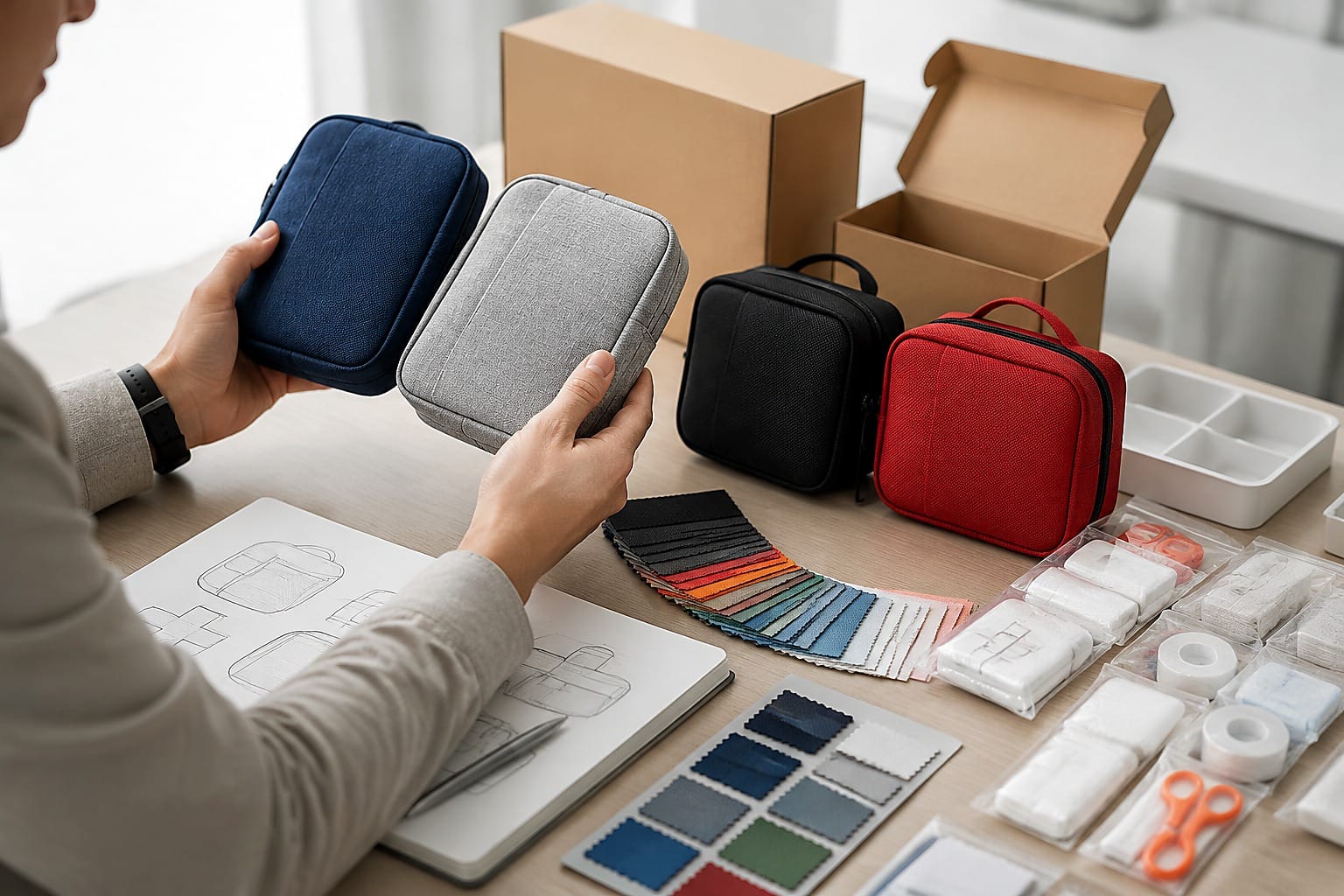
Start with the unbranded container specification. A printing method cannot correct a bag panel that is too textured, a case surface that is sharply curved, or a logo area interrupted by webbing and zippers. Ask the supplier to identify the actual substrate and coating at the proposed application point, not only the general bag material.
Use this seven-step decision sequence:
This sequence matters because the same logo can behave differently on woven polyester, coated nylon, molded plastic, painted metal, and a textured hard case. Even two visually similar red bags may use different coatings or surface finishes. The supplier should disclose those differences before artwork release.
For the wider sample-to-bulk process, use the OEM private-label first aid kit guide as the project control document. The logo method should connect to the same BOM, container specification, sample record, and change process.
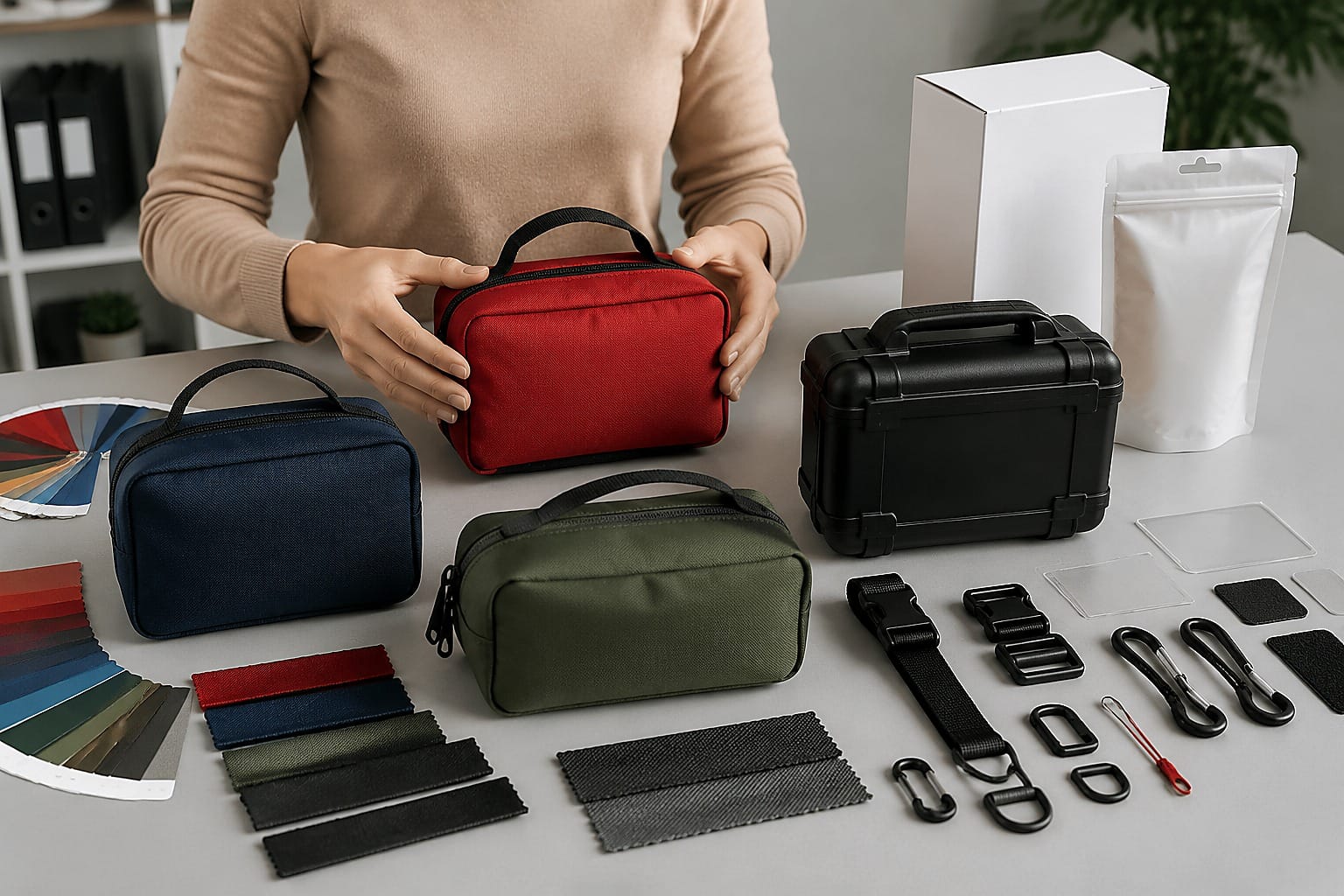
No method is universal. The following table is a sourcing comparison, not a production promise. Actual feasibility depends on the quoted material, coating, construction, equipment, artwork, and order quantity.
| Branding method | Typical starting use | Main advantages | Limits to verify | Sample evidence |
|---|---|---|---|---|
| Screen printing | Simple one-color or limited-color artwork on an accessible fabric panel | Direct application and economical repeat production where setup is spread across volume | Ink compatibility, textured weave, color opacity, registration, seams, panel access | Printed production-material panel or finished bag |
| Heat transfer | Fine detail, several colors, or variable graphics on compatible textile panels | Can reproduce detail without separate stitching around every element | Heat and pressure compatibility, film edge, cracking, peeling, gloss, coated-fabric change | Finished application after flex and rub checks |
| Embroidery | Bold marks on fabric panels with enough structure and clearance | Tactile textile appearance and no printed film surface | Small text, dense detail, backing visibility, panel stiffness, needle penetration, seam access | Finished panel showing front and reverse construction |
| Sewn woven or embroidered patch | Modular branding, stock bags, programs that may replace or revise a badge | Patch can be produced separately and attached to a standard container | Added thickness, border shape, stitch path, snag points, removal policy | Finished attached patch with dimensions and stitch specification |
| Molded rubber or plastic badge | Tactile multicolor badge on compatible soft bags or cases | Raised form and separate badge production | Tooling, attachment method, material disclosure, color tolerance, odor, edge lift | Finished badge attached by the proposed production method |
| Pressure-sensitive label | Shorter runs, serialized programs, or smooth rigid surfaces | Separate label production and easy information changes | Adhesive compatibility, texture, edge lift, temperature, moisture, cleaning, residue | Label on the actual case after conditioning and adhesion checks |
| Pad or direct digital printing | Small marks on rigid or mildly contoured case surfaces | Direct mark without a sewn textile component | Curvature, surface energy, texture, opacity, scratch resistance, fixture consistency | Printed production case from the proposed line |
| Embossed, debossed, or molded-in mark | Long-running molded case or component program | Integrated form with no separate printed layer | Tooling cost, limited color effect, mold ownership, revision cost, long-run commitment | Tool drawing, first article, and approved molded reference |
Screen printing is often the first quotation route for a simple custom first aid kit logo, but “screen print” is not a complete specification. Record the number of colors, finished dimensions, position tolerance, ink or print-system reference, background material, and approved sample. A white mark on red fabric may need a different production approach from a dark mark on a pale uncoated panel.
Heat transfer is useful when artwork has several colors or detail that would be difficult to separate cleanly. The buyer should still inspect the edge, surface feel, flexibility, and behavior on the exact coated or uncoated fabric. A successful transfer on a flat swatch does not prove that the production bag can be pressed safely beside padding, binding, or a zipper.
Embroidery works when the logo can tolerate thread-based simplification. Very small letters, narrow gaps, and color gradients may need artwork changes. Ask for the stitch area, thread colors, backing, reverse-side finish, and panel construction. Confirm that the logo does not make a pocket stiff or interfere with a lining, divider, or water-resistant construction claim.
Patches separate badge production from bag production. That can help a buyer use one base bag across several channels or languages. It also creates another controlled component. The RFQ should state whether the patch is permanently sewn, attached with hook-and-loop, or supplied separately, and whether removal is intended.
Rigid cases need their own review. A pressure-sensitive label may be practical for a trial program, while direct printing or a molded mark may fit a stable high-volume design. Surface texture, curves, mold-release residue, paint, and cleaning agents can affect the result. Ask the supplier to test the actual production surface.
Buyers can review emergency medical bag formats before fixing the logo area. Format selection comes first because pockets, folds, handles, and access panels determine where branding can be applied and inspected.
A screenshot or logo copied from a website is not a controlled print file. Supply an artwork pack with a revision number and a named approver. Adobe’s explanation of vector and raster files notes that vector graphics use mathematical equations and can be resized without the pixelation associated with raster images. That makes an approved vector master a useful starting point for scaling and color separation.
The artwork pack should contain:
Pantone describes its systems as tools for selecting, communicating, and matching color. A Pantone reference can improve communication, but it does not make every substrate or print process visually identical. Fabric texture, coating, ink film, thread, molded material, gloss, and lighting all influence appearance. Approve an allowed visual range or physical reference rather than treating one code as the complete acceptance rule.
Do not place operational content inside the brand artwork unless it is controlled as label content. A logo file, contents list, barcode, importer detail, product identifier, and language panel may follow different approval routes. Keeping them separate makes later address, barcode, or market-language changes easier to trace.
The International Committee of the Red Cross explains that the red cross, red crescent, and red crystal are protected emblems under international and national law. A buyer should not assume that a cross-shaped medical graphic is available for unrestricted commercial branding. Review the proposed symbol, color, jurisdiction, and authorized use before releasing artwork.
Define what the factory can measure. “Centered on the front” is ambiguous when a bag has a curved top, asymmetrical pockets, or a handle that changes the visible center.
A custom first aid kit logo placement record should state:
| Field | Example of a controlled entry |
|---|---|
| Application | Front upper pocket, outer face |
| Finished size | Width and height in millimeters |
| Position | Distances from named seam, edge, zipper, or molded datum |
| Orientation | Parallel to specified seam or case edge |
| Background | Named material, finish, and production color |
| Method | Screen print, transfer, embroidery, patch, label, or other approved route |
| Color | Named spot, process build, thread code, or approved physical reference |
| Tolerance | Buyer-approved dimensional and position range |
| Artwork | File name, ID, and revision |
| Reference | Approved swatch or finished-sample ID |
Place the mark where it remains visible during intended use but does not cover identification panels, inspection windows, instructions, reflective elements, attachment points, or closures. Check the bag both empty and loaded. A panel can bow after packing, which changes apparent alignment and may crease a transfer.
Ask the supplier to show the printable area before finalizing dimensions. Reducing the logo slightly may avoid a seam or zipper and produce a more consistent result. Enlarging it to fill every available millimeter can expose artwork to folds and abrasion.
Contrast also needs a physical review. A thin white line that looks clear on a screen may disappear into a coarse red weave. A dark logo may be unreadable on a black case under warehouse lighting. Approve the finished application from the expected viewing distance, not only a magnified proof.
If a barcode or scannable code shares the panel, control it separately. GS1 provides a barcode verification framework for checking identity data, while print and scan acceptance should follow the applicable barcode specification and the buyer’s system. Do not approve a scannable symbol from visual appearance alone.
A digital proof checks content and approximate placement. It cannot show ink opacity, adhesive behavior, thread construction, film edge, texture, or the effect of flexing a loaded bag. The approval sample should use the intended production material, color, construction, method, and artwork revision.
Use a documented test plan rather than the instruction “make it durable.” A practical sample review can include:
For textile color transfer, ISO 105-X12 specifies a method for determining textile color fastness to rubbing. Its scope should be checked before use because a test for textile color fastness is not automatically an acceptance test for every ink, transfer film, patch, or complete bag. Buyers should define the test specimen, conditioning, assessment, and pass criteria with the responsible quality team.
For some coatings on rigid substrates, ASTM D3359 describes tape-test methods for assessing coating adhesion to metallic substrates. It also states limitations. It should not be cited as a universal label, fabric, or bag test. Use a standard only when its scope fits the material and failure mode.
The custom first aid kit logo sample is part of the pre-production reference. If the supplier changes fabric, coating, ink system, transfer film, thread, adhesive, badge material, equipment route, or application location, the buyer should decide whether a new sample is required.
“Logo defect” is too broad for inspection. Divide failures into categories that can be counted and resolved.
| Defect category | Examples | Control record |
|---|---|---|
| Wrong content | Old logo, misspelling, missing element, unapproved symbol | Artwork ID and visual master |
| Wrong color | Incorrect color reference, poor opacity, unapproved thread | Color reference and accepted sample |
| Position or size | Outside the stated tolerance, rotated, crosses excluded area | Dimensioned placement drawing |
| Registration or detail | Misaligned colors, filled small gaps, broken thin lines | Approved production sample |
| Surface defect | Peeling edge, bubble, crack, scratch, ink skip, loose thread | Method-specific defect standard |
| Attachment defect | Missed stitches, exposed backing, lifted badge, loose patch | Attachment specification |
| Container damage | Scorching, coating change, distortion, puncture in restricted area | Container specification and sample |
The buyer should classify which defects require rejection, rework, or documented concession. That decision depends on the application, order, contract, and risk. A cosmetic position shift may be handled differently from the wrong brand file or an unauthorized emblem.
Inspection also needs a sampling approach. The Cluster C pillar explains how sample, artwork, and bulk inspection records fit together. The purchase order should name the controlling artwork and sample, define inspection timing, and state who can approve a deviation.
Avoid approving a sample with the note “bulk should be better.” Either approve the sample as the reference, reject it, or approve a clearly documented correction that will be verified before full production. Ambiguous approval moves unresolved work into the bulk order.
The finished kit MOQ may not be the logo MOQ. Screen preparation, transfer setup, embroidery programming, patch production, label conversion, molded-badge tooling, and case fixtures can each create a separate cost or quantity driver. Ask the supplier to separate one-time setup, unit application, custom-component MOQ, and sample charges.
For a lower-volume launch, buyers can compare these options:
Lowering the number of custom layers can reduce a genuine setup constraint. It should not remove artwork control, sample approval, or inspection criteria. A short run still needs a repeatable reference.
For reorders, require the supplier to confirm whether the substrate, coating, background color, print system, transfer film, thread, patch, adhesive, tooling, and application location remain unchanged. “Same logo” does not prove the production route is unchanged. Record any proposed change before materials are committed.
Tool ownership also belongs in the commercial record. If the buyer pays for screens, dies, embroidery files, molds, plates, or fixtures, state who owns them, where they are stored, how long they are retained, and what happens when artwork changes. Do not assume a setup charge automatically transfers ownership.
An RFQ should let suppliers quote equivalent branding scopes. Include a separate response line for each application rather than asking for one total “logo cost.”
| RFQ field | Buyer provides | Supplier confirms |
|---|---|---|
| Container | Model, material, color, construction, target quantity | Actual substrate at application point and feasibility |
| Artwork | Vector file, variants, color references, dimensions | Required file conversion or simplification |
| Placement | Dimensioned location and excluded areas | Printable area, fixture or access limits, tolerance proposal |
| Method | Preferred method or performance objective | Proposed process and material compatibility |
| Sample | Required quantity, tests, approval route | Sample cost, preparation factors, and production-process match |
| Commercial | Quantity tiers and reorder forecast | Setup, tooling, unit application, MOQ drivers, storage terms |
| Inspection | Defect categories and sampling request | In-process and final checks, records, deviation route |
| Continuity | Change-notice requirement | Controlled inputs and resampling triggers |
| Packing | Protection for printed or raised surfaces | Unit separation, abrasion prevention, carton arrangement |
Ask for alternatives when the preferred custom first aid kit logo method conflicts with the bag material or launch quantity. The response should explain the tradeoff. A lower setup option may have different edge, texture, color, or longevity characteristics. A higher-volume method may need tooling but reduce unit application work.
Keep branding separate from the kit contents quotation. This makes it easier to see whether cost changes come from the bag, logo, component BOM, retail packaging, or export packing. It also prevents a logo revision from silently changing the approved kit configuration.
Buyers preparing a supplier discussion can use UneedAid’s OEM and ODM project overview to identify the container, contents, branding, packaging, and sample layers that need separate confirmation. The final RFQ should still record the exact quoted method and production assumptions.
No. Screen printing depends on the actual textile, coating, texture, panel access, ink system, artwork, and production setup. A supplier should review the precise application area because a general material name such as polyester does not describe every weave or finish. Seams, padding, zippers, and pockets can also limit access or registration. Ask for a print on production material and, where construction may affect the result, a finished-bag sample. Record color, dimensions, position, and accepted appearance. Do not approve the method from a catalog photograph of a different bag.
The method name alone does not establish service life. Embroidery avoids a printed surface film, but thread, stitch density, backing, panel construction, abrasion, cleaning, and snag exposure still matter. Printing performance also varies by ink, transfer system, substrate, curing, and use conditions. Compare methods against a defined handling and inspection plan on the actual container. Embroidery may suit bold textile marks, while small lettering or gradients may need simplification. The approved sample and repeat-order controls are more useful than a general durability claim.
A PDF can confirm artwork content, approximate placement, and stated color references. It cannot reproduce every physical color result because screens, printers, fabric, ink, thread, gloss, texture, and lighting differ. Use the digital proof to approve geometry and file revision, then approve a physical swatch or finished application for appearance. Record the substrate, method, color reference, lighting or viewing conditions where important, and accepted sample ID. For repeat orders, compare the proposed materials and process with that reference before assuming the result will match.
There is no single answer. A standard container with a simple print, compatible transfer, or separately produced label or patch may reduce structural customization, but each option has different setup, attachment, appearance, and inspection needs. Ask the supplier to quote two or three defined alternatives using the same bag and artwork dimensions. Compare setup cost, unit cost, MOQ driver, sample route, lead-time factors, and reorder consistency. A low initial charge is not useful if the method cannot meet the approved material, placement, or handling requirements.
Repeat or reconfirm the sample when a change could affect appearance or attachment. Examples include a new fabric, coating, case resin, background color, ink, transfer film, thread, patch supplier, adhesive, tool, machine route, application position, artwork revision, or logo size. The buyer can decide whether a swatch, first article, or complete loaded sample is proportionate. Require written change notice before production. If nothing changed, retain evidence that the supplier reviewed the controlled inputs against the prior approved reference.
A controlled custom first aid kit logo specification links the container material, artwork, method, placement, sample, defects, commercial drivers, and change rules. Approve the physical result and keep its revision with the wider OEM project file. That gives the buyer and supplier one measurable reference from quotation through repeat orders.
A buyer can receive a complete-looking kit and still discover that it is difficult to place, inspect, refill, or reproduce across several sites. A reliable workplace first aid kit configuration starts with the workplace risk profile, workforce and shift pattern, response distance, deployment location, and buyer-controlled bill of materials. The container, quantities, labels, inspection cycle, sample approval, and reorder method should follow those inputs.
This checklist is for importers, distributors, institutional buyers, and private-label project teams. It supports sourcing and configuration decisions. It does not replace a workplace needs assessment, destination-market review, or advice from the responsible local authority or qualified professional.
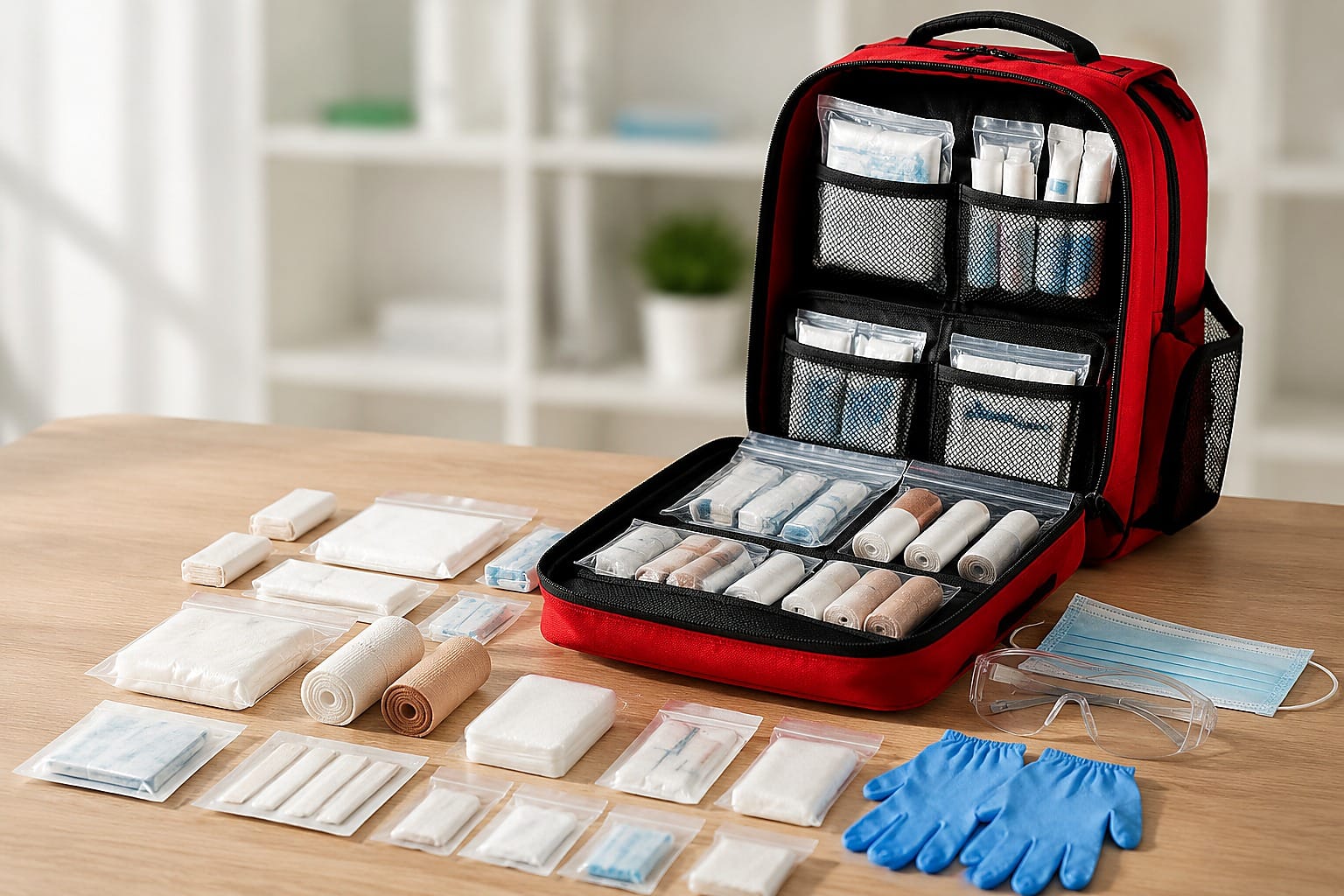
The first task in a workplace first aid kit configuration is not selecting a prepacked item count. It is documenting where the kit will be used and who must manage it. A single office floor, a warehouse with powered equipment, a remote service crew, and a multi-building campus may require different placement, container, quantity, and refill controls.
Collect these inputs before requesting a quotation:
In the United States, OSHA 29 CFR 1910.151 requires adequate first-aid supplies to be readily available. Its non-mandatory Appendix A explains that kit contents should reflect workplace needs and cites a consensus standard as one example. That appendix is not a universal global bill of materials. The United Kingdom’s HSE first-aid needs assessment guidance similarly asks employers to consider hazards, workforce, work patterns, travel, remote work, and distance from emergency services.
The procurement lesson is consistent: document the operating context first, then have the responsible buyer confirm the applicable requirements and approve the configuration.
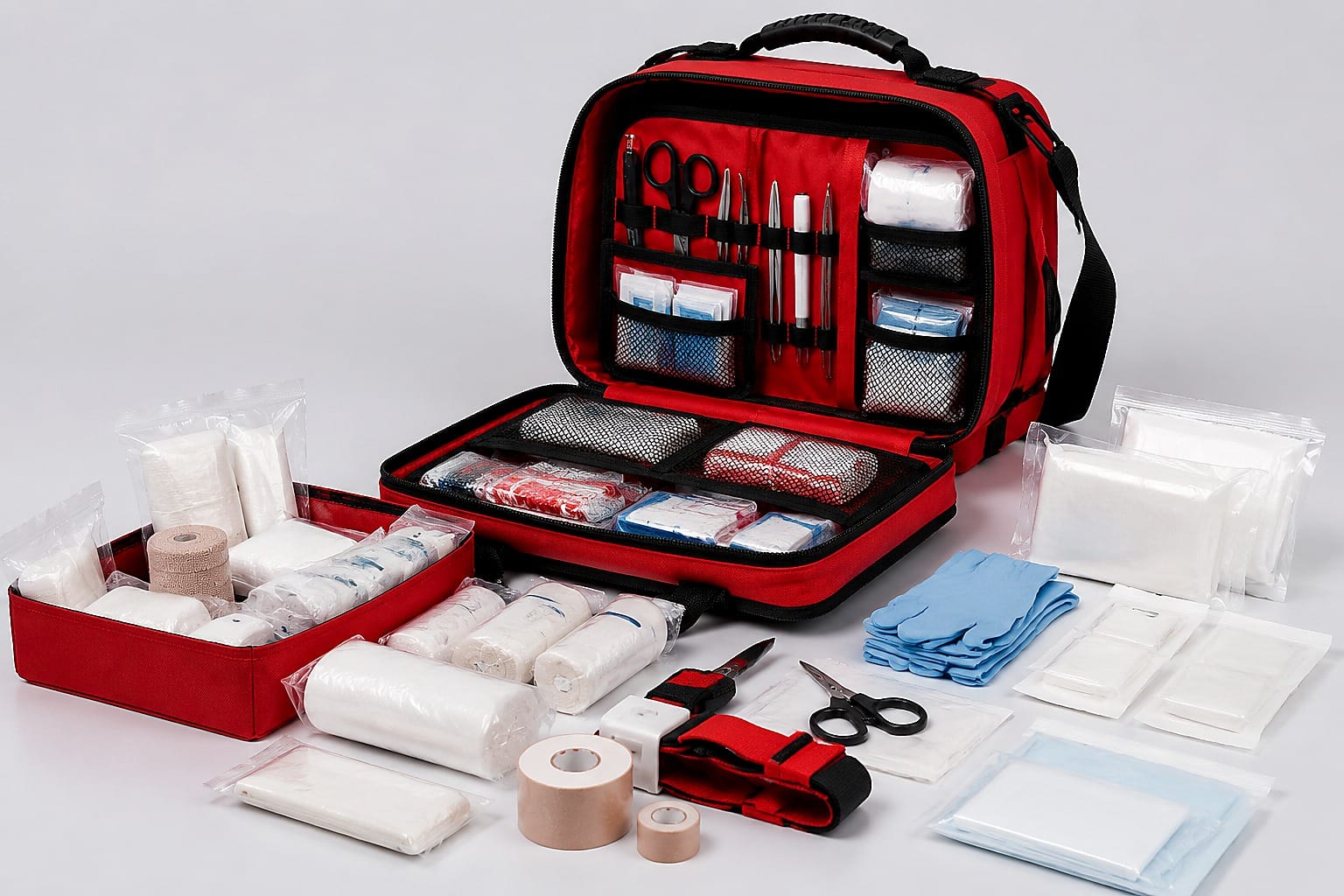
Four variables usually change the project more than the advertised piece count.
| Input | Configuration effect | Buyer evidence to capture |
|---|---|---|
| Workplace risk | Changes item classes, protective barriers, tools, and escalation planning | Needs assessment, hazard register, responsible reviewer |
| Workforce and shifts | Changes consumption assumptions, placement count, and refill stock | Headcount by shift, contractors, visitors, peak periods |
| Site layout | Changes the number of stations and whether fixed or portable formats are practical | Floor plan, walking route, vehicle or remote-work points |
| Response distance | Changes placement and the need for site-specific response arrangements | Local response plan and authority guidance |
Do not multiply one generic list by employee count and assume the result fits every location. A large office may need several visible stations because of floor layout. A smaller warehouse may require separate fixed and mobile points because workers move between loading, storage, and maintenance areas. A field team may need portable bags plus a controlled refill location.
The buyer should create a site map with a stable station ID for each location. The station ID can link the physical kit, inspection record, BOM version, refill history, and responsible person. This makes a multi-site workplace first aid kit configuration easier to audit and reorder.
A procurement BOM should organize contents by function and specification, not by a marketing total such as 50 pieces or 100 pieces. The responsible reviewer must decide which classes and quantities apply. Suppliers should quote against the approved document and identify every exception.
| BOM class | Fields to specify | Procurement check |
|---|---|---|
| Dressings and bandages | Type, size, material, sterile status where applicable, quantity, pack unit | Does the line match the sample label and quoted SKU? |
| Protective barriers | Glove material and size plan, CPR barrier format, individual packaging | Are sizes and pack units clear for each station? |
| Cleansing and irrigation | Product format, volume or count, packaging, lot and date fields | Is the proposed item suitable for the buyer-approved use and market route? |
| Burn and cold-response supplies | Format, dimensions, storage limitations, pack unit | Are storage conditions and replacement rules documented? |
| Tools and accessories | Scissors, tweezers, tape, pins, blanket, waste bags, or other approved items | Are material, size, finish, and packaging specified? |
| Records and identification | Contents card, inspection card, station ID, seal, reorder code | Can staff inspect and replenish without guessing? |
Every line should include a buyer line number, supplier SKU, description, size, quantity per kit, pack unit, label route, lot or expiry field where relevant, approved substitute rule, and refill code. Use an explicit status such as confirmed, alternative proposed, unavailable, or pending review.
The broader first aid supplies sourcing framework explains why evidence should be tied to the quoted SKU. The emergency kits and bags sourcing guide covers the same control from the full kit and container perspective.
Quantity decisions in a workplace first aid kit configuration should connect needs assessment, expected consumption, inspection frequency, site access, and refill lead time. A practical method uses five steps:
This method separates compliance confirmation from commercial planning. The supplier can explain stock pack sizes, MOQ effects, and replacement options, but the buyer remains responsible for approving the workplace quantity.
Record quantity logic in the BOM notes. For example, write “two stations on each warehouse level due to access route” instead of “four kits required.” The first statement can be reassessed when the layout changes. The second becomes an unexplained number that may persist after its basis has disappeared.
Container selection affects visibility, access, inspection work, refill organization, shipping cube, and branding. Compare the format with the loaded BOM, not as an empty sample.
| Format | Useful operating condition | Limitation to test | Loaded-sample check |
|---|---|---|---|
| Wall-mounted box | Fixed, visible station with a defined inspection owner | Door clearance, mounting surface, shelf layout | Open at the installed height and verify every label is readable |
| Portable hard case | Shared area, vehicle, or mobile crew needing shape retention | Latch, hinge, insert, and internal-space limits | Carry, stack, open, and recount the full configuration |
| Soft zip bag | Compact program with flexible packing and lower empty weight | Contents can shift or become difficult to count | Test zipper load, dividers, handle, and refill access |
| Fold-out medical bag | Program that benefits from visible modules and rapid inventory review | Overpacking can strain folds and closures | Hang or open fully, then repack to the approved compartment map |
| Backpack | Mobile work requiring hands-free transport | Weight distribution and access order need review | Load the approved BOM and check straps, back panel, and module sequence |
Buyers comparing fixed locations can review workplace emergency-care categories and wall-mounted emergency-box formats as starting points. A category page is a shortlist, not proof that one model matches the workplace rule set or the approved BOM.
The specification should state outer material, dimensions, color, closure, hinges or zippers, internal layout, handle or mounting method, label area, logo method, empty weight, loaded dimensions, and master-carton data. Performance claims require corresponding product-specific evidence; appearance alone is insufficient.
Procurement is incomplete if the buyer cannot maintain the installed workplace first aid kit configuration. Create the inspection and replenishment method before the first bulk order ships.
The station record should contain:
Separate a complete kit SKU from refill SKUs. Replacing the entire kit after one item is used creates waste and obscures consumption. A refill program can use individual component SKUs, grouped modules, or a prepacked replenishment set. The buyer should decide which method fits the number of stations, staff capacity, order volume, and shelf-life control.
For dated items, ask how lot and expiry information appears on the unit, inner pack, kit contents record, and master carton. Require written notice before an approved SKU changes. A silent substitution can change size, packaging, documentation, carton count, or refill compatibility even when the item name looks similar.
The label and document pack should identify what the buyer is receiving without making unsupported claims. At minimum, review the kit contents list, unit label, station label, inspection card, instructions supplied by the responsible party, barcode data, importer or distributor information where applicable, inner packaging, and master-carton marks.
Use a controlled artwork register:
| File | Required control | Approval evidence |
|---|---|---|
| Kit contents list | BOM revision, quantity, language, date | Signed or recorded buyer approval |
| Unit label | Product name, responsible-party fields, barcode, warnings where applicable | Approved artwork version |
| Inspection card | Station ID, inspection fields, refill route | Site-owner approval |
| Inner and master carton | Quantity, dimensions, weight, marks, destination data | Packing confirmation |
| Product and quality files | Exact SKU, model, scope, issuer, validity where relevant | Buyer compliance review |
Avoid treating a general company certificate or catalog as evidence for every component. Ask for documents linked to the quoted SKU or model. The importer, distributor, or institutional buyer should confirm classification, language, registration, labeling, workplace, and market-access obligations for the destination and intended use.
An empty bag or box sample verifies only part of the project. Approve a loaded sample against the BOM and artwork register.
Use this sample sequence:
The approved sample becomes a purchasing reference, not a substitute for the buyer’s production and receiving controls. The RFQ should state how pre-production confirmation and receiving inspection will compare bulk units with that reference.
A supplier can quote accurately only when assumptions are visible. Include the following fields in the RFQ.
| RFQ section | Buyer input | Supplier response |
|---|---|---|
| Workplace context | Country, use case, workforce, shifts, site count, deployment points | Feasibility notes and questions |
| BOM | Revision, item descriptions, sizes, quantities, pack units, substitute rules | Confirmed SKU, exception, price, and document notes |
| Container | Format, material, dimensions, layout, mounting or carrying method | Base model, custom limits, sample option |
| Identification | Station ID, label languages, barcode, logo, inspection card | Artwork template, print method, setup and MOQ drivers |
| Evidence | Product-specific file request and buyer review route | Available files by SKU and identified gaps |
| Sample | Loaded sample quantity, checks, address, target date | Sample charge, preparation time, courier method |
| Commercial terms | Trial quantity, volume tiers, Incoterm request, target schedule | MOQ, unit price tiers, lead-time factors, payment and packing |
| Continuity | Reorder horizon, refill model, substitution policy | Change notice, component continuity, refill availability |
Ask suppliers to price stock, label-only, content-customized, and container-customized options separately. The MOQ may be driven by printed packaging, fabric color, molded parts, component batch size, or assembly requirements rather than the complete kit alone.
Before approving a purchase, confirm each item below:
No single configuration fits every country, workplace, workforce, shift pattern, layout, and risk profile. Official guidance commonly starts with a needs assessment and requires the responsible party to consider the actual working environment. Buyers can use a recognized reference list as an input, but they should confirm its scope and applicability. The approved purchase specification should record why each station, item class, and quantity was selected. This makes later inspection, replenishment, and reassessment more reliable than copying a generic piece-count list.
The buyer should set the interval from applicable local requirements, workplace needs, usage, item dating, site access, and internal responsibility. High-use or remote stations may need a different cadence from a low-use office cabinet. The inspection record should identify the station, approved BOM, seal status, missing or used items, damaged packaging, expiry issues, refill action, inspector, and next due date. An interval without a named owner and reorder route is difficult to sustain across multiple sites.
Use the method that preserves the approved BOM with the least counting and purchasing error. Individual refills provide precise control but create more SKU lines. Grouped modules simplify replenishment but may replace unused items. Complete replacement kits are simple to issue but can create waste and hide consumption patterns. Many B2B programs use a complete initial kit plus controlled refill SKUs. Ask the supplier to show refill availability, pack units, minimum quantities, shelf-life information, and change-notice rules before the initial order.
Check mounting points, door clearance, hinge and latch operation, shelf or divider layout, label area, station identification, and visibility at the intended installation height. Load the exact BOM and confirm that staff can inspect labels and remove items without unloading the full box. Record the loaded dimensions and weight, especially when the mounting surface or hardware has limits. The buyer should also verify how refill stock is stored and whether a seal or inspection card remains visible after installation.
Only under the buyer’s written substitution rule. The supplier should identify the unavailable SKU, proposed alternative, specification difference, document effect, price effect, packaging change, and sample requirement. The buyer can then approve or reject the change before assembly. Silent substitution weakens repeat-order control because the same kit name can contain different sizes, materials, labels, or pack units. Keep the accepted change with the BOM revision and require the same notice process for future production.
Provide the workplace context, destination, site count, station plan, approved or provisional BOM, container format, materials and dimensions, label languages, artwork scope, document request, loaded-sample checks, quantity tiers, refill plan, packing limits, and commercial terms. Mark which fields are fixed and which are open to a supplier proposal. A structured RFQ lets buyers compare equivalent configurations and shows where MOQ, lead time, or pricing depends on packaging, component availability, customization, or documentation work.
A controlled workplace first aid kit configuration links the needs assessment, station map, BOM, container, artwork, evidence, loaded sample, inspection log, and refill plan. Keep those records under revision control. That gives the buyer and supplier one traceable reference from quotation through repeat orders.
A distributor can win a first aid tender and still lose money if the assortment is too broad, the replenishment cycle is unclear, or every reseller receives a different quote. A workable first aid distribution strategy starts with the channel’s job: who creates demand, who holds stock, who owns the customer relationship, and which records must travel with each SKU.
For most international B2B programs, the practical sequence is to segment channels, select a small launch assortment, define partner rules, run a measured pilot, and then expand only when sell-through and replenishment data support it. This framework is for importers, distributors, resellers, safety suppliers, and institutional procurement teams. It is a commercial planning guide, not medical or legal advice.
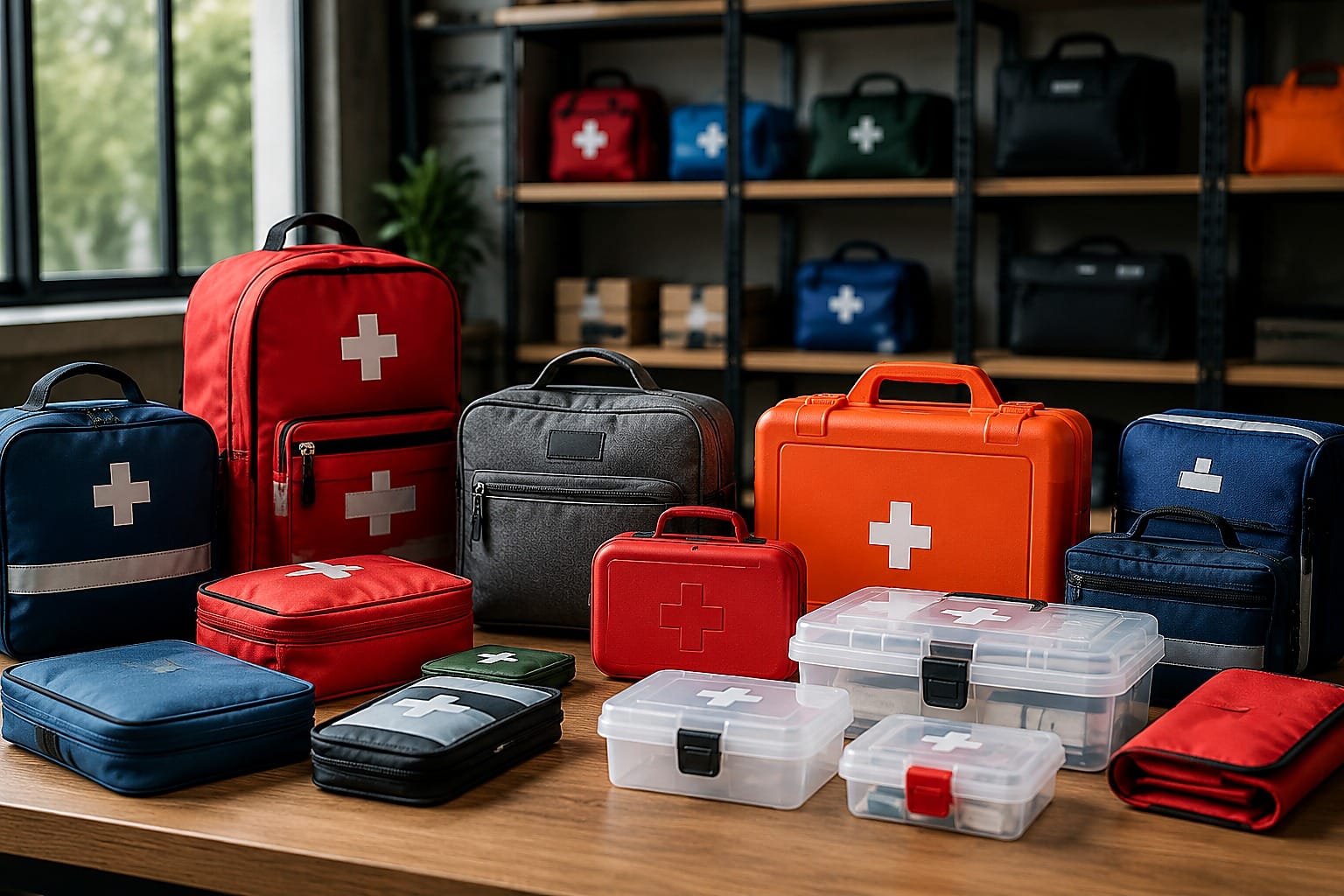
The word “distribution” can mean four different activities: importing goods, stocking them in a regional warehouse, selling through a reseller, or supplying an institutional contract. Those activities should not share one vague price list. Each has a different cash cycle, service burden, and evidence requirement.
Write the channel brief before requesting supplier pricing. Record:
McKinsey’s 2024 B2B Pulse research describes buyers using an average of ten interaction channels during a purchasing journey. That finding matters for first aid because a distributor may acquire a lead through a marketplace, validate a specification by email, approve a sample on a video call, and reorder through an EDI or spreadsheet workflow. A channel plan that names only “online” or “offline” will miss the handoffs where pricing and product data become inconsistent. See the McKinsey B2B Pulse research for the multi-channel finding and its commercial context.
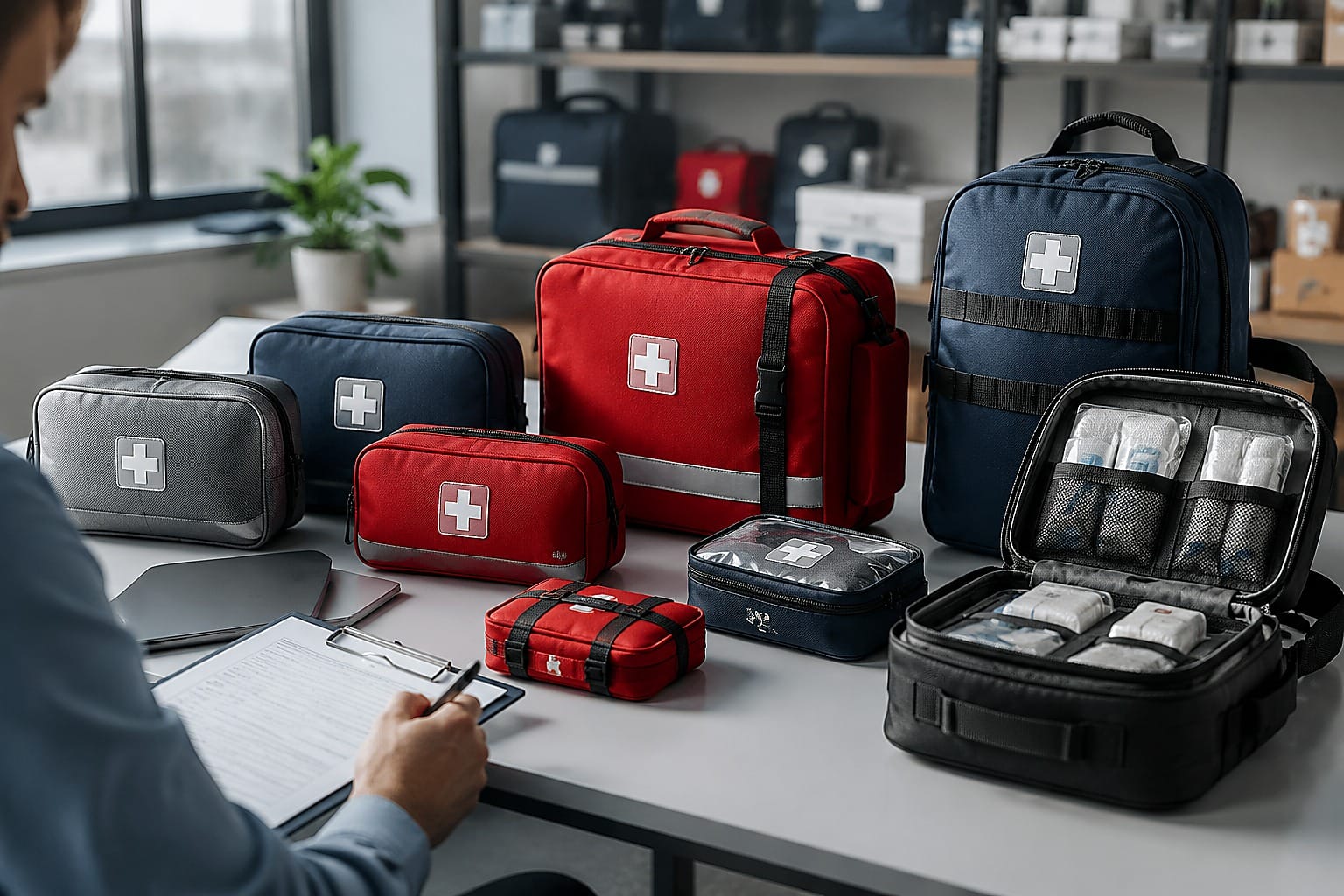
Choose a channel by the work it performs, not by its audience size. A first aid distribution strategy should assign a job to each route before a partner is recruited. First aid products are often replenishment items, but a distributor may still need to educate the buyer, bundle components, manage expiry rotation, or support a destination-market review.
| Channel | Where it fits | What the partner must do | Main control point |
|---|---|---|---|
| Regional importer-distributor | Multi-country or multi-city coverage with local stock | Import, warehouse, local sales, customer service, and replenishment | Territory, forecast ownership, and document scope |
| Industrial safety reseller | Workplace, construction, manufacturing, and EHS accounts | Convert hazard or site requirements into a practical assortment | Use-case fit, refill cadence, and label route |
| Medical or emergency equipment reseller | Higher-specification kits, bags, and response tools | Explain configuration, accessory compatibility, and service needs | SKU identity, sample approval, and technical evidence |
| B2B e-commerce seller | Search-led demand and small account orders | Maintain accurate listings, stock status, pack units, and delivery promises | Content revision, inventory feed, and returns |
| Institutional or public tender | Contracted volume with defined specifications | Meet bid documents, delivery milestones, and reporting rules | Tender compliance, lot traceability, and change control |
The same kit can appear in more than one route, but it should not have five uncoordinated specifications. Use a master SKU record and let each channel add its own pack, label, or service layer. A B2B first aid procurement guide can help teams turn that master record into a comparable RFQ.
Start with a narrow assortment that can be explained, stocked, and replenished. A distributor that lists every possible dressing, bag, box, and kit before measuring demand creates dead stock and weak product pages. The first release should have a clear reason for each SKU.
Use a three-layer assortment:
For each SKU, document the following before the first shipment:
| Record | Why it matters to the channel |
|---|---|
| Buyer and supplier SKU | Prevents a reseller listing from drifting to a visually similar item |
| Unit and inner-pack quantity | Sets the order unit, margin calculation, and carton plan |
| Dimensions and packed weight | Supports freight quotes, storage planning, and marketplace content |
| Lot, expiry, or shelf-life field where applicable | Enables rotation rules and customer communication |
| Label and language revision | Keeps the sales listing aligned with the shipped unit |
| Document reference and scope | Shows which file belongs to which SKU, site, or model |
| Substitution rule | Stops a stock change from becoming an unapproved channel promise |
The counterintuitive point is that a larger catalog can reduce channel reach. Resellers often delay onboarding when every item requires a separate document review, photo set, carton calculation, and reorder rule. A smaller launch range with complete data can reach more accounts than a large range with unresolved fields.
For category discovery, the UneedAid product category hub can help buyers group supplies, emergency bags, boxes, tools, and customizable kits before the assortment is frozen. The hub is a planning reference; the distributor still needs a line-level specification and destination review.
Channel conflict usually begins with an undefined rule rather than a bad intention. A distributor may quote a reseller below the importer’s direct-account price, or two partners may believe they own the same customer. Put the operating rules in writing before samples or market launch.
Define at least these eight controls:
Do not promise exclusivity only because a partner asks for it. Tie any protection to measurable actions such as approved listings, trained sales staff, quarterly forecast updates, or a minimum number of active accounts. A channel rule should describe the evidence that keeps the rule active.
A pilot should answer a commercial question, not create a smaller version of a full launch. In a first aid distribution strategy, select one channel, one geography, and a defined assortment. Then set a review date before the first order ships.
A practical pilot design is:
Track sell-through rather than shipment volume alone. Useful measures include active accounts, quote-to-order conversion, units sold per active account, days of stock on hand, reorder interval, gross margin after freight, document-related delays, and return or complaint reason. A shipment to a distributor is not demand validation if the stock remains in the warehouse.
The mechanism is simple: a controlled pilot separates product-market signal from channel loading. This is the measurement core of a first aid distribution strategy. If three partners all ask for the same missing pack unit or label language, the issue is probably an information or configuration gap. If partners view a product but do not request a quote, the problem may be positioning, price architecture, or channel fit. Those are different decisions and should not be mixed.
Replenishment needs a visible trigger. A useful starting point is:
Reorder point = average demand during supplier lead time + agreed safety stock
The formula is only as good as its inputs. Separate confirmed sales from forecasts, and record whether the lead time includes artwork, sample approval, production, inspection, export packing, and transit. For dated or regulated items, add the buyer’s remaining-shelf-life requirement to the decision.
Set a review rhythm by channel:
Do not use one safety-stock percentage for every item. A fast-moving glove pack, a custom-color bag, and a slow-moving emergency box have different demand variance, MOQ, and replenishment constraints. The distributor should model each SKU family and show the assumptions to the supplier.
Product data is part of channel infrastructure. GS1 describes the GTIN as an identifier for trade items in the supply chain. A distributor can use a stable identifier to connect the supplier record, warehouse unit, carton, reseller listing, and reorder file. That does not replace destination-market review, but it reduces the chance that two systems refer to different items by the same short name. See the GS1 GTIN reference for the identifier’s supply-chain role.
Build one controlled data pack per SKU:
For workplace-oriented channels, context still controls the assortment. In the United States, OSHA 29 CFR 1910.151 requires adequate first-aid supplies to be readily available when the standard’s conditions apply, while its non-mandatory Appendix A points to workplace hazards and professional consultation. That is a U.S. workplace reference, not a universal kit list. A distributor should ask the buyer to confirm the applicable destination and use-case requirements.
The supplier quote and the channel margin can look healthy until freight scope is compared. State the shipment rule and named place in every quote. ICC’s official Incoterms rules overview explains how the rules allocate tasks, costs, and risk between seller and buyer. The rule does not replace the sales contract, product specification, payment terms, insurance decision, or import review.
Model at least three scenarios when launching a channel:
| Scenario | Buyer should show |
|---|---|
| Small trial shipment | Express or air cost, handling, brokerage, and the price basis for low volume |
| Consolidated replenishment | Carton count, dimensions, gross weight, freight mode, and expected handoff |
| Planned container or pallet order | Forecast, loading assumptions, inspection timing, destination charges, and stock exposure |
Keep freight, duties, taxes, local delivery, inspection, storage, and payment charges as separate lines. A distributor can then decide whether to change the order unit, consolidate SKUs, or adjust the channel price without hiding a cost inside the product figure.
Before expanding beyond a pilot, confirm that the team can answer these questions in one shared file:
The strongest first aid distribution strategy is usually the one that makes fewer assumptions. It gives each channel a clear role, keeps the launch range manageable, and turns partner feedback into a documented product or process decision.
The answer depends on destination coverage, account density, service capacity, and who can hold compliant stock. Direct sales can preserve customer visibility but require local lead handling, quotation work, and post-sale support. A distributor can provide warehousing, local language coverage, and established accounts, but the supplier must set data, price, and account-ownership rules. Many programs use a mixed route: direct management for strategic accounts and distributors for regional coverage. Decide by channel role and measurable service requirements, not by a blanket preference for one route.
There is no universal number. A controlled starting point is 3–5 SKUs with a shared buyer problem, complete product data, and a realistic replenishment path. Add depth only after the team records sell-through, quote feedback, stock age, margin after freight, and repeat inquiries. A larger range is justified when the channel can maintain the additional listings, documents, pack units, and inventory controls. If each added SKU creates a new packaging or evidence workflow, include that workload in the launch decision.
Write territory, named-account, quote validity, price-level, and opportunity-registration rules before partners begin selling. Define what evidence activates or renews protection, such as a forecast, approved listing, or documented account activity. Keep one master specification and revision history so partners do not sell different versions under the same name. When an exception is necessary, record the customer, quantity, period, and approving person. A written exception is easier to review than an informal promise made in a sales conversation.
Provide a stable SKU and revision, product description, dimensions, unit and carton packing, current photos, label and language files, barcode or buyer-code information where applicable, document register, shelf-life or storage fields where applicable, and approved substitution rules. The reseller also needs clear commercial fields: MOQ, order unit, quote validity, lead-time basis, shipment term, and who pays which charges. Product data should match the physical sample and the shipped revision. A catalog image alone is not enough for a listing, tender, or reorder record.
No. A forecast is a planning signal unless the parties expressly make it binding. Record the period, SKU, quantity, confidence level, and review date. Ask the distributor to separate expected demand, approved purchase orders, and stock already on hand. The supplier can use the forecast to plan materials or capacity, but custom packaging, special colors, or dated components may require a separate commitment. Keeping the categories distinct protects both sides from treating a planning estimate as a fixed shipment obligation.
Review active accounts, quote-to-order conversion, units sold per account, reorder interval, stock age, gross margin after freight, document questions, sample issues, returns, and lost-order reasons. Then classify each SKU as expand, revise, hold, or remove. Also review the partner’s data maintenance and response time. If demand is weak because listings lacked pack units or the quote excluded freight, fix the process before rejecting the product. If the product repeatedly misses the channel’s use case or margin requirement after a controlled test, keep the result as a documented decision.
For the wider commercial workflow, connect this channel plan with the B2B first aid procurement guide, the first aid supplies sourcing guide, and the emergency first aid kits and bags guide. Those articles cover RFQ normalization, product-family sourcing, and use-case configuration that support a channel launch.
A folder named “certificates” is not a compliance system. An importer may receive a declaration, test report, quality certificate, label proof, and product photo, yet still be unable to show which file applies to the ordered SKU. Reliable first aid product compliance documents must connect the product, destination market, legal role, version, and evidence scope.
This distinction matters for mixed first aid assortments. A complete kit can contain articles with different regulatory identities, manufacturers, labels, shelf-life controls, and market routes. The bag or box may also follow a different rule from the packed components. Importers and distributors therefore need a line-level document map rather than one general certificate for the whole project.
This guide provides a procurement framework for building that map. It is not legal or regulatory advice. Product status and operator duties depend on the destination, intended purpose, claims, classification, supply chain, and current law. Buyers should confirm each conclusion with qualified local specialists and the relevant authority.

The first question is not “Which certificate do we need?” It is “What exactly is this product in the target market, and who performs each legal role?” The answer may differ across adhesive dressings, gloves, barriers, cold packs, scissors, empty bags, and assembled kits.
Start with a controlled SKU register. Record the supplier SKU, buyer code, product name, intended purpose, claims, manufacturer, manufacturing site where relevant, destination, classification conclusion, and responsible operator. Add the commercial pack and label version planned for the shipment.
A line-level register prevents four common errors:
Buyers can use the UneedAid product category hub to define the families in a sourcing project. The category page is a planning aid, not proof of a product’s regulatory status. The final register must reflect the buyer’s actual SKU, claims, market, and supply arrangement.
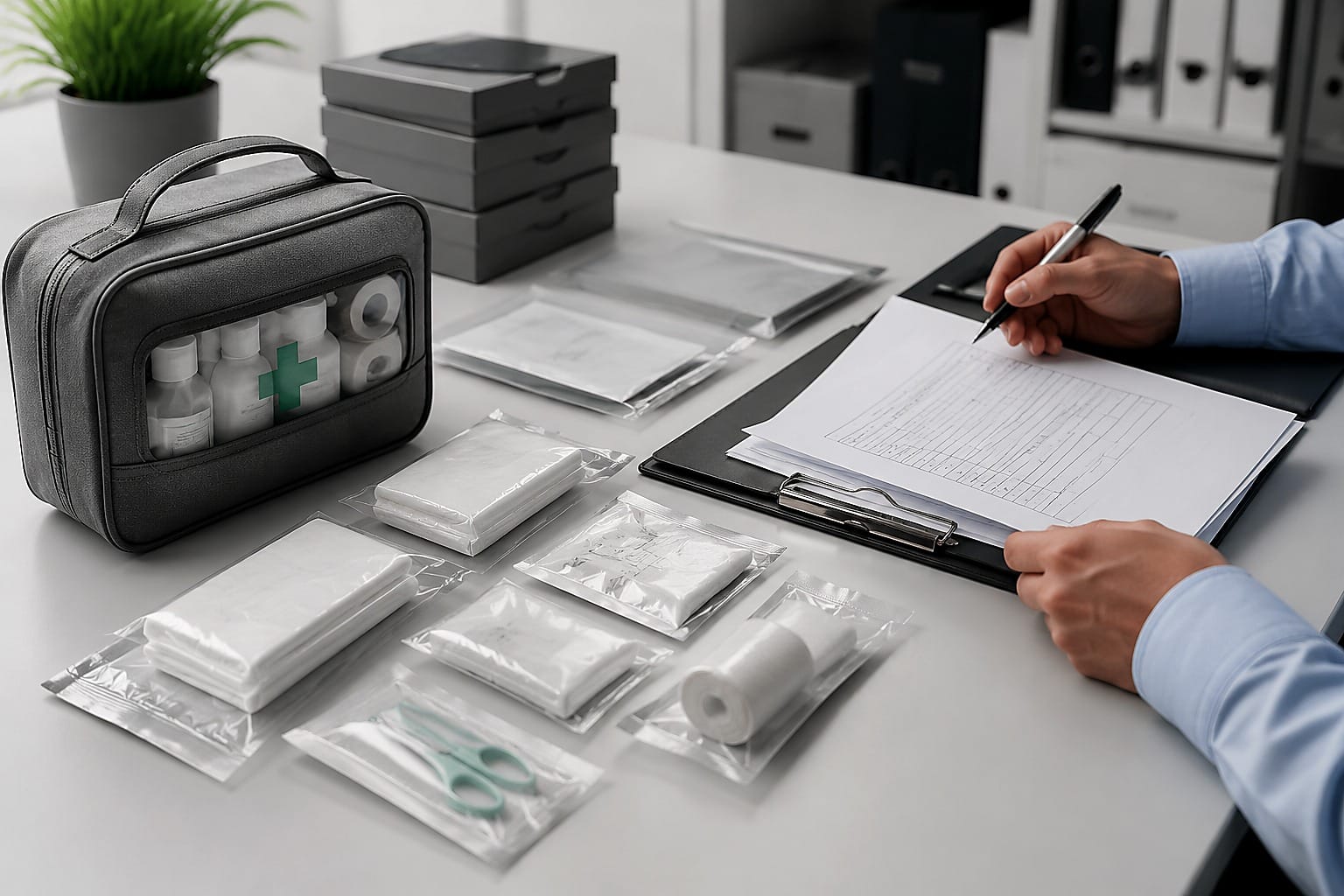
A compliance file is a structured index of conclusions and supporting records. It should show what evidence was requested, received, reviewed, accepted, rejected, or left open. The file should also identify the reviewer and review date.
| Evidence layer | Core buyer record | Scope question | Typical control |
|---|---|---|---|
| Product identity | SKU, model, description, intended purpose and claims | Does the file name the ordered product? | Match product code, photo, specification and label |
| Market status | Classification and market-route conclusion | Which law and destination apply? | Record authority source, rationale and reviewer |
| Economic operators | Manufacturer, importer, sponsor, representative or distributor | Who holds each role for this shipment? | Verify legal names, addresses and mandates |
| Registration or listing | Device, establishment or sponsor record where required | Is the product and operator in scope? | Check current authority record and identifiers |
| Technical evidence | Declaration, test report, assessment or technical record | What model, material, site and standard are covered? | Review scope, revision, issuer and validity |
| Labeling | Unit label, package label, instructions and language files | Does the released artwork match the destination? | Approve controlled artwork and sample |
| Quality and traceability | Quality-system evidence, lot controls and change records | Can the supplied batch be linked to approved records? | Capture lot, date, supplier and revision |
| Shipment evidence | Invoice, packing list, origin and transport records | Do commercial records match the approved identity? | Reconcile quantities, codes and operator names |
Not every row applies to every item. A buyer should mark a field as not applicable only after documenting the reason. Blank cells hide uncertainty and make later reviews difficult.
The document index should use exact file names and revisions. “Test report received” is too broad. A stronger entry records the report number, issuer, issue date, model, material, tested standard, pages reviewed, conclusion, and unresolved limitations.
The same commercial participant can have different legal duties across markets. Titles such as supplier, exporter, importer, distributor, sponsor, and representative are not interchangeable. The contract should reflect the actual route used for the shipment.
In the European Union, Regulation (EU) 2017/745 assigns duties to manufacturers, authorised representatives, importers, and distributors. Article 13 requires importers to verify specified matters before placing a device on the market. Article 14 defines distributor verification duties. Buyers should consult the official EU Medical Device Regulation and current guidance for the product and role involved.
In the United States, establishment registration and device listing are separate from premarket authorization. They do not by themselves show that a device has been reviewed or cleared. The FDA explains the distinction on its Device Registration and Listing page. Importers should also verify labeling, quality-system, premarket, and reporting obligations that apply to the device.
In Great Britain, many medical devices must be registered with the MHRA before being placed on the market. Overseas manufacturers may need a UK Responsible Person. The MHRA registration guidance describes the current process and the information that must be kept up to date.
In Australia, the sponsor is generally responsible for the device’s market inclusion route and ongoing obligations. The TGA describes the medical device inclusion process, including application and evidence steps. The manufacturer’s evidence and the sponsor’s ARTG entry must be checked against the actual device and intended purpose.
Canada separates medical device licences and medical device establishment licences according to device class and activity. The binding requirements are set out in the Medical Devices Regulations. Buyers should confirm the class, licence route, establishment duties, labeling, and importer or distributor activities for each SKU.
These examples show why first aid product compliance documents cannot be copied from one destination-market folder into another without review.
Document review is a matching exercise. A file is useful only when its scope can be connected to the ordered product and responsible organization. A professional-looking PDF with no clear connection to the SKU should remain unresolved.
Check at least these scope fields:
Verify issuer records through the relevant authority, notified body, certification body, laboratory, or database when an official verification route exists. Do not rely only on a screenshot supplied by the seller. Save the verification date, query, result, and reviewer.
A declaration should be read together with its referenced product list and legislation. A test report should be read together with the tested sample description. A quality-system certificate should be read for the certified entity, site, activities, exclusions, and dates. None of these records automatically replaces product registration, labeling review, or technical evidence required by the destination.
Labeling is part of the released product, not a design task that ends when artwork looks acceptable. Retain the approved unit label, immediate package, sales package, instructions, insert, barcode file, and master-carton marks as applicable.
The review should compare label content with the approved product identity and market route. Common fields include the product name, model, manufacturer, responsible local operator, lot or serial information, date fields, storage conditions, warnings, symbols, language, quantity, and traceability identifiers. The required fields vary by product and destination.
For the United States, the FDA’s general device labeling requirements provide an official starting point. Other rules may apply to specific device types, unique device identification, or promotional claims. A buyer should not assume that a generic template is complete for every SKU.
Use a controlled artwork approval process:
For private-label projects, the OEM private-label first aid kit guide explains how artwork, BOM, sample, and bulk revisions should remain synchronized.
A mixed kit needs a product-level pack record and a component-level evidence map. The pack record identifies the container, complete BOM, assembly revision, label route, quantity, and responsible parties. The component map links each BOM line to its SKU, manufacturer, status conclusion, evidence, label, lot rule, and approved substitution status.
| Kit control | Record to retain | Failure the record prevents |
|---|---|---|
| Frozen BOM | Line number, SKU, quantity and revision | Silent component substitution |
| Component identity | Manufacturer, model, size and pack unit | Documents matched to the wrong item |
| Regulatory mapping | Destination, classification and role conclusion | One status assumed for the complete kit |
| Label set | Component, kit and carton artwork revisions | Old or conflicting operator details |
| Shelf-life rule | Component dates and kit-level rule | A short-dated component hidden in the kit |
| Assembly traceability | Assembly lot linked to component lots | Inability to investigate a batch issue |
| Change record | Reason, impact, evidence and approver | Unreviewed material or supplier change |
The kit’s total piece count is not enough. Two kits with the same count can use different component sizes, materials, manufacturers, expiry profiles, and evidence. Approval should follow the BOM revision and packed reference sample.
The emergency first aid kits and bags sourcing guide provides the related framework for use case, container choice, layout, refill planning, and sample inspection.
Add a document schedule to the RFQ instead of requesting “all certificates.” The schedule should identify the file, scope, stage, format, and acceptance owner. This helps the supplier distinguish records needed for quotation, sample approval, production release, and shipment.
| RFQ stage | Document request | Buyer decision supported |
|---|---|---|
| Supplier screening | Legal entity, role, site scope and quality evidence | Can the organization support the proposed route? |
| Quotation | SKU register, status statement, available evidence index and deviations | Is the offer suitable for detailed review? |
| Sample | Specification, BOM, labels, evidence files and sample identity | Does the physical sample match the proposed records? |
| Production release | Approved revisions, open-item closure and change-control rule | Is the order authorized on a controlled basis? |
| Pre-shipment | Batch or lot data, inspection, packing and shipment documents | Does the shipment match the approved order? |
| Repeat order | Delta statement for product, supplier, site, labels and evidence | What changed since the previous approval? |
The B2B first aid procurement guide shows how this schedule fits with specifications, normalized quotations, samples, inspection, and repeat-order controls.
Define acceptance criteria before files arrive. For example, state that model lists must include the quoted SKU, scanned text must be readable, translations must be controlled, and expired records will not be accepted without a documented current route. The buyer should also identify which open items stop the order and which may be closed before production or shipment.
Compliance review is not a one-time upload. Products, suppliers, sites, labels, standards, laws, registrations, and evidence can change. Build a renewal and change process around the first aid product compliance documents index.
Use three triggers:
Each change notice should identify the original revision, proposed revision, affected SKU and quantity, reason, compliance impact, evidence needed, and approver. An email saying “same quality” is not a scope assessment.
Keep superseded files in an archive with clear status. Do not delete the record that supported an earlier shipment. The archive should show which version was active for each purchase order, production batch, and shipment.
The complete workflow can be managed through eight gates:
Assign an owner and dated decision to each gate. The owner may be in regulatory, quality, procurement, logistics, or local market operations. What matters is that the conclusion is visible and traceable.
This workflow turns first aid product compliance documents from a passive folder into a controlled procurement record. It also gives suppliers a clearer request and helps reviewers focus on real scope gaps.
No single mark should replace the importer review. For a product within the EU MDR, the importer must verify matters assigned to that role, and the applicable conformity route depends on the device and classification. Review the declaration, product identity, manufacturer, authorised representative where applicable, labeling, registration details, and supporting evidence. Also confirm that the ordered SKU and current revision are within scope.
No. The FDA states that registration and listing do not denote approval, clearance, or authorization. They are separate regulatory requirements. A buyer must identify the device’s applicable premarket route, exemptions, labeling duties, quality-system requirements, and importer obligations. Save the current listing or registration verification as one record within the larger first aid product compliance documents file, not as the sole acceptance basis.
Only when the scope can be demonstrated for every relevant component, which is uncommon for a mixed assortment. Each BOM line may have a different manufacturer, status, model list, label, shelf-life rule, and evidence route. Build a component matrix and link each file to the covered SKU. Then keep a separate kit-level record for the container, complete BOM, assembly, kit label, and traceability.
There is no universal interval for every record. Use expiry and renewal dates, repeat-order timing, destination-market requirements, supplier risk, and product changes to set the review schedule. Recheck immediately after a material, manufacturer, site, model, claim, label, or legal-role change. Authority notices, complaints, recalls, and verification failures should also trigger a documented review before further supply decisions.
Record the missing item, the reason given, the affected SKU, the required decision stage, and the risk owner. Confirm whether the file is legally required, commercially requested, or one possible form of evidence. Ask for a valid alternative only when a qualified reviewer accepts the equivalence. If the gap affects market access, product identity, labeling, or shipment release, keep the order blocked until the responsible reviewer closes it.
Before approving a sample or order, confirm that the file shows:
UneedAid supports international B2B buyers with specification, sample, packaging, and document coordination for first aid sourcing projects. Available files and routes depend on the product, customization, destination, and order structure. Send the destination markets, provisional SKU or BOM list, quantities, private-label scope, and required evidence fields in the RFQ so feasibility can be reviewed before production planning.
An international buyer can receive three quotations for the same first aid project and still have no valid basis for comparison. One supplier may price a stock kit, another may assume buyer artwork, and a third may omit documentation, samples, or export packing. A reliable B2B first aid procurement process removes those hidden differences before price approval.
The practical method is to define the requirement, identify the destination-market responsibilities, lock a line-level specification, qualify the supplier against relevant evidence, compare quotations on the same commercial basis, and approve a controlled sample before bulk production. This framework is for importers, distributors, institutional buyers, and private-label teams. It does not replace legal, regulatory, customs, or medical advice for a specific market.
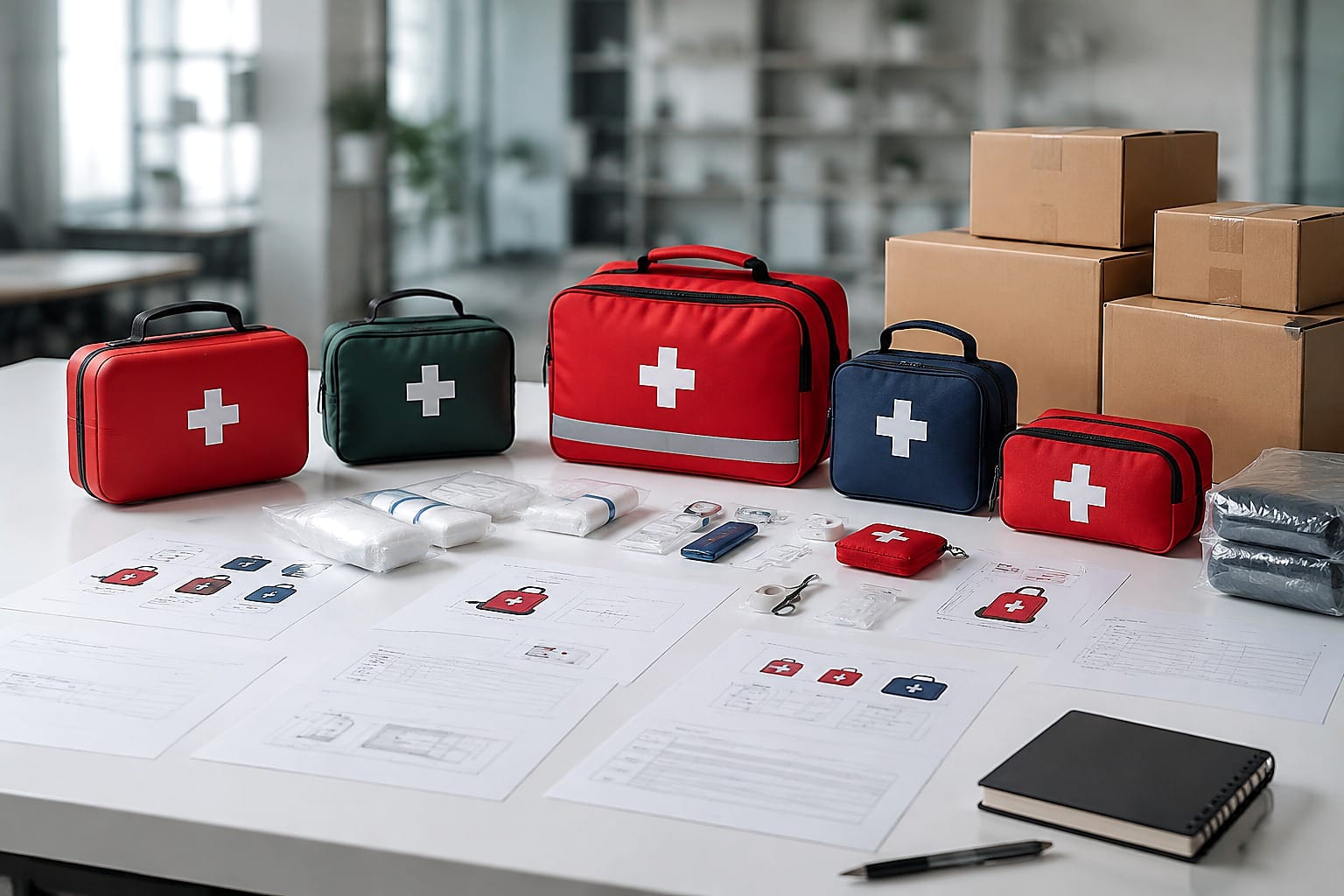
The procurement brief should explain the project before it asks for a price. A request such as “quote 2,000 first aid kits” leaves the supplier to make decisions about contents, packaging, labeling, quality evidence, delivery scope, and substitutions. Those assumptions later appear as price gaps or production disputes.
Start with ten controlled inputs:
Buyers still developing an assortment can scan the UneedAid product category hub to identify product families before creating the RFQ. The hub is a planning reference. The final brief must use the buyer’s own requirements and destination review.
The brief should also state what the supplier must not assume. Examples include no unapproved component substitution, no artwork production before written approval, and no change to packing quantities without a revised packing file. Clear exclusions reduce the chance that a supplier fills blank fields with its usual practice.
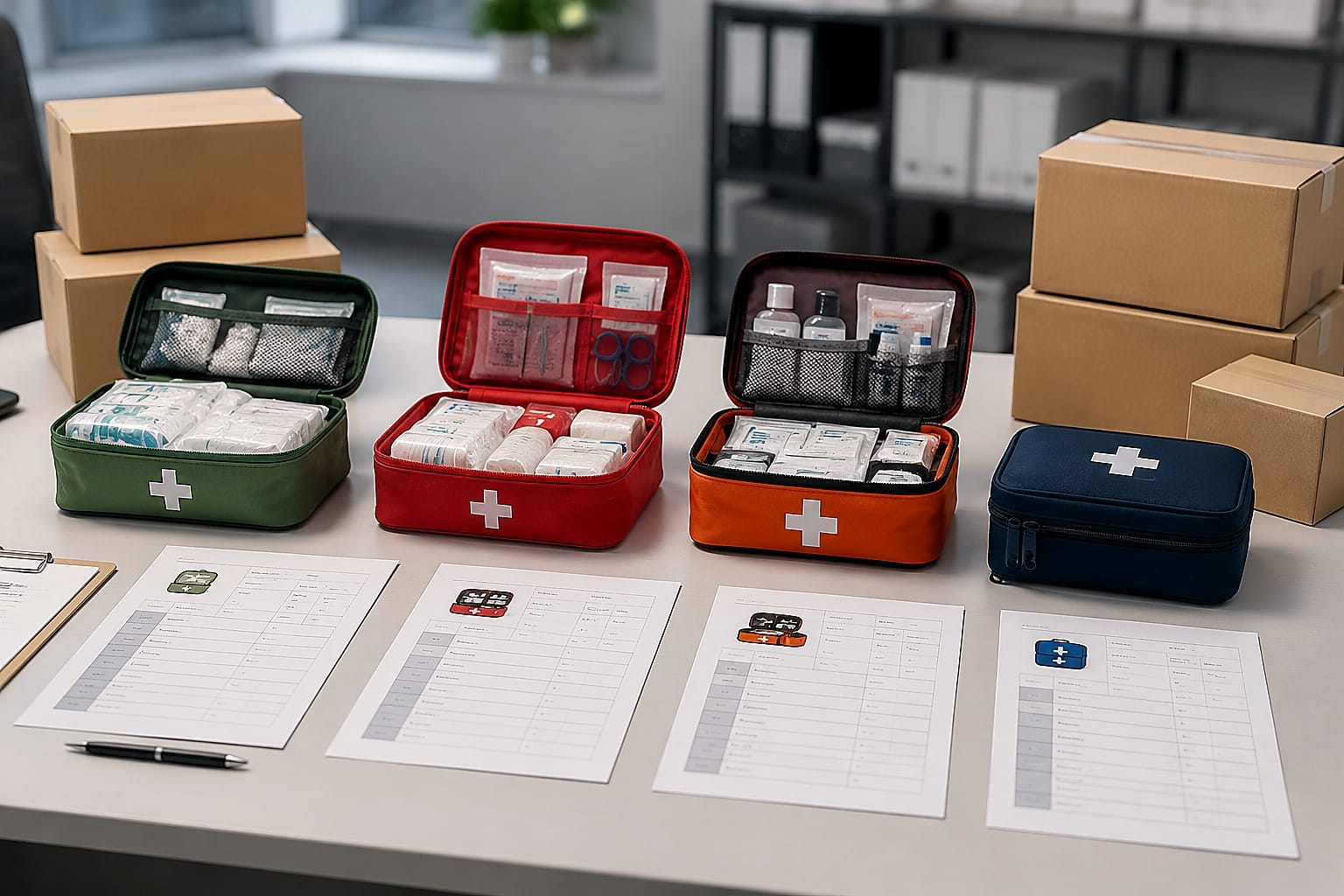
A procurement team needs two connected records: a program requirement matrix and a product-level specification. The requirement matrix covers commercial, documentation, packing, and approval rules for the whole project. The product specification defines what is being purchased.
For individual supplies, record the supplier SKU, buyer code, product description, dimensions, material or construction where relevant, unit packaging, label route, quantity, lot or expiry display where applicable, and requested evidence. For assembled kits, add the container specification, BOM revision, component location, refill code, and loaded-unit packing data.
| Specification layer | Minimum buyer record | Supplier response | Approval evidence |
|---|---|---|---|
| Product identity | Buyer code, supplier SKU, exact description | Offered SKU and any deviation | Approved specification line |
| Physical details | Size, format, material or construction fields | Actual quoted values | Data sheet or measured sample |
| Unit packaging | Pack count, seal, label, barcode, language | Proposed packaging route | Artwork proof and sample |
| Kit contents | BOM line, quantity, position, substitution status | Returned BOM with comments | Frozen BOM revision |
| Export packing | Units per carton, carton dimensions, gross and net weight | Packing estimate, then final file | Approved packing specification |
| Evidence | Required document by SKU or organization | File name, issuer, scope, validity | Buyer review record |
Avoid relying on photos or total piece counts. A photo cannot confirm size, material, label text, pack unit, lot traceability, or the exact SKU planned for repeat orders. A “120-piece kit” can also use repeated low-unit-value items to reach the count. Procurement approval should follow the written BOM and physical reference sample.
For kit projects, standard kit configurations can provide a starting structure. Buyers should then adapt the contents to the intended use, channel, and market rather than adopting a stock list without review. The related emergency kit sourcing framework explains how use case, container format, and refill logic affect a complete kit.
Supplier qualification should test whether the organization can control the quoted project, not whether it can send a polished catalog. Evidence must connect to the legal entity, site, process, product, or SKU that it is meant to support.
Use four evidence groups:
The buyer should record the difference between manufacturer, assembler, trading company, and export service provider. More than one party may participate in an order. The concern is not the number of parties by itself. The concern is whether responsibilities, product identity, document ownership, and change control are visible.
For products that fall within the European Union Medical Device Regulation, Article 13 assigns specific verification and record duties to importers. Buyers should review the current consolidated legal text and their role with qualified counsel or a regulatory specialist. The official Regulation (EU) 2017/745 text is the primary reference. A supplier statement alone does not determine the importer’s obligations or a product’s status.
Build a qualification record with dated files and conclusions. “Certificate received” is too vague. Record the document name, holder, issuer, scope, reference number, validity information if present, related SKU or site, reviewer, and unresolved question. This makes the B2B first aid procurement decision auditable and easier to revisit before a repeat order.
Price comparison starts after scope normalization. A low unit price may exclude artwork setup, labels, inner boxes, inspection, export cartons, freight, bank charges, or destination costs. Another quote may include a different component size or a lower packing quantity.
Use a comparison table that forces each supplier to answer the same fields:
| Quote field | Supplier response required | Buyer comparison check |
|---|---|---|
| Offered SKU and revision | State the exact offered SKU, specification revision, and every deviation from the RFQ. | Confirm all quotations use the same specification or price declared deviations separately. |
| Quantity tier and MOQ | Give the price quantity and explain whether MOQ applies per SKU, color, artwork, or total order. | Compare like-for-like tiers and identify any MOQ that could split or delay the order. |
| Unit price and currency | State the unit basis, currency, applicable quantity tier, and included packaging. | Use the same unit, currency date, and inclusion scope before comparing prices. |
| Included customization | List logo, label, insert, barcode, retail box, and carton-mark work included in the price. | Separate included work from setup charges and buyer-supplied materials. |
| Sample cost and timing | State sample type, cost, production time, freight method, and any refund or credit rule. | Confirm each supplier is quoting the same sample stage and approval scope. |
| Production lead-time basis | Define when the lead-time clock starts and which approvals can pause it. | Compare timelines from the same trigger, such as deposit plus final artwork and sample approval. |
| Packing data | Provide unit packing, units per carton, carton dimensions, and gross and net weight. Mark estimates clearly. | Compare confirmed production packing separately from early estimates and calculate shipment volume consistently. |
| Shipment rule and named place | Quote the Incoterms rule, named place, freight inclusion, and document responsibility. | Check that tasks, costs, and risk transfer are allocated on the same basis. |
| Payment proposal | State deposit, balance percentage, payment trigger, bank method, and bank-charge allocation. | Compare cash-flow exposure and confirm the balance trigger can be verified. |
| Quote validity and exclusions | Give the validity date, material or freight assumptions, taxes, tooling, and all excluded costs. | Record open assumptions and add missing costs before supplier selection. |
Commercial terms should include the Incoterms rule and named place, such as FCA with the named terminal or DAP with the named destination. The rule does not replace the sales contract, product specification, payment terms, insurance decisions, or import compliance work. ICC maintains the official Incoterms rules overview, which buyers can use to confirm the current rule set and obtain official publications or training.
Calculate a landed-cost scenario only from identified inputs. Keep estimated freight, duties, taxes, brokerage, inspection, storage, and local delivery visible as separate lines. Do not make a supplier responsible for a cost that the selected shipment term leaves with the buyer.
The sample process should move from feasibility to production authorization. A loose catalog sample can show a product direction. It should not authorize bulk production when the final SKU, BOM, logo, label, color, packing, or documents differ.
A controlled approval pack can include:
Inspect the sample against the records, then inspect it as a working packed unit. Count components. Measure critical dimensions. Read every label. Open and close the container. Check whether the full load strains seams, zippers, hinges, or latches. Confirm that the carton plan uses the same loaded configuration.
For bag-led orders, compare formats through the emergency medical bag directory and request a loaded reference. Empty dimensions do not show access order, compartment fit, weight distribution, or closure stress.
The purchase order should identify the approved revisions rather than saying “same as sample.” Samples can be lost or interpreted differently. A revision number links the order to files that both parties can retrieve.
No international order is completely static. A material, component, label, carton, production slot, or vessel plan may change. The control question is whether the change is detected, assessed, approved, and recorded before it reaches the shipment.
Require a change notice that identifies:
Silence is not approval. The supplier should not substitute a visually similar item and report it after assembly. The buyer should also respond within an agreed period so the order does not remain blocked without a decision.
Delivery planning needs the same discipline. Record when the lead time starts, which buyer approvals can stop the clock, when packing data becomes firm, who books transport, which documents travel with the goods, and what event releases the balance payment. Add schedule margin for custom materials, artwork revisions, inspections, consolidation, customs processing, and peak transport periods where relevant.
This stage often exposes a counterintuitive point in B2B first aid procurement: the shortest quoted production time is not always the shortest usable delivery plan. A quote that excludes sample approval, document review, or confirmed packing can move those tasks outside the stated lead time.
The inspection plan should mirror the specification. If the RFQ asks for component size, label language, barcode, logo position, carton quantity, and document references, the inspection record should check those same fields.
At minimum, define checks for product identity, quantity, dimensions, visible construction, packaging, label content, artwork position, kit BOM count, container operation, carton marks, and shipping quantities. Identify which issues stop shipment, which require rework, and which may be accepted through a written concession.
Receipt checks continue after shipment. Compare the packing list, carton count, purchase order, batch or lot information where applicable, and visible condition. Record shortages or damage with carton references and photographs. Keep the received sample or retained unit connected to the B2B first aid procurement order revision.
Repeat orders should not default to “same as last time.” Ask the supplier to reconfirm the SKU, BOM, materials, artwork, packing, documents, price, and lead-time basis. A one-page delta report can show what changed and what remains identical. That record protects continuity without forcing the buyer to repeat the entire qualification process blindly.
The complete workflow can be managed through eight gates:
Each gate should have an owner and a written acceptance record. This keeps procurement, quality, regulatory, logistics, finance, and sales teams from approving different versions of the same project.
Send the destination market, intended use, product list or provisional BOM, quantities, customization scope, packaging route, required evidence, sample plan, target shipment timing, and requested commercial terms. Mark unknown fields as open questions rather than leaving them blank. Ask suppliers to return the same file with comments and deviations. This creates a comparable record and reduces follow-up messages based on different assumptions.
There is no universal number. The useful number is one the buyer can qualify and compare with the same depth. Three credible candidates often provide enough contrast for price, capability, and communication, but a specialized product may justify fewer or more. Avoid collecting many shallow quotes that use different specifications. A smaller normalized comparison gives stronger evidence than a long price list with unresolved scope differences.
Unit price is one decision field. Compare the offered specification, included customization, evidence, sample route, packing, inspection, payment, shipment rule, and change controls. Then model identified landed costs and operational risks. A lower quote can remain valid, but the buyer should know why it is lower. Missing labels, smaller sizes, different pack units, or excluded export packing can create a false price advantage.
Approve a production reference after the product or BOM revision, container, artwork, label, packaging, and written exceptions are stable enough to represent bulk output. Record a sample ID, photographs, revision numbers, measurements, and approver. If production uses a different component or material, require a documented change review. A concept sample can support feasibility discussion, but it should not silently become the bulk-order authority.
Responsibility depends on the product, jurisdiction, transaction structure, and each party’s legal role. Supplier files can support review, but they do not transfer every importer, distributor, or economic-operator duty. The buyer should map responsibilities before ordering and obtain qualified advice when needed. Record which party checks product status, labels, language, registration, customs classification, and post-market duties instead of relying on a general statement that the goods are “compliant.”
Use stable SKUs, revision-controlled specifications, a substitution rule, and a pre-order delta confirmation. Ask the supplier to identify changes in materials, source, dimensions, labels, evidence, packing, price, and lead time before accepting the repeat order. Require a new sample when the change affects a critical field or the loaded kit. Consistency comes from visible change control, not from assuming the previous configuration remains available.
A dependable B2B first aid procurement program makes specifications, evidence, approvals, commercial terms, and changes visible before goods move. The result is not a promise that every order will be simple. It is a record that lets the buyer compare suppliers fairly, find unresolved assumptions, and decide who owns each next action.
Begin with the requirement matrix and line-level specification. Qualify the supplier against the offered scope, normalize the quotation, approve a controlled sample, and carry the same revisions into the purchase order and inspection plan. That sequence gives international buyers a repeatable procurement system rather than a collection of disconnected emails and product photos.
A buyer approves a neat sample, places a bulk order, and later finds that component labels, pouch sizes, or carton marks no longer match the signed files. OEM private label first aid kits avoid this failure when the sample is treated as a controlled production reference, not a sales display.
The practical process is to define the market and use case, freeze a bill of materials, approve actual artwork and a loaded sample, and write the inspection and change rules before bulk assembly. This guide gives distributors, importers, resellers, and institutional sourcing teams a sample-to-bulk framework. It does not prescribe a universal kit content list or replace destination-market review.
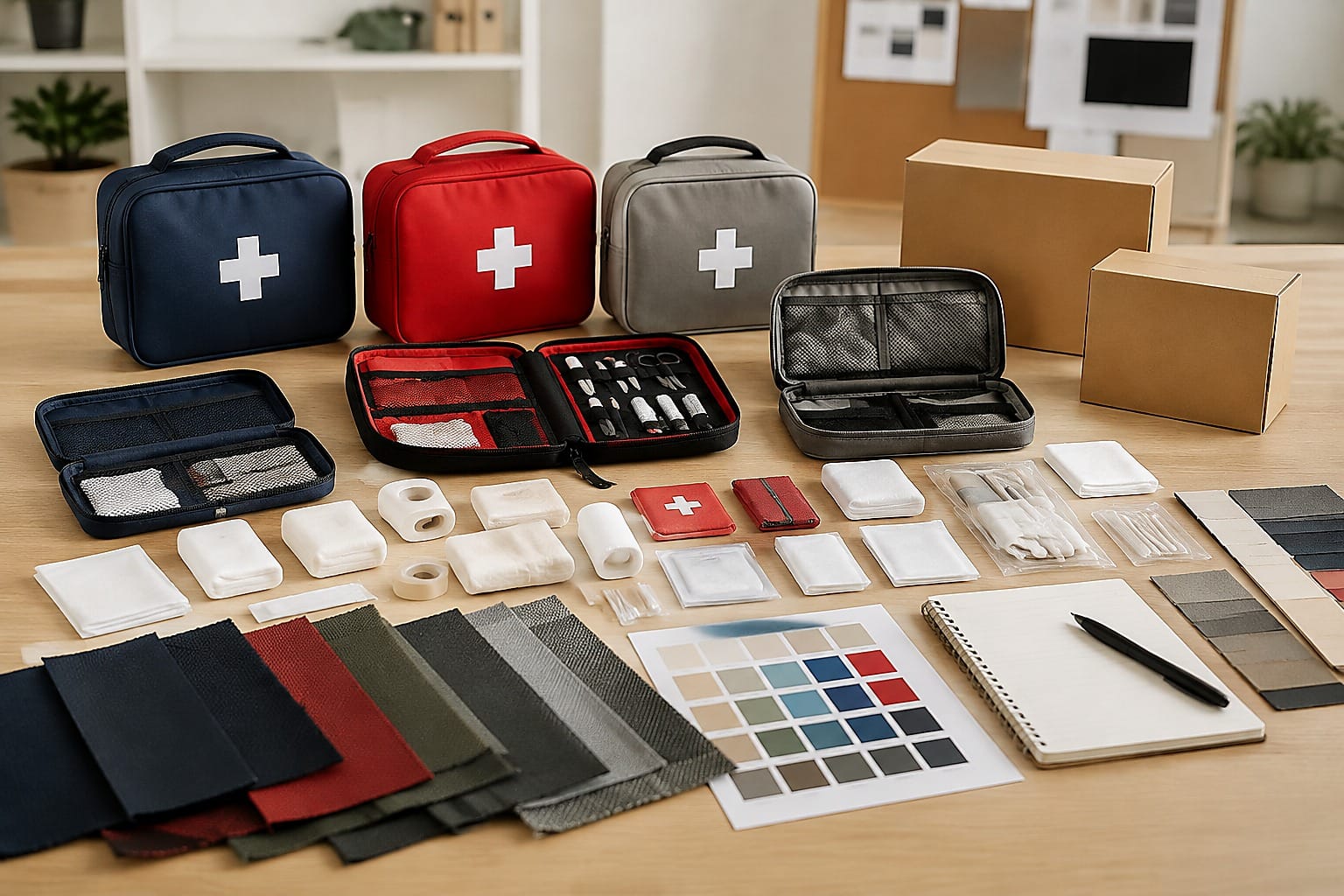
An OEM request needs more than a logo file and a target piece count. The supplier must know what is being customized, which decisions remain open, and which market receives the finished configuration. Otherwise, two quotations can appear comparable while using different bags, contents, label routes, and packing assumptions.
Start with eight project inputs:
This brief lets a supplier separate stock elements from custom work. A stock red bag with one printed logo is a different project from a custom-color backpack with new pockets, buyer-defined contents, multilingual labels, and retail packaging.
Buyers can use UneedAid’s OEM and ODM project overview to frame the first feasibility discussion. The final quotation still needs to identify the exact configuration, documents, customization limits, and buyer approvals.

Customization has several layers. Approving them in the wrong order creates rework. A printed insert cannot be finalized if the BOM is still changing. A bag compartment map cannot be approved until the approximate component volume is known.
| Customization layer | Decision to freeze | Common dependency | Approval evidence |
|---|---|---|---|
| Kit concept | Use case, channel, destination, target quantity | Buyer program and market route | Written project brief |
| Contents | SKU, description, size, quantity, pack unit, substitution status | Availability and document review | BOM revision |
| Container | Format, material description, dimensions, color, internal layout | Loaded component volume | Loaded sample and specification |
| Branding | Logo method, print area, color reference, artwork position | Container material and print process | Artwork proof and physical sample |
| Unit packaging | Label, insert, barcode, language, seal, retail box | Final contents and market requirements | Approved artwork revision |
| Export packing | Unit count, carton size, carton mark, pallet request | Final packed unit dimensions | Packing specification |
The kit concept and provisional BOM should come first. The supplier can then assess whether an existing container fits or whether the bag or box needs structural changes. Branding and retail packaging follow after the configuration is stable enough to support accurate dimensions and label text.
For early format selection, compare standard kit configurations as baselines. A baseline shortens discussion, but it should not be presented as automatically suitable for every workplace, tender, channel, or jurisdiction.
The BOM is the central record for OEM private label first aid kits. Photos, piece counts, and product names are supporting material. They do not replace line-by-line specifications.
Each BOM line should contain a stable line number, buyer code or supplier SKU, product description, size, material or format where relevant, quantity per kit, pack unit, label route, lot or expiry field where applicable, document status, and substitution rule. If the item uses buyer artwork, add the artwork revision.
Use explicit status values such as approved, alternative proposed, document pending, sample pending, or unavailable. A blank cell is ambiguous. It may mean stock is unconfirmed, a document was not requested, or the supplier has not reviewed the line.
The BOM should also state how changes are handled:
This process matters because a visually similar component can have a different size, pack unit, label owner, shelf-life presentation, or supporting file. It may also change how the loaded kit closes or how many kits fit in a master carton.
A concept sample answers, “Is this direction workable?” A production reference sample answers, “Is this the configuration we authorize for bulk assembly?” Mixing those purposes is a frequent source of disagreement.
| Sample stage | Main purpose | What may remain provisional | What the buyer records |
|---|---|---|---|
| Material or print swatch | Compare color, fabric, coating, or logo result | Container structure and contents | Swatch code, color reference, print method |
| Empty-container sample | Check shape, construction, pockets, closures, and carrying method | Final BOM and printed component labels | Model, dimensions, materials, construction comments |
| Concept loaded sample | Test capacity, layout, access, and overall presentation | Some components, artwork, and packing | Provisional BOM and exception list |
| Pre-production reference | Authorize the proposed bulk configuration | Only documented exceptions | Frozen BOM, artwork, packing, photos, sample ID |
The pre-production reference should be loaded and labeled as proposed for the order. If a component cannot be represented, the exception must be written. The buyer should not assume that a stock substitute in the sample will automatically be replaced in production.
Record the sample ID, date, BOM revision, bag or box specification, artwork revisions, packing revision, photographs, exceptions, and approver. Keep one agreed reference with the supplier and one with the buyer where the project and shipping arrangement permit.
Inspect the sample against documents first, then test it as a packed unit. An attractive presentation can hide count errors, unreadable labels, strained closures, and compartments that cannot be refilled efficiently.
Use this sequence for OEM private label first aid kits:
For bag-led projects, the emergency medical bag directory helps buyers compare waist, hand-carry, backpack, and fold-out formats before requesting a loaded sample. A directory image does not establish fabric, reinforcement, loaded comfort, or component fit. Those points require the quoted specification and sample.
Private-label projects often contain more artwork files than expected. The bag logo may be only one file among component labels, an instruction insert, barcode label, unit box, polybag mark, inspection label, master-carton mark, and pallet label.
Create an artwork register with these fields:
| Field | Purpose |
|---|---|
| Artwork ID and revision | Prevent an email attachment from becoming the unnamed final file |
| Application | Bag, component, insert, unit box, carton, or pallet |
| Language | Identify the approved language version |
| Dimensions and position | Define print area and placement |
| Color reference | Give the production team a stated reference |
| Print method | Connect the artwork to the actual substrate and process |
| Approval date and approver | Establish release authority |
| Superseded file | Make obsolete artwork traceable |
Digital proofs can verify text, dimensions, and placement. They cannot fully represent ink behavior, fabric texture, curved surfaces, adhesive performance, or color under different lighting. Where those factors matter, approve a physical application sample.
The buyer should also confirm which economic operator appears on labels and which claims are allowed in the destination market. Logo ownership does not answer those questions. They depend on the product, market route, contractual roles, and applicable rules.
Private label does not turn a collection of supplier files into automatic evidence for the finished kit. The regulatory role may depend on the component, claims, labeling, destination, and whether the buyer places the product on the market under its own name.
In the United States, the FDA’s device registration and listing guidance identifies activities such as manufacturing, relabeling, repackaging, and specification development when explaining who may need to register and list. Buyers should assess their actual activity and product classification rather than infer responsibility from the word “OEM.”
For the European Union, Articles 13 and 14 of Regulation (EU) 2017/745 set obligations for importers and distributors. Other obligations may apply to manufacturers, authorized representatives, or a party that makes changes described in the regulation. The buyer should map the actual supply chain and obtain qualified advice when the role is unclear.
Use a responsibility table during sourcing:
| Topic | Supplier evidence | Buyer or importer confirmation |
|---|---|---|
| Product identity | Quoted SKU, specification, label sample | Correct classification and intended market route |
| Document scope | Named model, site, report, certificate, or declaration where applicable | Scope, validity, issuer, and relevance to the ordered SKU |
| Label content | Artwork template and available product information | Required operator details, language, symbols, claims, and local rules |
| Kit configuration | BOM and component files | Whether the assembled assortment creates added requirements |
| Change control | Supplier notification process | Who reviews a changed component or label before release |
This guide cannot determine the legal role for a specific order. That conclusion needs the actual product set, claims, parties, and destination.
One quoted MOQ can hide several separate constraints. The bag, printed label, insert, custom box, and individual components may each have a different production or purchasing batch. The workable project quantity is shaped by the most restrictive approved element and by how surplus materials will be handled.
Ask the supplier to separate these drivers:
Do not convert these factors into a fixed delivery promise before the configuration is frozen. A wording change on an insert can delay print release. A component substitution can reopen document and sample review. A custom fabric color may follow a different schedule from a stock bag.
For OEM private label first aid kits, request a milestone schedule tied to approvals: brief confirmed, BOM confirmed, artwork released, pre-production sample approved, materials available, assembly started, inspection completed, and shipment released. Dates should be updated when an approval or specification changes.
The approved sample is a reference, but the purchase order also needs measurable acceptance criteria. For OEM private label first aid kits, state which files control production and what evidence must be available before shipment.
A practical production release pack contains:
For attribute inspection, buyers may refer to ISO 2859-1, which covers sampling procedures indexed by acceptance quality limit for lot-by-lot inspection. The buyer must choose an appropriate plan and acceptance criteria for the product and risk. Citing the standard without defining defects and inspection levels does not create an inspection plan.
Defect definitions should be specific. “Artwork issue” is broad. Separate wrong language, missing text, wrong revision, unreadable print, incorrect position, color outside the agreed reference, and damaged label. Do the same for BOM counts, container construction, closures, contamination, packing, and carton marks.
The first approved order creates the baseline for later OEM private label first aid kits. Repeat orders should reference that baseline and list every requested change. Reusing only the old product name or a photograph leaves too much room for interpretation.
Before each reorder, ask for a continuity review:
| Review point | Reorder question |
|---|---|
| BOM | Are all SKUs, sizes, quantities, and pack units unchanged? |
| Dated items | Does the proposed remaining shelf-life meet the purchase requirement? |
| Container | Are fabric, color, dimensions, pockets, closures, and reinforcement unchanged? |
| Artwork | Is the same revision still approved, and have addresses or barcodes changed? |
| Documents | Are requested files still current and applicable to the proposed SKU? |
| Packing | Are unit count, carton dimensions, gross weight, and marks unchanged? |
| Inspection | Are the same defect definitions and sampling rules being used? |
The supplier should disclose a proposed change before assembly, not at final inspection. The buyer can then decide whether documentary review, a component sample, an artwork proof, or a new loaded sample is required.
Component continuity does not mean every raw material or upstream source will remain available indefinitely. It means the project has a method for identifying, reviewing, approving, and recording changes before they enter the order.
A structured RFQ makes supplier responses comparable and exposes unresolved assumptions. Ask each supplier to respond in the same table rather than returning only a total price and a catalog image.
| RFQ section | Buyer provides | Supplier confirms |
|---|---|---|
| Project | Channel, use case, destination, target quantity | Feasibility and base configuration |
| BOM | Line-by-line list and substitution rule | Confirmed SKU, exception, alternative, document status |
| Container | Format, dimensions, material, color, layout | Model, customization scope, sample route |
| Branding | Logo, language, barcode, label and packaging needs | Print method, template, setup, MOQ driver |
| Evidence | Required files by product or component | Available file, scope, gap, and timing |
| Samples | Required stages and approval checklist | Cost, preparation factors, courier arrangement |
| Inspection | Defect definitions and sampling request | Proposed checks and records |
| Commercial | Quantity tiers, Incoterm request, packing limits | Price tiers, payment, lead-time factors, carton data |
| Continuity | Forecast horizon and change rules | Notification method and repeat-order process |
Ask suppliers to price standard and custom elements separately. This shows whether the main MOQ or cost driver is the container, a printed component package, the retail box, or assembly. It also gives the buyer alternatives if the first configuration exceeds the launch quantity.
There is no reliable universal lead time. The schedule depends on whether the project uses an existing container and stock packaging or requires new construction, custom colors, printed component packs, inserts, retail boxes, and market-specific review. Buyer response time also matters. A project can pause while the BOM, artwork, documents, or sample exceptions await approval. Ask for a milestone schedule instead of one unsupported date. The schedule should show brief confirmation, BOM review, artwork release, sample preparation, sample approval, material availability, assembly, inspection, and shipment handoff. When a specification changes, request an updated schedule and identify which completed approvals must be reopened.
Freeze the purchase order, BOM revision, container specification, reference sample ID, artwork register, unit packing, master-carton packing, substitution rules, inspection criteria, and required pre-shipment records. The word “approved” should point to a named file or sample, not an email thread with several attachments. Any unresolved exception belongs in a written release list with an owner and due date. If the supplier cannot reproduce one item shown in the sample, decide whether to approve an alternative and whether a new sample is needed. Bulk assembly should begin only after the parties understand which records are final and who has authority to release a change.
No. A sample establishes the agreed configuration and gives the parties a physical comparison point. It does not show the condition of every production unit. The bulk order still needs process checks and a defined inspection plan. Buyers should state the defect categories, inspection stage, sampling method, acceptance criteria, and records they expect. High-impact issues may require different controls from cosmetic issues. The inspection should compare units with the frozen BOM, artwork, container specification, and packing rules. Receiving inspection may also be appropriate because transport can affect cartons and packed units after the supplier’s final check.
Responsibility cannot be assigned from the term “private label” alone. It depends on the product, claims, labeling, destination, and the activities of each party. A supplier can provide specifications and applicable files, but the buyer or importer should verify its own market role and obligations. In some jurisdictions, relabeling, repackaging, importing, distributing, or placing a device on the market under another name can affect responsibilities. Map the manufacturer, brand owner, importer, distributor, and any authorized representative for the actual order. Review label ownership, registration, language, traceability, and document scope with the relevant authority or qualified advisor before market release.
Reduce the number of custom layers, not the quality records. A buyer can evaluate an existing bag color, stock container structure, standard component packaging, a common insert size, or a simpler logo application. The supplier should explain which change reduces a real production or print batch. Keep the BOM, artwork revision, sample checks, inspection criteria, and change process even for a smaller trial. Removing those controls makes the order harder to reproduce. It may also hide whether the lower quantity uses a different component, label, or packing route. Ask for two or three clearly defined configurations and compare their MOQ drivers, rather than requesting an undefined lower minimum.
Keep the final purchase order, BOM, specifications, artwork files, approvals, reference-sample record, supplier documents, inspection report, packing list, lot or batch records received, shipment documents, and approved change history. Store them by project and order number. A repeat order should begin from this file set, followed by a written continuity review. If a market question or customer complaint arises, the records help identify which configuration, labels, components, and lots were supplied. Retention periods depend on the product, market, contract, and buyer procedures, so the project team should define them rather than applying one generic period to every order.
The sample-to-bulk path for OEM private label first aid kits is a chain of controlled decisions: brief, BOM, container, artwork, evidence, sample, release pack, inspection, and change control. Keep every decision tied to a revision. That gives the buyer and supplier a shared production reference without turning assumptions into specifications.