
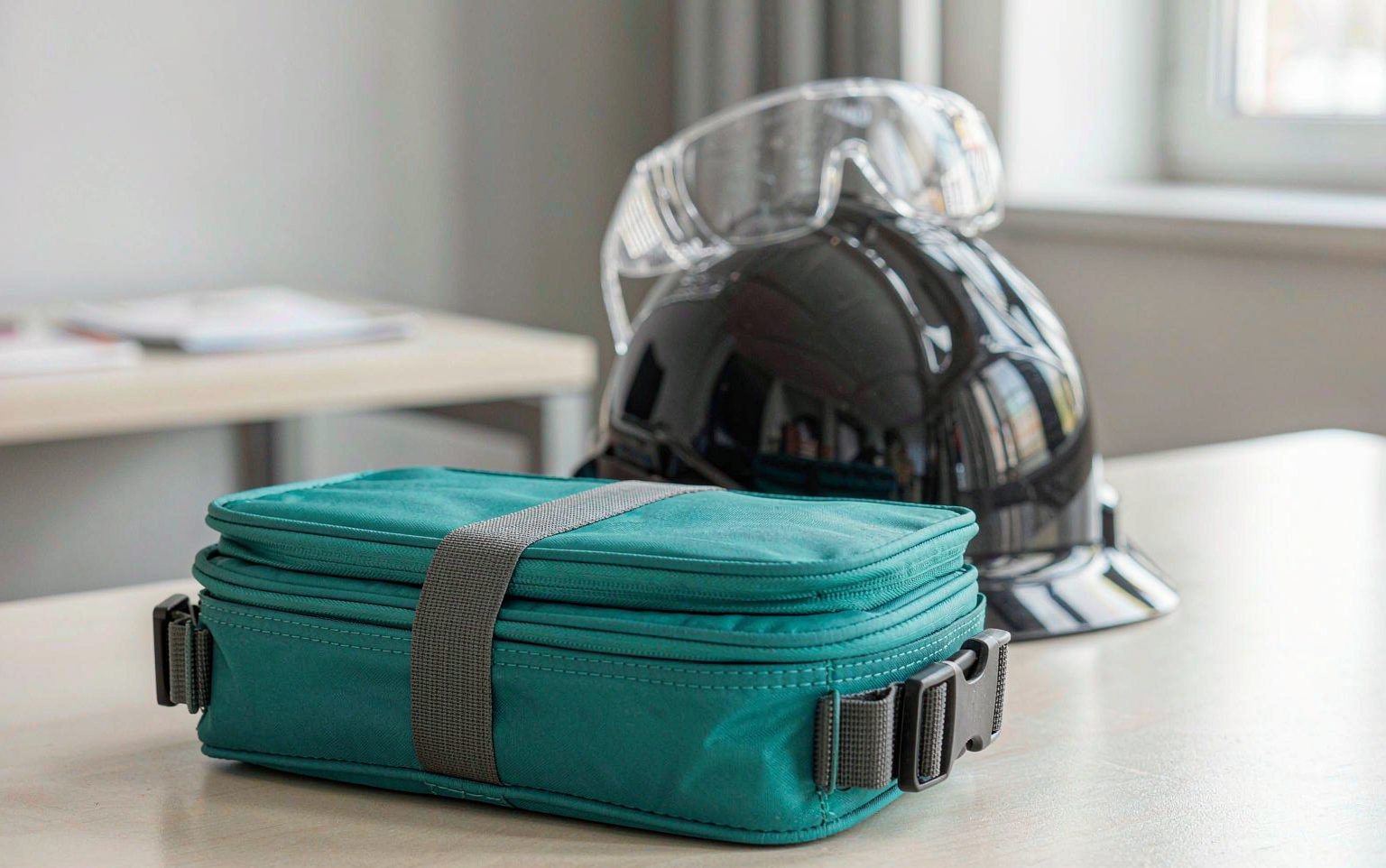
Ask for “a compliant first aid kit” and the next question from any serious supplier will be: compliant to what, exactly? In the US workplace context the answer almost always traces back to one document — ANSI/ISEA Z308.1, the American National Standard for Minimum Requirements for Workplace First Aid Kits.
This guide explains what the standard actually specifies, how its two classes and four container types work, what changed in the 2021 edition, and how buyers write it into a purchase specification so quotes come back comparable.
What ANSI Z308.1 Is — and What It Is Not
ANSI/ISEA Z308.1 is a voluntary consensus standard, developed by the International Safety Equipment Association under the American National Standards Institute process. Its current edition is ANSI/ISEA Z308.1-2021.
It is not a law. The enforceable US requirement for general industry is OSHA 29 CFR 1910.151(b) — “adequate first aid supplies shall be readily available” — and OSHA’s non-mandatory Appendix A points employers to ANSI Z308.1 as the reference for judging adequacy. In practice, inspectors, auditors, and safety consultants use the standard as the yardstick. OSHA’s interpretation letter on first aid supplies documents how the agency reads the standard alongside its own rule, including which configurations it recommends for high-risk industries.
Voluntary status does not make it optional in practice: it is what “adequate” is measured against when someone asks.
The Structure: Two Classes × Four Container Types
The standard answers two separate questions — what is inside, and what holds it.
Classes describe contents.
| Class A | Class B | |
|---|---|---|
| Intended for | Common injuries, lower-risk workplaces | Higher-risk or higher-headcount sites |
| Adhesive bandages (1×3 in.) | 16 | 50 |
| Antibiotic treatment applications | 10 | 25 |
| Antiseptic applications | 10 | 50 |
| Burn treatment applications | 10 | 25 |
| Sterile pads (3×3 in.) | 2 | 4 |
| Trauma pads (5×9 in.) | 2 | 4 |
| Medical exam gloves | 4 | 8 |
| Triangular bandage | 1 | 2 |
| Tourniquet | — | 1 |
| Splint | — | 1 |
| Foil emergency blanket | 1 | 1 |
Container types describe the case. Type I: fixed-mount, indoor. Type II: portable, indoor, light-duty. Type III: portable, indoor/outdoor, water-resistant seal. Type IV: portable, ruggedized for transport and outdoor industries. A wall-mounted office cabinet is Type I territory; a construction crew kit in a truck is Type IV. The full selection logic by site type is in the Class A vs Class B guide.
What Changed in the 2021 Revision
Three changes matter most to buyers replacing old stock:
- Foil emergency blanket added to both classes — kits stocked to earlier editions will not meet the current minimum without it.
- Class B tourniquet and splint carried forward as explicit requirements — the items most often missing from pre-2015-era refills.
- Quantity refinements across several line items, which is why the standard’s edition should be cited by year in purchase documents.
Stock filled to an older edition is not automatically unsafe — but it no longer meets the current minimum table, and “maintained adequate supplies” is easier to demonstrate against the current edition.
Writing ANSI Z308.1 Into a Purchase Specification
A compliant, comparable specification names five things:
- Edition and class: “ANSI/ISEA Z308.1-2021, Class B” — not “industrial first aid kit.”
- Container type: Type I for fixed indoor cabinets, Type III/IV for portable outdoor use.
- The contents list, line by line, with quantities — so bids are compared item against item, not photo against photo.
- Headcount the fill serves, or the refill-pack structure if the program restocks by module.
- Documentation expectations: contents list with the quotation; labeling language per destination market, confirmed by the buyer.
Suppliers respond to this format with directly comparable quotes, and the audit trail stays clean: specification → sample → delivery check against the same document. For order mechanics, see the bulk sourcing guide; for sector-specific setup, the commercial, factory, and construction site guides map the classes onto real sites.

Frequently Asked Questions
Is ANSI Z308.1 legally required?
No. It is voluntary guidance referenced by OSHA’s non-mandatory Appendix A to 1910.151. Practically, it is the benchmark used to judge whether workplace supplies are “adequate,” so procurement teams treat the current edition as the default specification.
What is the difference between Class A and Class B in ANSI Z308.1?
Class B includes every Class A item category in larger quantities, plus two items Class A does not require: a tourniquet and a splint. Class A serves lower-risk workplaces; Class B serves higher-risk or larger sites.
What does Type I, II, III, and IV mean?
They are container types: Type I is fixed-mount indoor (wall cabinets), Type II is light-duty portable indoor, Type III is water-resistant portable for indoor/outdoor use, and Type IV is ruggedized portable for transport and outdoor industries.
Do ANSI standards apply outside the United States?
The standard is written for US workplaces, but its structure is widely referenced in international procurement as a contents benchmark. Destination-market regulatory requirements remain the buyer’s responsibility to confirm — labeling, language, and registration differ by market.
How often is ANSI Z308.1 updated?
The standard is reviewed on a periodic cycle; the current edition is ANSI/ISEA Z308.1-2021. Buyers should cite the edition year in specifications, since quantity line items can change between revisions.