
A commercial first aid kit is not a bigger version of a home kit. Workplaces carry obligations — keeping adequate supplies readily available is a baseline expectation under OSHA 29 CFR 1910.151(b) in the US and similar duty-of-care rules in most markets — and they face usage patterns a household never sees: more people, higher turnover of supplies, and inspectors or auditors who may ask how adequacy is maintained.
This guide walks through what “commercial grade” actually means in practice, which contents class fits which type of business, and how multi-location businesses standardize without overcomplicating procurement.
What Makes a Kit “Commercial”
Three differences separate a workplace kit from a household one:
- Configuration class. Commercial kits are specified against ANSI/ISEA Z308.1, the standard that defines minimum workplace contents in two classes. Class A covers common injuries in lower-risk settings; Class B adds larger quantities plus a tourniquet and splint for higher-risk sites. The class decision comes from the hazard assessment, not from the size of the budget.
- Replenishment as a process. A home kit refills when someone remembers. A commercial kit refills on a schedule, with a log — because “maintained” supplies are part of what adequacy means.
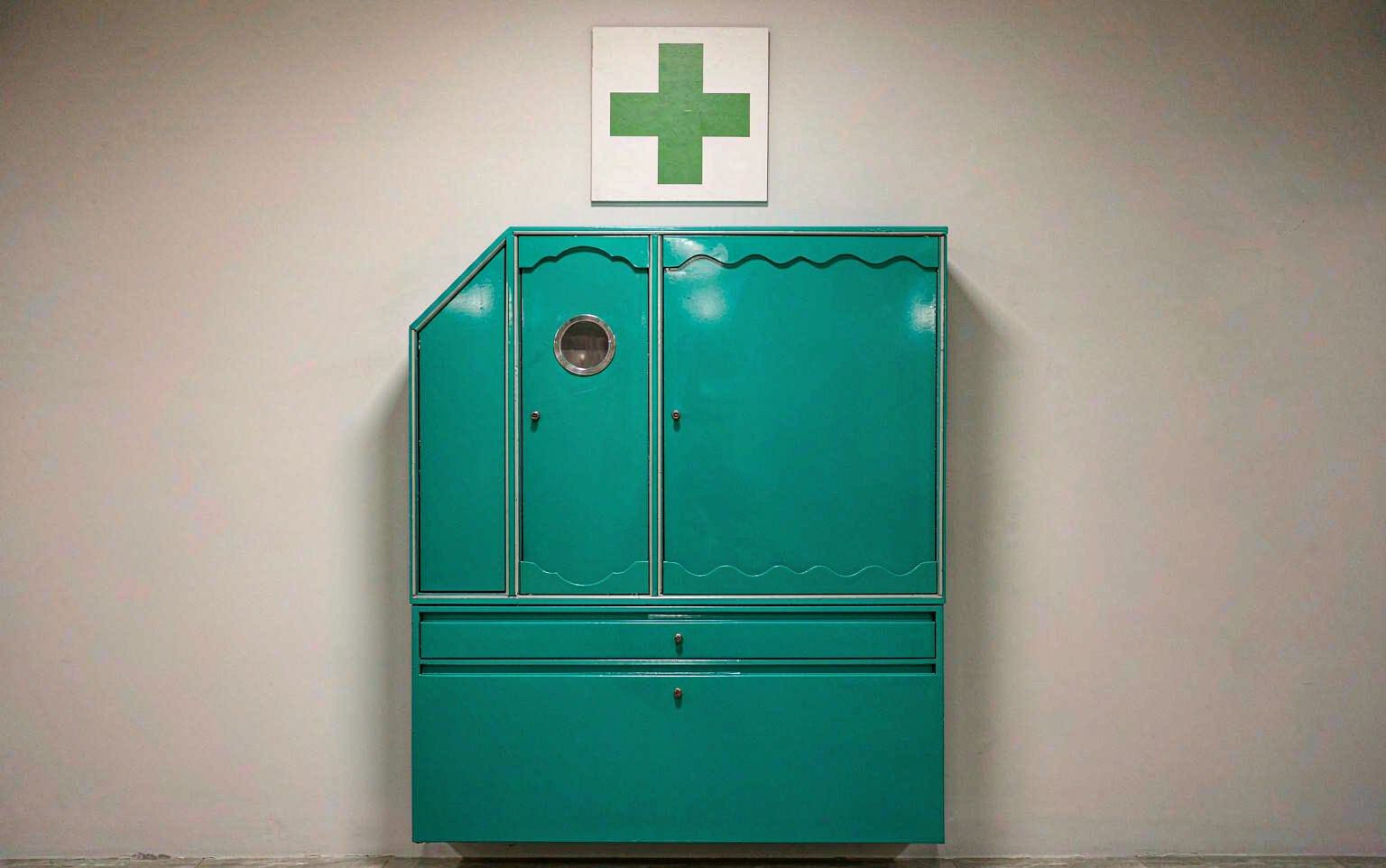
- Access rules. Workplace kits must be reachable by everyone on shift, including visitors and contractors in many premises. Location, signage, and unobstructed access matter as much as contents.
Which Class Fits Which Business
| Business type | Typical class | Why |
|---|---|---|
| Office, retail floor, showroom | Class A | Common injuries: cuts, minor burns, sprains |
| Restaurant / commercial kitchen | Class A + sector extras | Burns and knife cuts are frequent; detectable (blue) plasters help prevent foreign-object incidents in food |
| Hotel, gym, education | Class A, more units | Public-facing premises need visible, signed stations |
| Light manufacturing, workshops | Class B | Machine-related injuries justify tourniquet and splint coverage |
| Warehouse, logistics hub | Class B | Forklifts, racking, heavy loads — see the factory and warehouse breakdown for area-by-area setup |
There is no fixed legal ratio of kits per employee; one kit per 25 people or per work area is a common planning benchmark. What governs is travel time — a worker should reach supplies quickly from anywhere on the premises.
Sector-Specific Contents Worth Adding
Beyond the standard class fill, commercial buyers commonly add by sector:
- Food service: detectable bandages, blue waterproof plasters, burn dressings for hot surfaces, and separate hand-sanitizing stock.
- Retail and hospitality: eye wash for chemical splash incidents in back rooms, cold packs for slips, and plainly signed cabinets guests can find.
- Offices: automated external defibrillator (AED) placement is increasingly common alongside the kit — a separate purchase decision, but planned at the same wall location.
- Gyms and leisure: larger cold pack stock and sterile wash for mat-related abrasions.
These additions sit on top of the class fill — they replace nothing, because the class minimum is the floor, not the target.
Standardizing Across Multiple Locations
The pattern that works for chains and franchise groups: pick one case family, one fill specification per site type, and one supplier for all locations.
The benefits compound: identical inspection checklists across sites, one restocking SKU set, staff who can find supplies in any branch, and consolidated purchasing that reaches bulk pricing sooner. Buyers typically consolidate an annual or semi-annual order covering all branches, with logo marking on cases so kits stay with the right site after audits or moves.
For order mechanics — quantities, logo marking thresholds, packing, and lead times — see the bulk first aid kit sourcing guide.
Choosing the Case, Not Just the Contents
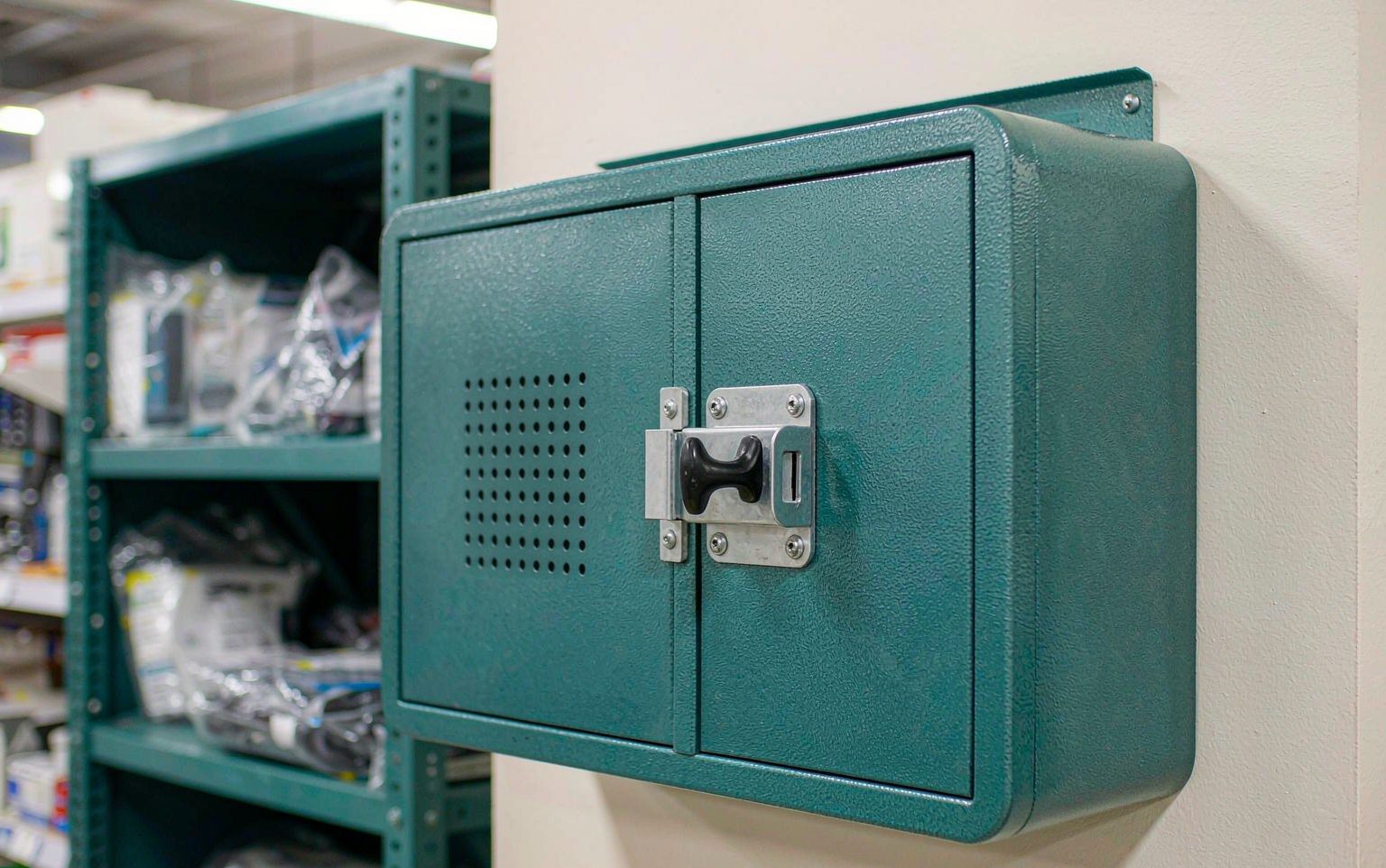
Contents decide compliance; the case decides whether the kit is still usable a year later. Enclosed metal or hard polymer cabinets protect sterile wraps from dust and moisture in back-of-house areas; lockable or slide-latch models suit premises where unauthorized access is a concern, provided staff can reach supplies without delay. The wall-mounted series covers fixed installations from 25 to 100 people per configuration.
Frequently Asked Questions
Is a business legally required to have a first aid kit?
In the US, general industry employers must ensure adequate first aid supplies are readily available under 1910.151(b); most other markets have equivalent duty-of-care requirements. ANSI/ISEA Z308.1 is the recognized benchmark for judging adequacy, though it is guidance rather than law.
What class first aid kit does my business need?
Match the class to the hazard assessment: Class A for offices and retail, Class B where machine, fall, or severe-injury risks exist. Sector extras are added on top of the class fill.
How many first aid kits does a commercial premises need?
No fixed ratio exists in regulation. Plan by work areas and travel time first — one per floor or zone is typical — then size fills by headcount.
Should first aid kits be locked in a commercial setting?
They may be locked only if staff can reach the key or combination immediately in an emergency. A tamper-evident seal is the common alternative: instant access, visible evidence of use.
Can we put our logo on kits for all our locations?
Yes. Logo marking on cases is a common multi-site practice for identification and brand consistency; at UneedAid, logo customization starts from 200 pieces. See the custom first aid kits guide for the full customization ladder from logo printing to private label.