
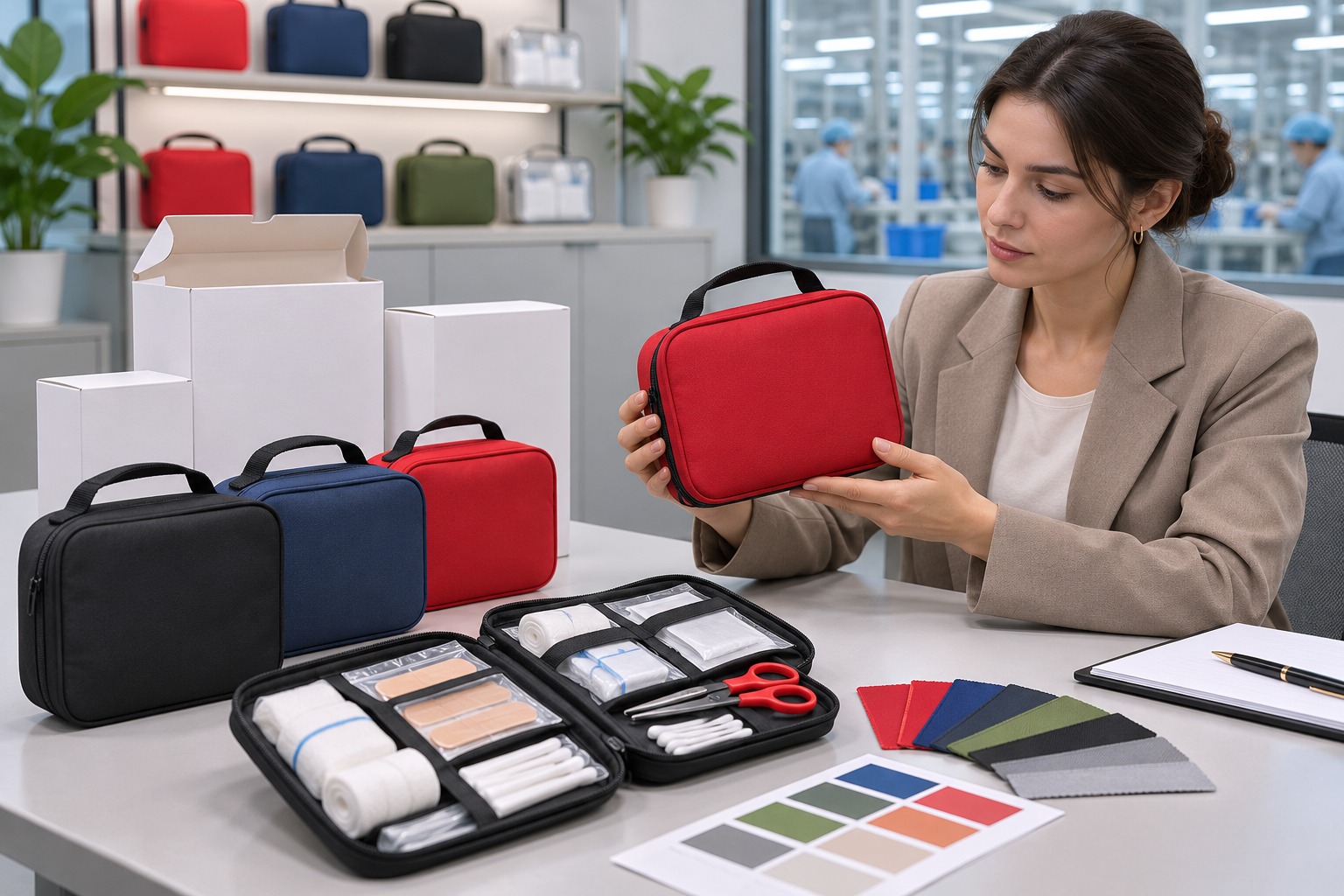
A GTIN barcode private label first aid project usually stalls in the same place. The kit is ready, the carton artwork is approved, and then a distributor asks for the number that has to sit under the symbol. Nobody in the chain is certain who is allowed to issue it. The short answer: the brand owner allocates the GTIN, and the factory prints it. Everything else follows from that split, and most avoidable reprints come from getting it backwards.
This guide covers the decision order a buyer faces when a GTIN barcode private label first aid program moves from sample to production. It covers ownership, packaging levels, label content, and the checks worth running before the first carton is printed.
What a GTIN barcode private label first aid program actually assigns
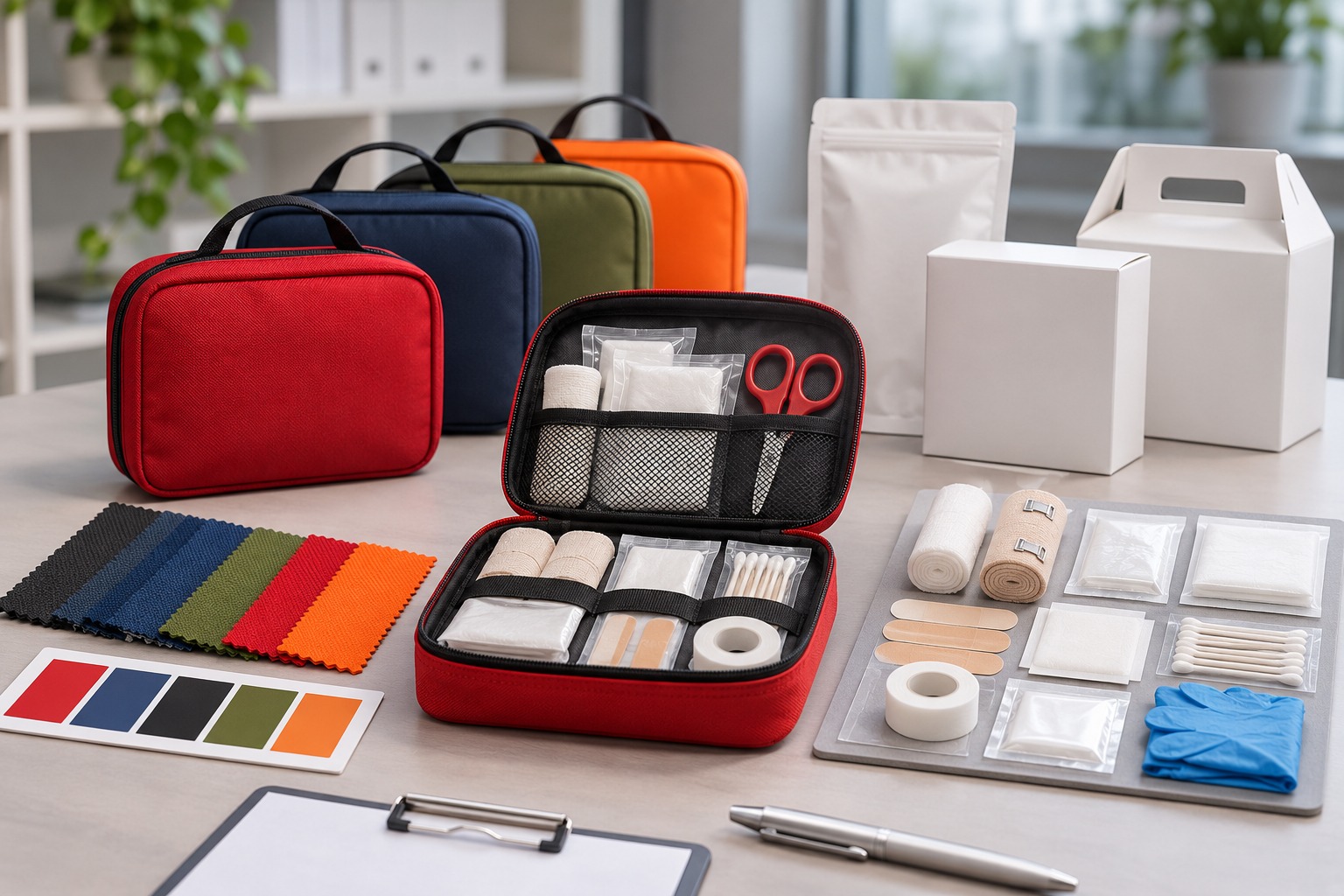
A GTIN is not a product photo, a SKU, or an internal part number. It identifies a trade item that can be priced, ordered, or invoiced at some point in the supply chain. GS1 defines trade items that way, and the definition matters here because it puts the number in commercial territory rather than design territory.
Three things get confused at the start of a private label project:
- The buyer’s internal SKU, used in purchase orders and invoices between the two companies.
- The GTIN, used by every downstream party that scans the pack.
- The artwork file name, which is a document control habit and nothing more.
Only the second one has to survive contact with a retailer’s system, a distributor’s warehouse, and a marketplace listing. That is why the allocation question is a governance question before it is a printing question.
Who allocates the number when a factory makes the kit
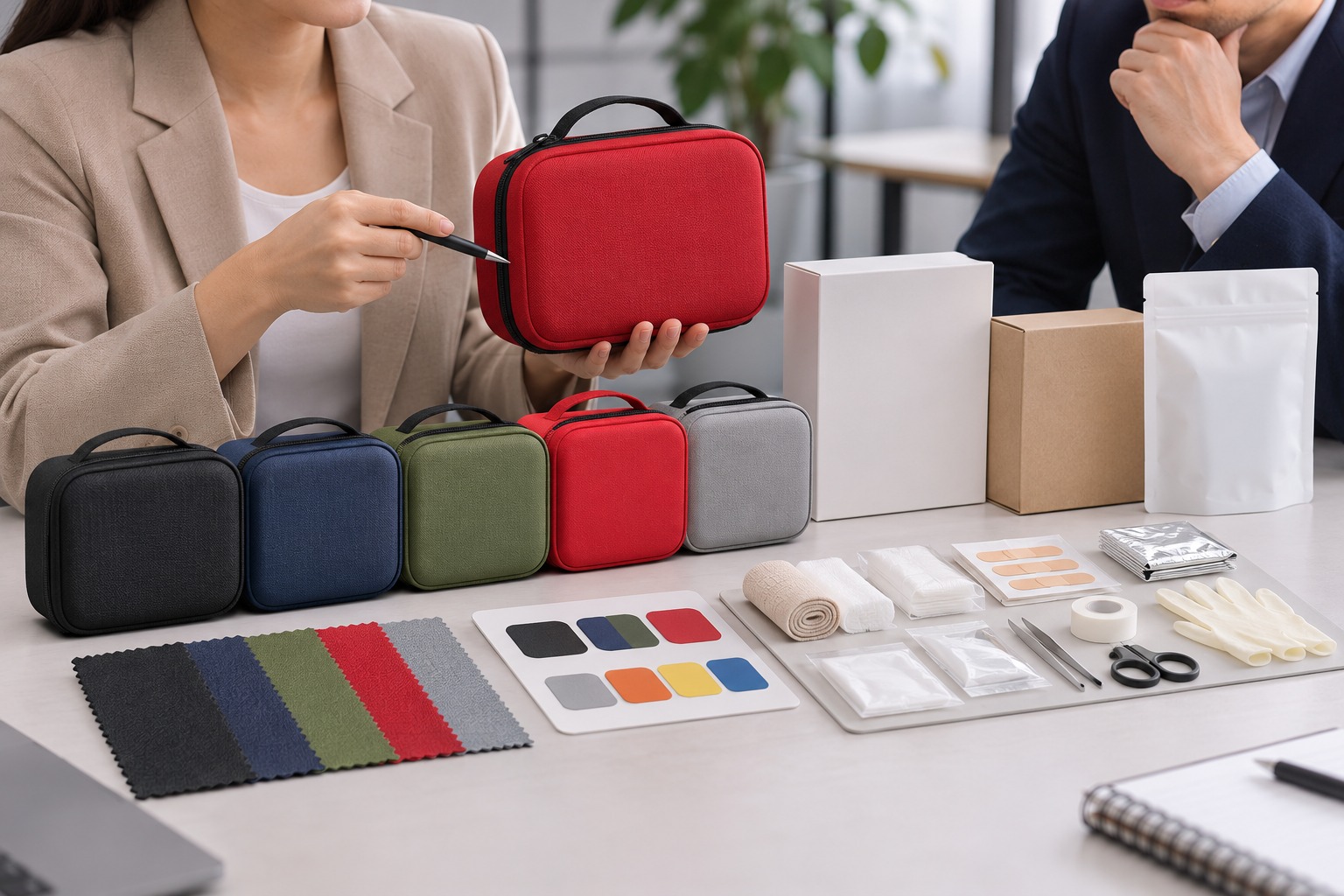
GS1 is explicit on this point. The brand owner, meaning the organisation that owns the specifications of the trade item regardless of where or by whom it is manufactured, is normally responsible for allocating the GTIN. On joining a GS1 Member Organisation the brand owner receives a GS1 Company Prefix. That prefix is for the sole use of the company it is assigned to, and GS1 states that the Company Prefix may not be sold, leased, or given to any other company, in whole or in part.
For a private label buyer this has a practical consequence. A factory cannot hand over its own prefix numbers so that a customer’s brand can go to market under them. The buyer becomes the brand owner, joins its local GS1 Member Organisation, and issues numbers from its own prefix. Our own role stops at printing the number the buyer supplies, plus checking that the symbol scans at the specified size.
GS1 also lists exceptions worth knowing before a project starts. Non-branded items, meaning generic items that are not private label, are still numbered by their manufacturers. Customer-specific items, made for one trade customer and orderable only by that customer, may have the GTIN assigned by the customer. If the brand owner does not assign a number, an importer or intermediary can assign a temporary GTIN until the normal one exists.
Which packaging levels need separate GTINs
A first aid kit rarely travels as a single unit. It goes out as an individual pack, often inside an inner box or display tray, then into a shipping carton. Each level that a trading partner might order, scan, or store separately is a candidate for its own number. GS1’s guidance is that a company assigns a GTIN to each of its products and to every packaging configuration. A GTIN barcode private label first aid decision is therefore made per configuration, not once per product family.
| Level | Typical use | Who usually needs it |
|---|---|---|
| Individual kit | Retail shelf, e-commerce unit | Retailer, marketplace, distributor |
| Inner pack or tray | Shelf-ready display, multipack | Retailer, wholesaler |
| Shipping carton | Warehouse receipt, case picking | Distributor, 3PL, importer |
| Pallet or logistic unit | Shipment tracking | Forwarder, DC receiving |
The pallet row is a different identifier, not a GTIN. Where a logistic unit needs tracking on its own, GS1’s traceability guidance points to the Serial Shipping Container Code, assigned by the party that built the unit.
Two rules keep this manageable. First, do not reuse a number for a changed pack. Second, do not create a new number for a change that no trading partner would notice. The judgement call is whether a buyer could tell the two versions apart and choose between them. If yes, handle them as separate items.
Case labels carry a 14-digit GTIN with the (01) application identifier, as the GS1 case label examples show. A retail unit symbol and a case symbol are different jobs, and printers should be told which one goes where rather than being left to infer it.
What the label has to carry, and what belongs on the case
Label content is set by the destination market and by the channel, not by the factory’s house style. A private label buyer typically has to settle four items before artwork is final: the number itself, the symbol size and placement, the human-readable digits, and the batch or lot coding method.
Regulated categories add a layer. Where a first aid kit falls under the US unique device identification rule, the labeler must include a unique device identifier on labels and packages, in both plain-text and machine-readable form. The FDA defines the labeler as the party that causes the label to be applied, and notes that a labeler may be a convenience kit assembler, a repackager, or a relabeler rather than a conventional manufacturer. Dates on those labels follow a single format, YYYY-MM-DD.
That definition has a direct effect on a GTIN barcode private label first aid project. If the buyer’s name and label go onto a kit assembled elsewhere, the buyer may be the labeler for the destination market even though the factory built the kit. Confirm the position with a regulatory adviser for the specific market before committing artwork.
Case and carton marking follows the same logic at a coarser level. Distributors want the case number readable from a distance, with the lot visible, and often want the case configuration stated on the label so receiving can check quantity without opening the carton.
Setting up GTINs before the first production run
The sequence below keeps ownership clear and avoids reprinting cartons. It is the order we use when a GTIN barcode private label first aid brief arrives before sampling closes.
- Decide who the brand owner is for each market. It is usually the buyer, but confirm it in writing rather than by assumption.
- Join the GS1 Member Organisation in the relevant country and obtain a company prefix.
- List every packaging configuration that a trading partner could order or scan, and map one GTIN to each.
- Send the allocated numbers to the factory as a controlled list, with the packaging level stated for each line.
- Agree the symbol type per level, and confirm the printed size and quiet zones against the label drawing.
- Put the number, symbol, human-readable digits, and lot field on one approved artwork file per SKU.
- Scan the first production samples at the actual print size before the run continues.
Step seven is where most problems surface. A symbol that scans on a laser proof can fail on a flexo-printed carton at small size. The difference shows up only when someone tests the printed surface rather than the file.
Where private label GTIN setup goes wrong
Five specification failures account for most GTIN barcode private label first aid reprints. None of them originate at the printer.
| Failure | What it looks like | Prevention |
|---|---|---|
| Factory prefix used for buyer brand | Numbers trace back to the supplier | Buyer obtains its own prefix |
| One number for several pack sizes | Retailer receives mismatched units | Map numbers per packaging configuration |
| Symbol too small or crowded | Scanner rejects at till or dock | Test print at final size |
| Case and unit numbers swapped | Receiving scans the wrong level | State level on the artwork brief |
| Number changed after launch | Listings and EDI break | Freeze numbers before first shipment |
Each row reaches the printer as an instruction, which is why the correction belongs upstream in the specification.
If the packaging structure is still open, the packaging options guide for private label kits sets out how carton, tray, and bag choices change the number of configurations. Artwork files usually need the number locked before prepress starts, which is why the artwork prepress checklist puts allocation ahead of design sign-off.
For buyers assembling a kit from components, the bill of materials approach helps separate component SKUs from the finished trade item. The finished item is what gets the GTIN. Components usually do not, unless they are also sold as standalone trade items.
Our own starting MOQ for private label kits is 1,000 pieces, which means the first print run is also the run that carries the number into the market. Fixing a wrong allocation after that point costs a full reprint plus relabelling, so the ownership question deserves an answer before sampling ends. Buyers who want the full sequence from sample to bulk can follow the OEM private label first aid kits guide.
FAQ
Who owns the GTIN on a private label first aid kit?
The brand owner owns it, meaning the organisation that owns the trade item specifications regardless of where it is manufactured. For most private label programs that is the buyer, not the factory. The buyer joins a GS1 Member Organisation, receives a company prefix, and allocates numbers from that prefix. A factory’s prefix cannot be lent to a customer’s brand, and GS1 states the prefix may not be sold, leased, or given to another company.
Can the manufacturer supply the barcode number instead?
Only in defined cases. GS1 lists non-branded generic items as numbered by their manufacturers, and customer-specific items orderable by a single trade customer as permissible for the customer to assign. If no brand owner number exists yet, an importer or intermediary can assign a temporary GTIN. Outside those cases, a manufacturer supplying its own number for a buyer’s brand puts the wrong entity in the supply chain record.
Does every pack size need its own GTIN barcode private label first aid number?
Yes, when a trading partner can order or scan that configuration on its own. A 25-person kit and a 50-person kit are separate trade items. A retail unit and its shipping carton are separate levels, and often separate numbers. Consolidating several configurations under one number creates receiving errors, because the scan no longer tells the warehouse which pack is in hand.
What is different about the carton label?
The carton label identifies a case rather than a retail unit, and the case symbol carries a 14-digit GTIN with the (01) application identifier. Where a pallet or logistic unit needs its own identity, the identifier is a Serial Shipping Container Code rather than a GTIN. The two are frequently confused, and a mixed-up carton label shows up as a receiving discrepancy rather than a scanning failure.
How early should numbers be allocated in a private label project?
Before artwork approval, and certainly before the first print run. Numbers drive the symbol, the human-readable digits, and often the carton layout. Allocating after design sign-off tends to reopen the file. With a 1,000-piece starting MOQ, a late allocation change lands on a full run rather than a proof, which is the expensive version of the same mistake.
Conclusion
Barcode setup looks like a design task and behaves like a contract task. The party that owns the specification owns the number, and every downstream scan inherits that decision. Settle ownership, map the packaging levels, then send the printer one controlled list per SKU. Buyers who want the wider commercial picture can start from the OEM private label first aid kits guide and work backwards to the label.