
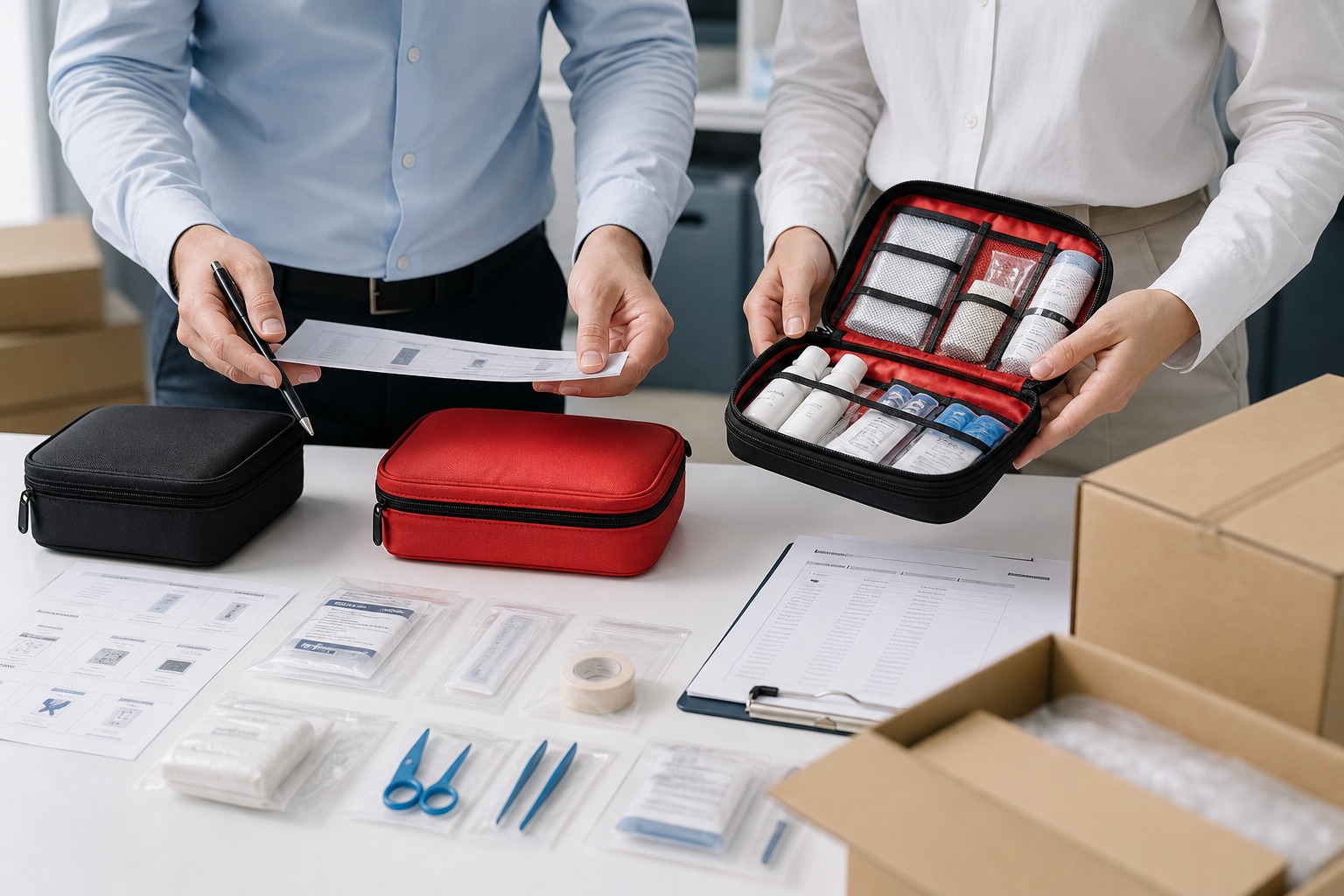
Suppose a distributor confirms an order for 640 workplace kits plus refill pouches, and the palletised volume lands at 7.4 cubic metres. A 20-foot container holds far more than that, so a full container quote wastes most of what the buyer pays for. Air freight moves the same load in days, at a price that erases the margin on refill pouches. LCL freight consolidation first aid planning sits between those two options: your cartons share a container with other shippers’ cargo, and you pay for the space you occupy rather than the space you reserve.
The mechanics are simple. The planning is not. A consolidated container is loaded, sealed, opened and split by people who never see your purchase order. Everything that survives that journey was decided before the booking, in carton dimensions, pallet build and paperwork.
When LCL freight consolidation first aid shipping fits an order
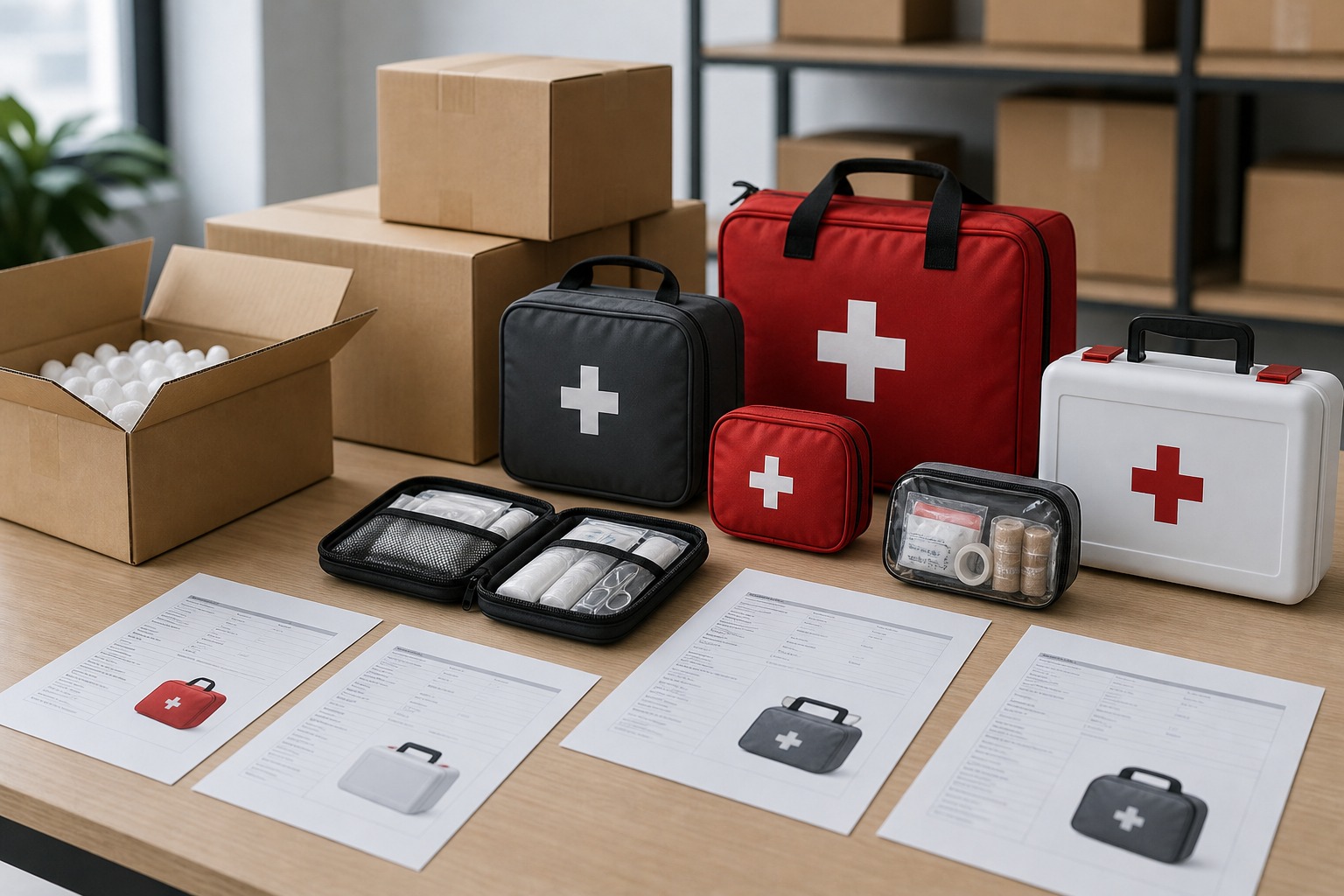
Carriers describe LCL as cargo grouped with compatible shipments and sealed into a shared container at origin, then separated at destination (Maersk). Three modes serve three different order shapes, and the decision is usually about volume, not preference.
| Mode | What you pay for | Handling touches | Typical fit |
|---|---|---|---|
| FCL (full container) | The whole container, loaded or not | Load at origin, devan at destination | Replenishment volumes that fill 20′ or 40′ on a regular cycle |
| LCL (consolidated) | The space your cargo occupies, rated on volume or weight, whichever is higher | Consolidation at origin, deconsolidation at a CFS at destination | Launch orders, mixed SKU trials, quarterly refill runs below container volume |
| Air freight | Chargeable weight, where volume is converted into a weight equivalent | Airport handling at both ends | Sample runs, urgent substitution of a single SKU |
The LCL column carries a hidden cost that quotes rarely show. Deconsolidation happens at a container freight station, not at your warehouse, and the sequence of consolidation and splitting adds transit days compared with a direct container (Origin Logistics). Budget the extra week before you promise a delivery date to a hospital group.
There is a threshold where LCL stops paying. When your monthly volume approaches half a container, the fixed charges attached to each LCL shipment start to outweigh the saving on unused space. Those charges cover documentation, CFS handling at both ends and destination release. At that point the better move is usually fewer, larger shipments rather than more LCL bookings.
Build carton and pallet data before you ask for a rate
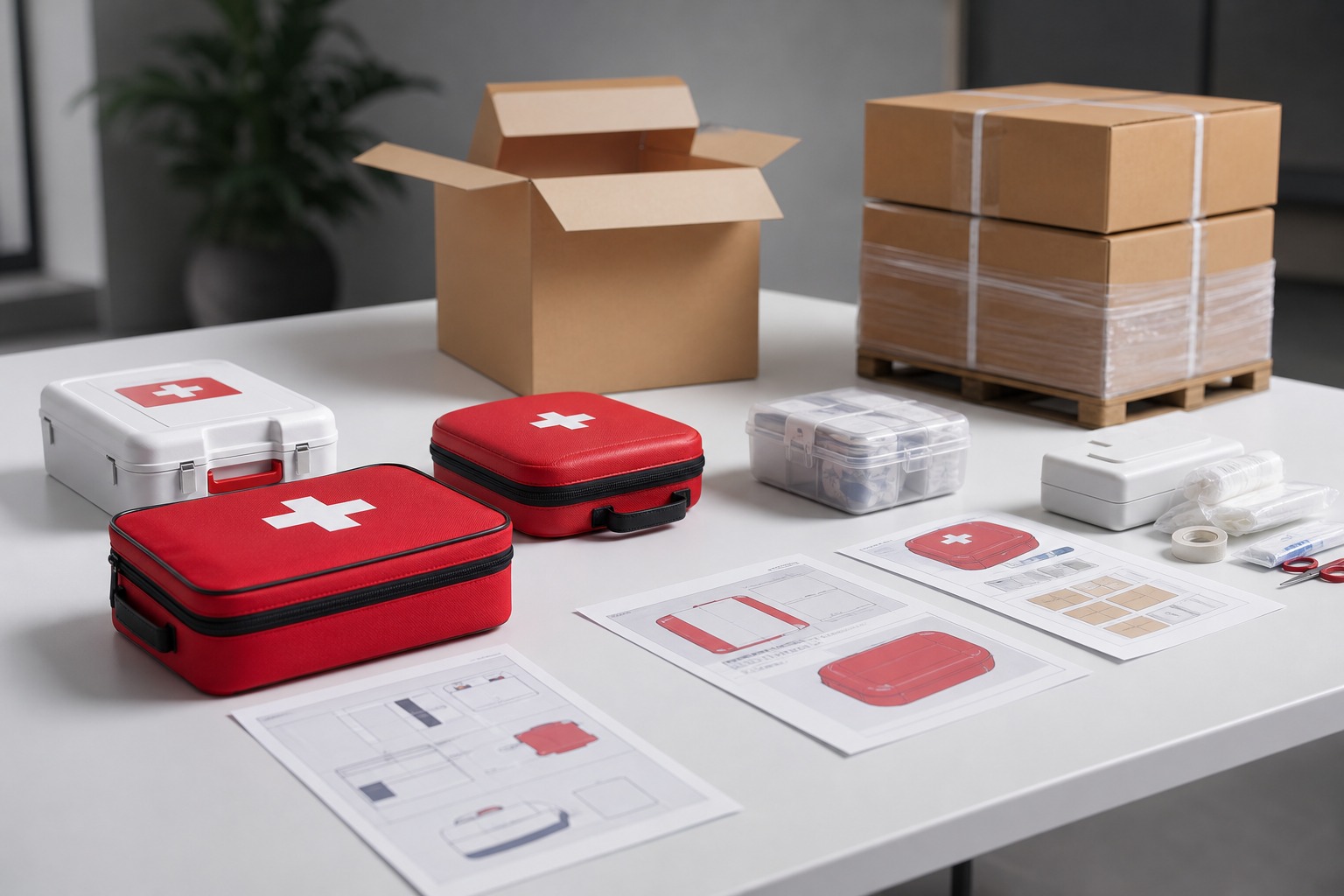
Most first aid buyers request an LCL rate with a total weight and a guessed volume. The rate comes back, the booking is made, and the final invoice differs because the carrier measured the cargo instead of trusting the email.
Volume is what LCL rates respond to. Before requesting anything, assemble four numbers per SKU:
- Carton dimensions and gross weight, measured from the approved sample carton, not from a catalogue sheet.
- Cartons per pallet layer and layers per pallet, which together give the real pallet height including the pallet itself.
- Stackability, stated as a yes or no with a reason. Rigid supply boxes usually stack; soft bags with rigid inserts often do not, and a non-stackable pallet consumes far more container space than its cube suggests.
- Pallet footprint, 1200 × 1000 mm or 1200 × 800 mm, because mixing both in one consignment wastes floor space in the shared container.
A first aid order makes this harder than a single-product shipment. One pallet may hold wall-mounted boxes, another gauze refills, a third a mixed kit configuration. Mixed pallets are legal and normal. Undeclared overhang is not, and it is the most common reason a consolidated consignment gets reworked at the CFS.
Where the sample has not yet been approved, do not publish carton data to a forwarder. Our own process validates a sample before bulk production for exactly this reason, and the carton dimensions on the sample are the ones that end up in the rate request. That is also why serious LCL freight consolidation first aid quoting starts with the sample carton rather than the catalogue page.
LCL freight consolidation first aid planning in five steps
The sequence below keeps the commercial decision ahead of the logistics one. Run it before the purchase order is issued, not after.
- Fix the SKU mix and the volume ceiling. Decide how many kits and how many refill lines ship together. A mixed consignment spreads fixed charges across more units, which lowers the per-unit freight figure.
- Convert cartons into pallet positions. Build pallets on paper first. If the build needs three footprints, redesign it before booking.
- Request rates against declared cube and weight. Ask the forwarder to confirm which basis applies: revenue ton by volume or by weight. Get the answer in writing, because it decides whether repacking saves money.
- Screen the contents for transport restrictions. Alcohol-based wipes, sanitizer gels, aerosols and lithium battery devices change what can travel in a shared container and with whose cargo.
- Lock the document set with the supplier. Commercial invoice, packing list and the SKU-level documents your market requires should be final before cargo moves to the consolidation warehouse.
Step four is where an LCL freight consolidation first aid shipment differs from general cargo. A consolidated container mixes your goods with other shippers’ goods, and the segregation rules that apply to incompatible substances are set out in the IMDG Code, which covers packing, container traffic and stowage with particular reference to segregation (IMO). A carton of alcohol wipes travelling without a proper declaration can hold up the whole container, not just your pallet.
What consolidation changes about packaging and labelling
Shared handling raises the packaging standard. Three changes matter most for first aid cargo.
Outer cartons need to survive being handled by strangers. In a dedicated container, your cartons are moved by people who know what is inside. In a consolidated one, staff handling several shippers’ freight stack, shift and re-stack them. Double-wall board and edge protection are not luxury items here.
Every carton needs to be identifiable without the packing list. Mark cartons with the consignee, the purchase order reference and the carton count, for example 3 of 14. A carton that loses its identity at deconsolidation becomes an orphan, and orphan cargo is released last.
Labels must match the declared contents. If a carton holds an item with a transport restriction, the marking has to be correct and visible, not buried inside. This is a supplier-side task, and it should be written into the order rather than assumed.
For buyers moving rigid formats, carton quality and stacking behaviour are easier to control with case-style supply boxes, because the outer box carries load predictably and pallet height stays consistent from order to order.
Where the per-unit cost actually moves
Freight quotes look like a single number. The per-unit figure is built from four components, and only one of them is the ocean rate.
- Revenue ton. The carrier charges on whichever is greater, cubic metres or metric tonnes. A light, bulky consignment of empty bags is rated on volume; a dense consignment of glass ampoules is rated on weight.
- Origin and destination fixed charges. Documentation, CFS receiving, CFS release and terminal handling are charged per shipment, so they fall hardest on small consignments.
- Inland legs. Moving from the consolidation warehouse to the port, and from the destination CFS to your warehouse, is usually quoted separately.
- Delay cost. A consignment held for a documentation query at destination can incur storage from the day the container is devanned.
The practical lever is density. Repacking cartons to remove air, without compromising protection, reduces cubic metres and can move a consignment from a higher volume band to a lower one. For LCL freight consolidation first aid cargo, density is usually a packaging decision rather than a product decision. That makes it a supplier conversation, and it is worth having before the first booking rather than after the third.
FAQ
What does LCL freight consolidation first aid shipping involve?
It is a shipping arrangement where your cartons are grouped with cargo from other shippers into one container at origin, then separated at a destination container freight station. You pay for the space your cargo occupies instead of a whole container. For first aid orders below container volume, it keeps freight proportional to what you actually buy.
How is LCL priced, and which measurement decides the charge?
LCL is rated on chargeable volume in cubic metres or on weight, whichever produces the higher charge, plus handling and documentation fees (Origin Logistics). Accurate carton dimensions therefore matter more than total weight for most first aid consignments, because kits and bags are light relative to their volume.
Can alcohol wipes and sanitizer travel in a consolidated container?
They can, provided the items are classified, packed and declared correctly for sea transport, because the IMDG Code governs packing, container traffic and stowage, including segregation of incompatible substances (IMO). The declaration is the shipper’s responsibility. Confirm with your forwarder before booking, and do not assume a supplier has classified the item unless the paperwork shows it.
How much longer does LCL take than a full container?
Expect additional days rather than a fixed number. Consolidation before departure and deconsolidation after arrival both add handling, which is why LCL transit times are longer than FCL on the same lane. Build that buffer into your replenishment cycle, especially when a customer contract specifies a delivery window.
What should a first aid buyer send to a forwarder for an LCL quote?
Send carton dimensions and gross weight per SKU, cartons per pallet, pallet footprint and height, stackability, total pallet count, the destination address and the required delivery window. Add any item with a transport restriction. With that set, the quote you receive is one you can hold the forwarder to.
Does LCL change the minimum order quantity?
Not directly. Our production minimum starts at 1,000 pcs per item where the specification allows, and that is a manufacturing threshold rather than a shipping one. LCL affects how you ship what you have already bought, which is why the two decisions should be made together rather than one after the other.
Closing the loop between purchasing and freight
A first aid order placed without a freight plan tends to produce one of two outcomes: a container that is half empty, or a consolidated booking that stalls on paperwork. Neither is a pricing problem. Both come from deciding the shipping mode after the order is fixed.
A repeatable LCL freight consolidation first aid routine is unglamorous. Fix the SKU mix, measure the approved carton, build the pallet on paper, screen the contents, then price the freight on real numbers. That order also keeps your documentation aligned, since the packing list you build for the rate request becomes the packing list that clears customs.
For the commercial side of the same decision, including tiered pricing, payment terms and lead-time factors, the B2B procurement guide sets out how the pieces connect. If your terms are still open, Incoterms for first aid supply orders explains which party carries the freight cost and the risk at each stage. Buyers shipping mixed SKUs with liquids or aerosols should also read restricted items in first aid kit exports before the booking is confirmed, and check the HS classification guidance so the invoice, the packing list and the customs entry describe the same goods.