
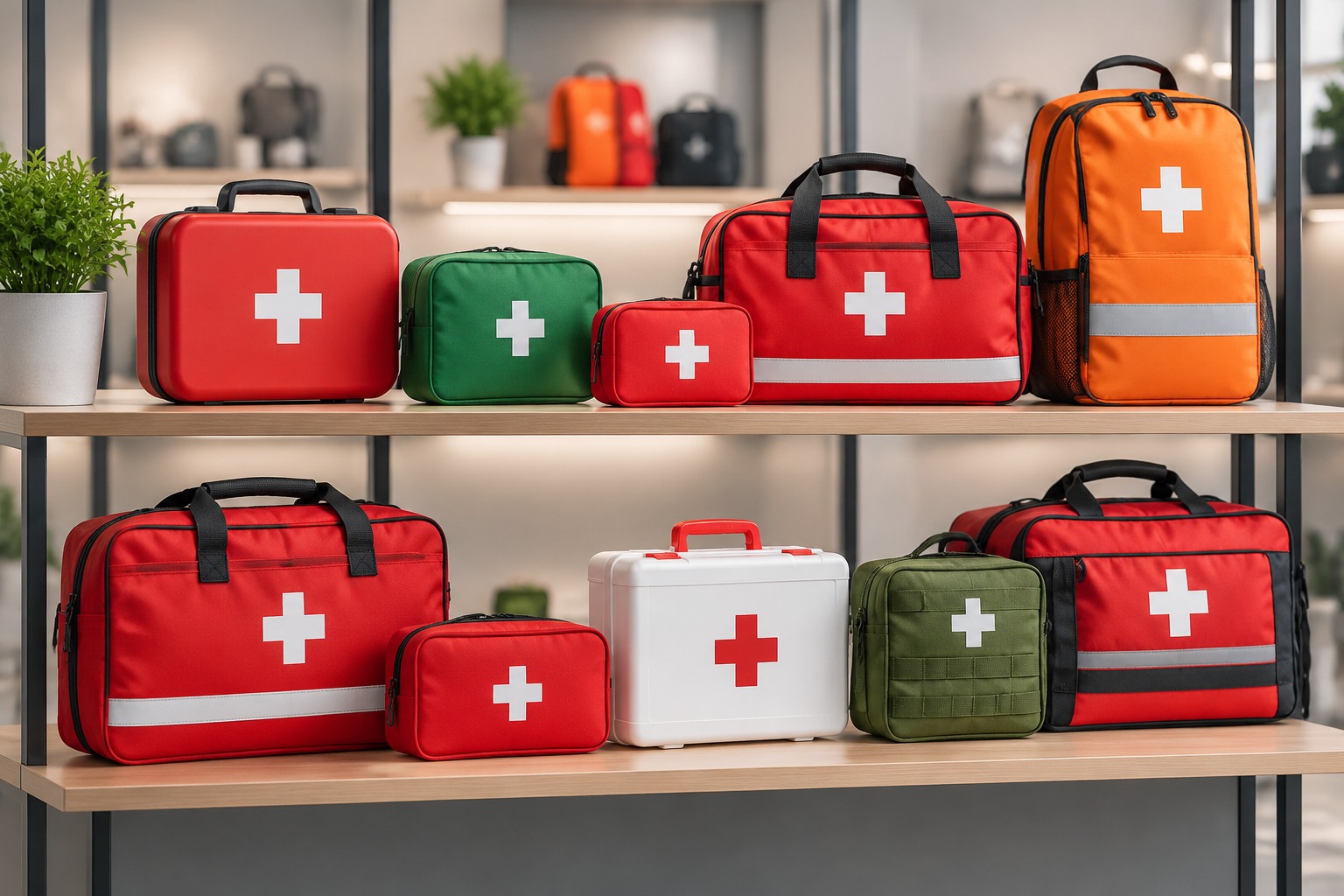
A distributor in Rotterdam sends one email with two questions. How large is the first aid kit packaging market, and should the new range ship in rigid cases or soft bags? The first question has a published answer in under a minute. The second decides tooling, freight per kit, and whether the range can be refilled for the next three years.
Published estimates for the first aid kit packaging market disagree by a factor of seven. That gap is not a scandal. It is a scope problem. Every study draws the boundary of the word packaging in a different place, and the boundary is the part a buyer actually signs against.
This guide reads the segment structure instead of the headline total. It is written for importers, distributors and kit assemblers who buy by the carton and have to defend a format decision to a finance team.
Why First Aid Kit Packaging Market Estimates Disagree by a Factor of Seven
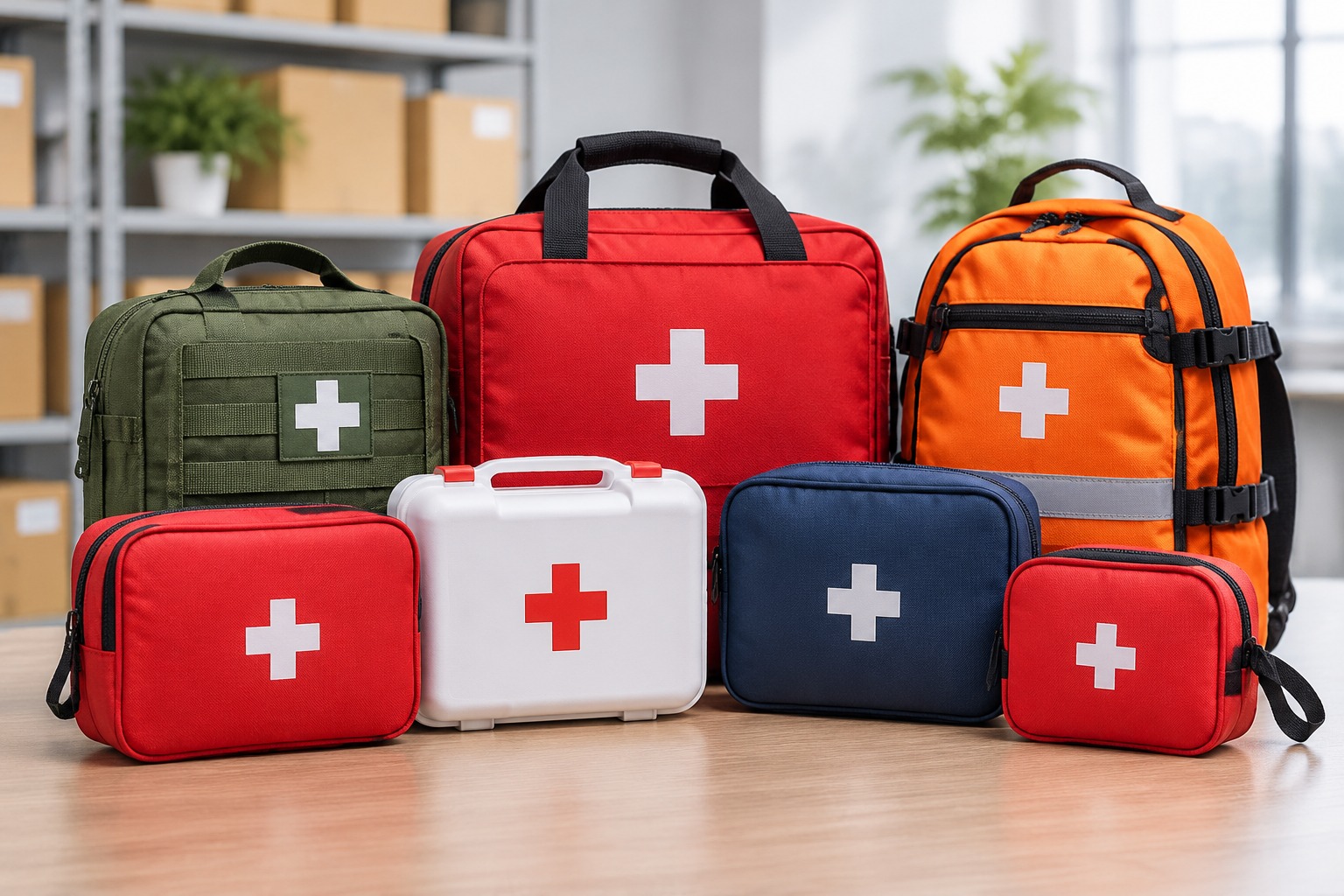
Five estimates for the first aid kit packaging market are published under the same keyword. All are reachable, all are internally consistent, and none of them match.
| Publisher | Base value | Forecast | CAGR |
|---|---|---|---|
| Data Insights Reports | USD 238.48 M (2026) | USD 390.96 M (2035) | 5.68% |
| The Insight Partners | USD 365.60 M (2025) | USD 648.36 M (2034) | 6.57% |
| Stratistics MRC | USD 397.29 M (2026) | USD 632.56 M (2034) | 6.10% |
| PMarketResearch | USD 850 M (2025) | USD 1.27 B (2032) | 5.85% |
| Market Research Intellect | USD 1.61 B (2025) | USD 3.32 B (2035) | 7.50% |
Base years sit within twelve months of each other. The values differ by a multiple of 6.7. Growth rates stay inside a 1.8 point band.
Read that shape again. The disagreement is not about growth. It is about what counted as packaging in the first place. One study may count the kit container alone. Another adds the retail carton, the inner sachets, the printed insert and the label. A third may fold in empty medical bags sold as products in their own right, or small promotional kits bought by the thousand for events.
That difference changes the denominator, and the denominator changes every ratio built on top of it. Currency per kit, packaging cost as a share of landed cost, growth attribution by format: all of it moves when the scope moves.
Two practical rules follow. Use the growth band, which is stable, rather than the absolute size, which is not. And when a number has to appear in a board paper, print the scope next to it. A figure without its boundary is a rumour with decimal places.
Four Container Segments and What Each One Changes
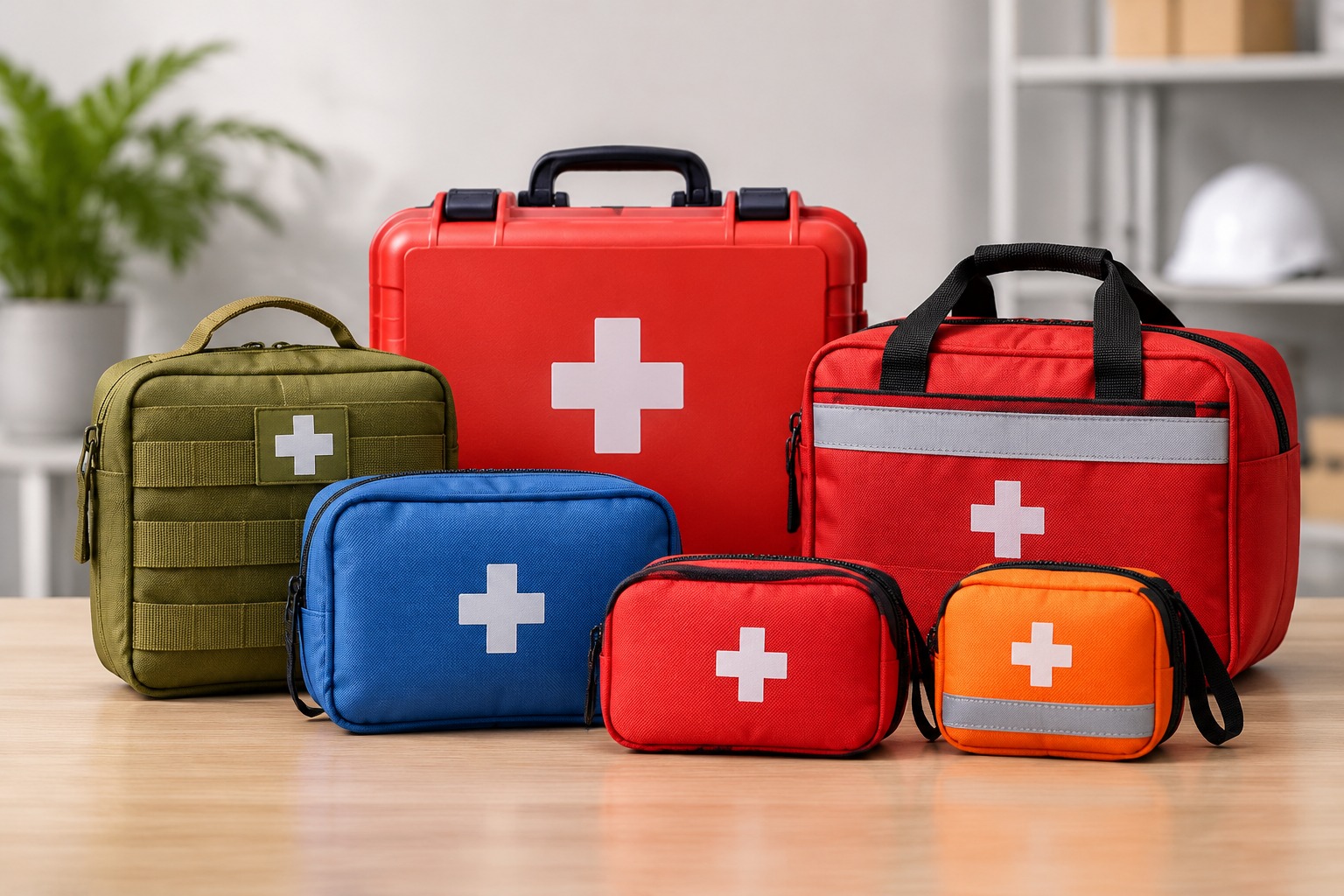
Published segmentations of the first aid kit packaging market consistently split it into boxes, bags, cabinets and backpacks. The split earns its place because each format locks a different cost line.
| Segment | Typical material | What it fixes in a purchase order | Where demand concentrates |
|---|---|---|---|
| Boxes and case-style kits | PP, ABS, some metal | Mould and tooling amortisation, drop performance, replacement latches | Workplace, industrial, vehicle |
| Soft bags, hand-carry or waist | Polyester, nylon, PVC | Fabric weight and coating, stitching, packed carton cube | Mobile crews, field service |
| Backpacks | Heavy textile with harness | Harness spec, filled weight, load distribution | Tactical, remote field, outdoor |
| Cabinets | Metal or ABS with trays | Mounting hardware, lock type, refill tray standard | Fixed facilities, clinics |
Take boxes first. A rigid case carries a mould cost that has to be recovered across the order, so the format rewards concentration: fewer sizes, deeper runs. It also protects contents through rough handling, which is why industrial buyers gravitate to it.
Soft bags invert that logic. There is no mould, so colour and print variations become affordable at lower quantities, and the packed carton cube drops. A thousand kits in soft bags occupy less container space than the same thousand in rigid cases, and that difference can outweigh a small unit price gap on a sea shipment.
Cabinets are a facilities product. They are bought once and refilled many times, so the purchase decision moves to tray standardisation and lock management. Backpacks behave like textile goods: harness specification and filled weight decide whether a crew carries the kit or leaves it in the truck.
None of these formats is a substitute for another. They serve different buyers, and that is why segment mix in a target market tells you more about assortment than the total market size does. Our own wall-mounted and case-style boxes and soft bags and backpacks are quoted from the same factory floor, but they compete on different purchase criteria.
How Class and Type Cut the Same Market a Second Time
Container format is only the first cut. In the United States, the workplace standard adds a second one that reaches straight into the packaging decision.
ANSI/ISEA Z308.1-2021 defines two kit classes and four container types. Class A covers the common workplace assortment; Class B carries a broader range and adds a splint and a tourniquet that Class A does not include, as summarised in this university first aid kit guide. Types I to IV then describe the container: mounted indoor, portable indoor, portable and water resistant, and portable for rough outdoor handling.
The regulatory layer is thinner than buyers assume. 29 CFR 1910.151 requires that first aid supplies be readily available where a clinic or hospital is not near. It names no item list and no container. OSHA refers employers to Z308.1 as guidance rather than adopting it as a binding contents rule. The standard binds through commercial contracts and buyer specifications, not through the regulation itself.
That matters for packaging because contents drive volume. Add a tourniquet and a splint and the case grows. A larger case changes wall thickness, closure design and carton cube. Type III and Type IV then add water resistance, which usually means a different closure and a coated or laminated material. Each step changes what the converter has to run.
So a rise in Class B share shows up as packaging demand even when the number of kits sold is flat. The same holds for a shift from Type I cabinets toward Type IV portable cases. Segment mix, not unit count, is where the packaging signal hides.
Packaging Rules Are Re-Segmenting the Material Mix
The regulatory layer above the kit is moving, and it moves faster than the kit standards do.
In the European Union, Regulation (EU) 2025/40 has applied since 12 August 2026 and replaced the 1994 packaging directive. It requires all packaging on the EU market to be recyclable in an economically viable way by 2030, and it sets extended producer responsibility obligations on the producer placing the packaging on the market. The European Commission’s packaging page records 181 kg of packaging waste per person in 2024, with paper and cardboard at 40.8% of the total.
For a first aid kit, that pressure lands in three places: the retail carton, the inner sachet, and the outer shipping case. A mono-material carton is easier to defend than a laminated one. Individually sealed sachets add barrier performance and add weight-based fees. A thick rigid case with a metal latch is durable and awkward to recycle.
Several US states have moved in the same direction through producer responsibility laws for packaging, including California’s SB 54. The mechanics differ from the EU model, but the direction is the same: material choice becomes a cost line with a reporting obligation attached.
None of this is a compliance verdict on any product. Destination-market responsibility sits with the importer or the brand placing the goods on the market, and the documentation needed differs by country. What the rules do change is the relative cost of materials, and that is a packaging decision, not a labelling one. Our note on packaging EPR registration for importers covers the registration side; the format side is covered in private label packaging options.
How to Read the Data Before Committing to a Format
A first aid kit packaging market report is useful for assortment planning and close to useless for format selection. Six checks close that gap.
- Match the study’s scope to your SKU set. If it counts cabinets and you sell bags, the growth rate does not describe your business.
- Convert currency totals into units. Ask what a thousand kits consume in container volume, cartons and sachets. That number survives scope differences.
- Check the class and type mix in the destination market. A market moving toward Class B needs larger cases and more internal dividers.
- Cost the carton cube, not the kit. Freight per kit is decided by packed volume and weight, and it often outweighs the unit price gap between formats.
- Separate one-off tooling from per-unit cost. A mould is a fixed charge that only pays back above a volume threshold.
- Test the material against the destination packaging rule before artwork is approved. Changing substrate after print approval is the expensive order of events.
Applied in that order, the six checks turn a market report into a purchasing brief. Applied out of order, they produce a format decision that finance cannot audit.
Where Segment Data Actually Helps a Distributor
Segment growth is a poor forecast and a good filter. If soft bags are growing faster than rigid cases in a region, the useful conclusion is not that the whole market is expanding. It is that assortment depth should shift toward soft formats for that region, with fewer case sizes carried in stock.
The same logic applies to refills. A market where cabinets dominate will reward a refill programme, because the container is already installed and the recurring purchase is contents. A market of mobile crews rewards sealed, single-use configurations and a different restock rhythm. Our retail-ready packaging note covers the shelf-facing version of that decision, and print methods covers what changes when a logo has to survive handling.
Minimum order quantities sit underneath all of this. Our production floor starts at 1,000 pieces, which is low enough to test a format in one market before committing to a full range. A format test at that scale answers the question the market report cannot: whether buyers in that channel accept the container you chose.
For the wider channel picture, the B2B distribution strategy guide sets out how distributors test a new category without carrying inventory risk across a full range.
FAQ
How large is the first aid kit packaging market?
Published estimates for 2025 and 2026 range from about USD 238 million to USD 1.61 billion depending on the publisher. The spread comes from scope, not from disagreement about growth. Some studies count only the kit container, while others include retail cartons, inner sachets, labels and empty bags sold as products. Use the growth band of roughly 5.7% to 7.5% for planning, and accept any absolute figure only for the scope it declares.
Which packaging format is growing fastest?
Textile formats are consistently described as the faster-growing material group, which points to soft bags and backpacks rather than rigid cases. The mechanism is straightforward: soft formats carry no mould cost, so they support smaller runs and more colour variation, and they pack into a smaller carton cube. That combination suits distributors testing a new channel. Rigid cases keep the larger share by value because workplace and industrial buyers still prefer them for durability.
Does ANSI/ISEA Z308.1 require a specific container type?
No. The standard defines container types by the environment they are built for, from Type I mounted indoor units through Type IV portable cases for rough outdoor handling. It does not mandate one type for a given workplace. The choice follows the employer’s hazard assessment. What the standard does fix is the minimum contents for Class A and Class B, and contents drive the internal volume the container has to provide.
How does EU packaging regulation affect first aid kit imports?
Regulation (EU) 2025/40 has applied since 12 August 2026 and requires all packaging on the EU market to be recyclable in an economically viable way by 2030. It also places extended producer responsibility on the producer that puts the packaging on the market. For kit importers this turns material choice into a cost and reporting question: mono-material cartons are simpler to defend than laminates, and individually sealed sachets add weight-based fees. Confirming the registration duty for each destination stays with the importer.
Should a distributor choose boxes or bags for a new range?
Choose by channel, not by market size. Fixed facilities with installed cabinets reward refill programmes and standardised trays. Mobile crews and field service teams reward sealed soft formats that pack flat and survive a vehicle. If the channel is unproven, start with a soft format at a low order quantity, measure sell-through for two restock cycles, then add a rigid case once the volume supports the tooling.
The Segment Is the Decision
The headline number for the first aid kit packaging market will keep moving as publishers revise scope. The segment structure underneath it is steadier, and it is the part that maps onto a purchase order: container format, class and type, material, carton cube.
A buyer who reads the segments can answer the Rotterdam email with a reason rather than a range. Pick the channel, pick the format that channel already accepts, cost the packed cube, then check the material against the destination rule. The market total never has to enter the conversation.