
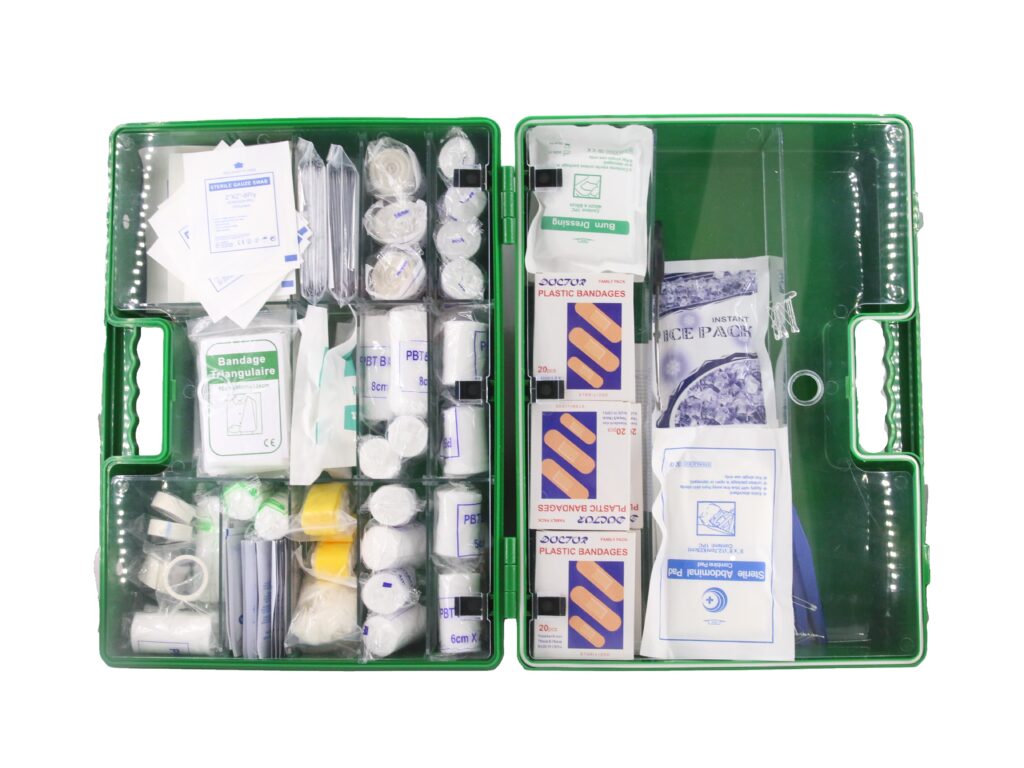
Walk into any safety supply catalog and you will meet two labels again and again: Class A and Class B. They come from ANSI/ISEA Z308.1 — the American National Standard for workplace first aid kits — and the difference between them is one of the most common questions procurement teams ask when sourcing kits in bulk.
This guide explains what each class contains, where a Class B first aid kit is actually required, how the container types work, and the compliance gaps that show up most often in real workplaces.
What ANSI Z308.1 Actually Is — and What OSHA Requires
The two documents do different jobs:
ANSI/ISEA Z308.1 is a voluntary consensus standard that defines minimum contents for workplace first aid kits. It was updated in 2021 ( ANSI/ISEA Z308.1-2021 ), and it organizes kits into two classes and four container types.
OSHA 29 CFR 1910.151(b) is the enforceable rule for general industry. It requires that “adequate first aid supplies shall be readily available” — but it does not list specific contents. OSHA’s own non-mandatory Appendix A points employers to ANSI Z308.1 as the reference for judging adequacy.
In practice: inspectors and safety consultants use ANSI Z308.1 as the yardstick for OSHA’s “adequate” standard, even though the ANSI document itself is not law. OSHA’s official interpretation letter on first aid supplies confirms this relationship and explains how the agency reads the two standards together.
Class A vs Class B: The Practical Difference
Both classes cover the same categories of supplies; the difference is quantity and two specific items.
| Class A | Class B | |
|---|---|---|
| Intended environment | Lower-risk workplaces: offices, retail, light warehousing | Higher-risk or higher-headcount sites: manufacturing, construction, warehouses |
| Adhesive bandages (1×3 in.) | 16 | 50 |
| Antiseptic applications | 10 | 50 |
| Burn treatment applications | 10 | 25 |
| Exam gloves | 4 pairs | 8 pairs |
| Trauma pads (5×9 in.) | 2 | 4 |
| Tourniquet | Not required | Required (1) |
| Splint | Not required | Required (1) |
| Foil emergency blanket | 1 (added in 2021 revision) | 1 (added in 2021 revision) |
The tourniquet is the item most often missed. Class B kits must include one because the class is designed for environments where severe bleeding is a realistic risk — and since the 2015 edition of the standard, bleeding-control capability is read together with OSHA’s expectation that trained responders can apply direct pressure, hemostatic dressings, and tourniquets.
A common industry benchmark sizes kits at one per 25 employees or one per work area — but that figure is a planning convention, not a legal ratio. The governing principle remains “readily available” judged against the site’s own hazard assessment.
Container Types I–IV: Where Wall-Mounted Kits Fit
Class describes contents; the container type describes the case. ANSI Z308.1 defines four:
- Type I: stationary, indoor, fixed-mount — the classic wall-mounted cabinet for offices and facilities
- Type II: portable, indoor, light-duty
- Type III: portable, indoor/outdoor, water-resistant seal, mountable
- Type IV: portable, ruggedized for outdoor and transport industries
A permanently installed wall-mounted first aid kit falls into Type I territory: fixed to the wall, indoors, protected from rough handling. If a program needs the same case family to serve both a head office and a field crew, buyers typically specify Type I cabinets for fixed sites and Type III or IV portable kits for vehicles and outdoor teams — keeping contents configuration aligned to whichever class the hazard assessment calls for.
Common Compliance Gaps Inspectors Find
Most audit findings are not about missing cabinets — they are about stale contents:
- Expired items. Expired antiseptics, eyewash, and burn treatment do not meet the standard’s performance requirements. A kit with expired contents can be judged as not “adequate” under 1910.151(b).
- Pre-2021 fill. Kits stocked to the older edition may lack the foil blanket now required in both classes — and Class B kits may be missing the tourniquet and splint.
- Class mismatch. A Class A fill deployed in a high-risk production area is a mismatch between standard and hazard, regardless of quantity.
- Locked without access. A cabinet may be locked, but workers must be able to reach the key or combination immediately during an emergency. Many programs prefer a tamper-evident seal on a slide-latch cabinet — tampering is visible at a glance, and access is never delayed.
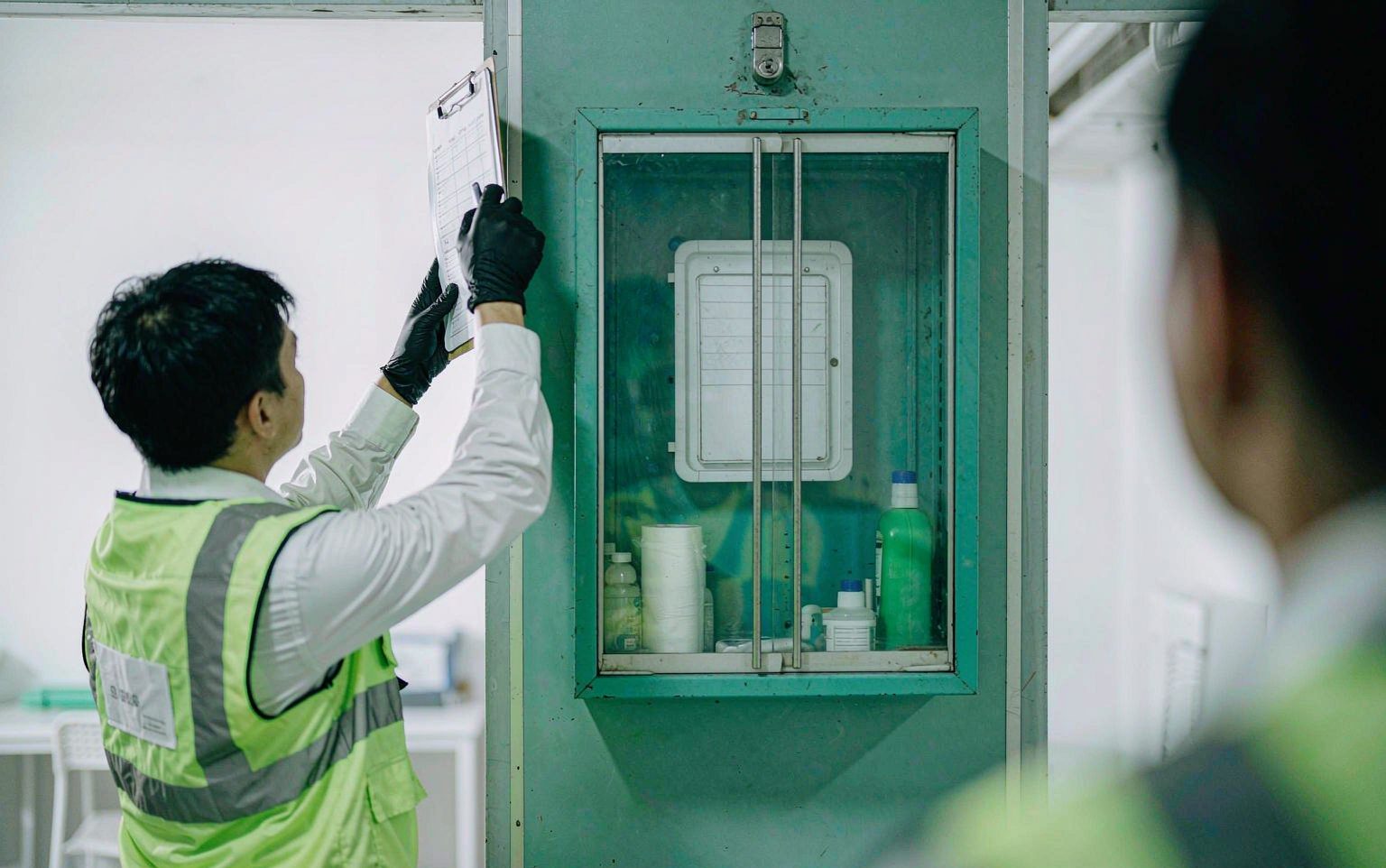
- No inspection record. The standard does not mandate a frequency, but monthly checks with a signed log are the widely used baseline for demonstrating “maintained” supplies.
How to Choose the Right Class for Your Site
Three inputs drive the decision:
Hazard profile. Offices and retail floors sit comfortably in Class A. Production lines, machine shops, warehouses, and construction sites point to Class B — particularly where amputation or severe-bleeding risk exists.
Headcount and distribution. Higher headcount consumes supplies faster; larger sites also gain from multiple smaller cabinets rather than one large one, keeping travel time to a kit short.
Program structure. Multi-site buyers usually standardize one class per site type: Class A for offices, Class B for industrial locations, with refill packs ordered on the same schedule. For guidance on ordering logistics — quantities, customization, and lead times — see the bulk sourcing guide.
Sourcing Notes for B2B Buyers
When requesting quotes, specify the class explicitly and reference the current edition: “ANSI/ISEA Z308.1-2021, Class B” leaves far less room for interpretation than “industrial first aid kit.” Ask the supplier to state which class the contents configuration is built to, and request the contents list as part of the quotation so classes can be compared line by line.
Wall-mount formats and configurations from 25 to 100 people are available in the UneedAid wall-mounted series, and more compliance and sourcing guides are collected in the Resource Center.
Frequently Asked Questions
Is ANSI Z308.1 legally required?
No. OSHA references it as non-mandatory guidance in Appendix A to 29 CFR 1910.151. In practice, it is the benchmark safety professionals use to judge whether “adequate” supplies are present, so most procurement specifications treat it as the de facto requirement.
Does a Class A kit need a tourniquet?
No. Under ANSI/ISEA Z308.1-2021, the tourniquet and splint are Class B requirements. Class A covers common injuries in lower-risk settings without them.
What changed in the 2021 revision?
The 2021 edition added a foil emergency blanket to both Class A and Class B minimum fills, refined several quantity requirements, and kept the two-class plus four-container-type structure.
Does OSHA require a specific number of first aid kits per employee?
No federal ratio exists. The requirement is that supplies be readily available relative to hazards and workplace layout. One kit per 25 employees is a common planning benchmark, not a rule.
Can a first aid cabinet be locked?
Yes, provided workers have immediate access to the key or combination at all times, including during an emergency. If controlled access matters — for example against theft — a tamper-evident seal is the usual compromise: access stays instant, and any opening is visible.