

A factory is not one workplace — it is several hazard profiles sharing a roof. The machine shop, the assembly line, and the warehouse rack aisles each produce different injuries at different speeds, and a single kit by the main door rarely serves all of them.
This guide breaks industrial first aid provision down by zone: what each area needs, where cabinets go, and how refill logistics survive production schedules.
Start With the Class: Why Industry Points to Class B
Under ANSI/ISEA Z308.1-2021, Class B kits carry every Class A category in larger quantities plus a tourniquet and a splint. OSHA’s own guidance on first aid identifies manufacturing-type environments as high-hazard and recommends the richer configuration accordingly — severe bleeding from machinery contact and fractures from falls or struck-by incidents are the scenarios the extra items exist for.
If you are comparing Class A and Class B line by line, the Class B requirements guide covers the full contents tables. For specification writing, name the edition and class explicitly: “ANSI/ISEA Z308.1-2021, Class B.”
Zone 1: The Machine Shop and Workshop
Workshops concentrate cut and puncture hazards: rotating tools, swarf, sheet edges. Zone setup that holds up in practice:
- One wall-mounted cabinet per workshop bay, mounted at handle height on a column or wall clear of racking and machine envelopes.
- Class B fill with extra sterile dressings and pressure bandages sized for lacerations.
- Eye irrigation within seconds of grinding and cutting stations where debris is routine.
- Immediate-access rule: nothing stored in front of the cabinet, ever — blocked access is the most common audit finding in workshops.
Zone 2: The Production Line
Line environments add repetition injuries and burns:
- Kits positioned per line segment or per shift station, so a stoppage never requires walking the full floor for a plaster.
- Burn dressings and gel stocked wherever hot work, sealing, or soldering runs.
- Glove and sterile-wipe stock replenished on the same schedule as production consumables — supplies next to the process get used, which is the point.
Zone 3: The Warehouse
Warehouse injuries skew to impacts, falls from height, and manual-handling strains:
- Cabinets at dock doors, pick-module entrances, and charging areas — the endpoints of traffic flows.
- Cold packs in generous quantity for strains and minor impacts.
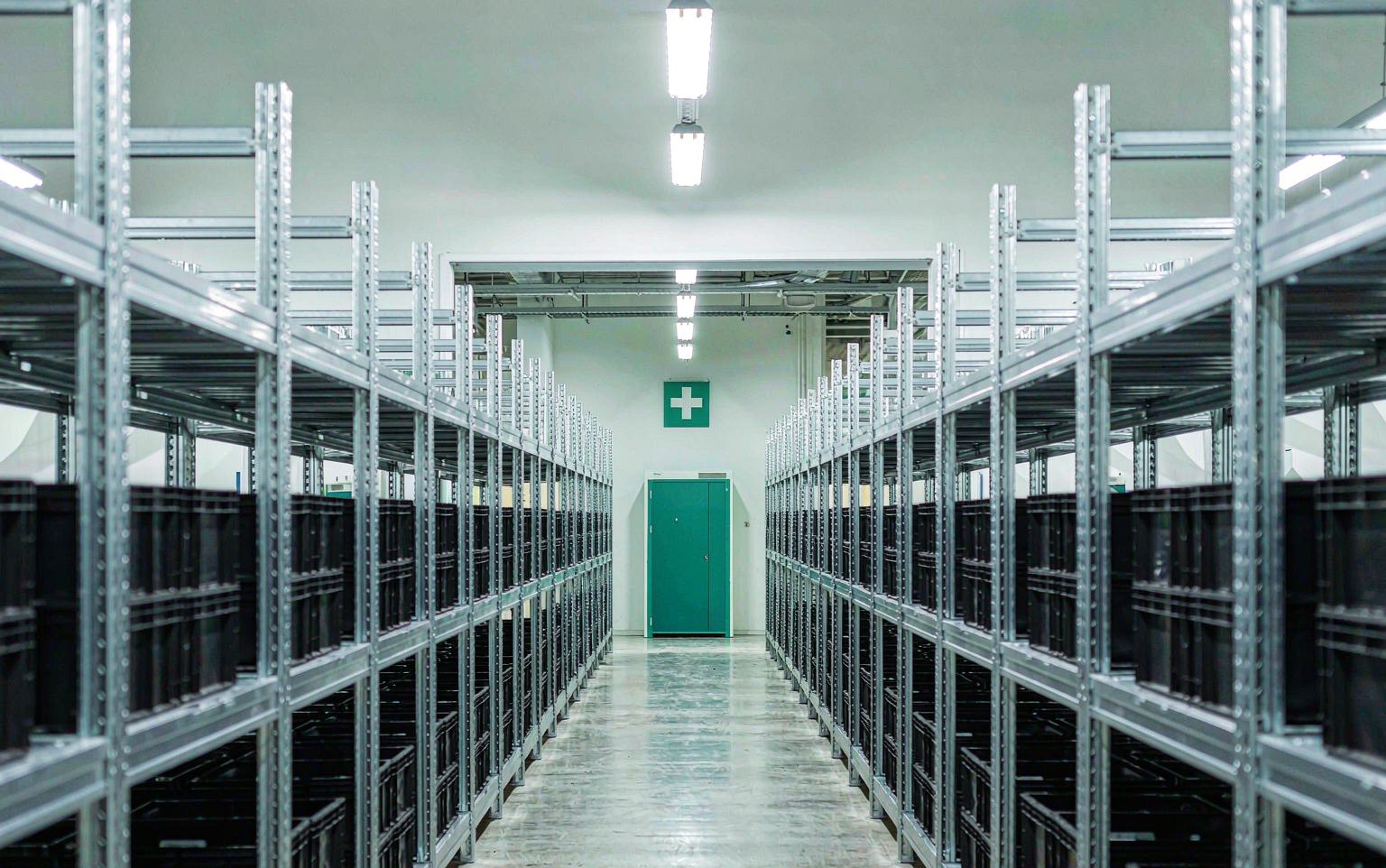
- High-visibility cabinet placement: racking creates sight-line dead zones, so signage and floor marking around stations carry real weight. A visible, signed wall-mounted first aid kit at each endpoint shortens the search when minutes matter.
Across all three zones the planning benchmark stays the same: no legal ratio exists, but a worker reaching a kit within roughly 3–4 minutes is the widely used design target, and headcount sizes the fill rather than the number of cabinets.
Access Control Without Delay
Industrial settings often want kits secured against unauthorized use — the resolution is access control that never delays an emergency: cabinets with a slide latch and tamper-evident seals keep opening instant while making any use visible at the next check. Locked-with-findable-key is the fallback; a slide-latch cabinet plus seal is the cleaner default.
Refill Rhythm That Survives Production
Factory consumption is uneven: a week of finishing work can empty a cabinet section. Practical programs:
- Monthly documented checks as the baseline, plus immediate restock after any use.
- Refill packs matched to the kit specification held as min-max stock in the warehouse — restocking becomes a pick, not a purchase order.
- Batch consistency: ordering refills against the same specification keeps contents identical between batches, which is what auditors check when they ask how adequacy is maintained.
Multi-site plants usually consolidate refill and kit purchases into scheduled bulk orders — the bulk sourcing guide covers the order mechanics, and sector-specific variants (offices on the same campus, outdoor yards) are compared in the commercial first aid kit guide and the construction site guide.
Frequently Asked Questions
What class first aid kit does a factory need?
Class B under ANSI/ISEA Z308.1-2021 is the configuration that matches industrial hazard profiles — machine contact, severe bleeding, and fracture risks are exactly what the tourniquet and splint requirements exist for.
How many first aid kits should a factory have?
No fixed legal ratio. Plan by zone and travel time — typically one cabinet per workshop bay, line segment, or warehouse endpoint — then size each fill by the headcount it serves.
Where should kits be mounted in a workshop?
On columns or walls at handle height, clear of machine envelopes and racking, with nothing stored in front. Blocked or obscured access is the most common finding in industrial first aid audits.
Do warehouse first aid kits need anything special?
Generous cold pack stock for strains, placement at dock doors and pick-module entrances, and high-visibility signing — racking creates sight-line dead zones that make signage functional, not decorative.
How often should factory first aid kits be checked?
Monthly documented checks are the common baseline for active industrial sites, with immediate restocking after any use and confirmation that sterile packaging remains intact in dusty zones.