
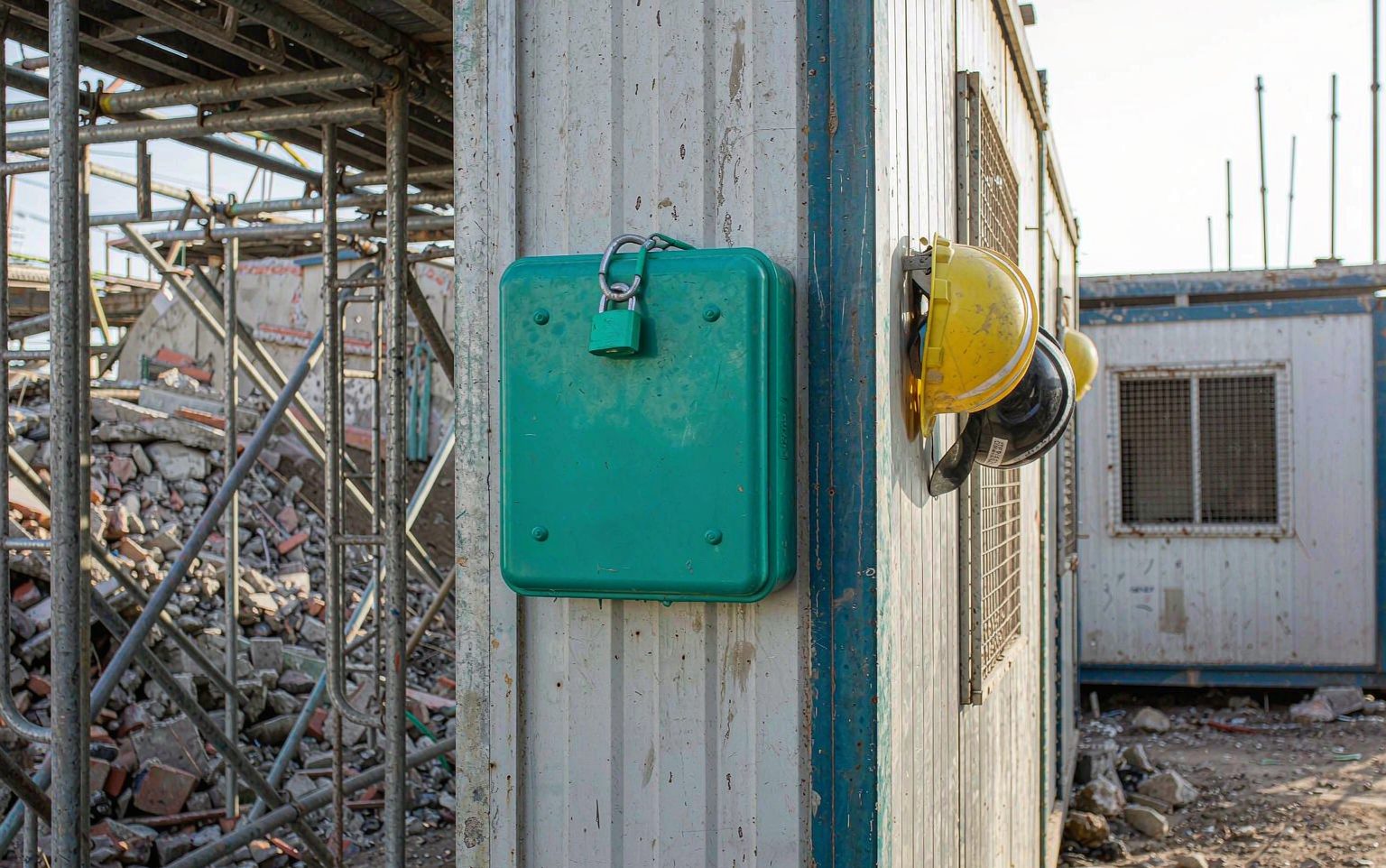
Construction sites concentrate almost every first aid risk a workplace can have: sharp tools, heavy materials, work at height, dust, weather, and a workforce that moves around constantly. Yet first aid provision on sites is often improvised — one kit in the site office, nothing where the crews actually work.
This guide covers what OSHA’s construction standard expects, why a Class B configuration is the sensible baseline, and how to structure stations and portable kits so that supplies are genuinely reachable when something happens.
What OSHA Requires on Construction Sites (29 CFR 1926.50)
Construction has its own first aid standard, separate from general industry:
- 1926.50(d)(1): first aid supplies shall be readily accessible when required.
- 1926.50(d): in the absence of an infirmary, clinic, hospital, or physician reasonably accessible to the site, a person with a valid first aid training certificate shall be available at the site on every shift.
- 1926.50(c): first aid training references the American Red Cross or American Heart Association curriculum, including modern bleeding-control techniques.
The standard does not list specific kit contents. For that, employers and safety managers fall back on ANSI/ISEA Z308.1 as the recognized benchmark — the same relationship as in general industry. OSHA’s interpretation letter on first aid and bleeding control states plainly that construction is a high-hazard industry, cites Bureau of Labor Statistics data showing construction workers suffered 13,500 open wounds in a single year, and recommends the richer Class B configuration for high-risk industries.
Why Class B Is the Practical Baseline for Construction
Under ANSI/ISEA Z308.1-2021, Class B kits carry every Class A item category in larger quantities, plus two items Class A does not require: a tourniquet and a splint.
On a construction site, both items address realistic scenarios. Severe bleeding from cuts and lacerations is among the most common serious injuries on sites — exactly the scenario where a tourniquet matters before emergency services arrive. Falls and struck-by incidents drive the fracture and immobilization cases that a splint serves.
A Class A fill sized for an office does not become adequate by placing it on a construction site. When specifying kits for site procurement, name the standard and class explicitly — “ANSI/ISEA Z308.1-2021, Class B” — so the contents configuration is unambiguous. For the full comparison of the two classes, see the Class A vs Class B breakdown.
Fixed Stations vs Portable Kits: Covering a Moving Workforce
Construction breaks the usual assumption that workers stay near the cabinet. Crews move across zones, work at height, and rotate between sites. Practical programs combine two formats:
Fixed stations — wall-mounted cabinets in the site office, tool containers, break areas, and at each level or zone entrance of larger structures. A permanently installed wall-mounted first aid kit gives each zone a visible, known supply point, and the site office keeps the master stock.
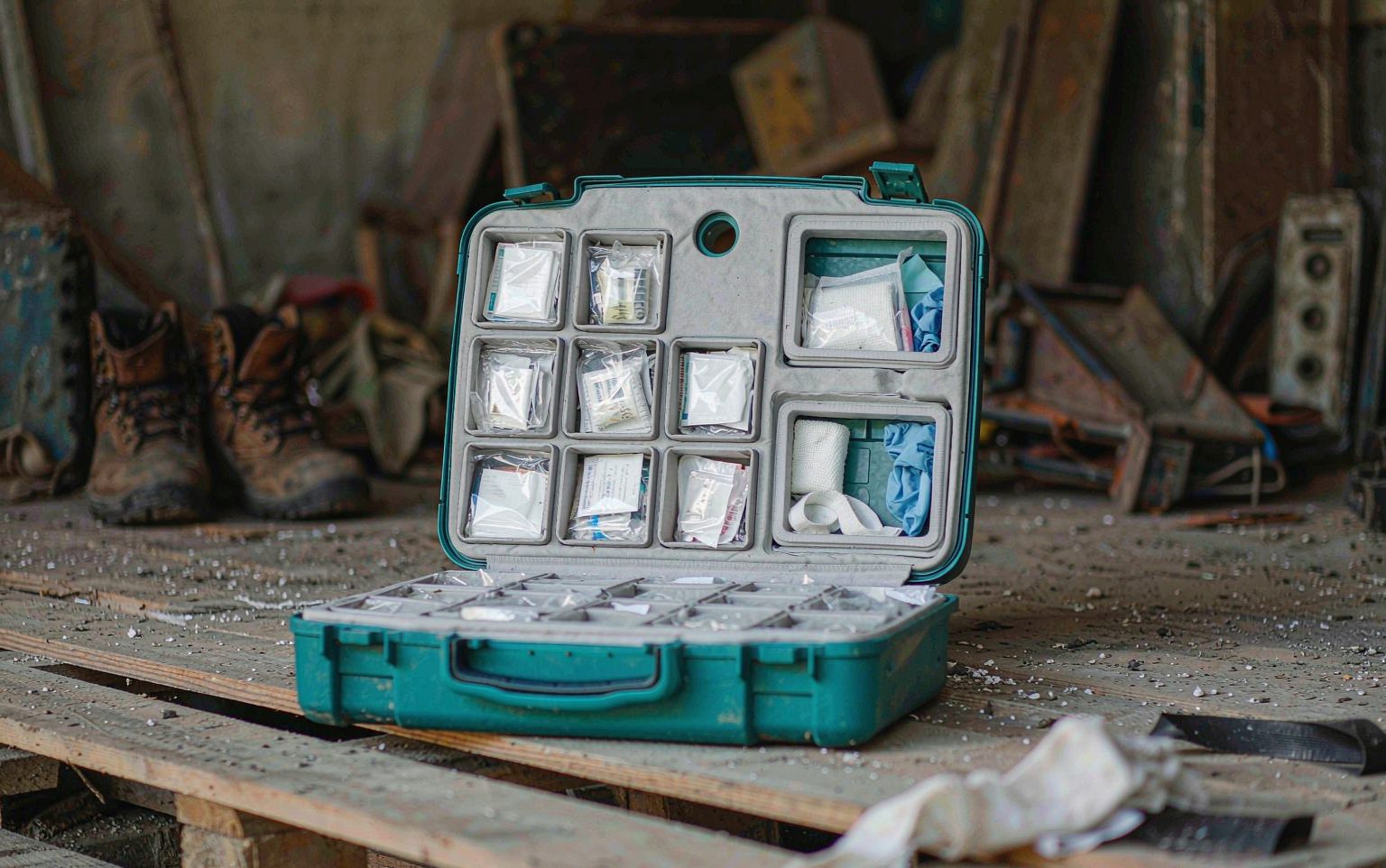
Portable kits — one per crew or per high-risk activity (cutting, excavation, work at height), kept with the crew’s gear. For sites with vehicle access and outdoor exposure, weather-sealed portable cases in the ANSI Type IV spirit survive dust, rain, and rough handling far better than open shelving.
The combination matters because “readily accessible” is judged by travel time, not by existence. A widely used planning benchmark is that a worker should reach a kit within roughly 3–4 minutes; on a large or multi-level site, that usually means several supply points rather than one.
Site Hazards That Should Shape Your Contents
Beyond the Class B baseline, site risk assessments usually add:
- Eye irrigation for dust, debris, and any corrosive material exposure — where corrosives are present, dedicated eyewash provisions apply under 1926.50(g).
- Extra wound dressings and pressure bandages for lacerations from sheet metal, tools, and nail guns.
- Burn dressings for hot work and welding zones.
- Cold packs and immobilization support for sprains and falls.
- Protected packaging: dust and moisture ruin sterile wraps. Sealed compartments and intact sterile packaging are what make contents usable months into the project — a reason to prefer enclosed metal or hard polymer cases over soft bags in dusty zones.
Placement, Numbers, and Access
Three planning rules that hold up in practice:
- Map by work area, not headcount alone. One station per major zone or crew, plus portables with mobile teams. Headcount then sizes the fill, not the count of cabinets.
- Keep access unobstructed. Cabinets blocked by materials, tools, or locked without a reachable key fail the “readily accessible” test. Where theft is a concern, a tamper-evident seal keeps access instant while making any opening visible — the same logic applied to slide-latch wall cabinets in fixed facilities.
- Sign and brief. New subcontractors and visitors do not know where stations are. Signage at the container office and a first aid point in the site induction cover the gap.
Inspection and Refill Rhythm
Site conditions consume and damage supplies faster than offices: monthly checks are the common baseline for active sites, with immediate restocking after any use. Every check should confirm three things: no expired items, sterile packaging intact, and Class B items (tourniquet, splint) present and serviceable.
Refill packs ordered against the kit specification keep restocking fast and keep contents consistent between batches — which is also what auditors look for when they ask how adequacy is maintained.
Sourcing Kits for Multi-Crew Projects
Contractors running several crews or multiple sites usually standardize one case family and one fill specification across the project, then order in a single bulk purchase with logo marking for site identification. For order logistics — quantities, customization, packing, and lead times — see the bulk first aid kit sourcing guide, or browse the wall-mounted series and other sourcing guides in the Resource Center.
Frequently Asked Questions
What class of first aid kit is required on a construction site?
OSHA does not mandate a named class — 1926.50 requires readily accessible adequate supplies. Because construction is a high-hazard industry, Class B under ANSI/ISEA Z308.1-2021 is the configuration that matches the hazard profile, and OSHA’s own guidance recommends richer configurations like Class B for high-risk industries.
Where should first aid kits be placed on a construction site?
At fixed, signed stations in the site office, containers, and break areas — plus a portable kit with each crew or high-risk activity. The test is travel time: a worker should be able to reach supplies quickly from anywhere on site.
How many first aid kits does a construction site need?
There is no fixed legal ratio. Size the number of stations by work areas and travel time first, then size each fill by headcount. One kit per 25 employees is a common planning benchmark, not a rule.
Do construction first aid kits need to be weatherproof?
OSHA does not require a specific case type, but dust, moisture, and rough handling damage sterile packaging and make contents unusable. Sealed, rigid cases — portable outdoor types and enclosed wall cabinets — keep contents serviceable for the duration of the project.
Who can provide first aid on a construction site?
Under 1926.50(d), when no infirmary, clinic, hospital, or physician is reasonably accessible, a person with a valid first aid training certificate must be available on site during every shift — and training must include current bleeding-control techniques.