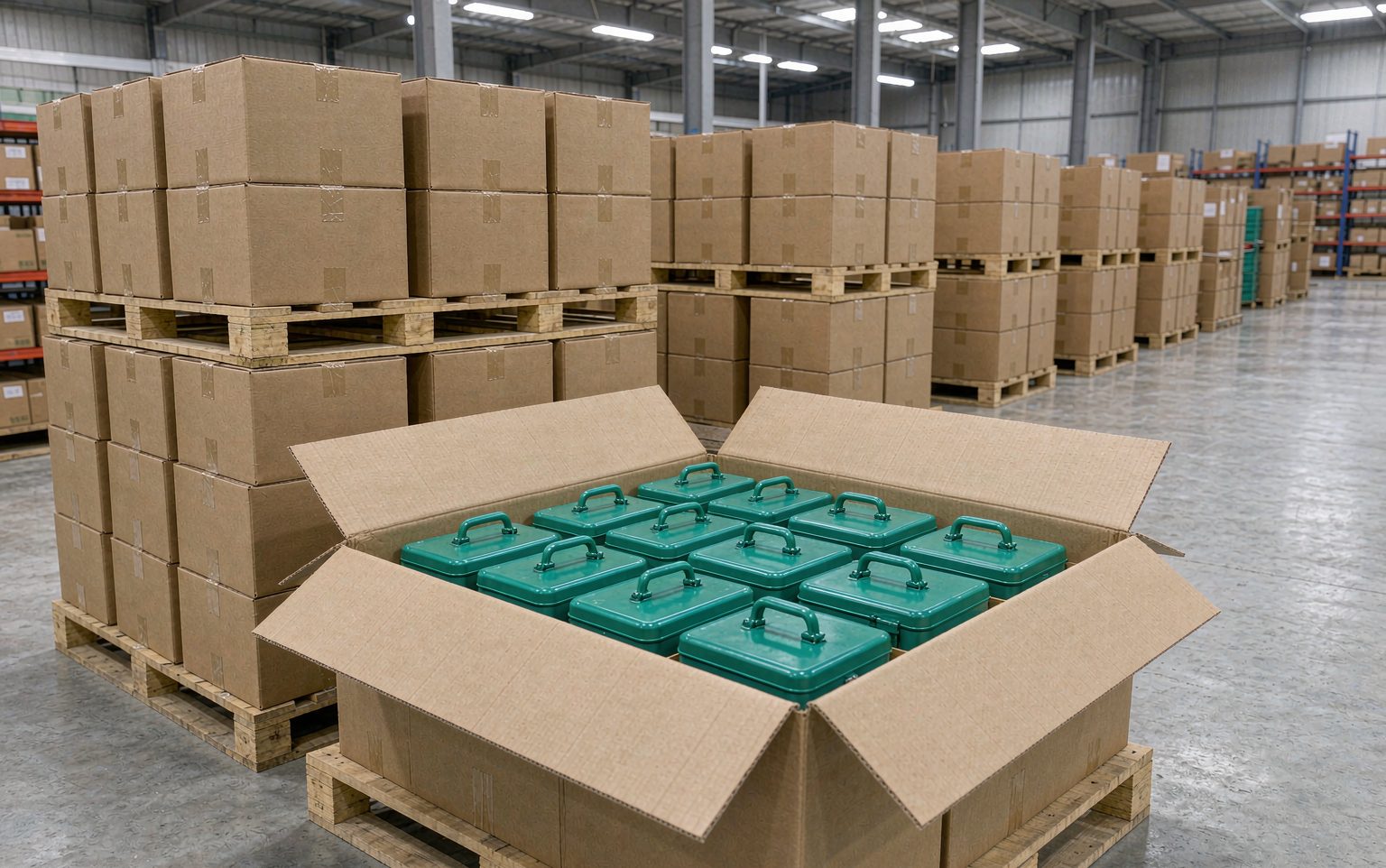
Buying first aid kits in bulk looks simple from the outside: pick a model, multiply by headcount, compare prices. Anyone who has run a multi-site order knows it is rarely that straightforward. Between size configurations, contents, customization requirements, packaging, and destination-market documentation, a bulk order has more decision points than a retail purchase by a wide margin.
This guide walks through the decisions that actually move cost and lead time on bulk first aid kit orders — written for procurement teams, distributors, and resellers rather than individual consumers.
Who Buys First Aid Kits in Bulk?
Bulk purchasing shows up in four common situations:
Multi-site companies standardizing one kit configuration across offices, warehouses, or retail locations. One standardized SKU means one restocking process, one inspection checklist, and one training reference for staff.
Distributors and resellers carrying first aid kits as a category alongside safety or medical supplies. They buy in bulk to hold local stock and serve downstream customers with short delivery times.
Institutions and project buyers — schools, construction projects, fleet operators — who need many identical kits delivered against a project schedule.
Brand owners running private-label programs, where the kit itself carries the buyer’s brand and the supplier manufactures to specification.
The sourcing logic differs slightly in each case, but the underlying checklist is the same.
How Bulk Pricing Actually Works
Unit price on bulk orders is driven by four variables, in rough order of impact:
- Order quantity. Unit cost drops stepwise as quantity crosses production thresholds — material roll sizes, molding cycles, and line changeovers all price more efficiently at volume.
- Contents configuration. The case is usually the smaller cost driver; the fill contents are where most of the unit cost lives. A filled kit and an empty case from the same product line can differ in price by several multiples.
- Customization depth. A printed logo is a light customization. A private-label program — custom colors, custom contents layout, branded packaging — touches tooling, materials, and QA, and prices accordingly.
- Incoterms and freight. Sea freight vs air freight, and how the carton is packed (pieces per carton, carton dimensions, gross weight), can shift the landed cost per unit more than most buyers expect. Confirm packing data before comparing offers.
A practical note: when comparing supplier quotes, normalize them to landed cost per unit at your destination port, including packing details. Quotes compared on ex-works unit price alone are not comparable.
Define These 8 Points Before Requesting a Quote
The fastest way to slow down a bulk order is to start it with an incomplete specification. Before sending an RFQ, define:
- Deployment scenario. Office, industrial site, vehicle, or outdoor program — this drives the product category.
- Headcount per kit. Kits are configured by the number of people they serve. A 10-person office kit and a 50-person industrial kit are different products, not different quantities.
- Case size and material. Confirm external dimensions and material. For example, a small wall-mount case runs about 29×20×12 cm, while medium formats run about 34×25×13 cm — confirm the exact spec sheet per SKU before ordering.
- Empty or pre-filled. Decide whether the supplier fills the kit or you source contents separately.
- Logo and branding requirements. Logo placement, print colors, and artwork format.
- Packing method. Carton quantity, inner boxes, and whether kits ship individually boxed or consolidated.
- Destination market. The destination country determines what documentation and labeling the shipment should carry — and who is responsible for confirming market compliance. Buyers should confirm regulatory requirements for their own market; this responsibility typically sits with the importer, not the factory.
- Target delivery window. Production lead time and transit time are planned separately; a realistic window needs both.
Suppliers respond to complete RFQs faster, and the quotes come back comparable because every bidder prices the same specification.
Empty Kits vs Pre-Filled Kits
Both approaches are common in bulk programs, and the trade-off is control versus convenience:
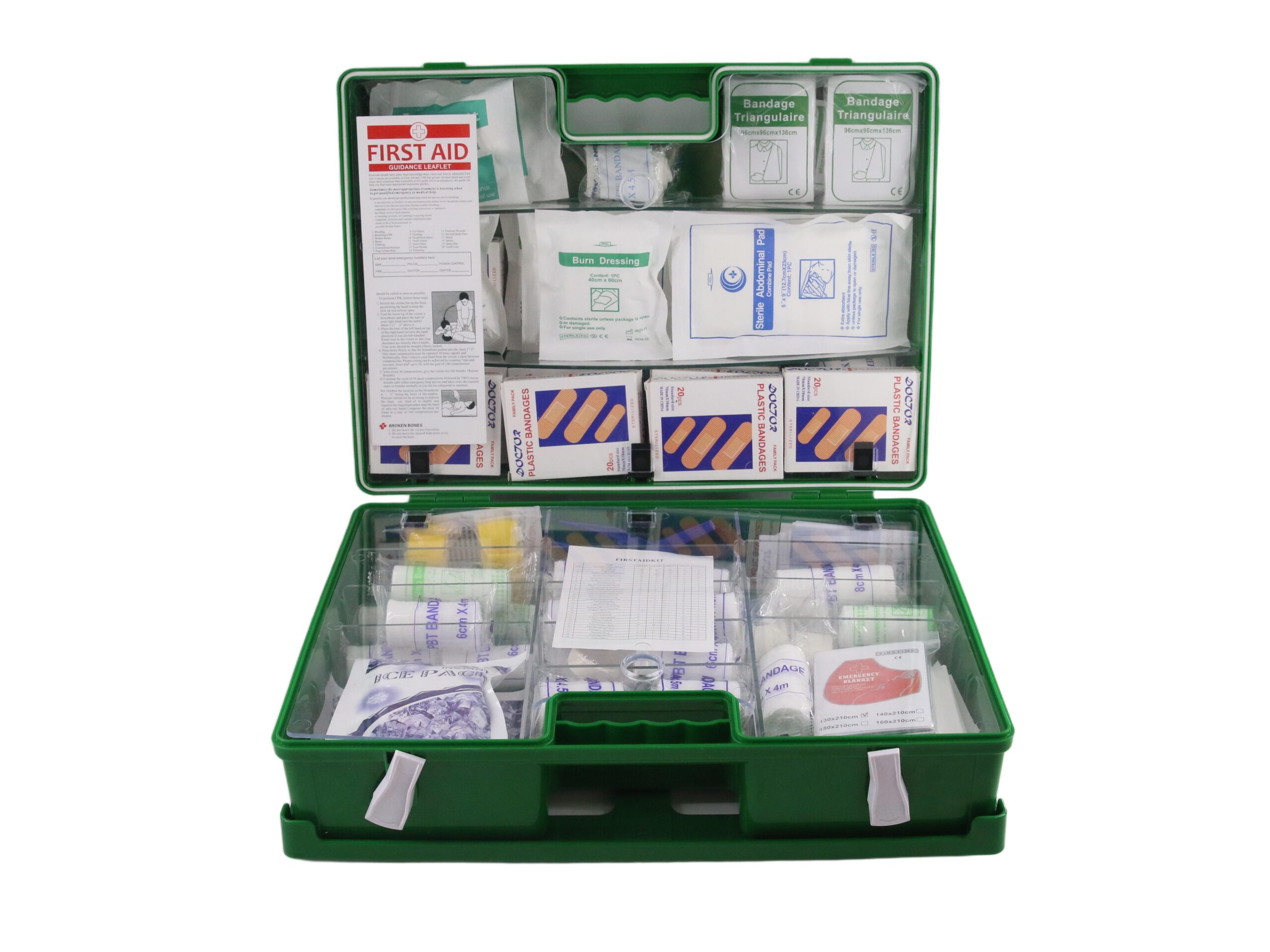
Pre-filled kits arrive ready to deploy. One supplier, one QA process, one delivery. This suits buyers who want standardized multi-site rollout with minimal internal handling.
Empty kits — the case only — let buyers fill locally. This suits distributors who already stock contents, buyers with local-sourcing requirements, and programs where contents must match a specific national standard or customer specification.
A middle path is also common: order cases in bulk and source refills as recurring line items. This keeps case quality consistent across sites while letting contents follow local requirements. UneedAid supplies both empty cases and configurable kits, and the wall-mount series covers configurations from 25 people (small case, 29×20×12 cm) through 50 people (medium case, 34×25×13 cm) up to 100 people (large case, 43×32×15 cm), which makes it practical to standardize one case family across sites of different sizes.
Customization: Logo Printing vs Private Label
These two get mixed up often, and the MOQ difference matters for planning:
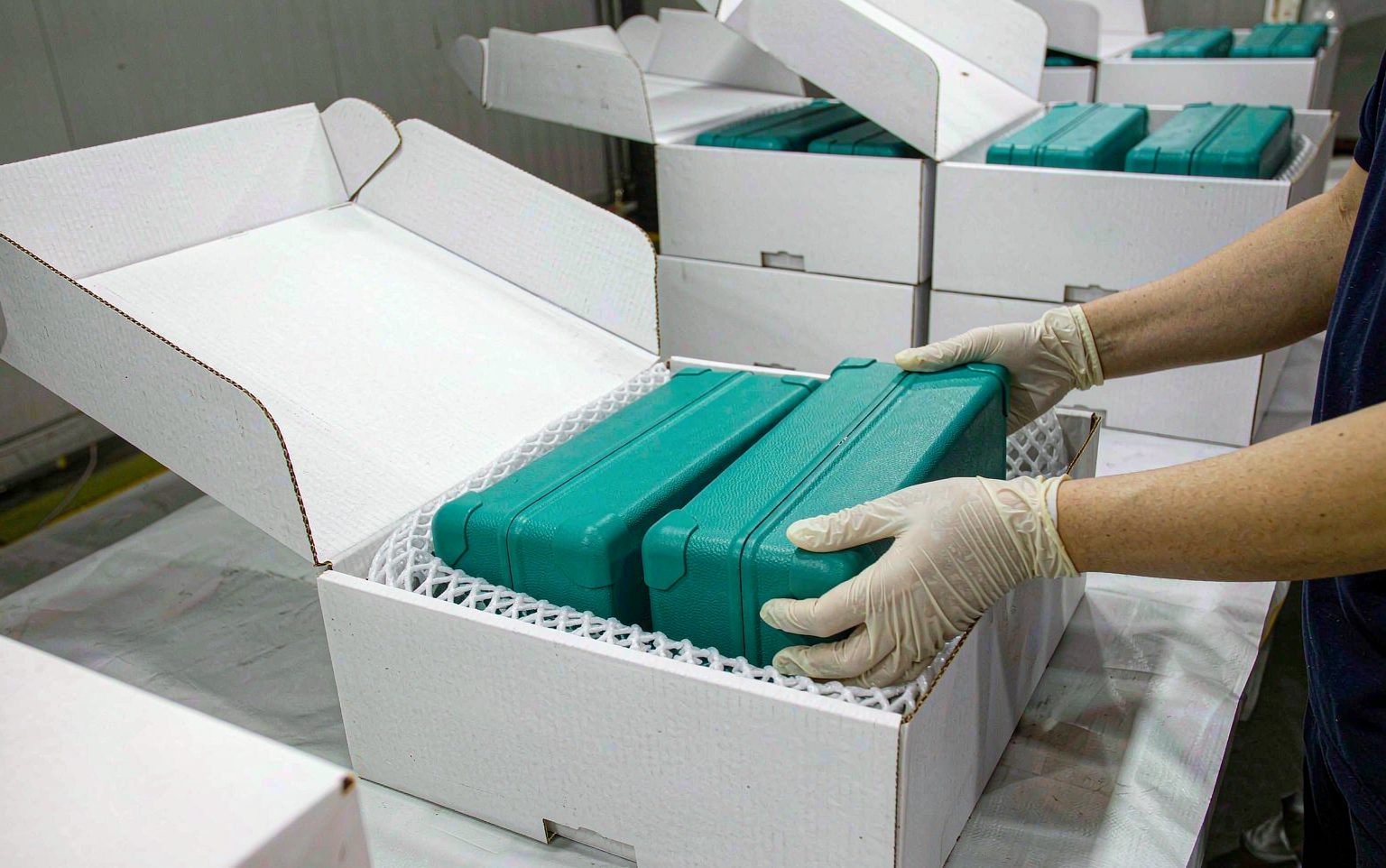
Logo printing applies your mark to a standard product. At UneedAid, logo customization starts from 200 pieces, which makes it accessible for mid-size orders and first-time bulk buyers validating a supplier relationship.
Private label (OEM/ODM) means the product is built to your brand specification — colors, contents, packaging, and labeling. This is a project, not a line item: it runs from 1,000 pieces at UneedAid, and the standard sequence is specification → sample → sample validation → bulk production.
The planning implication: if you are testing a market or a channel, logo-printed standard kits let you move at a lower commitment level. If you are building a brand program, budget for the sample stage and plan the MOQ accordingly.
How to Evaluate a Bulk First Aid Kit Supplier
Price differences between suppliers usually trace back to differences you cannot see in a product photo. Five checks that separate reliable bulk suppliers from risky ones:
- Sample before commitment. Any supplier confident in its production will support sample validation. Assess case material, hinge and latch quality, print quality, and contents layout against the approved specification.
- Documentation willingness. Ask what documents accompany shipment: packing list, contents list, material specifications, and — where applicable to the product and market — a Declaration of Conformity or equivalent. A supplier that answers documentation questions quickly is usually organized elsewhere too.
- Feasibility honesty. Strong suppliers tell you what is not feasible before the order, not after. If a requested configuration is not possible, you want that answer at RFQ stage.
- Component continuity. For repeat orders, ask how the supplier maintains continuity of contents and materials across batches. A kit program that changes fill items silently between orders creates audit problems downstream.
- Export experience. Carton marks, consolidated shipping, and export paperwork are their own skill set. A factory that ships B2B volume routinely will handle freight coordination with fewer surprises.
For reference, OSHA’s guidance on first aid supplies in general industry (29 CFR 1910.151) requires that adequate first aid supplies be readily available at the workplace — employers are responsible for judging adequacy against their own hazard assessment. A supplier can support that judgment with configuration options and documentation, but the compliance responsibility sits with the employer or importer.
Frequently Asked Questions
How many first aid kits do I need per employee?
There is no universal legal ratio. A common industry benchmark is one kit per 25 employees, or one kit per work area — but the governing principle in most jurisdictions is that supplies must be readily accessible relative to workplace hazards and layout. Map kits to work areas first, then adjust for headcount.
What is a typical MOQ for bulk first aid kits?
It depends on the customization level. Logo printing on standard models commonly starts around 200 pieces; full private-label programs typically start around 1,000 pieces. Confirm the current MOQ for the specific SKU before planning an order.
Should I buy empty or pre-filled kits in bulk?
Buy pre-filled if you want one supplier, one QA process, and ready-to-deploy standardization. Buy empty if you source contents locally, must meet a specific national contents standard, or want to bundle refills with local suppliers. Many programs mix both: bulk cases plus recurring refill orders.
How long do bulk orders take to produce and ship?
Production lead time depends on configuration, contents sourcing, and quantity — pre-filled custom kits take longer than empty cases, and private-label projects add a sampling stage. Transit depends on mode: sea freight is measured in weeks, air freight in days. Confirm both timelines at RFQ stage, not after order confirmation.
What should I confirm with a bulk supplier before ordering?
At minimum: SKU variant and case spec, empty or filled configuration, contents list where applicable, logo and packaging requirements, packing method and carton data, destination market documentation responsibilities, and the delivery window. Put all of it in the RFQ so quotes come back comparable.
Standardize Your Bulk Program
If you are building a multi-site first aid program, the wall-mounted kit series is a practical anchor product — one case family, multiple size configurations, and logo customization from 200 pieces. See the full wall-mounted first aid kit range on UneedAid, including the ABS curved-handle model and its PP, transparent-panel, and slide-latch variants, or browse more sourcing guides in the Resource Center.